
Elon Musk’s company, SpaceX, is dedicated to advancing space exploration and development. Another step in their program was completed on February 6, 2018, when they successfully launched ‘Falcon Heavy,’ the world’s most powerful rocket. The spaceship  blasted off from The Kennedy Space Center, in Florida, with a course set to take it in an elliptical orbit around the sun, before heading to Mars. In addition to being the world’s most powerful rocket, Falcon Heavy is also the largest to be launched, since NASA’s Saturn V in 1973. To demonstrate its ability to carry heavy cargo outside the Earth’s atmosphere, the rocket is transporting a limited edition Tesla Roadster (Elon Musk’s personal car) throughout its journey.
The Falcon Heavy was constructed from the cores of three Falcon 9s, SpaceX’s previous rocket model. The designers had planned for the three cores to return to Earth, after the launch, but the middle one missed its target. The two side cores landed, as planned, on twin pads at the Cape Canaveral Coast. These will be reused in the making of future rockets. Although initially designed to transport passengers, Space X has ruled this out for the future, because of how well development on their BFR (Big F*cking Rocket) has progressed. The company now intends to use the rocket to transport large national security payloads, such as satellites, that will be too heavy for small spaceships to carry. The Falcon Heavy can be launched with weight that would be equivalent to a 747 jet, full of passengers, their luggage and enough fuel for a long journey. This is more than twice the capacity of the world’s second largest rocket.
The launch has been highly publicized, to attract possible investors in the company’s future endeavors. Although NASA is developing a system to send missions to Mars, via their Space Launch System (SLS) program, they are facing severe budget restrictions and have concentrated the majority of their efforts on returning to the moon. Elon Musk has demonstrated that passenger trips outside of our planet will most likely be organized by private companies, with SpaceX being at the forefront. NASA’s SLS is anticipated to be more powerful than Falcon Heavy, and should be ready for launch by 2022. The amount that each journey would cost on SLS would be between $500 million and $1 billion, compared to $90 million aboard the Falcon Heavy. SpaceX has also estimated that this cost will decrease for further launches, emphasizing that the future of space exploration really belongs to private companies.

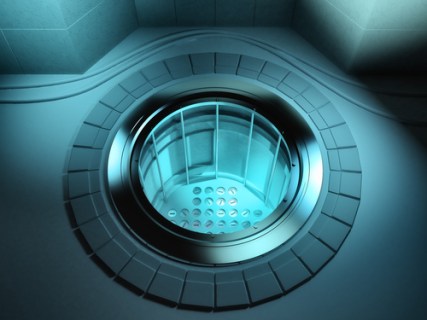 Apart from the PBTR located in India, there is only one commercially operable Fast Breeder Nuclear Reactor in the world. This is the Beloyarsk Nuclear Power Plant, located in the Ural Mountains, Russia. This plant uses uranium to provide energy for various parts of the country. China is also experimenting with Fast Breeder Nuclear Reactors, but their progress is behind India’s by about a decade. The technology has proved extremely difficult to produce, and maintain, and other countries, such as France and Japan, have been unsuccessful in their attempts to utilize it. The world will continue to observe the capacity to which India can put their nuclear plant to use, and there may be attempts to replicate it in the future.
 Solar energy plants have a 30+ year lifespan, during which the molten salt will not need to be replace or topped up. It is made from an environmentally friendly mixture of sodium and potassium nitrates, which can be used as a high grade fertilizer once the plant has been decommissioned. The salt is stored in tanks at atmospheric pressure, and about 566°C. The sunshine is reflected by a field of mirrors onto a tower, which heats the salt up. Using the molten salt for both heat transfer and energy storage means that the number of storage tanks and the salt volumes can remain relatively low. The salt is circulated through highly specialized piping in the receiver, during the day, and kept in storage tanks at night.
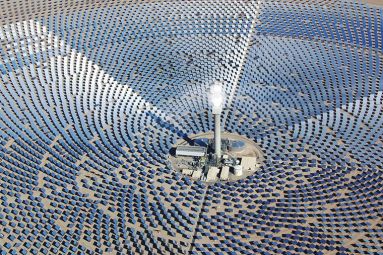 It facilitates thermal power plants operating in the same way as fossil fuel or nuclear power plants, without the associated harmful emissions as well as eliminating the cost for the fuel. These plants can also operate around the clock, providing power for both on-grid and off-grid applications.
 R. E. KEARNEY