
Most science fiction movies have concepts of space travel which that every 11-year-old wants to take. However, is it possible in real life? Can we travel through space through extended periods or is it just science fiction?
In movies we have often seen humans that are sent into extended periods of a deep sleep just so they can survive their journey in space by flash freezing their bodies. This may still be far off in the future, but there has recently been some progress made.
 A team of scientists has been researching suspended animation in mice. They wanted to see whether mice would be able to survive suspended animation or not by putting the mice into a state of hibernation by stimulation of certain neurons in their brain that could control hibernation-like behavior.
It is the first time in history that such neural progress has taken place.
In a journal titled Nature, a paper was published which explained how the researchers had found that certain brain pathways existed within the hypothalamus. These were said to be responsible for the state of hibernation-like sleep that mice would fall into. This state occurs when the body temperature of the mice decreases down to 20 degrees while the metabolic rate also decreases.
Researchers believe that body temperature is vital for most animals. It is vital in keeping them alive. In humans, if the body temperature were to fall by even a few degrees, the human would go into hypothermia and die. However, in the hibernation that is created by the research, the body temperature falls drastically and is controlled.
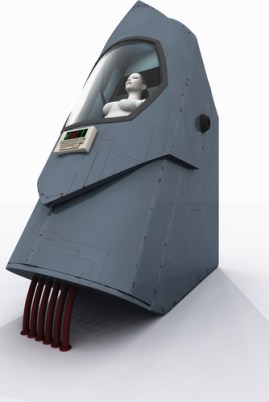 However, one should note that there is still much research that needs to be done in the field of human hibernation and how to sustain, maintain, and create it. It’s a task that will take many years to master.
Researchers believe that the research right now is not strong enough and not extensive enough for them to start thinking of humans. However, their end goal is to induce a similar state within humans by identifying neural processes that could do so.
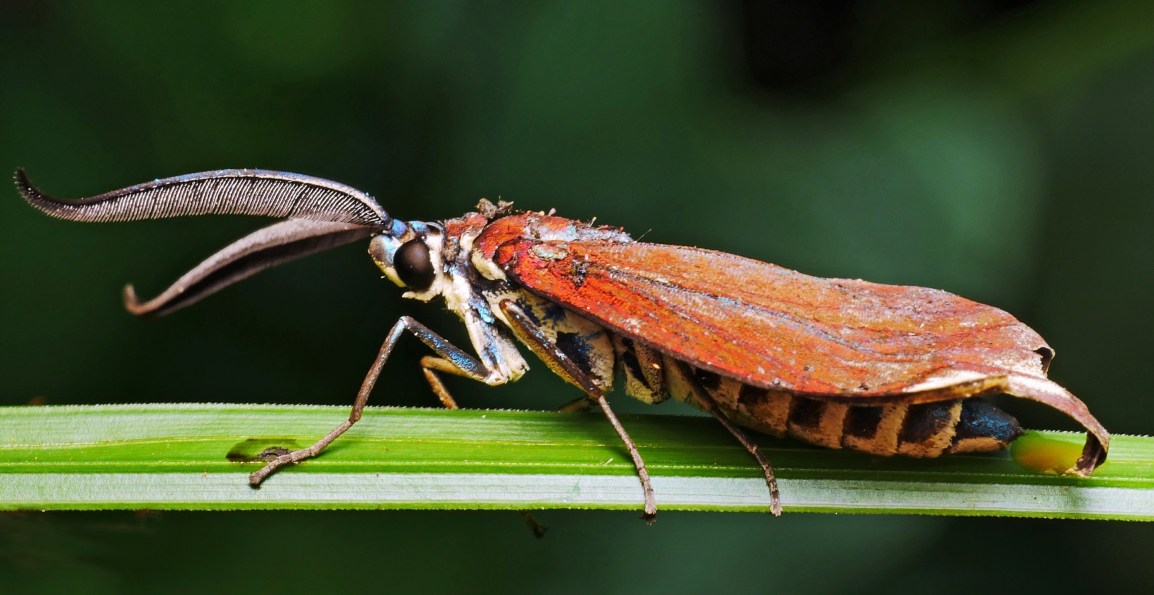
 The Diamond Back moth is a huge moth that ruins tons of harvests and leads to around 5 billion dollars of losses every single year. Teams of researchers have been hired to take care of this issue and try to suppress the population of the Diamond Back moth.
 Before the modified moths were released in the wild, they were marked on their bodies with fluorescent powder so they could easily be identified. This then allowed the team of researchers to observe the behavior of the moths and the way they interacted with their community.
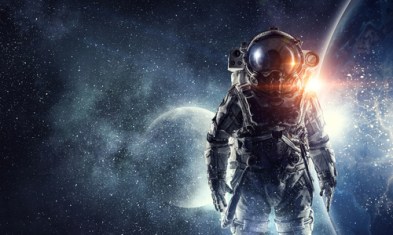 While it is a huge achievement to be able to visit outer space, it has raised many questions for scientists. One of the most important risks from such activities is the exposure to bacteria. One possibility is an astronaut contaminating their destination planet, while the other is bringing harmful bacteria back to Earth.
 Even if that is the case, astronauts still have a responsibility when travelling to distant planets to avoid contaminating those planets. Humans must avoid treating other planets the same way they have treated Earth. The consequence of our carelessness is clear.
 Tesla believes that the introduction of such a battery will reduce the cost of electric vehicles (EVs) by a significant amount. To be more exact, the company says that there will be little variation between the prices of EVs and gas engine cars.
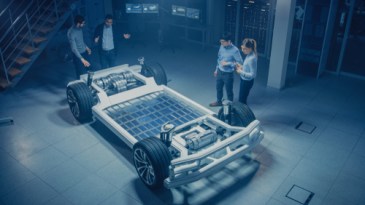 To make it happen, Tesla has recruited experienced academic battery experts who are working day and night to introduce this surprising invention to the world very soon.
 R. E. KEARNEY