
Robots have always been a futuristic phenomenon, and their production is conventionally viewed as technological and scientific advancements. There are many popular applications where Robots have proven their efficiency and productivity, like in healthcare, manufacturing, military and more. However, traditionally the importance has been placed on what tasks robots can do for us; like drive our cars, clean our floors or even give us extra limbs. But what can power their abilities.
Remember when we were engrossed in devouring popcorns while enjoying the theatrical experience at the movies? Steve Ceron came up with a genius idea of using the same popcorns we eat for a much bigger purpose at Cornell’s Collective Embodied Intelligence Lab.
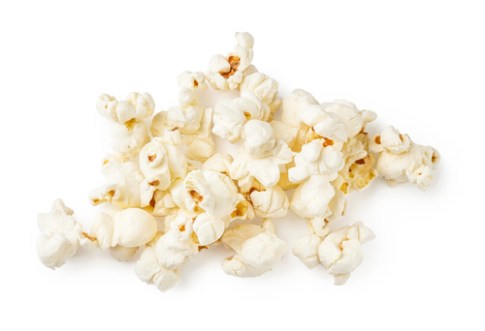 With his team of researchers, Ceron drafted a paper explaining how simple robots can be powered by Popcorn without electricity or hydraulics, at the IEEE International Conference on Robotics and Automation. Yes, it’s true! In this ultra-modern era, it has become commonplace that we come across strange yet astounding developments in the sci-fi field and a popcorn robot is exactly that. The engineers from Cornell University demonstrated their hypothesis. Inside a silicon beam that was fastened with toasted wire, they put 36 kernels. An electrical current was dispersed through the metal chord, warming up the kernels which eventually started popping due to the heat, moving the silicon.
Popcorn has distinct features that include being readily available, cheap, and having the ability to expand in terms of the shape and size when heated. This invention could potentially be a stepping stone towards overall soft robots, but could also be utilized for a wider use. Ceron suggests that this invention’s long-term benefits are manifold; ranging from its ability to complete basic transportation, to serving as an inexpensive building block through which biodegradable structures can be made. He asserts that it can even function as a viable alternative to spray foam.
To claim popcorn robots will take over the world is not a coherent argument to make at this point. While they can hold objects and lift relatively lighter weights by expanding, there are certain limitations to achieving tasks beyond their ability. The engineers accomplished this by creating a claw where its “fingers” or insides were lined with raw kernels and a heating wire. As soon as the kernels burst open, they wield tension on the sleeve, holding them in a process that is similar to tense muscles. Given that the production is exceptionally cheap, deploying many of these robots will pave the way for a wide range of applications across various fields.
One can claim that the future looks bright, fluffy and delightful as researchers are now integrating food into Science and increasing the scope for similar innovations.

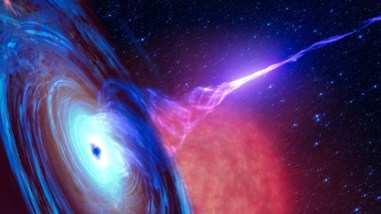 Unarguably, the most enigmatic celestial object, black holes, are now believed to be energy powerhouses. For several decades, astrologists and scientists have contributed to decrypting the mystery of black holes. Roger Penrose discovered that the development of black holes is a prediction of the theory of relativity. Stephen Hawking theorized the entire phenomenon “Hawking Radiation.”
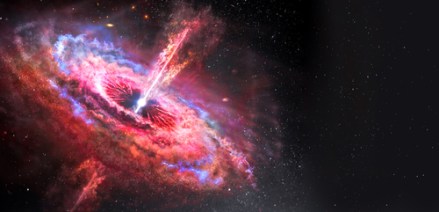 As far as the theory goes, human habitats in space seem like a reality. Asenjo, the coauthor of the study, postulated that energy extraction is possible because of the high relative velocity between captured and escaping plasma particle streams. Plasma energization is known to produce maximum efficiency due to the black holes “leak energy”. Leak energy is an accumulation of negatively charged particles in black holes reducing energy. Comisso’s theory is subjected to the polarity of the plasma shot against the spin of the black hole and not with the spin of the black hole.
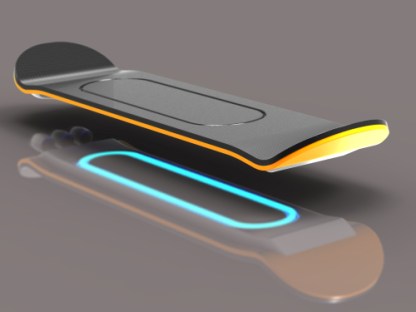 The genius who conceived the hoverboard project was Jimmy Zhou, an intern at Hacksmith Industries who is also an engineering student in Canada. Zhou devoted a number of hours to work on the complex technicalities that entailed the creation of the hoverboard. The founder of Hacksmith Industries, James Hobsen, gave a befitting analogy in his attempt to describe how hard Zhou worked: “He drank more Red Bulls than a frat house on spring break.” The statement reflects the unbridled dedication and consistency that Zhou displayed, both of which serve as key components in creating something of scientific value.
 The accelerating rotation varies all the time because of variations in the atmospheric pressure, winds, ocean currents and movement in the Earth’s core. However, these variations can be troublesome for the timekeepers who are responsible for setting the Coordinated Universal Time (UTC). The UTC is used to set clocks and whenever the astronomical time differs by 0.4 seconds from UTC; UTC is adjusted.
  There’s no doubt that global warming has disturbed most natural habitats, processes and ecology, but it could not be the only cause of the increase in spin speed. No matter what the factors and reasons are, the addition of a negative leap second could have catastrophic impacts on modern technologies. To avoid any disastrous consequence, some scientist suggests to let the difference between astronomical and atomic times expand until the addition of leap hour is required.
  R. E. KEARNEY