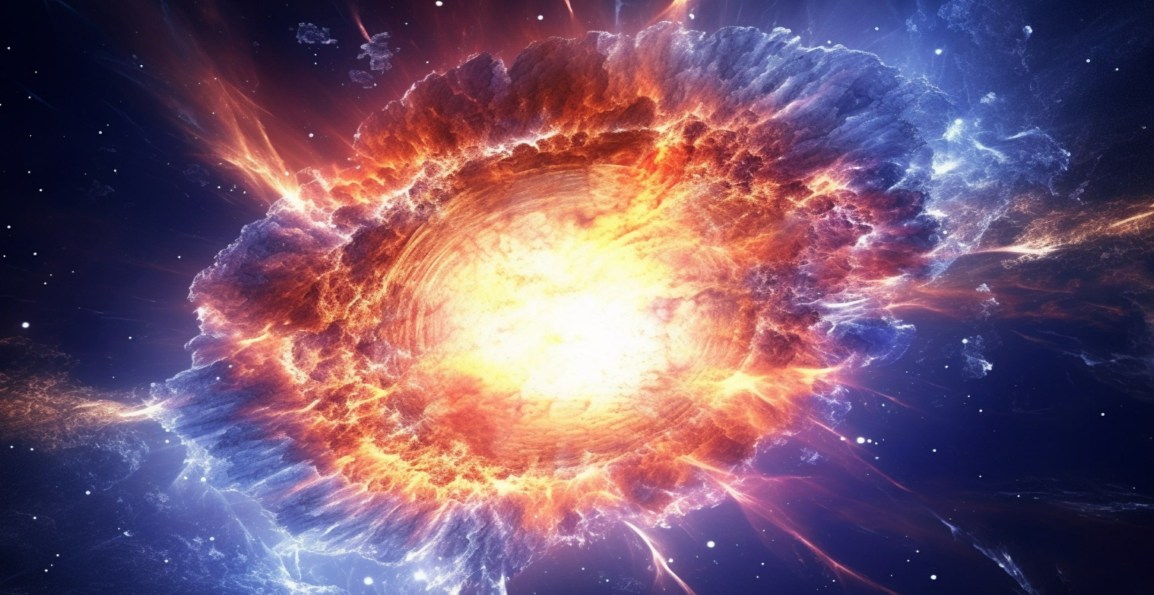
Extreme nuclear transients are among the most enigmatic and energetic phenomena in astrophysics. These fleeting yet profoundly powerful events involve nuclear processes that release immense amounts of energy in short bursts, often leaving behind traces that challenge our understanding of fundamental physics.
Understanding Extreme Nuclear Transients
Extreme nuclear transients refer to highly energetic astrophysical occurrences where nuclear reactions—whether fusion or fission—occur under extreme conditions. These can manifest as sudden bursts of radiation, high-energy particles, or the rapid transformation of matter into exotic states. Some well-known examples include neutron star mergers, gamma-ray bursts (GRBs), and certain types of supernovae.
Unlike steady nuclear fusion in stars, which sustains energy production over millions to billions of years, these transients unleash their energy in a matter of seconds to minutes, often triggering secondary cosmic events. The study of extreme nuclear transients has implications for astrophysics, nuclear physics, and even cosmology, as they reveal details about the composition and evolution of matter in the universe.
Key Examples of Extreme Nuclear Transients
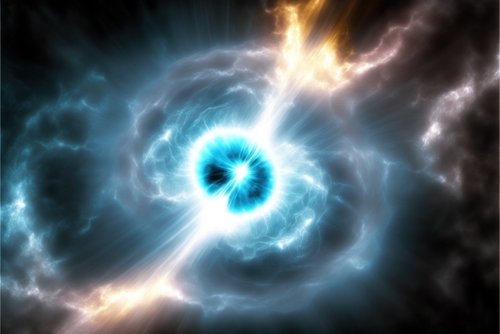
1. Gamma-Ray Bursts (GRBs) – GRBs are among the most extreme examples of nuclear transients. Originating from either the collapse of massive stars (long-duration GRBs) or the merger of compact objects like neutron stars (short-duration GRBs), these explosions release as much energy in mere seconds as the Sun would emit over its entire lifetime. The nuclear reactions involved create exotic elements and high-energy radiation detectable across vast cosmic distances.
2. Neutron Star Mergers – When two neutron stars spiral toward each other and collide, they create a brief but violent nuclear transient. This event produces gravitational waves—ripples in spacetime first detected in 2017—and extreme nuclear reactions. The aftermath of such mergers often includes kilonovae, where heavy elements like gold and platinum form through rapid neutron capture.
3. Pair-Instability Supernovae – Some of the most massive stars undergo a rare nuclear process called pair-instability, where high-energy gamma rays spontaneously create electron-positron pairs. This disrupts the star’s equilibrium, leading to a runaway nuclear reaction that results in a catastrophic explosion. Unlike typical supernovae, pair-instability events leave behind no remnant—just vast clouds of newly forged elements.
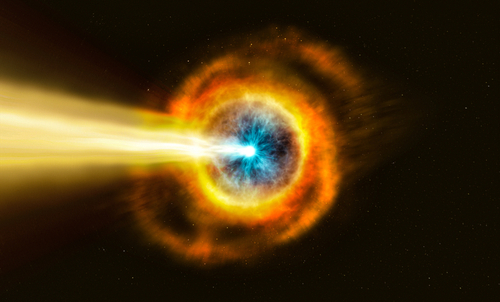
4. Magnetar Outbursts – Magnetars—neutron stars with ultra-powerful magnetic fields—occasionally undergo sudden magnetic reconnection events that trigger extreme nuclear reactions. These transients emit intense X-rays and gamma rays, sometimes causing observable disruptions in nearby astrophysical environments.
Implications for Science and Technology
Extreme nuclear transients provide unique opportunities to test theories of fundamental physics, including quantum mechanics and relativity. Studying them enables scientists to refine models of nuclear reactions in extreme environments, potentially leading to new insights into controlled fusion technology. Moreover, understanding these events enhances our ability to detect cosmic signals, such as gravitational waves and high-energy neutrinos, aiding the search for undiscovered physics.
As observational techniques improve, including deep-space telescopes and advanced detectors, we may uncover new types of nuclear transients that challenge our existing models. These phenomena remain at the frontier of astrophysics, offering a glimpse into the universe’s most violent and transformative moments.
Extreme nuclear transients serve as cosmic laboratories, revealing physics under conditions unattainable on Earth. By studying them, we inch closer to unlocking the mysteries of energy generation, matter formation, and the ultimate fate of the cosmos.

 R. E. KEARNEY
Published by