
The Earth spins on its axis at roughly 1,670 kilometers per hour at the equator, completing one full rotation every 24 hours. This constant turning defines our day and night, but intriguing fluctuations in Earth’s rotational speed have puzzled scientists for decades. These variations—sometimes speeding up slightly, other times slowing down—aren’t just trivia for astronomers. They’re subtle fingerprints of powerful forces acting on our planet from within and beyond.
Why Earth Spins—and Why It Shouldn’t Be So Constant
The Earth’s rotation is a relic of its formation. Billions of years ago, colliding dust and gas formed our planet, and the conservation of angular momentum from that chaotic birth gave Earth its initial spin. With no friction in the vacuum of space, it would seem Earth’s rotation should remain unchanged—but our world isn’t isolated.
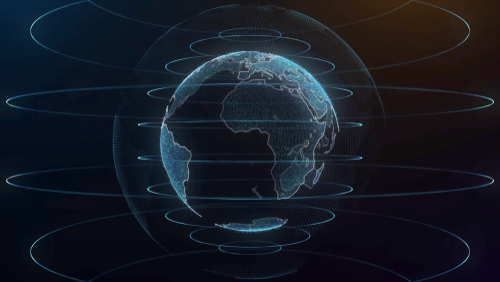
In reality, the rotation is affected by many internal and external forces, turning this steady spin into a cosmic balancing act.
The Braking Force of Tides
One of the most influential factors slowing down Earth’s rotation is tidal friction. The gravitational pull of the Moon and Sun on Earth’s oceans creates tides, which don’t perfectly align with the Moon’s position. These misalignments exert drag on the planet, acting as a brake.
Over millions of years, this friction has gradually extended our day length. In fact, fossil records suggest that during the Devonian period about 400 million years ago, a day lasted just over 21 hours.
Quakes, Glacial Melt, and Earth’s Inner Dynamics
Sometimes, Earth unexpectedly speeds up. Large-scale geological events can redistribute Earth’s mass and subtly tweak its spin. For example:

- Major earthquakes—like the 2004 Sumatra-Andaman quake—shift enormous land masses, slightly altering Earth’s moment of inertia and causing microseconds of rotational speed increase.
- Melting glaciers and polar ice from climate change push more water toward the equator. This redistribution can slow rotation, akin to a spinning skater stretching out their arms.
- The core-mantle interaction—the swirling movement of Earth’s molten interior against its solid crust—can create rotational wobbles and long-term shifts known as “length-of-day” variations.
Atmospheric Winds and Seasonal Changes
Earth’s atmosphere also plays a surprising role. Powerful jet streams and El Niño events can transfer angular momentum between the air and the solid Earth. Think of it as invisible currents tugging at the surface. These effects are small, but measurable by atomic clocks and satellite laser ranging systems.
Why It Matters
Beyond curiosity, understanding Earth’s rotation has real-world implications. GPS satellites rely on precise timing derived from Earth’s spin; even microsecond shifts must be accounted for. Astronomers also use Earth’s rotation to align telescopes and predict celestial movements with accuracy.
These shifts remind us that Earth isn’t a static orb in space—it’s an active, responsive body engaged in a cosmic ballet with the Moon, the Sun, and its own restless interior.

 R. E. KEARNEY
Published by