
In recent years, scientists have uncovered a series of baffling materials embedded within meteorites—substances that challenge our understanding of physics, chemistry, and even the boundaries of terrestrial science. These alien materials, often found in micrometeorites or deep-space fragments, exhibit behaviors that diverge dramatically from anything naturally occurring on Earth.
Unusual Composition and Structure
One of the most striking discoveries involves quasi-crystals—structures that defy conventional crystallography. Unlike typical crystals, which repeat in a predictable pattern, quasi-crystals display symmetries forbidden in standard atomic arrangements. First discovered in a meteorite from the Khatyrka region of Siberia, these formations suggest high-energy, high-pressure environments not found on Earth, possibly originating from ancient supernovae or interstellar collisions.
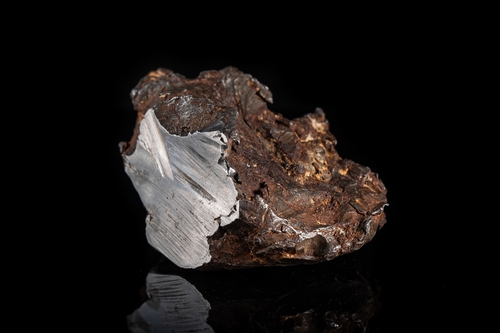
Even more perplexing are alloys composed of elements like aluminum, copper, and iron fused in ratios that shouldn’t naturally occur. These combinations are thermodynamically unstable under Earth-like conditions, yet they remain intact in meteorite samples, hinting at formation processes beyond our planetary norms.
Magnetic and Thermal Anomalies
Some meteorite materials exhibit magnetic properties that fluctuate with temperature in ways that defy known laws. For example, certain nickel-iron compounds found in space rocks show spontaneous magnetization at temperatures far below their Curie point—a phenomenon that suggests quantum-level interactions or exotic particle behavior.
Thermal conductivity is another puzzle. Alien silicates and carbon-based compounds have been observed to conduct heat unevenly, with directional bias that implies anisotropic lattice structures. In simpler terms, heat travels faster in one direction than another, a trait that could revolutionize materials science if replicated synthetically.
Optical and Electromagnetic Oddities
Perhaps most intriguing are the optical properties of some meteorite fragments. Researchers have identified materials that bend light at angles inconsistent with their refractive index, suggesting internal structures that manipulate photons in novel ways. These could be natural analogs to metamaterials—engineered substances used in cloaking devices and advanced optics.

Electromagnetic interference is also common. Certain meteorites emit low-frequency radiation or disrupt nearby electronic equipment, even when inert. While some speculate residual cosmic radiation, others propose that these materials may interact with the quantum vacuum or possess embedded charge distributions unknown to Earth science.
Implications for Technology and Origin
The implications of these discoveries are profound. If these materials can be synthesized or harvested, they could lead to breakthroughs in quantum computing, energy transmission, and aerospace engineering. More tantalizing still is the question of origin: are these materials the byproduct of natural cosmic processes, or remnants of extraterrestrial technology?
While no definitive evidence points to alien manufacture, the sheer strangeness of these substances keeps the door open to speculation. As analytical techniques improve and more meteorites are recovered, we may inch closer to understanding whether these materials are simply cosmic curiosities—or clues to a broader galactic narrative. In the meantime, they remain silent messengers from the stars, whispering secrets of physics we’ve yet to decode.

 R. E. KEARNEY
Published by