
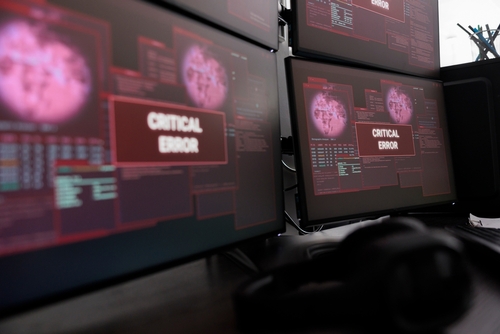
In an age where digital infrastructure underpins nearly every facet of modern life—from banking and healthcare to communication and transportation—the concept of a “digital apocalypse” is no longer confined to science fiction. It represents a plausible and deeply unsettling scenario: a sudden, systemic collapse of global digital systems triggered by cyberattacks, solar flares, AI malfunctions, or cascading software failures. The consequences would be swift, chaotic, and far-reaching.
Imagine waking up to find your phone dead—not just out of battery, but unable to connect to any network. No internet. No GPS. No access to bank accounts, medical records, or emergency services. Traffic lights blink out, planes are grounded, and hospitals scramble to operate without digital tools. In this scenario, the digital apocalypse isn’t just a tech failure—it’s a societal rupture.

One of the most feared catalysts is a large-scale cyberattack. State-sponsored hackers or rogue collectives could exploit vulnerabilities in critical infrastructure, unleashing malware that disables power grids, corrupts financial systems, or hijacks communication networks. The 2017 WannaCry ransomware attack, which crippled hospitals and businesses worldwide, was a chilling preview of what a coordinated digital assault could look like.
Another threat looms from nature itself: solar storms. The Carrington Event of 1859, a massive geomagnetic storm, disrupted telegraph systems across continents. If a similar event occurred today, it could fry satellites, disrupt GPS, and knock out power grids—effectively plunging the world into digital darkness.
Artificial intelligence, while a marvel of modern innovation, also poses risks. A misaligned AI system with access to critical infrastructure could inadvertently—or maliciously—trigger cascading failures. The more we automate, the more we entrust machines with decisions that affect millions. If those systems fail or are compromised, the fallout could be catastrophic.
The digital apocalypse also raises philosophical questions about dependency and resilience. Have we become too reliant on technology to function as individuals and societies? What happens when the systems we trust implicitly vanish overnight? In such a scenario, analog skills—map reading, face-to-face communication, manual record-keeping—could become survival tools.
Yet amid the dystopian vision, there’s room for hope. Governments and tech companies are investing in cybersecurity, redundancy systems, and disaster recovery protocols. Ethical AI development and solar storm forecasting are advancing. Grassroots movements advocate for digital minimalism and resilience training, encouraging communities to prepare for tech outages.
Ultimately, the digital apocalypse is less a prediction than a provocation—a call to examine the fragility of our interconnected world and to build safeguards that preserve not just data, but dignity. It reminds us that while technology can elevate humanity, it must be wielded with foresight, humility, and a deep respect for the analog roots that still anchor us.

 R. E. KEARNEY
Published by