The idea of injecting gold into the eye sounds like something from myth or alchemy, yet emerging research suggests it may become a powerful tool for restoring sight. Scientists are exploring how gold nanoparticles—microscopic particles thousands of times thinner than a human hair—can help compensate for damaged retinal cells and potentially return vision to people with degenerative eye diseases. Recent studies in mice offer a glimpse of what could become a groundbreaking, minimally invasive therapy for conditions like macular degeneration and retinitis pigmentosa.
Why Gold?
Gold might seem like an unusual medical material, but at the nanoscale it behaves in remarkable ways. Gold nanoparticles (AuNPs) are:
- Biocompatible, meaning they don’t trigger harmful immune reactions
- Stable, resisting breakdown inside the body
- Responsive to light, especially infrared wavelengths
These properties make them ideal for interacting with the retina, the light-sensitive tissue at the back of the eye.
The Problem: Damaged Photoreceptors
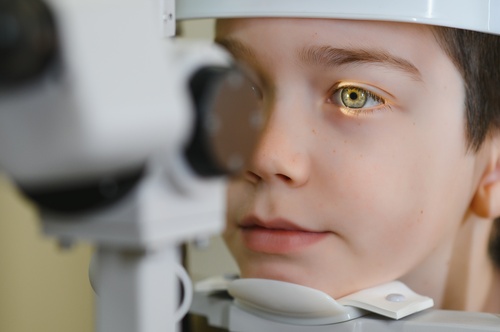
Millions of people worldwide suffer from retinal degenerative diseases. In conditions such as age‑related macular degeneration (AMD) and retinitis pigmentosa, the photoreceptors—rods and cones—gradually die. These cells normally convert light into electrical signals that travel to the brain. Once they are lost, the retina can no longer perform this essential function.
Traditional treatments can slow degeneration, but they cannot restore lost vision. That’s where gold nanoparticles enter the picture.
The Breakthrough: Gold as a Retinal Prosthesis
Researchers at Brown University and other institutions have demonstrated that injecting gold nanoparticles directly into the retina can help restore visual function in mice with retinal damage. The particles act as light-sensitive substitutes for lost photoreceptors.
When illuminated with infrared light, the nanoparticles generate tiny electrical signals. These signals mimic the natural activity of healthy photoreceptor cells and stimulate the remaining retinal circuitry. In other words, the gold particles become a kind of nano‑scale prosthetic, bypassing damaged cells and reactivating the visual pathway.
Studies show that mice treated with this method regained measurable visual responses, suggesting that the brain can interpret these artificial signals as meaningful visual information.
How the Procedure Works

The process is surprisingly straightforward compared to existing retinal implants:
- Gold nanoparticles are injected into the eye, settling within the retina.
- Infrared light is applied, often through specialized goggles.
- The nanoparticles convert this light into electrical impulses.
- These impulses stimulate retinal neurons, which send signals to the brain.
Unlike electronic implants, this approach requires no surgery, no wires, and no genetic modification—a major advantage for patient safety and accessibility.
The Future of Vision Restoration
While the research is still in early stages, the implications are enormous. If the technique proves safe and effective in humans, it could offer:
- A minimally invasive alternative to retinal implants
- A treatment for multiple forms of retinal degeneration
- A scalable, cost‑effective therapy
- A way to restore functional vision rather than simply slowing decline
Scientists caution that more testing is needed, but the promise is undeniable. Gold, long associated with wealth and beauty, may soon offer something far more precious: the gift of sight.

 R. E. KEARNEY
Published by