Blood-Sucking Parents

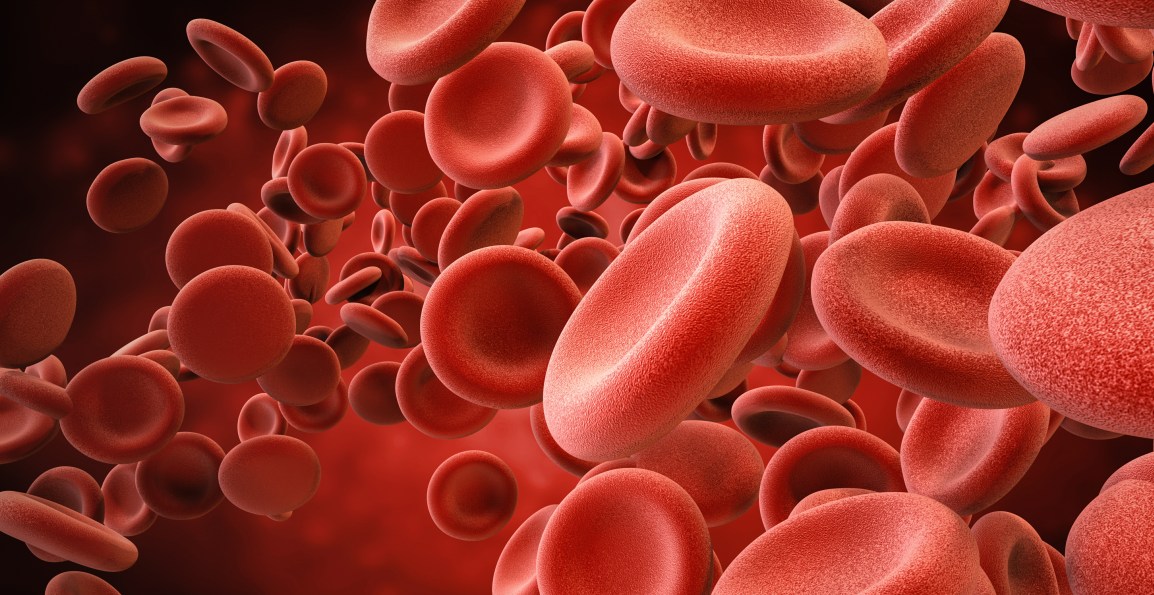
Some people will go to extraordinary lengths to try and prolong their life span. There never goes a month by without there being some food or drink fad that improves your health and allegedly adds a few years to your life expectancy. Tablets and extracts from various sources claim to be wonder panaceas that delay the inevitable. But it seems a tech millionaire has taken a step further and received a blood transfusion from his teenage son! Not only that – the millionaire is also giving some of his son’s blood to his father too.

Bryan Johnson, who is 45 years old, took his 17 year old son and 70 year old father to a clinic in Dallas for an intergenerational blood swap. And this wasn’t the first time. Bryan Johnson had received young people’s blood on previous visits to the clinic from anonymous donors. The profile of the donor was carefully filtered according to blood type, diet, body mass index as well as general health. Has it helped make him younger or prolonged his life span – no one can truly know yet.

This is not the first time Mr Johnson has been on a quest for eternal youth. He has spent $2million each year employing a team of doctors to advise him how to turn back the clock to a time when his body was in peak physical condition. Johnson’s specific aim is to return his “brain, heart, lungs, liver, kidneys, tendons, teeth, skin, hair, bladder, penis and rectum” to the state they were in when he was 18 years old.

“We start from evidence first,” Johnson explained. “We do nothing based on feeling.”

Other millionaires have followed the same path and transfused young people’s blood into their bodies in the hope of defying age and degeneration. Some researchers are suggesting there might be science to back up this unusual trend. When two mice were joined together in a laboratory so that they shared one circulation system, the older of the two mice showed some improvements in their body, but could this also apply to humans?

The Food and Drug Administration issued a warning as far back as 2019 against the use of blood transfusions from young people into the bodies of older people because it was untested and unknown what the possible outcomes could be for either party. They stated that “There is no proven clinical benefit of infusion of plasma from young donors to cure, mitigate, treat, or prevent these conditions, and there are risks associated with the use of any plasma product.”

Charles Brenner, a biochemist in Los Angeles, has these thoughts on the matter. “To me, it’s gross, evidence-free and relatively dangerous. The people going into these clinics who want anti-aging infusions basically have an anxiety problem. They have an anxiety problem about their mortality.” With that in mind, maybe the millionaires should be paying for counseling for their anxiety issues, rather than draining the blood of the young.

Protective Mutations

The human race is constantly evolving, however most changes are subtle and unnoticeable unless looking back across large chunks of time and making comparisons. Some might consider that we are longer changing and that we have reached an ‘optimum’ point in our evolution and the next logical step is a symbiosis between man and machine, but nature, and humans, might still have some surprises to reveal.

You might be surprised that a man with an unusual mutation has been discovered who exhibits potential resistance to Alzheimer’s disease. A Colombian man who possessed a genetic marker which virtually guaranteed he would develop early onset Alzheimer’s had a brain scan which showed atrophy of the brain as well as amyloid plaques and tae proteins, which together indicated with certainty that he would develop Alzheimer’s in his early 40s.

However, despite the genetic and biological indications, the man did not develop the condition. Only when he reached the age of 67 did he begin to experience the effects.

“The male remained cognitively intact until 67 years of age despite carrying the PSENI-E280A mutation,” explained one of the scientists in the study.

PSEN1-E280A is a genetic mutation seen in the population of the Colombian state of Antioquia. Other studies have shown that every carrier of the mutation shows impairment in verbal fluency by 45 and dementia by 50 and death at an average age of 59.

So why was this man, a carrier of the PSEN1-E280A genetic mutation different?

Scientists found that the man also had a second gene mutation that prevented the disease from affecting him for much longer. This second mutation, called COLBOS by the researchers, blocked the disease from entering the part of the brain responsible for memory and produced a protective protein which prevented the Alzheimer’s own tau proteins from forming into large strands, thereby slowing down the damage to the brain.

What researchers hope to do is to replicate this protective protein to create an effective treatment for Alzheimer’s.

“This really holds the secret to the next generation of therapeutics,” explained cell biologist and study coauthor Joseph Arboleda-Velasquez, who has already founded a biotech company with the purpose of using this research to create pharmaceuticals.

Innerspace

It seems that science fiction movies have yet again been able to accurately predict the future. Back in 1987 Dennis Quaid starred in a film called Innerspace, where a man and his machine were shrunk down so much that they could then be injected into the blood stream of Martin Short. From there he could interact with the cells, nerves etc.

Whilst the movie may be just been a work of fiction at the time, just 35 years later a team of scientists in Israel have created a micro robot that is so small it can inspect individual cells to assess their health, as well as move cells to a different location by electro magnetic means. The scope for these micro robots is huge and this progress could be a game changer in the diagnosis and treatment of diseases.

“Developing the micro-robot’s ability to move autonomously was inspired by biological micro-swimmers like bacteria and sperm cells,” said Gilad Yossifon, biomedical engineering professor at Tel Aviv University. “This is an innovative area of research that is developing rapidly, with a wide variety of uses in fields such as medicine and the environment and as a research tool.”

“Our new development significantly advances the technology in two main aspects — hybrid propulsion and navigation by electric and magnetic mechanisms that are very different. In addition, the micro-robot has an improved ability to identify and capture a single cell for local testing or retrieval and transport to an external instrument.”

As well as being able to identify healthy and dying cells, the team is now looking to develop the micro robot so that it can also be used as an effective drug carrier that can precisely target specific areas of the body.

The merging of robot and animals has been experimented with in many ways over the years. Early in 2023 scientists managed to make a robot move using muscle cells taken from a mouse, laying the path for potential complex cyborg technology in the future.

Like a scene from Frankenstein, the experimental cyborg was created from a 3D printed skeleton, wireless LED control chip and lab grown mouse muscle cells, and maneuvered through a maze. The power to move the cells came from the use of light and heat on the LED controllers. “You can basically beam energy into the chip,” explained Mattia Gazzola, mechanical engineer at the University of Illinois, “so that means that you don’t need power onboard.”

Combine this with the recent explosion in AI development and biohybrid robots with their own intelligent neural network and internal self healing micro robots could possibly overtake the human race as the dominant species on planet Earth.

Chinese Space Construction

While a lot of space agencies are looking towards Mars as a possible future solution for the survival of the human race, China is looking a lot closer to home – somewhere you can see every night from your window. The Moon.

A Chinese state run news outlet has recently reported that China intends to begin building a Moon base within the next five years. But they’re not shipping tons of concrete to the lunar surface, they intend to make the bricks for the building from the Moon soil itself, making it the first country to build a permanent structure outside of the Earth that is anchored to another celestial body. It’s proposed that the Moon base will be manned and is also likely to involve robots too.

In a show of serious intent, 100 researchers from China’s scientific community came together at a conference to discuss everything from building the infrastructure to the use of robots.

“Eventually, building habitation beyond the earth is essential not only for all of humanity’s quest for space exploration, but also for China’s strategic needs as a space power,” Ding Lieyun, a scientist at the Huazhong University of Science and Technology, told state-run news outlet China Science Daily during the conference.

Ding Lieyun demonstrated how an egg-shaped prototype could be constructed from 3D printed bricks made from lunar soil by a robot, called ‘Chinese Super Mason’, which takes the bricks and builds the structure, eliminating the need to transport labor to the Moon.

This isn’t the only interest China has in the Moon. They’re already planning a mission to the far side of the Moon which is as yet a lot less studied. The mission is to bring samples back for examination and is scheduled to begin in 2025.

As well as interest in the Moon, China is also intending to launch a total of 13,000 satellites that will become it’s own broadband-beaming mega constellation in low Earth orbit later this year. This comes on top of the development of their Long March 5B rocket platform which has enabled modules to be delivered to the Tiangong space station.

The space race is still well and truly on and is becoming a very competitive commercial area.

Population Contraction

There’s no denying that the world’s population has grown at such a rapid rate over the last fifty years that it has literally put the future existence of our planet in danger. Overcrowding, animal displacement, global warming, plastic pollution – they can all be linked to the disproportionate volume of human beings living on a world that surpassed the level of a sustainable population back in the 1970’s. Some scientists predict the human population will continue to increase at an even fast rate leading to a sixth mass extinction event, but a new report suggests the opposite.

Researchers have found that population growth rates, which although they have continued to rise, have done so at a slower rate than was actually expected. Although the rate is still growing, it also looks possible that the global population will peak this century before starting to fall. Currently we have around eight billion people on the planet, a number that has quadrupled since just 1968. At that rate of growth the population could be estimated to increase to sixteen billion by 2100, but new research considers we might hit nine billion before it then starts to decrease.

“The global population could peak at a much lower level — around nine billion — by mid-century,” the Earth4All nonprofit collective research predicts. “And if the world invests more in economic development, education, and health, the global population could fall to levels at which everyone on Earth can have sustainable access to clean energy, shelter, food, and water.”

While the research may have retrospectively looked at population growth and found it hadn’t increased as rapidly as was initially predicted (even though it’s still at an alarming level) it seems to rely on life changes to make a difference for the future. And change, particularly when asking humans to alter their habits, is a very difficult thing to achieve.

“This research gives us evidence to believe the population bomb won’t go off, but we still face significant challenges from an environmental perspective. We need a lot of effort to address the current development paradigm of overconsumption and overproduction, which are bigger problems than population.”

If we don’t address social and environmental problems, and individually and collectively make a choice to change, it will be that which destroys the planet, not overpopulation.

Zombie Virus

Viruses have been the talk of the town, particularly since Covid changed life on every corner of the planet in 2020. But the threat from viruses is nothing new, even going back to the dark ages and Spanish Flu, Norovirus, Sars – the list goes on. Covid, is the just the most recent virus to effect the modern global community in a big way.

So, how would you feel if scientists have decided to resurrect an ancient virus, especially one that carries the ominous name of “Zombie” virus? As the climate warms and Siberia’s permafrost melts, the possibility of viruses frozen in time suddenly being released back into the world is highly likely. French researcher Jean-Michel Claverie is currently testing a 48,000 year old virus which he believes could be one of a potential seven he’s detected that could be released from the permafrost as it melts. While the scientists are unsure whether these viruses have the ability to jump hosts and infect humans, there’s still a real possibility that they could make us ill.

“You must remember our immune defense has been developed in close contact with microbiological surroundings,” Birgitta Evengård, professor at Umea University in Sweden. “If there is a virus hidden in the permafrost that we have not been in contact with for thousands of years, it might be that our immune defense is not sufficient,” she said. “It is correct to have respect for the situation and be proactive and not just reactive. And the way to fight fear is to have knowledge.”

At the moment, the viruses that Claverie has managed to isolate and revive from the permafrost infect only single-cell amoeba’s, his concern is their effect on humans and animals. “We view these amoeba-infecting viruses as surrogates for all other possible viruses that might be in the permafrost,” the French scientist explained. “We see the traces of many, many, many other viruses, so we know they are there.”

Because these frozen viruses were present on the Earth so many years ago, they pose less of a threat to mankind than recent viruses which have evolved and changed to survive in a modern day environment and develop defenses against advanced medical treatment.

While calling a virus a “Zombie” virus sounds scary and likely to cause concern, it only derives it’s name because of being reanimated from a frozen inactive state to an active state, not because it is likely to cause humans to become the undead feeding off the brains of the living. Don’t panic.