Plastic Ocean

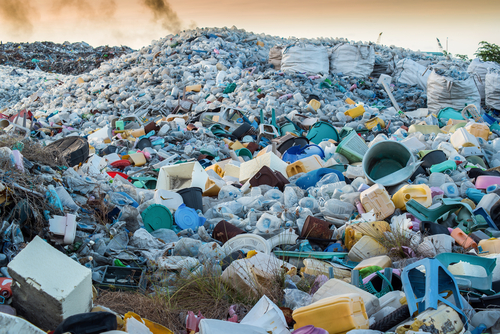
Despite years of warnings, numerous studies, and shocking images, the volume of plastic now found in the oceans of the planet have reached unprecedented levels. Is there anything we can do to turn the tide, or is it too late?

Shockingly, the latest study on plastic levels in our oceans reveals a mass of 2.3 million tons of plastic has invaded the planet’s water, made up of a staggering 171 trillion microplastic particles. While decades ago we looked to the sky and saw clouds of pollution created by burning fossil fuels, car exhausts and industrial smoke, beneath the waves a new “plastic smog” has been growing. And the news gets worse – the increase in plastic particles has been increasing at an unprecedented rate since 2005.

This recent study was based on water data collected over a 40 year period from over 12,000 monitoring stations around the world. Eight to ten million tons of general plastic waste is dumped in the oceans each year, but the microplastics (fine particles) the make up the plastic smog are creating a much bigger problem. They’re easily ingested by marine life, but also seep toxic chemicals into the water, changing the chemical nature of the water and altering the fragile ecosystem of marine life. And the volume of plastic waste is likely to increase by 2.6 times by 2040 unless something drastic is done to change our obsession with plastic and the careless way we discard it. While “fishing” plastic out of the oceans might help reduce the level of larger plastic waste, it doesn’t make much of a difference to the microplastic pollution.

“It is much higher than previous estimates,” study co-author Lisa Erdle, director of science and innovation at the environmental non-profit 5 Gyres explained. “We clearly need some solutions that have teeth.” Meaning we have no alternative but to limit and reduce the amount of plastic we produce and waste.

“Cleanup is futile if we continue to produce plastic at the current rate, and we have heard about recycling for too long while the plastic industry simultaneously rejects any commitments to buy recycled material or design for recyclability,” said study co-author Marcus Eriksen.

As well as microplastics, it seems that the amount of sewage in the ocean has also reached an unhealthy level. In an article in ‘Environmental Sciences & Technology,’ it was found that the spray from the ocean around San Diego’s Imperial Beach contained sewage bacteria, effecting the air people in the area breathed and increasing the risk of E Coli, Salmonella, and Norovirus.

When will we take action to prevent our careless disregard for the planet we call home?

Level 3 Driving Automation

Self driving cars have been a regular staple of science fiction books and films, and a goal for several car manufacturers, particularly Tesla.

There are several levels attributed to the progress manufacturers strive to attain on the journey to driverless cars. At present Tesla has achieved a Level 2 with their Autopilot driver assistance software. This is where a car can keep itself in its lane, adjust speed according to the car in front, as well as make lane changes. But, a driver still needs to be present and is still required to monitor the road conditions and take control when required. Level 2 is merely the car technology assisting the driver, but not taking over from the driver.

Level 3 is the same as level 2, with the driver still present to take over if required, but where the driver is not required to monitor the road, allowing them to use the time for other things – working, reading, watching TV. Where Level 2 is technology assisting, Level 3 is human assisting. Level 4 detaches the human altogether with the vehicle in complete control, allowing the occupants to sleep should they wish.

Level 4 driving automation is still a long way off, but for the first time Mercedes-Benz has achieved a level 3 state.

“It is a very proud moment for everyone to continue this leadership and celebrate this monumental achievement as the first automotive company to be certified for Level 3 conditionally automated driving in the US market,” said Mercedes-Benz USA CEO Dimitris Psillakis.

Navada is the first state to approve the use of these Level 3 vehicles, but only up to a maximum of 40mph. It’s likely that other states will approve the vehicles too, and like a lot of technological advancements, once one company has achieved Level 3, other manufacturers will quickly attain the same improvement. Which then begs the question – how long will it be before Level 4 is achieved and the future of travel changes forever?

But, there are some who doubt that Level 4, or even a safe level 2 and 3, can truly be achieved.

Anthony Levandowski, cofounder of Google’s self-driving division, believes little progress has actually been made in the last twenty years and at a cost of $100 billion. Whilst the glorified tech demos show monitors, symbols, and geometrical shapes to show awareness of the cars surroundings, they don’t show the inconsistency, and unpredictable changes in the surroundings. You don’t have to search for long on the internet to find videos of self driving cars causing accidents and injury, and the lawsuits that follow.

“Life Finds A Way”

Science fiction often has a way of accurately predicting the possibilities of the future. When Michael Crichton wrote Jurassic Park in 1990 he obviously did a lot of research into genetic engineering, but little could he have known that his novel was going to have a direct link to the resurrection of the Dodo thirty years later.

The Dodo has been extinct since around 1662 due to habitat loss and hunting, but a biotech startup called Colossal Sciences, is planning to resurrect the flightless bird in a similar way the dinosaurs were in Jurassic Park. Colossal Sciences is a “de-extinction” company who have previously floated plans to revive other long lost animals including the Wooly mammoth and Tasmanian tiger. And they’re not alone in their vision – since 2021 they have acquired $225 million in investment to make their proposals a reality.

Interestingly one of Colossal’s biggest backers is Thomas Tull (through States Innovative Technology Fund) who is also the producer of the Jurassic World films. Like the films foretold, reintroducing an extinct animal into a new ecosystem can have disastrous consequences, many of which might not be predictable.

If we’ve learned anything from Jurassic Park, we know that the first thing you need in order to recreate an animal is its DNA. Colossal Sciences lead paleogeneticist Beth Shapiro claims they are now in the possession of a complete Dodo genome after taking extracts from preserved remains in Denmark. But this isn’t to create a theme park, there’s a serious reason for trying to bring the Dodo back – to find a way to combat the current extinction crisis affecting the planet.

“We’re clearly in the middle of an extinction crisis,” Shapiro said. “And it’s our responsibility to bring stories and to bring excitement to people in a way that motivates them to think about the extinction crisis that’s going on right now.”

But can a true Dodo be recreated, or would it just a hybrid who’s DNA has been altered slightly?

The theory that resurrecting extinct animals from their DNA in the future could be a viable science is also confirmed by Chester Zoo, UK, whose animal researchers have teamed up with Nature’s SAFE to cryogenically freeze genetic material from animals at the zoo that have died, preserving their DNA for the future in the event of extinction.

Sadly, some scientists think that these efforts might be too late as human population and activity means we’re already in the process of a mass-extinction event, with some unique animal DNA lost forever.

Turning Waste into Fuel

Two problems seem to be plaguing the planet and our survival as a species – the ever growing mass of plastic waste we produce, and our dwindling supplies of fossil fuels. But surprisingly there could be one solution that solves both problems at the same time. And even better – it’s solar powered!

Researchers at the University of Cambridge claim that they have created a machine that takes CO2 as well as plastic waste and turns it into fuel using solar power. Their “Photoelectrochemical” system uses two compartments inside a reactor, one for greenhouse gases, and one for plastic waste. A light absorber called Perovskite and a chemical catalyst are then used to absorb enough light from the sun to convert the waste into carbon, a basic fuel.

“What’s so special about this system is the versatility and tunability — we’re making fairly simple carbon-based molecules right now, but in the future, we could be able to tune the system to make far more complex products, just by changing the catalyst,” explained Cambridge chemist Subhajit Bhattacharjee.

“Generally, CO2 conversion requires a lot of energy, but with our system, basically you just shine a light at it, and it starts converting harmful products into something useful and sustainable,” added coauthor Motiar Rahaman.

As well as carbon based fuels, the Photoelectrochemical system was also able to convert plastic bottles and CO2 into synthetic gas, and glycolic acid. Synthetic gas is an important part of liquid fuels.

On a side note, the Perovskite and catalyst combination could also help transform the solar power industry by making solar panels more productive and efficient in converting sun light into power.

But they’re not stopping there. While the system would be valuable in removing waste products from the planet and at the same time creating a fuel, the team at Cambridge believe that within the next five years they will be able to adapt the Photoelectrochemical system to transform other, more complex, materials and possibly create a solar recycling plant.

“Developing a circular economy, where we make useful things from waste instead of throwing it into landfills, is vital if we’re going to meaningfully address the climate crisis and protect the natural world,” explained Professor Erwin Reisner, a scientist at Cambridge’s Yusuf Hamied Department of Chemistry. “And powering these solutions using the sun means that we’re doing it cleanly and sustainably.”

Humanity Time Bomb

With global warming and violent conflict around the world, it’s not surprising that the question of humanity’s future longevity on planet Earth is being asked. But, while we speculate in response to news headlines, Stanford Scientists are taking a more clinic approach and have come to the conclusion that civilization will end in the “next few decades.”

This comes following a recent appearance on CBS’s 60 Minutes program where scientists discussed global mass extinction. Stanford Biologist Tony Barnosky, suggested that, through his work examining fossil records and ecosystem changes, current extinction rates are roughly 100 times higher than typically seen at any other point in Earth’s four billion year history.

Earth is currently experiencing the worst mass extinction event since the dinosaurs. Although the Earth may continue to turn after extinctions, life on the planet does not. But will that include humans?

Paul Ehrlich published a book in 1968 called ‘The Population Bomb’ where he addressed overpopulation and mass extinction. Today, over 50 years later, his predictions are becoming more and more real.

Even if the human race survives its society will crumble because of changes in habitat destruction, soil infertility and changes in our food chain. It’s all down to too many people and too much consumption. “Humanity is not sustainable,” explained Paul Ehrlich. “To maintain our lifestyle (yours and mine, basically) for the entire planet, you’d need five more Earths.”

“It is too much to say that we’re killing the planet, because the planet’s gonna be fine,” added Tony Barnosky. “What we’re doing is we’re killing our way of life. There are five times in Earth’s history where we had mass extinctions, at least 75% of the known species disappearing from the face of the Earth. Now we’re witnessing what a lot of people are calling the sixth mass extinction where the same thing could happen on our watch.”

And this warning is only repeated by other experts. In fact, it’s more unlikely that you find an expert who doesn’t think we’re in an extinction crisis, than does.

The World Wildlife Fund’s research found that life on Earth was sustainable in the year 1970 when there were 3.5 billion people on the planet. Today there are 8 billion people – a number which is growing at an alarming rate and forcing animals to different parts of the planet in an attempt to survive. The research also added that since 1970, 69% of global wildlife has collapsed. Humans have taken over 70% of the planet as well as 70% of the freshwater, pushing other animals, and plants, into extinction.

Could things change? Mexican ecologist Gerardo Ceballos believes the only solution would be to save the one third of Earth that is currently wild and is involved in a scheme to pay farmers to stop cutting the forests in Guatemala. But these small scale schemes need to be scaled up 10,000 times to have any chance of making a difference.

Paul Ehrlich’s thoughts for the future: “there’s no political will to do any of the things that I’m concerned with, which is exactly why I and the vast majority of my colleagues think we’ve had it; that the next few decades will be the end of the kind of civilization we’re used to.”

Extinction Internet

If you look back only twenty or thirty years, the world seems a very different place to the one we’re familiar with now. Today, almost every aspect of our life depends on access to the internet and our ability to access social media every day, it’s the modern invention we physically cannot live without. So, it seems completely unbelievable that the end of life online could even be contemplated as a possibility. But that’s exactly what a Dutch professor thinks will eventually happen – we will start to “log off”.

Professor Geert Lovink, a media theorist from the University of Amsterdam, has produced a paper called “Extinction Internet” which considers the possibility that everyone will eventually become tired of being online, constantly being exposed to bad content, and decide to turn off.

Certain generations have already begun to discover that the internet is “both toxic and curative” resulting in disenchantment and a strong believe that the time to fix the internet has long passed. Swirling with fake news, misinformation and hatred, whilst intoxicating for the few, is destructive for most.

“There may come a point when that’s no longer acceptable, after which time the adverse consequences can no longer be controlled,” Lovink explained. “The internet is headed for a point of no return, and Big Tech is probably already aware of this, too.”

“Mark Zuckerberg has already moved away from his social media platforms and launched Meta,” he added, “as if nothing’s wrong and we can just start over again, but it’s clearly already broken.”

Lovink suggests that the psychological price associated with our addiction to the internet and social media will begin to cost too much of the average user, resulting in rejection of technology. And that point of no return is rapidly approaching – Lovink’s ‘peak internet moment’ will occur when our dependence hits a line most users will not want to cross.

“The observation that the internet is accelerating the world’s problems and is increasingly becoming problematic is reaching consensus status.”

But, could this really happen? Is the human race too addicted to a digital world to be able to unplug?

Whilst some will make a conscious decision to remove themselves from social media, the actual connection to the internet is also far more likely to be cut by a third party. The fragile thread of connection can simply be severed as a result of an electromagnetic pulse from a weapon of mass destruction – a threat that’s all too real.