Potential new Epidemic in Congo

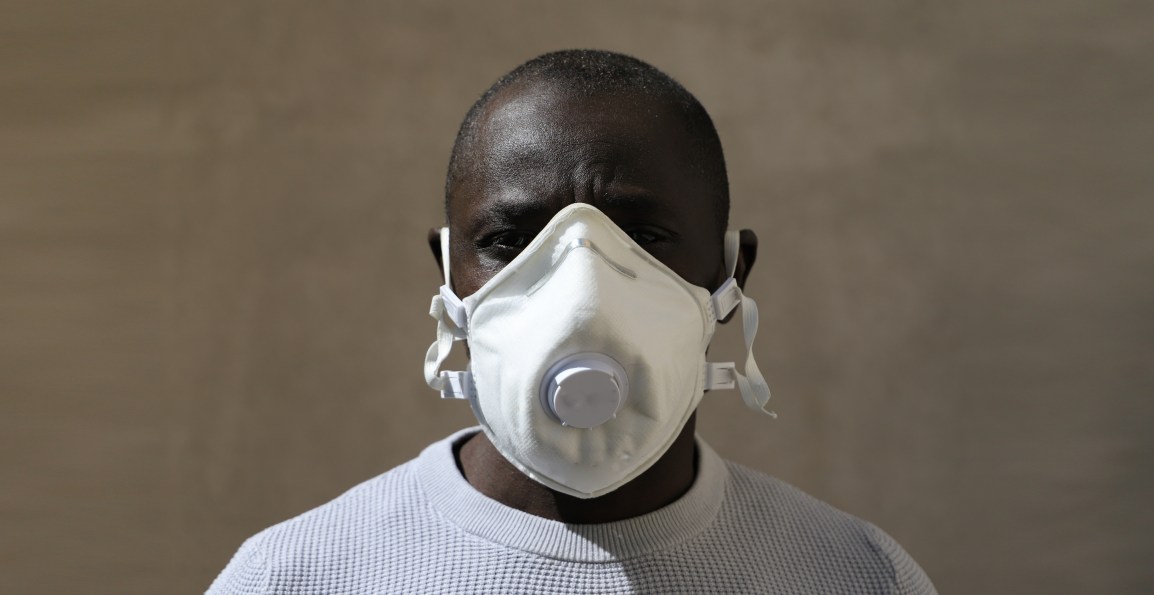
A mysterious and alarming disease has recently emerged in the northwest of the Democratic Republic of Congo (DRC), causing significant concern among health officials and the global community. The outbreak began on January 21, 2025, in the village of Boloko, after three children consumed a bat carcass and subsequently died within 48 hours. This new illness has since spread rapidly, resulting in 419 reported cases and 53 deaths as of late February.

The symptoms of this disease are particularly distressing, with affected individuals experiencing fever, vomiting, internal bleeding, and hemorrhagic fever-like symptoms. The rapid progression from the onset of symptoms to death, often within just 48 hours, has heightened the urgency of the situation. Health officials have ruled out common hemorrhagic fever diseases such as Ebola and Marburg, as well as other known illnesses like dengue and yellow fever.

The World Health Organization (WHO) has been closely monitoring the situation and has deployed experts to the affected areas to investigate the cause of the outbreak and implement measures to contain its spread. The WHO’s Africa office has emphasized the significant public health threat posed by this new illness, which has a fatality rate of approximately 12.3%. The rapid spread of the disease and the high number of deaths have raised concerns about the potential for a larger epidemic if not swiftly contained.

The origins of this outbreak echo the beginnings of the COVID-19 pandemic, which is believed to have jumped from bats to humans in China before spreading worldwide. The consumption of wild animals, such as bats, has long been a concern for public health officials due to the potential for zoonotic diseases to emerge and spread among human populations. The DRC has experienced a surge in such outbreaks over the past decade, with the number of zoonotic disease incidents increasing by more than 60%.

In addition to the current outbreak, the DRC has been grappling with other public health challenges, including a major outbreak of Mpox (formerly known as monkeypox) and a previous outbreak of acute respiratory infections complicated by malaria. The country’s weak healthcare infrastructure and ongoing political instability further exacerbate the difficulties in managing and containing these outbreaks.

Despite the alarming nature of this new disease, health officials are working diligently to reassure the public that it is unlikely to trigger the next global pandemic. University of Southampton senior research fellow Michael Head has noted that while genuinely new illnesses can emerge, they are relatively rare, and most outbreaks are brought under control relatively quickly. However, the high number of cases and deaths in this instance is concerning and underscores the need for immediate and coordinated efforts to contain the outbreak.

As the investigation continues, it is crucial for the global community to remain vigilant and support efforts to identify the cause of this new disease and prevent its further spread. The situation in the DRC serves as a stark reminder of the importance of robust public health systems and the need for ongoing research and preparedness to address emerging infectious diseases. By working together, we can help mitigate the impact of such outbreaks and protect the health and well-being of communities worldwide.

Switching off the internet

In an era where smartphones have become an extension of ourselves, recent studies have shown that blocking internet access on these devices can significantly improve mental health, well-being, and cognitive functioning. This revelation comes from a series of controlled experiments that aimed to understand the impact of constant online connectivity on our psychological state.

One such study, conducted by researchers from various universities, including the University of Texas at Austin and the University of Alberta, involved a month-long randomized controlled trial with 467 participants. The participants were asked to install an app on their smartphones that blocked all internet access, including browsers and social media, while still allowing calls and text messages. The study found that blocking mobile internet for just two weeks led to significant improvements in mental health, subjective well-being, and sustained attention.

The researchers discovered that participants who blocked internet access on their smartphones spent more time engaging in offline activities such as socializing in person, exercising, and being in nature. These activities contributed to the improvements in their psychological functioning. The study also found that the positive effects of blocking internet access persisted even after participants regained access to the internet, suggesting long-lasting benefits.

One of the most striking findings of the study was the improvement in sustained attention. Participants who blocked internet access showed an increase in their ability to focus, equivalent to erasing a decade of age-related cognitive decline. This improvement in attention span is particularly significant in a world where distractions are just a tap away.

The study also highlighted the impact of blocking internet access on mental health. Participants reported a reduction in symptoms of depression, with the improvement being larger than the average effect of pharmaceutical antidepressants. This finding suggests that reducing constant online connectivity can be a powerful tool in managing mental health.

Moreover, the study found that blocking internet access led to an increase in subjective well-being, including life satisfaction. Participants reported feeling happier and more content with their lives when they were not constantly connected to the online world. This increase in well-being can be attributed to the increased time spent in meaningful offline activities and the decreased time spent consuming media.

The implications of these findings are profound. In a world where smartphones have become ubiquitous, and constant online connectivity is the norm, taking a break from the internet can have significant benefits for our mental health and cognitive functioning. The study suggests that we are not adapted to deal with constant connection to everything all the time, and that reducing our online presence can lead to a more balanced and fulfilling life.

As we continue to navigate the digital age, it is essential to find ways to manage our online presence and prioritize our mental health.

Growing Living Teeth in the Laboratory

Recent advancements in dental science have brought us closer to a future where losing a tooth might not mean a permanent gap in your smile. Scientists at Tufts University have successfully grown human-like replacement teeth in a laboratory setting and implanted them into the mouths of miniature pigs. This groundbreaking research could pave the way for bioengineered teeth that could one day replace lost or damaged teeth in humans.

The research team, led by Pamela Yelick, combined human and porcine tooth cells and grew them into tooth-like structures inside samples of pig teeth. This approach was chosen because pigs grow multiple sets of teeth throughout their lifetime, making them an ideal model for this type of research. Once the teeth were mostly grown, they were implanted into the jaws of pigs for two months before being removed for analysis.

The results were promising: the lab-grown teeth developed hard layers of dentin and cementum, which are essential components of natural teeth. Although the teeth were not yet “beautifully formed,” the researchers are optimistic about the potential of this technology to create functional biological tooth substitutes.

One of the main advantages of bioengineered teeth over traditional dental implants is their ability to integrate with the jawbone more naturally. Dental implants, typically made of titanium, can sometimes lead to bone resorption over time and implant failure due to the direct transmission of chewing forces to the jawbone. In contrast, natural teeth are tethered to the jawbone via periodontal ligament tissues, which absorb and modulate these forces, promoting healthy bone maintenance.

The Tufts study also highlights the limitations of using human embryonic tissues for tooth regeneration, as they are difficult to obtain and not viable for regenerative medicine applications. Bioengineered tooth replacements grown in a lab offer a promising alternative.

While the research is still in its early stages, the potential benefits are significant. Bioengineered teeth could provide a more natural and long-lasting solution for tooth replacement, reducing the need for synthetic implants and the associated risks of infection and bone loss. The researchers hope that one day, this technology will be available to patients who need tooth replacement, offering a more effective and biologically compatible option.

As the field of dental science continues to evolve, the possibility of growing living teeth in the laboratory represents a significant step forward. With continued research and development, we may soon see a future where tooth loss is no longer a permanent problem, but a treatable condition with natural, bioengineered solutions.

Artificial Sun

China’s Experimental Advanced Superconducting Tokamak (EAST), often referred to as the “artificial sun,” is a groundbreaking nuclear fusion reactor that has recently set a new world record by sustaining plasma for 1,066 seconds. This achievement marks a significant milestone in the quest for clean, limitless energy.

Nuclear fusion, the process that powers the sun, involves fusing two light atomic nuclei to form a heavier nucleus, releasing substantial energy in the process. Unlike nuclear fission, which splits heavy atomic nuclei and is currently used in nuclear power plants, fusion produces minimal radioactive waste and carries a lower risk of catastrophic accidents. The EAST reactor, located in Hefei, China, aims to replicate these stellar conditions by confining hot plasma within a doughnut-shaped chamber using powerful magnetic fields.

The recent milestone achieved by EAST on January 20, 2025, surpasses the previous record of 403 seconds set earlier in 2023. The reactor operated at temperatures exceeding 100 million degrees Celsius, seven times hotter than the sun’s core. This accomplishment demonstrates the reactor’s enhanced stability and efficiency in maintaining the extreme conditions necessary for nuclear fusion.

Sustaining plasma for over 17 minutes is a critical advancement in fusion research, bringing scientists closer to the goal of continuous, self-sustaining fusion reactions essential for practical power generation. The success of EAST indicates progress in understanding plasma behavior and improving reactor components, paving the way for future fusion power plants.

Nuclear fusion holds the promise of providing a nearly inexhaustible and environmentally friendly energy source. Unlike fossil fuels, fusion does not produce greenhouse gas emissions, making it a potential solution to combat climate change. The ultimate goal of an artificial sun is to create nuclear fusion like the sun, providing humanity with an endless, clean energy source.

China’s progress with EAST positions it as a leader in the global pursuit of fusion energy. The ability to maintain stable plasma conditions for extended periods is a vital step toward developing fusion reactors capable of providing a continuous power supply. This achievement not only showcases China’s growing capabilities in advanced scientific research but also contributes significantly to international efforts aimed at harnessing fusion energy as a sustainable and clean power source.

Despite this remarkable progress, several challenges remain before fusion energy can become a practical reality. Developing materials that can withstand prolonged exposure to the extreme temperatures and radiation within fusion reactors is crucial. Additionally, achieving a net positive energy output, where the energy produced by fusion exceeds the energy input required to sustain the reaction, remains a significant hurdle.

Future prospects for fusion energy are promising, with ongoing research and collaboration among global scientists. The recent success of EAST provides valuable insights for future fusion projects, including the International Thermonuclear Experimental Reactor (ITER) under construction in France. Lessons learned from EAST’s experiments will inform the design and operation of next-generation fusion reactors.

In conclusion, China’s “artificial sun” reactor represents a significant step forward in the quest for clean, limitless energy. The recent achievement of sustaining plasma for 1,066 seconds at temperatures exceeding 100 million degrees Celsius demonstrates the potential of nuclear fusion to revolutionize the global energy landscape. While challenges remain, the progress made by EAST brings us closer to a future where fusion power plants provide a sustainable and environmentally friendly energy source for all.

The Dangers of Perfume

Perfumes are a staple in many people’s daily routines, adding a pleasant scent to our clothes, bodies, and living spaces. However, the chemicals in perfumes can pose significant health risks, especially from prolonged exposure.

Short-Term Health Effects

Inhaling perfume can lead to immediate symptoms, particularly for individuals with allergies or sensitivities. Common short-term effects include respiratory issues, particularly in those with asthma, skin reactions, headaches and migraines, and eye irritation.

Long-Term Health Effects

Much more worrying are the potential long-term effects caused by Phthalates, a group of chemicals commonly used in perfumes to enhance fragrance longevity and stability. While they serve these purposes well, their presence has raised significant health concerns. Here are some of the dangers associated with phthalates in perfumes:

– Endocrine Disruption

Phthalates are known to disrupt the endocrine system, which regulates hormones in the body. They can mimic or interfere with hormones, leading to imbalances of various bodily functions. This disruption can have serious long-term effects on health, including reproductive and developmental issues.

– Developmental and Behavioral Concerns

Exposure to phthalates, especially during critical periods of development such as pregnancy and early childhood, has been linked to developmental and behavioral problems. Studies have shown that children exposed to phthalates may experience learning difficulties, lower IQ, and behavioral disorders. Prenatal exposure to phthalates can also affect the development of the male reproductive system.

– Respiratory Issues

Inhaling phthalates from perfumes can lead to respiratory problems, particularly for individuals with pre-existing conditions like asthma. The chemicals can cause irritation of the airways, leading to symptoms such as coughing, wheezing, and shortness of breath.

– Cardiovascular and Metabolic Effects

Some research suggests that long-term exposure to phthalates may be associated with cardiovascular issues and metabolic disorders. Phthalates have been linked to insulin resistance, which can increase the risk of diabetes, as well as other cardiovascular problems.

– Cancer Risk

While the evidence is still emerging, some studies have suggested a potential link between phthalate exposure and certain types of cancer. The long-term effects of these chemicals on human health are subject to ongoing research, but the possibility of increased cancer risk is a significant concern.

Minimizing Exposure

To reduce the risks associated with phthalates, consider using phthalate-free personal care products. Look for products labeled as “fragrance-free” or “phthalate-free.” Additionally, be mindful of the products you use and try to limit your exposure to synthetic fragrances.

Conclusion

While phthalates enhance the performance of perfumes, their potential health risks cannot be ignored. By making informed choices and opting for safer alternatives, you can enjoy pleasant scents without compromising your health. It’s essential to stay informed about the ingredients in personal care products and take steps to minimize exposure to harmful chemicals.

What is “Mirror Life?”

It was recently reported that a group of scientists called for the immediate stop to research into something called Mirror Life, because of the terrifying risks it could potentially pose for our future existence. But, what is Mirror Life? The concept of “mirror life” is a fascinating exploration into the possibilities of existence and consciousness beyond our conventional understanding. Mirror life, or mirror matter, hypothesizes the existence of a parallel form of matter that is a mirror image of the ordinary matter we know. This idea stems from attempts to explain certain physical phenomena and has intriguing implications for physics, cosmology, and even the search for extraterrestrial life.

Origins of the Concept

The notion of mirror life is rooted in the symmetries observed in particle physics. In the 1950s, physicists Tsung-Dao Lee and Chen-Ning Yang proposed the idea that parity, or mirror symmetry, might not be conserved in weak interactions. This was later confirmed in experiments, leading to a deeper investigation into the role of symmetry in the universe. The idea of mirror matter arises from the possibility that for every particle in our universe, there might be a corresponding mirror particle that interacts primarily with other mirror particles.

Mirror Matter and Dark Matter

One of the most intriguing aspects of mirror matter is its potential connection to dark matter, which is thought to make up about 27% of the universe’s mass-energy content. Dark matter does not interact with electromagnetic forces, meaning it doesn’t emit, absorb, or reflect light, making it invisible and detectable only through its gravitational effects. Mirror matter could be a candidate for dark matter, as it would similarly interact weakly with ordinary matter and might only be detectable through gravitational interactions.

Implications for Life

The concept of mirror life takes the idea of mirror matter a step further by speculating about the possibility of life forms made entirely of mirror matter. Just as ordinary matter forms the building blocks of life on Earth, mirror matter could theoretically form the building blocks of mirror life. These life forms would exist in a mirror universe or parallel dimension, fundamentally similar yet entirely separate from our own.

Mirror life could have its own biology, chemistry, and even consciousness, but it would be undetectable to us due to its weak interaction with ordinary matter. This idea stretches the boundaries of our understanding of life and challenges the notion that our universe is the only possible cradle for living organisms.

The concept of mirror life, while fascinating, is largely hypothetical and speculative. However, if we entertain the idea of mirror matter and mirror life, there are a few theoretical scenarios where interactions between mirror matter and ordinary matter could have destructive consequences for life on Earth.

Annihilation Events

One of the primary concerns is the potential for matter-antimatter-like annihilation events. If mirror matter and ordinary matter were to come into direct contact, they might annihilate each other, releasing a tremendous amount of energy. This kind of interaction could be catastrophic, akin to antimatter colliding with matter. In a worst-case scenario, if large quantities of mirror matter were introduced into Earth’s environment, it could lead to significant explosions and energy releases.

Gravitational Disruptions

Another hypothetical risk is the gravitational influence of mirror matter. While mirror matter is expected to interact very weakly with ordinary matter, its gravitational effects could still be significant. If substantial amounts of mirror matter were to accumulate in the vicinity of Earth, they could potentially disrupt orbital dynamics, leading to changes in Earth’s orbit or the orbits of other celestial bodies. Such gravitational disturbances could have profound impacts on the stability of Earth’s environment.

Ecological Impact

If mirror life forms were to somehow interact with Earth’s biosphere, there could be unpredictable ecological consequences. Mirror life forms might compete with ordinary life forms for resources or introduce new forms of disease. However, given the hypothetical nature of mirror life and its expected weak interaction with ordinary matter, this scenario seems less plausible.

Conclusion

The idea that mirror life could destroy life on Earth is rooted in speculative science and theoretical physics. While it provides an intriguing topic for scientific inquiry and science fiction, there is no concrete evidence to suggest that such interactions are possible or likely. Theoretical explorations of mirror matter and mirror life continue to expand our understanding of the universe, but for now, they remain within the realm of speculation rather than imminent danger.