
Black Friday Deal
 To celebrate Black Friday and Cyber Monday
I’ve reduced the price of Future Furies to just
$0.99
Grab a bargain before it returns to full price on Tuesday!

To celebrate Black Friday and Cyber Monday
I’ve reduced the price of Future Furies to just
Grab a bargain before it returns to full price on Tuesday!
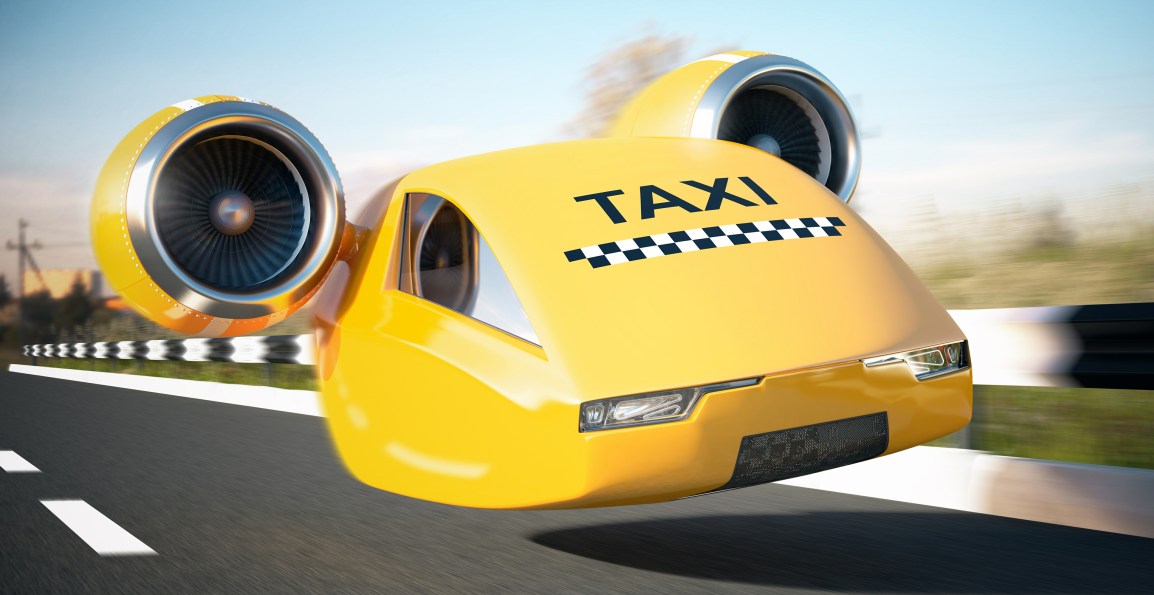
Futuristic movies and books have featured flying vehicles for many years, and technology has finally caught up with the human imagination. Companies are now designing cars that will take to the skies to provide us with commuting options. In February 2016, Airbus advanced on a project with a mission to solve the ever increasing traffic in urban areas. They aim to do this by creating the world’s first approved ‘air taxi,’ which will operate on a system similar to ordering an Uber, using a smartphone.
 Project Vahana, as the undertaking has been named, currently faces many challenges. These include air traffic management hurdles, as well as structural requirements for such a vehicle. Spokespersons for Airbus have said that their aim is to work with several other companies in order to overcome these obstacles. They have already begun to take into consideration the regulations that the Federal Aviation Administration will be putting into place, in order to approve the use of flying vehicles.
With urban congestion predicted to increase by at least 10% by 2030, the company believe that millions of their innovative cars will be needed worldwide as a result. They have already designed and begun to build their first prototype. This VTOL (Vertical Take Off and Landing) will operate similarly to a helicopter. Even though it will be equipped with self-piloting technology, the vehicle will be introduced with human behind the wheel, until the approval to have autonomous flight has been granted. Sense-and-avoid technology is relatively new in vehicles, and needs to be further tested in those that are airborne before they can be declared safe for public use. Currently drones, even though able to fly themselves, are not allowed to be in open air space without being monitored remotely by a human and the technology used to power larger vehicles is very similar.
 In addition to the pilot, the expectation is that the vehicle will at first be able to carry a single passenger. A testing contract has been granted to the company and they have chosen to have their first trial flights in Singapore. Airbus has said that their aim is to begin testing their prototype by the end of 2017. They are well on their way to meeting this target, after which they plan to introduce the vehicles to commuters by 2020. They are confident that this will be the biggest solution to the current traffic problem that the world is experiencing.
Airbus is not the only company with this futuristic ambition, however, and their competitors are already working on similar designs. Google and Uber are just two of the others that have announced plans to release air commuting vehicles. Regardless of which company is able to release their design first, the only thing we can be sure of is that the future has already become the present.
Our planet is approximately 70% water; even so, statistics show that in excess of 600 million people do not have access to a clean drinking source. Recently, there has been a worldwide effort to provide poverty stricken countries with this vital component of life. With natural water sources being constantly polluted and expensive to clean, organisations have been trying to find additional ways of coming up with pure water.
Zero Mass Water, a company with the aim of making unpolluted water accessible to all, has invented solar technology which ‘produces, delivers, and mineralises clean, fresh drinking water to a tap.’ The unit which they have created, Source, can be installed in just 20 minutes either on the ground or on a roof. It is also able to produce this water without tapping into a natural supply. How is this possible and what are the effects that this unit might be having on these poorer countries?
 The unit is made from a special type of material, designed by the company, which is able to absorb water from the air. Its solar panels are then able to harvest the energy from the sun to heat the liquid enough to turn it into steam. This evaporation is the way in which the water is purified. It is then run through a mineral block, adding beneficial nutrients and improving the taste.
Each device is able to produce 5 litres of water daily, with a storage capacity of up to 30 litres. The company has started to install the panels in rescue camps, and poorer communities, and countries such as Ecuador, Mexico and Jordan are now benefiting from clean water. This in turn has dramatically reduced illnesses and deaths, caused from unclean drinking water or dehydration.
The panels have not been reserved for these countries only, however, and are being made available in other areas. In first world countries many people are drinking bottled water or using filters, which are both an ongoing source of expense. The minerals in bottled water are beneficial to the body, and Source is able to infuse these into what will be a cheaper water source in the long run.
In addition, countries that experience drought during the hotter months of the year would now be able to access water during this time. People are forced to store water in tanks, which can be very unhygienic and a breeding ground for certain insects, such as mosquitos. This technology would not only be beneficial to individuals, but many industries (such as farming) would be able to increase production during normally slow periods. This would increase both individual profits and the overall economy.
Zero Mass Water continues to improve on their technology, and is aiming to make larger units which can store more water. This will increase both their humanitarian movement and their appeal to larger industries, in the near future.
The human body is relatively frail, it breaks down as we age and is susceptible to a wide range of ailments. Gene therapy is one of the methods which has been developed with the intention of making our bodies more efficient. It achieves this by replacing malfunctioning genes in our cells, and the new ones are introduced to the system to take the place of those that are no longer serving us.
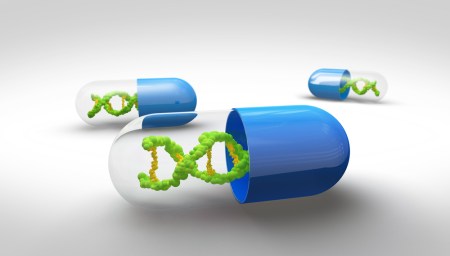 There are two types of gene therapy. The first is known as in-body therapy, where researchers transport new cells within our bloodstream by using viruses. These organisms facilitate the reproduction of the cells as they are naturally designed to replicate. The first attempts at in-body therapy used the virus that causes the common cold, but scientists found that this wasn’t very effective because of the automatic immunity the body develops against it. A genetically modified adeno-associated virus has replaced this, as it is not known to cause any reaction in humans.
Out-of-the-body gene therapy involves removing the blood or bone marrow of a patient and separating immature cells. A modified gene is then added to these and they are reintroduced into the patient’s bloodstream by injection. The cells automatically go to the bone marrow where they mature and multiply, eventually replacing the defective ones. Doctors are working on refining this process in order to be able to replace all of an individual’s bone marrow or bloodstream. This would then enable them to treat diseases which affect the entire body, such as sickle cell.
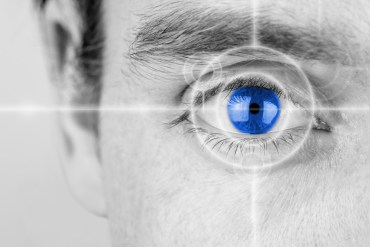 Gene therapy will introduce one of its greatest achievements to the market in 2017. A cure developed for blindness, caused by the condition hereditary retinal dystrophies, is in its final stages of being approved by the FDA. The procedure works by directly targeting the hereditary mutation which is the cause of blindness. New cells will be injected into the patient in a 45 minute surgery. Within thirty days it is expected that the majority of sufferers will experience vision improvements.
Made by Spark-Therapeutics, the product is currently known as SPK-RPE65. One of the obstacles that the company had to overcome in their development was to ensure that patients would not have an immune reaction to the treatment. This scenario has been the cause of at least one death in the past, when gene therapy was first introduced. There is still much speculation about how the product will be received, but Sparks-Therapeutics is confident that it will be met positively. In the company’s initial tests 27 out of 29 patients experienced a noticeable change in their ability to see, without any observed side effects. This product is expected to provide new insight into gene therapy altogether.
The global temperature has been rising at a disturbing rate in recent decades. This incline has partially been attributed to the burning of fossil fuels in different forms. In December 2015, 195 countries collaborated to take action against climate change, by signing a legally, binding agreement called The Paris Agreement. This agreement will take effect in 2020 and aims to avoid many detrimental effects of a higher global temperature. The main requirement is to limit the rise in global temperature to 2°C. Many of the countries involved are already putting necessary procedures into effect in order to do so.
Germany has the fourth largest output of automobiles in the world, and its government has made a proposal to ban internal combustion engines by 2030. This would mean that no new cars will require any type of fuel or diesel to operate. The majority of the vehicles in operation would then run exclusively on renewable energy. They have also suggested that the tax subsidies that are given to diesel automobile makers be lowered, in an effort to bring this change into effect sooner rather than later.
 The increase in making renewable energy vehicles would mean a decline in the labor force, within automobile companies, as they require less manpower to produce. The country is prepared to deal with this unemployment in different ways, as they have decided that the pros greatly outnumber the cons. In addition to directly impacting global warming and keeping the climate under control, using renewable energy in cars would mean healthier citizens, as well as overall economic benefits, due to the fact that they cost less to make and operate.
The energy sources that environmentally friendly vehicles are able to run on currently include plug-in hybrids, fuel cell powered hydrogen cars and chargeable electric cars. There are also companies creating vehicular prototypes which operate on solar and wind energy. As the largest source of renewable energy, many are hoping to use the sun to power vehicles in two separate ways. The first would be to install solar panels on the roofs of cars, and the second would be to have chargers for cars which are fed by solar powered generators. There are prototypes of both currently being monitored and revised.
Large car manufacturers have seen the value in producing renewable energy vehicles and companies such as BMW, Ford and Toyota already sell hybrids which use various forms of cleaner energy. Volkswagen has set a goal to become the largest automaker in the world, and believes that renewable energy will be one of the best ways to do so. A huge percentage of their funds are put towards researching the best ways of powering these vehicles in the future.




 Breakthrough Message – A competition with the top prize of $1,000,000 has been announced for individuals, or groups, to design a complete message about life on our planet and its people. This should be made with the intention of communicating with any extra-terrestrials that might be found. The public is included in order to create awareness of the mission, and get the general outlook behind space exploration.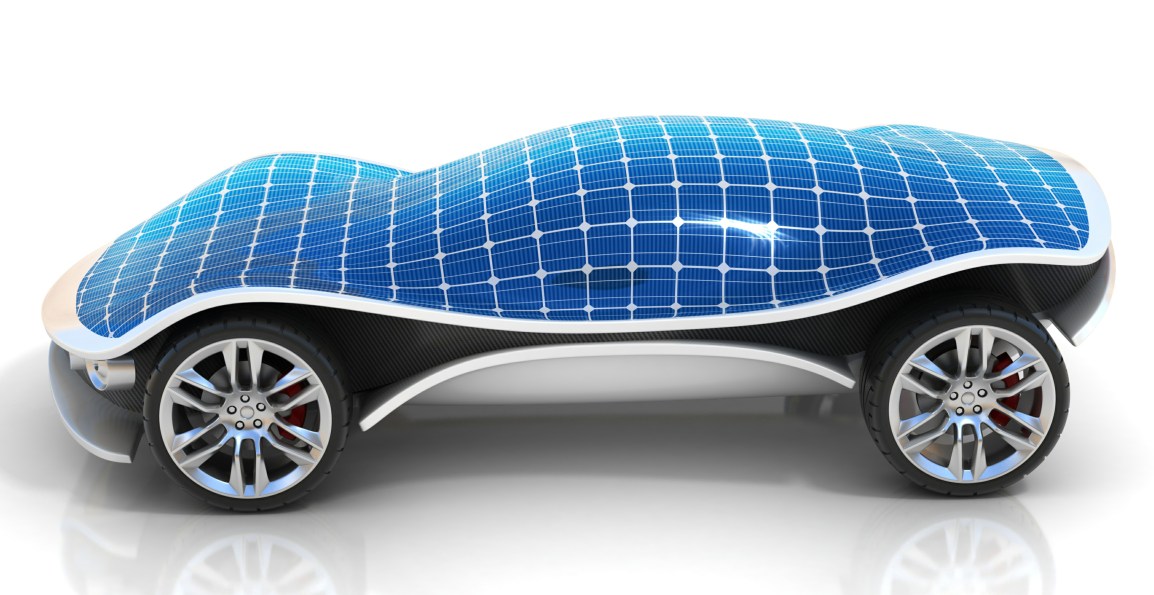
 R. E. KEARNEY