Refreezing the Arctic: A Bold Endeavor

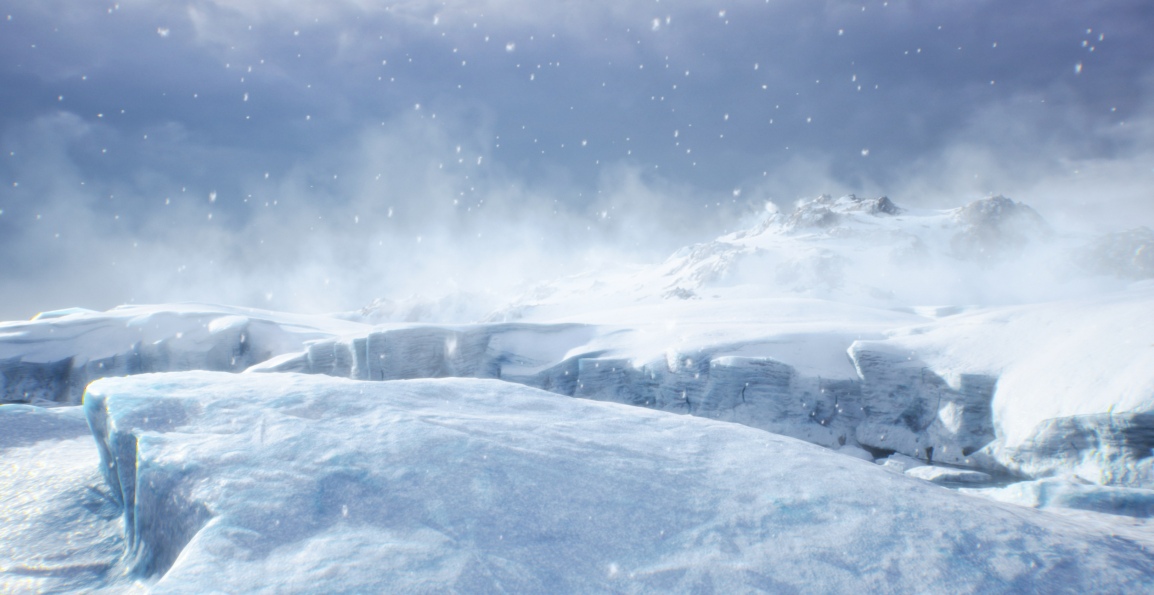
The Arctic, our planet’s icy crown, is in peril. Rapid warming has led to unprecedented ice melt, threatening ecosystems, weather patterns, and global sea levels. But scientists are not content to watch this unfold passively. Instead, they’re exploring innovative ways to intervene directly and refreeze the Arctic.

The Urgency of Arctic Intervention

The Arctic’s plight extends beyond its icy boundaries. Melting Arctic ice contributes to rising sea levels, releases greenhouse gases from thawing permafrost, and disrupts weather systems worldwide. The economic impact of unmitigated Arctic warming by the end of this century is estimated to be a staggering $67 trillion.

Geoengineering Solutions

Surface Freezing with Water Pumps: Imagine giant pumps lifting seawater to the surface, where it freezes, creating a protective layer over the Arctic snow. This approach aims to restore lost ice cover and slow down warming. Challenges: Energy requirements, logistical complexities, and potential unintended consequences.

Reflective Glass Beads: Scatter reflective glass beads on snow surfaces to deflect harmful solar rays. By increasing albedo (reflectivity), we can help preserve existing ice and prevent further melting. Challenges: Ensuring widespread distribution and long-term effectiveness.

Sulfate Aerosols to Reflect Sunlight: Injecting sulfate aerosols into the stratosphere could mimic the cooling effect of volcanic eruptions, reflecting sunlight away from the Arctic. However, this approach raises ethical and environmental concerns. Challenges: Balancing benefits with risks.

Seafloor Mounds to Protect Glaciers: Constructing underwater mounds near glaciers could prevent warm ocean water from melting them. These mounds act as natural barriers, preserving ice mass. Challenges: Engineering feasibility and long-term stability.

The Road Ahead

Refreezing the Arctic is no small feat. It requires international collaboration, substantial investment, and careful consideration of ecological impacts. But as the ice continues to vanish, scientists remain committed to these audacious endeavors.

While geoengineering offers potential solutions to combat climate change, it also comes with significant risks. Here are some key concerns:

Unintended Consequences: Geoengineering interventions can have unforeseen effects on ecosystems, weather patterns, and regional climates. Altering one aspect of the environment may lead to unintended outcomes elsewhere. For example, sulfate aerosols injected into the stratosphere to reflect sunlight might disrupt rainfall patterns or harm the ozone layer.

Ethical Dilemmas: Decisions about geoengineering affect the entire planet. Who gets to decide? How do we balance global interests with local impacts? Some argue that geoengineering could be used as a “quick fix” instead of addressing root causes like reducing greenhouse gas emissions.

Dependency and Risk Compensation: Relying on geoengineering might reduce the urgency to mitigate emissions. If people believe we can “fix” the climate, they may delay necessary changes. There’s a risk of moral hazard—assuming that geoengineering will bail us out if things get worse.

Geopolitical Tensions: Implementing large-scale geoengineering projects requires international cooperation. Disagreements over methods, costs, and benefits could strain relations between countries.

Technological Challenges: Developing and deploying geoengineering technologies at a global scale is complex. We lack experience and robust testing. Failure or unintended consequences could exacerbate existing climate problems.

Equity and Justice: Geoengineering impacts won’t be evenly distributed. Some regions may benefit while others suffer negative effects. Ensuring fairness and justice in implementation is crucial.

In summary, while geoengineering holds promise, we must proceed cautiously, considering both its potential benefits and the risks involved. A holistic approach that combines mitigation, adaptation, and responsible geoengineering is essential for a sustainable future.

Solar Power in Germany: A Renewable Energy Revolution

Germany has emerged as a global leader in harnessing solar energy, demonstrating its commitment to sustainability and combating climate change. Let’s delve into the fascinating world of solar power in this European nation.

Historical Context

Solar power accounted for an estimated 10.7% of Germany’s electricity in 2022, a remarkable increase from less than 0.1% in 2000. This growth reflects the country’s dedication to renewable energy sources and its transition away from fossil fuels. Germany has consistently been among the world’s top photovoltaic (PV) installers, with a total installed capacity of 81.8 gigawatts (GW) by the end of 2023.

Impressive PV Capacity

Germany boasts an impressive 807 watts of solar PV per capita (as of 2022), ranking third globally behind Australia and the Netherlands. The country’s commitment to solar energy is evident in its long-term targets: aiming for 80% renewable electricity by 2030 and full decarbonization before 2040.

Photovoltaic Industry

The photovoltaic industry plays a pivotal role in shaping Germany’s sustainable energy future. Solar power serves as a crucial renewable energy source for both electricity and heat supply. As part of its “Energy Transition,” Germany offers significant market opportunities in photovoltaics and energy storage.

Challenges and Innovations

While Germany’s solar success story is inspiring, challenges remain. Fluctuating solar and wind energy necessitate grid adaptations, new storage capacity, and the gradual phasing out of fossil and nuclear power plants. Brown coal and nuclear power, being the cheapest suppliers, pose dilemmas as the country strives for a greener future. Nevertheless, Germany’s surplus solar electricity is exported to neighboring countries, contributing to a cleaner energy landscape.

In recent years, the global energy landscape has witnessed a remarkable shift. Solar power, once considered a niche technology, is now on the cusp of surpassing fossil fuels as a dominant energy source. Wind and solar power generation is growing at a rate of 15-20% per year, based on a 10-year average. Continued investments in solar and wind infrastructure will play a crucial role in achieving this tipping point. As fossil fuels become less economically viable and environmentally sustainable, the transition to renewables becomes inevitable.

The International Energy Agency (IEA) anticipates that wind and solar capacity will surpass both gas and coal globally in 2024. This milestone signifies a seismic shift in the energy sector.

Conclusion

Germany’s commitment to solar power exemplifies its dedication to environmental stewardship. As the world transitions toward cleaner energy sources, Germany’s PV capacity and innovative policies serve as a beacon of hope for a sustainable future.

In summary, Germany’s solar journey is a testament to the power of human ingenuity and collective effort in combating climate change. With continued investments and technological advancements, solar energy will play an even more significant role in shaping our planet’s future.

Warp Drives: Bridging the Stars with Hypothetical Technology

Faster-than-light travel has long captured the imagination of science fiction enthusiasts and physicists alike. The prospect of journeying between stars in a reasonable timeframe necessitates surpassing the cosmic speed limit imposed by the speed of light. While faster-than-light travel remains theoretical, recent research suggests that warp drives, once confined to science fiction, might not be entirely out of reach.

A warp drive, if realized, would revolutionize our understanding of time and space. Here’s how:

Space Compression:

A warp drive would compress space in front of a spacecraft, allowing it to cover vast interstellar distances more quickly. Our perception of distance and travel time would drastically change. What once took centuries could become feasible within days or weeks.

Time Dilation:

According to Einstein’s theory of relativity, as an object approaches the speed of light, time slows down relative to an observer. A warp drive, by bending spacetime, could lead to time dilation effects. Crew members might experience less time passing during their journey than observers outside the warp bubble.

Temporal Paradoxes:

Faster-than-light travel could introduce temporal paradoxes. For instance, a ship arriving at its destination before it even left could challenge causality. Our understanding of cause and effect would need reevaluation.

Cosmic Neighborhood:

Warp drives would allow us to explore neighboring star systems within a human lifetime. Our perspective of the cosmos would shift from distant points of light to reachable destinations.

Warp drives would redefine our notions of distance, time, and the fabric of spacetime itself, opening up new frontiers for exploration and challenging our fundamental understanding of the universe, but is it a genuine possibility?

The Alcubierre Warp Drive:

In 1994, physicist Miguel Alcubierre proposed a mathematical framework for a warp drive. It involves creating a bubble of compressed spacetime in front of the spacecraft and expanded spacetime behind it.

The challenge lies in the need for negative energy—a hypothetical form of energy that remains unobserved. If harnessed, negative energy could encapsulate the warp bubble.

Recent Advances:

Previous warp drive concepts required exotic matter with negative energy density. However, a new approach avoids this requirement. Physicists Alexey Bobrick and Gianni Martire recently proposed a warp drive design that adheres to known physics. Their model doesn’t violate energy conservation laws and doesn’t rely on exotic matter. While challenges remain, these recent developments suggest that warp drives may be theoretically possible.

Physicist Jared Fuchs, along with a team of researchers, has proposed another novel solution for a constant-velocity subluminal warp drive that adheres to the principles of general relativity. The solution combines a stable matter shell with a shift vector distribution similar to the Alcubierre metric, but unlike previous models, it doesn’t require exotic matter or violate energy conservation laws. While theoretically feasible, the mass required for this warp drive exceeds current technological capabilities, in fact it would require a mass greater than that of the Sun.

In conclusion, warp drives remain tantalizingly distant but not entirely implausible. As we continue to explore the cosmos, humanity’s dream of bridging the vast interstellar distances may one day become a reality

Universal Vaccines

In the quest to combat infectious diseases, scientists have been exploring innovative approaches to vaccine development. One promising avenue is the concept of universal vaccines, which aim to provide broad protection against various strains of pathogens, including those that may emerge in the future.

What Are Universal Vaccines?

Unlike traditional vaccines, which target specific strains of a pathogen, universal vaccines are designed to teach the immune system to defend against all versions of that pathogen—even those that haven’t yet appeared. These vaccines focus on a fundamental element shared by different strains, allowing them to provide broader and longer-lasting immunity.

The Role of mRNA Vaccines

One groundbreaking technology that has gained prominence during the COVID-19 pandemic is mRNA (messenger ribonucleic acid) vaccines. Both the Pfizer/BioNTech and Moderna COVID-19 vaccines utilize this approach. But what exactly are mRNA vaccines, and how do they work?

  • mRNA is a component found in all living organisms. Its primary role is to carry instructions from our genes (encoded in DNA) to the protein-making machinery within our cells.
  • In the context of vaccines, synthetic mRNA is used to deliver instructions for creating a harmless piece of protein identical to one found in a specific virus or bacterium.
  • Our cells then produce this protein, triggering an immune response.
  • Once the protein is assembled, our immune system recognizes it as foreign.
  • Antibodies are produced to attack the protein, preparing our immune defenses.
  • If we encounter the actual virus later, our immune system is primed to respond effectively.
  • After the immune response, the mRNA instructions from the vaccine break down naturally.
  • Our immune system retains memory for producing antibodies, but booster shots may be necessary over time.

Advantages of mRNA Vaccines

mRNA vaccines can be swiftly tailored to different diseases or variants by modifying the mRNA sequence. This adaptability is crucial for responding to emerging pathogens.

Researchers can personalize mRNA vaccines to target specific antigens which enhances their effectiveness.

Potential for Universal Vaccines:

While current mRNA vaccines are pathogen-specific, the technology holds promise for universal vaccines. By targeting conserved elements shared across strains, mRNA vaccines could provide broader protection.

The Road Ahead

Scientists continue to explore novel targets for universal vaccines. For instance, researchers have identified the N (nucleocapsid) protein of SARS-CoV-2 (the COVID-19 coronavirus) as a potential universal vaccine candidate due to its low mutation rate. As we invest in mRNA research and development, we move closer to a future where universal vaccines play a pivotal role in safeguarding global health.

In summary, universal vaccines represent a paradigm shift—a departure from strain-specific immunity toward broader protection. As we learn more about these groundbreaking approaches, we inch closer to a world where infectious diseases are met with powerful and adaptable defenses.

Tardigrades: Nature’s Resilient Heroes

In the microscopic world, there exists a creature that defies the odds—a true survivor. Meet the Tardigrade, a tiny, seemingly unremarkable animal that possesses extraordinary resilience. These minuscule beings can withstand extreme conditions that would spell doom for most other organisms. But what makes Tardigrades so tough, and how might their secrets benefit us humans?

The Unassuming Water Bear

Discovery: Tardigrades were first described by German naturalist Johann August Ephraim Goeze in 1773. Their peculiar gait earned them the nickname “little water bears.”

Appearance: Imagine a cross between a woodlouse and a caterpillar, shrunken down to microscopic proportions.

Ubiquity: You can find Tardigrades in damp environments—wet moss, lichen, or even a patch of dew-kissed grass.

Survival Superpowers

Extreme Temperatures: Tardigrades can endure being frozen to a degree above absolute zero (that’s -272°C or -458°F). Conversely, they can withstand boiling temperatures.

Vacuum of Space: Scientists have flown Tardigrades through the vacuum of space. These hardy travelers survived the harsh cosmic environment.

Dehydration Resistance: When water is scarce, Tardigrades enter a cryptobiotic state—a sort of suspended animation. They can lose up to 99% of their body water and still revive when conditions improve.

Radiation Tolerance: Tardigrades shrug off ionizing radiation that would harm most living organisms.

Mysterious Protein Shield: A protein called Dsup (damage suppressor) found only in Tardigrades binds to DNA, potentially shielding it from reactive oxygen. Could this protein hold the key to human survival in space?

Applications for Humans

Space Colonization: Emulating Tardigrades could help us colonize outer space. Their resilience might protect astronauts from radiation and extreme conditions.

Medicine and Biotechnology: Scientists hope to unlock Tardigrade secrets to create new medicines or enhance human cell toughness. Imagine fortifying our cells against stress, disease, or environmental challenges.

Conclusion

Tardigrades, the unassuming water bears, teach us resilience. As we gaze at the stars, we might find inspiration in these tiny survivors. Perhaps one day, their secrets will help us thrive beyond our blue planet.

Remember, even in our vulnerability, we carry the spirit of the Tardigrade—a tenacity to endure, adapt, and explore the unknown.

Total Solar Eclipses: A Celestial Dance of Shadows

A total solar eclipse is a cosmic spectacle that captivates both seasoned astronomers and curious skywatchers alike. As the moon gracefully glides across the sun’s surface, it casts a shadow upon our planet, plunging parts of the Earth into temporary darkness. Let’s delve into the fascinating world of total solar eclipses, including details about the upcoming event in April 2024.

What Is a Total Solar Eclipse?

A total solar eclipse occurs when the moon positions itself directly between the Earth and the sun, effectively blocking the solar surface from our view. The alignment is a cosmic coincidence: although the moon is about 400 times smaller than the sun, it happens to be approximately 400 times closer to us. Consequently, during an eclipse, these celestial bodies appear nearly identical in size when viewed from Earth.

Other Types of Eclipses

Annular Solar Eclipses: When the moon is farther from Earth, it appears too small to completely cover the sun’s surface. Instead, a striking “ring of fire” surrounds the moon—a mesmerizing sight for sky enthusiasts.

Partial Solar Eclipses: These occur when the Earth, the moon, and the sun are imperfectly aligned. The moon only partially obscures the sun, creating a captivating crescent shape.

Lunar Eclipses: Earth occasionally comes between the moon and the sun, resulting in a lunar eclipse. During this event, the moon takes on a reddish hue due to sunlight filtering through Earth’s atmosphere.

The Upcoming Total Solar Eclipse (April 8, 2024)

On April 8, 2024, North America will witness its second total solar eclipse in just seven years. The eclipse’s path will sweep across North America, starting over the South Pacific Ocean. Skywatchers in Mexico will be the first to witness totality on the mainland. From there, the eclipse will slide northward, entering the United States through Texas and proceeding northeast. Most people in the path will experience the awe-inspiring event off the coast of Canada.

The entire eclipse event will last around two hours or more. It begins with a partial solar eclipse, as the moon takes a “bite” out of the sun’s edge. Eventually, totality occurs—the moment when the moon completely obscures the sun’s surface. Depending on your location, totality may last anywhere from a few minutes to over four minutes.

Remember that it is never safe to look directly at the sun during an eclipse (except during totality). Always use protective eye equipment to watch the event safely.

Where to Witness the 2024 Eclipse

Several alluring locations lie along the eclipse’s path of totality. From the Pacific to the Atlantic, tens of millions of people will have the opportunity to experience this celestial dance of shadows. Whether you’re in Mexico, the United States, or Canada, mark your calendar for April 8, 2024, and prepare to be awestruck.

In the words of Carl Sagan, “The cosmos is within us. We are made of star-stuff.” So, let’s embrace the magic of total solar eclipses and marvel at the cosmic choreography that unfolds before our eyes.

Remember to protect your eyes, find a comfortable spot, and savor this rare celestial event—it’s a moment that connects us to the vastness of the universe.