Biological Robots

Progress has an uncanny way of sounding like a science fiction movie. Never more so when it comes to the development of robots, particularly ones which can interact with humans, as well as look and move like humans. But the idea that a robot could potentially be actually “made from” living human cells has taken a giant leap forward by a team of scientists recently.

In a study, scientists have shown that tiny engineered robots made from human cells, called Anthrobots, can help heal wounds and treat disease, and had even managed to regrow damaged neurons.

This might sound extraordinary, but so far the Anthrobots have only managed to achieve this inside a petri dish in a laboratory, rather than inside a living human being. But, it’s a giant leap forward for human/robot augmentation and creating a human with improved healing capabilities.

Researchers used the cells from an adult human trachea. The arrangement of these cells appears to be ideal for forming multi-cellular growths. In the laboratory the cells were encouraged to form these growths, called organoids, with hairy filaments facing outside. Using the filaments the growths were able to successfully move around. Not only was movement observed, but so was growth.

“Anthrobots self-assemble in the lab dish,” explained co-author Gizem Gumuskaya, a synthetic biologist at Tufts University.

Previous research by some of the same team took stem cells from frogs to create the first biological robot called a Xenobot. But this new version uses regular human cells, which ultimately reduces the risk of a host body identifying the Anthrobot as foreign tissue and rejecting it. “Unlike Xenobots, Anthrobots don’t require tweezers or scalpels to give them shape, and we can use adult cells — even cells from elderly patients — instead of embryonic cells,” added Gumuskaya.

“Some people thought that the features of the Xenobots relied a lot on the fact that they are embryonic and amphibian,” explained co-author Michael Levin. “I think this is a much more general property of living things.”

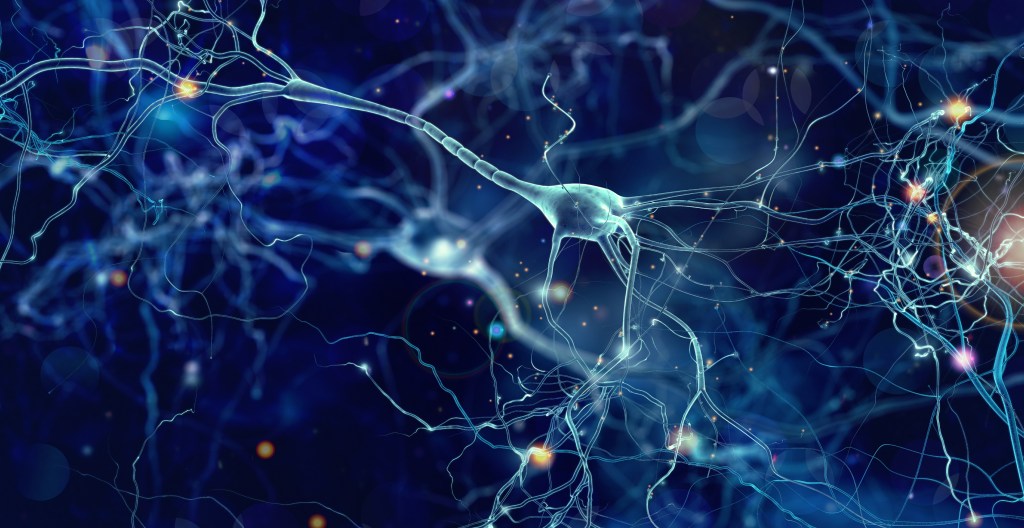
To test the new Anthrobots the team took human neurons and made small incisions in them to replicate a wound or damage. Clusters of Anthrobots were then placed near to the neurons and incredibly they were seen to be helping the neurons to regrow without any genetic engineering or programming. So far the research team is unsure why they do this, but have speculated that there is some form of communication between the cells and that the cells have a natural programming that instructs them to perform biological functions.

At the moment the Anthrobots can only survive in the lab and biodegrade within 60 days. They also can’t reproduce and spread uncontrollably. However, the hope one day, is to successfully transplant these Anthrobots into a human body, opening the door for a new form of medical treatment, and possibly a new variation of the human race.

Fungal Takeover

Life has a surprising way of managing to survive, whatever the conditions or obstacles that are placed in its way. Carnivorous plants like the Venus Fly Trap and North American Pitcher Plants have adapted to their swamp conditions where nutrients in the soil and water are scarce, by adapting themselves to lure prey in the form of insect to them, trapping them and “digesting” them.

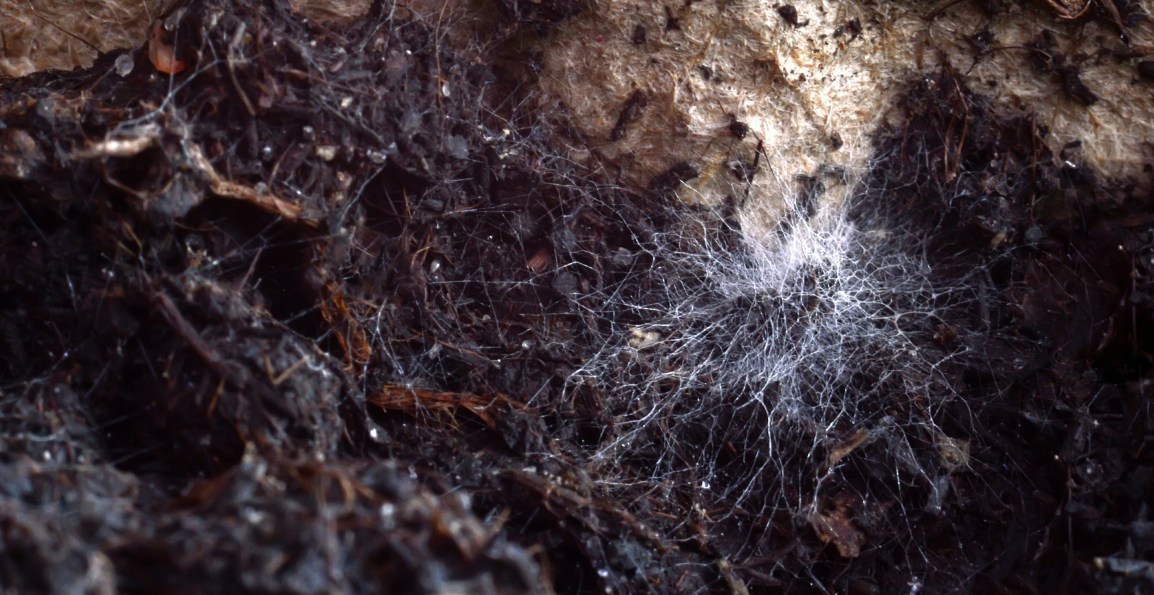
What you probably wouldn’t expect is an intentionally predatory carnivorous fungus to exist. Normally a fungus, called Arthrobotys Oligospora, feeds on dead organic matter. But it’s recently been discovered that when there isn’t enough decomposing matter to consume A. Oligospora has learned to adapt and ensnare worms in a trap for the purpose of feeding and survival.

A recent study has discovered that when it’s necessary the fungus creates a sticky net that the worm cannot escape from. Once trapped the fungus invades the worm’s body with filaments called hyphae both inside and out. It seems that this carnivorous nature is embedded in the DNA of the fungus. When a worm is near the fungus it’s DNA replication and production goes into overdrive together with the genes that secrete the sticky proteins. Interestingly the hyphae also release a type of enzyme that breaks down proteins making the worms easier to digest.

Fungus is rarely recorded invading humans, but a man in India recently contracted a case of Silver Leaf disease. While it can be fatal to plants, until now it’s never been recorded in a human. The man’s throat become infected, sending root like filaments into his body. Microscopy and lab culture failed to identify the fungus. Only with molecular sequencing were scientists able to successfully identify it and treat it.

“This case highlights the potential of environmental plant fungi to cause disease in humans,” the report reads, “and stresses the importance of molecular techniques to identify the causative fungal species.”

While the jump from infected plants into a human is rare, it could begin to occur more frequently. “The cross-kingdom pathogenicity demands much work to be done in order to explore insights of the mechanisms involved,” explained a researcher, “thus leading to possible recommendations to control and contain these infections.”

Scientists have previously stated how quickly fungi can evolve and adapt, becoming immune to anti-fungals as well as turning an immune system against itself. It is believed that the chance of a fungus gaining the ability to infect and then jump from human host to human host is becoming greater.

Life on Earth

Mankind’s desire to try to discover life on other planets to prove “we are not alone” in the universe appears to be an endless quest that up until now, has been relatively fruitless. However, there are a group of researchers that believe we should be looking a lot closer to home for evidence of alien planets.

NASA recently completed an atomic analysis of a Moon rock that was collected during the 1972 Apollo 17 mission, and found that the Moon was formed around 40 million years earlier than scientists had previously thought. It’s believed that the Moon was created when another planet collided with the Earth releasing debris into space which, over a long period of time, eventually fused to form the orbiting Moon.

The impact was a “cataclysmic event for Earth and changed Earth’s rotational speed,” explained cosmochemist Philipp Heck. “After that, the Moon had an effect of stabilizing Earth’s rotational axis and slowing down Earth’s rotational speed. The formation date of the Moon is important as only after that Earth became a habitable planet.”

Around 4.5 billion years ago a planet the size of Mars, called Theia, smashed into Earth, shattering huge amounts of debris into space. Now, a team of scientists from China claim to have uncovered evidence that suggests chunks of Theia became lodged deep inside the Earth, and are still there.

Using a simulation of the impact, the team demonstrated how the upper half of the Earth’s mantle would have melted and only 10% of Theia would have made its way deep into the Earth. Due to convection currents the remains of Theia would get churned around, growing in size as they attached to other debris. The Chinese team has identified two possible massive clusters of matter buried deep below Africa and the Pacific Ocean which they believe could be Theia at their core. Estimates suggest that the remaining 10% of Theia could account for 2 to 3 percent of the Earth’s overall mass.

“In most of the Moon-forming impact simulations, most of the lunar materials come from the impactor,” explained geophysicist Quian Yuan. This would mean that testing these clusters of matter inside the Earth to see if the chemical signature matches lunar mantle rock would confirm the presence of Theia in our own planet. But gathering the samples from deep within the Earth is currently an impossibility.

If Earth is also made from matter from another planet, and life only began after the collision, could alien life already be part of life on Earth? Integrated and evolved, amalgamated and merged into what we consider “normal” Earth flora and fauna.

Solar Power

With the urgent need to find a cleaner replacement to fossil fuels as a source of energy – solar, wind and tidal energy sound like they are the best alternative. And the planet certainly needs one. Global temperatures are climbing, as evident from the wildfires that swept across the globe during 2023, sea levels are rising, ice caps are melting, and some naturalists believe we have already entered the next mass extinction event. But with governments and big businesses being slow in their attempts to hit targets for reducing emissions it’s easy to think that time is rapidly running out.

But, all might not be lost. At the current rate of growth, it appears that solar power could potentially be on track to become the dominant power source by 2050. Decreasing costs in solar panel construction are partly to thank for this potentially good news. Researchers in the UK used simulated scenarios that looked at 22 different types of energy, including nuclear, and found that solar was most likely to generate 50% of all energy in 72% of the scenarios they generated.

“We currently have a fossil fuel-dominated system and without additional policies, we arrive at a state that’s dominated mostly by solar,” explained University of Exeter lecturer and study lead author Femke Nijsse.

Sadly, it’s not as simple and straight-forward as you might expect. There are factors and uncertainties which could still create hurdles for solar power adoption. The most obvious is the instability of energy production and how that might affect the power grid. The level of sunlight varies every day, fluctuating the level of power. To overcome this better infrastructure of power grids would need to be implemented together with more efficient batteries to store excess power on good days.

While the adoption of solar power in wealthy countries is easier to integrate, developing countries and those with political instability may find financing change a lot more difficult, especially if there are job losses associated from the fossil fuel industry such as a decrease in demand for raw materials and the supply chain that surrounds it. This could be offset by the creation of new jobs for mining the different metals needed to create a solar panel.

The prospect of solar becoming a dominant source of power in the future faces various challenges, but at least it is more environmentally friendly than burning fossil fuels. However, there are a growing number of voices suggesting that nuclear might be the way forward. Long branded dangerous and not environmentally friendly by groups such as Greenpeace, despite a third of the clean energy in EU coming from nuclear power.

“Greenpeace is stuck in the past fighting clean, carbon-free nuclear energy while the world is literally burning,” complained 18 year old climate activist Ia Anstoot. “We need to be using all the tools available to address climate change and nuclear is one of them.”

Additionally Greta Thunberg has also changed her stance on nuclear power, admitting that nuclear plants in Germany should be kept running – at least in place of coal.

As the climate situation becomes more urgent every year, could a nuclear/solar power combination be the answer? Whichever direction the planet decides to go, all agree that burning fossil fuels must be drastically reduced.

Microplastics

Microplastics have been discovered in the most unexpected places, but most notably in our oceans, resulting in tiny fragments of plastic inside fish and consequently inside ourselves. Now scientists in Japan have even found microplastics in rain clouds, falling down on us, polluting the air, the ground, our water and crops. It seems that nowhere can escape plastic pollution.

The scientists discovered nine types of plastic as well as one type of rubber in samples they examined from the mist around Mount Fuji and Mount Oyama.

“If the issue of ‘plastic air pollution’ is not addressed proactively, climate change and ecological risks may become a reality, causing irreversible and serious environmental damage in the future,” explained Hiroshi Okochi, lead author of the research.

While the contamination created from the presence of microplastics in rain clouds falling on to the ground might seem obvious, there are also other worrying effects that could contribute to global warming. Airborne microplastics degrade quicker in the upper atmosphere than they do on the ground because of the stronger ultraviolet radiation. But the result of degradation is the release of harmful greenhouse gases.

Another study recently discovered that exposure to microplastics created dementia and behavioral changes in mice, most notably in older mice. The study showed that microplastics found their way to every organ in the mouse’s body including their brain. “The brain-blood barrier is supposed to be very difficult to permeate. It is a protective mechanism against viruses and bacteria, yet these particles were able to get in there,” explained study leader Jamie Ross. “It was actually deep in the brain tissue.” So far it’s not been demonstrated in humans, but there seems no reason not to suspect the similar results in every animal.

Fortunately there might be a glimmer of hope. In 2001 a team of scientists discovered a bacteria called Ideonella Sakaiensis that successfully breaks down the carbon in plastics. Since then the team has discovered other similar organisms as well as successfully manipulating bacteria to produce enzymes that break down plastic at a rate which might be fast enough to be able to combat the massive global problem. Despite a lack of funding, scientists constantly search landfill sites hoping to discover a better performing bacteria, a problem made even harder due to the different types of plastics we use and dispose.

In a similar study, another group of scientists discovered high levels of plastic degrading enzymes in deeper depths of the ocean, 60% of which had never been discovered before. “The next step would be to test the most promising enzyme candidates in the lab to closely investigate their properties and the rate of plastic degradation they can achieve,” Aleksej Zelezniak, associate professor of biology at Chalmers University of Technology, explained. “From there you could engineer microbial communities with targeted degrading functions for specific polymer types.”

As microplastics infiltrate every part of the planet, at least there might potentially be a way to contain the problem for the future.

Electric Vehicles going the distance.

The most common complaint held by motorists against electric vehicles is the distance they can travel before needing to be charged up. For long journeys it necessitates lengthy stops every couple of hundred miles to recharge the battery, significantly adding additional time to a long journey. Not only that, but the number of charging points at highway services is still very low compared to the growing number of electric vehicles that join the roads every year.

However, that all might be about to change. In Germany, the Technical University of Munich has built an electric vehicle called “muc022” which has travelled 1,600 miles on just a single charge, smashing the current record for the longest distance driven without recharging. Amazingly, the students in Germany managed the 1,600 miles with just a 15.5 kilowatt-hour battery. Previously the 2023 commercially available Lucid Air vehicle had managed a 516 distance mainly due to a 118 kilowatt-hour battery. But at a base price starting at $140,000 it’s not going to be in most people’s budget.

Muc022 is a wedge shaped single seater vehicle and weighs just 375 pounds. It’s designed to reduce weight and air resistance to a minimum, stripping away luxuries, travelling at a consistent speed of 26mph, meaning there is no option for additional power draining luxuries such as Air Conditioning or music.

The previous distance record was achieved way back in 2017 by global tech company IT Asset Partners. Their vehicle, named The Phoenix, was made from 90% recycled waste, and managed to travel 999 miles on one charge.

Other recent developments in the Electric Vehicle world include the amazing acceleration power of a mini racer from 0 to 62mph in less than one second, powered from a battery! Built by the Academic Motorsports Club Zurich, the 309 pound vehicle was built from “in-house” components, including lightweight carbon and aluminum honeycomb structures. With 326 horsepower, the problem of “sticking” itself to the ground during acceleration was overcome with a device that worked in a similar way to a vacuum cleaner.

Not to get left behind, US carmaker Dodge is expected to release an all electric muscle car soon, but with a slightly different twist. “The company’s upcoming EV will “tear up the streets, not the planet,” Dodge CEO Tim Kuniskis said. He also explained the Dodge would not be selling electric cars but will instead be making “American eMuscle” in an attempt to promote electric performance vehicles. “Our customers purchase an experience, not a technology,” explained Kuniskis.