
We have all seen countless movies in which robots take over the world and wipe out humanity, where robots behave like humans and form a whole force to fight against the beings that created them. Most of us didn’t really believe that one day, robots that behave like humans, would actually become real. Until now. Scientists have been able to make tiny human brains and hook them up to robots! For many, it is still unbelievable, but scientists are actually moving closer and closer to creating life in a laboratory.
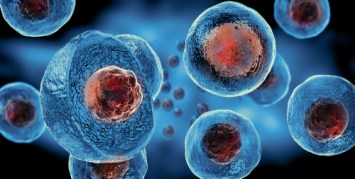 The steps that have been taken are just the beginning and there is a very long way to go until scientists are able to completely replicate a human brain and successfully implant it into a metal body.
Scientists have been able to come up with ways to make robots behave like humans. They were able to produce organoids which generate brain waves that could show signs of consciousness, and reproduce qualities of the human brain like being capable of sentience (capacity to feel, perceive, or experience subjectively) and of feeling pain, agony and distress.
It all started at the University of California, San Diego lab, of biologist Alysson Muotri, where the scientists used stem cells to grow organoids. These are tiny, self-organized three-dimensional tissue cultures. These organoids were then packed into a box and shipped to space to see how they develop in a zero gravity environment. As said by Muotri, they are most likely ‘replicating like crazy’ in space. It was then observed that the organoids produced were giving off brain waves or complex designs of neural activities. As the organoids matured, it was observed that they showed changes in the brain waves, similar to the changes that take place in the developing brain of a premature baby. This peculiar finding is forcing the scientists to revisit the limitations of lab-grown mini-organs and the ethical issues surrounding them.
 To proceed with the experiment, Dr. Muotri hooked the mini brains up onto a spider-shaped robot in order to study the neural activity. The results that he got from this could possibly prove that scientists are now able to generate partially conscious life in a laboratory.
Dr. Muotri emphasized the fact that these are just clusters of replicating brain cells, not actual brains. Another point to state is that the mini brains barely scratch the surface of a human brain’s capabilities. The human brain is immensely complex, whereas the mini-brains are just a simple ball of neurons. But, of course, creating these simple balls of neurons, somewhat similar to the human brain, was also once believed to be an impossible task.
As the scientists agree, there is a long way to go to make human brain robots a success in the world of science and technology. But, this is also a huge landmark and many scientist across the globe are experimenting with and are hopeful that this research will not stop here.
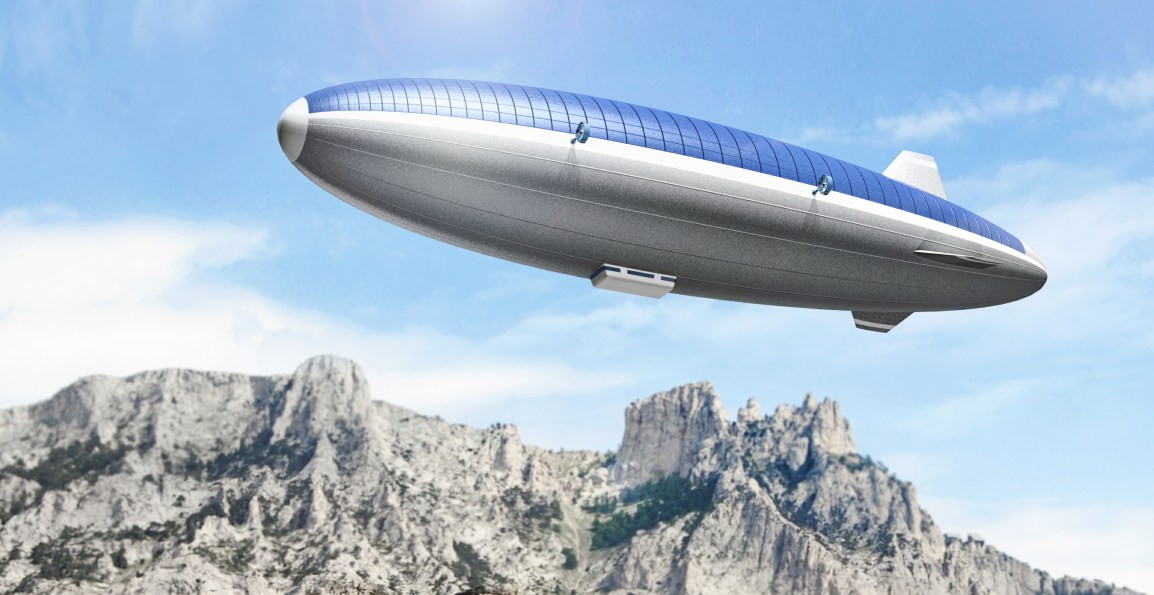
 was later replaced with a much cheaper alternative; hydrogen which was notoriously known for being flammable.
 incidents, took away people’s faith and marked the end of airships and the beginning of commercial airplanes on a broad scale which were much safer and faster and could fly internationally.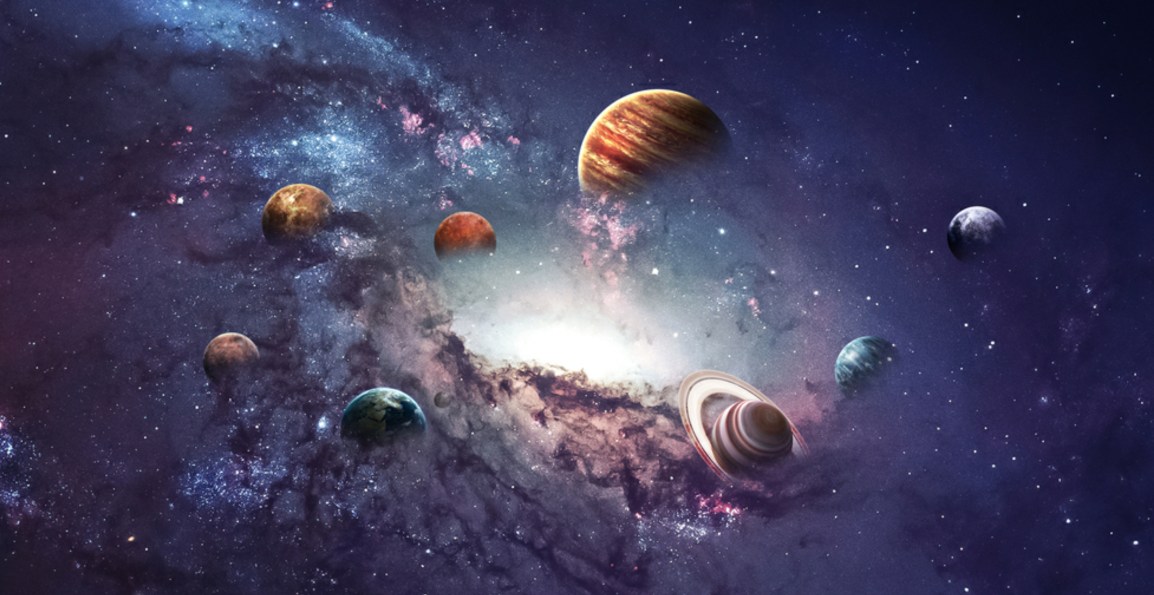
 To believe that Earth is the only planet suited to support life amongst is foolish. For years intellectuals have argued that there may exist a planet with conditions somewhat similar to Earth on which life could bloom but so far we have been unable to find it. Until recently, when a planet that goes by the name K2-18b fell under the sight of NASA’s Kepler telescope.
 The most important aspect of determining whether a planet can sustain life or not is by determining if there is water present on the planet. Water compromises about 70% of the Earth, without it, life cannot survive let alone thrive. So, to find a planet that could potentially support life, water is the first priority. 2 years after K2-18b’s discovery, NASA’s sole objective was to search for water on the planet. They found that every time the planet moved in front of the dwarf, the wavelength absorbed by the water dropped. Similarly, as the planet crossed, the wavelength rose. For NASA, this confirmed the presence of water vapors. Further studies show that K2-18b is much bigger than Earth nearly twice the size and has a temperature ranging from 0 to 40 degrees Celsius which is optimal in regards to supporting life. In addition to that, studies show that it may be made up of 50% water.
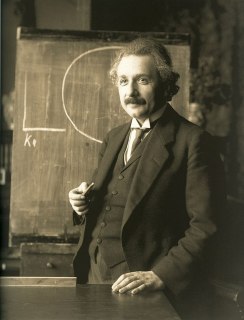 Wormholes are based as a solution to Albert Einstein’s equation of general relativity – the equation for which accounts for the short child wormholes, or Einstein Rosen Bridges, which essentially acts as giant blackhole linking two areas of space time. The theory suggests that the matter and light that is absorbed from one end escapes out of the other at the point known as a whitehole. This whitehole will be located somewhere else in the galaxy or maybe even in some other dimension.
 Next step into space travelling or travelling to other dimensions, this theory relies on the many-world’s hypothesis and interpretation of Quantum Mechanics that reveals infinite universes in timelines. According to this idea, every choice or branching path that we take, exits in the endless list of others. Experts like Stephen Hawking suggest that the wormholes could be all around us but they are microscopically small existing in very deceptive spacetime as nothing is completely flat or solid. According to this theory, there are incredibly small holes in every piece of matter including the time itself, even smaller than the atoms. However, being so tiny we can’t even begin to imagine traveling between them or manipulating them.
 However, the downfall of this futuristic city is that it will force the local tribes to relocate that have existed in Saudi Arabia for centuries. It is also planned that a human gene-editing clinic will be placed within the city and the city will be under surveillance of the government 24 hours of the day. It seems that the city is more of a dystopian future in books rather than a futuristic, fun tourist spot.
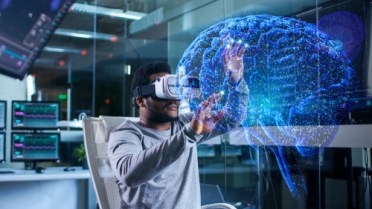 Facebook says that they are in collaboration with scientists and researchers at the University of California to work on this new invention. They stated that they want to connect the world without any limitations whether they are geographical, physical or mental. They want to make the world instantly accessible and completely hands-free. So with collaboration from researchers, Facebook is trying to build a device that will let patients with neurological diseases have a voice again by examining their brain’s activity in real-time.
 However, there is much more work to be done. Right now the project is just at the beginning stage where it is starting to take form. What the researchers aim to achieve will take many years of trials and practice. The researchers want to decode around 100 words per minute with a vocabulary of 1000 words, and they want less than a 17% chance of error. This is a huge goal for the researchers and if this is achieved, it could transform the technological world.
 R. E. KEARNEY