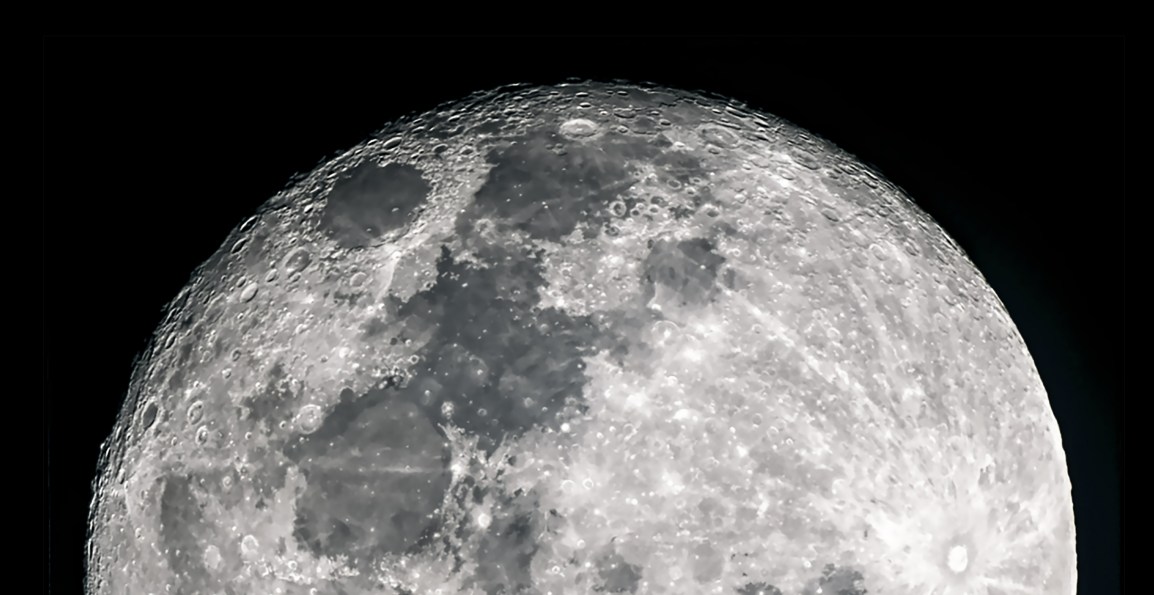
Most of us have not studied the moon in great detail because we consider it as just a shiny white sphere that appears every night. However, we need to know that the moon is much more than that. It holds a lot under its surface. Recently, scientists discovered an enormous, metallic anomaly under the moon’s largest crater.
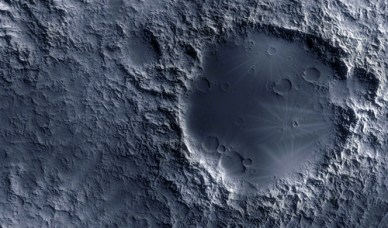 Interestingly, the pile of metal is considered to be five times larger than the Island of Hawaii. It weighs around 2.18 billion kilos and spreads across 300 kilometres. It is also considered to be millions of years old. Researchers identify two main reasons behind the existence of this huge pile of metal under the moon. Firstly, they assume that the metal that formed this crater is still set in the moon’s mantle. Secondly, they believe that the moon’s liquid magma surface turned into a solid which left heavy oxides of nickel and iron. However, both these reasons have not been confirmed yet.
Another study suggests that there is presence of water under the moon’s surface. Scientists say that there’s plenty of water beneath the moon, but it is slowly drying out. It was discovered that the existence of water is not new. It could have been there since the formation of the moon. However, it’s still uncertain how such large amounts of water ended up under the moon’s surface. According to researchers, the presence of water could be quite  beneficial during future explorations. Transporting water from earth is a complex and expensive procedure which also requires a lot of time.
Both of these discoveries are quite impressive and have changed people’s perceptions about something as simple as the moon. Who would have thought that the moon could have so much going on beneath its surface, and who knows what else is yet to be uncovered?
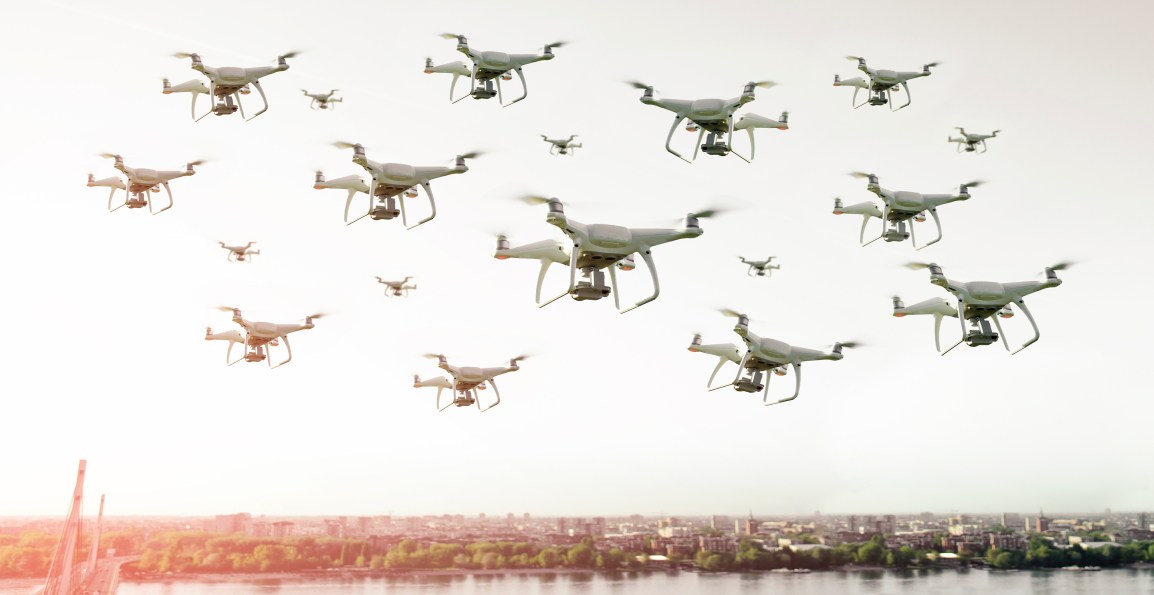
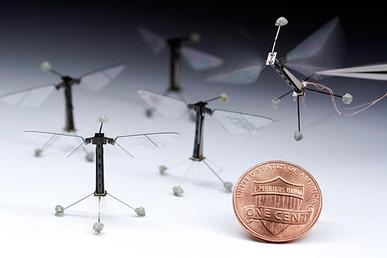 When we use the word robot, we’re not talking about some terrifying robots from the movies or directly from the future. Instead, we’re talking about creations like RoboBee. This drone was made by Harvard John A Paulson School of Engineering and Applied Sciences. Due to the advancements in technology, this device can stabilise on the surface of water before an internal combustion engine will ignite to let it fly and bring it back in the air.
 The asteroid belt is rich in assets. There are certain metals and other natural resources that are rare on earth, but not on the asteroids. These metals can be used in the production of many products. For example, electric vehicles, turbines, and many other types of electronics.
 Space mining seems to become easier with the advances in technology and research. Several companies have now started focusing on this version of mining. They are investing in technology and research to come up with workable ways to mine in space. However, things need to be done to consider the long term effect. Space mining does not seem like the best idea in the distant future. It can ruin the areas beyond Earth while trying to make survival easier on earth. Alternatively, it could turn out to be very beneficial for companies and the general public on Earth.
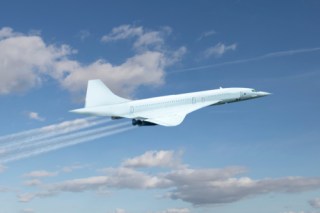 This speed is greater (almost twice) than that of the iconic Concorde. As per Ars Technica, seeing a working prototype any time soon is unlikely, but, the initial round of funding has been completed. This would make it possible for the organisation to bring in a propulsion demonstrator. Interestingly, Hermeus is not the only organisation working on this, a competitor ‘Boom Supersonic’ is also working on something similar. Boom Supersonic is another start-up just like Hermeus.
 Interestingly, now these drones will be able to carry around enough larvicide that can be sprayed across more than 2 acres. This is a task that would normally be handled by helicopters that are very expensive. However, this technology will make it less costly and efficient to treat the remote pools and eradicate mosquitoes. Florida Keys Mosquito Control District wants to start with a precise location to test first.
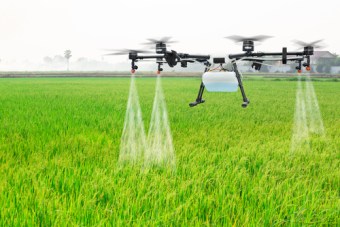 A few days ago, residents in Key West woke up from the noise of a mosquito control helicopter that was there to spray larvicide to the Aedes aegypti mosquito after heavy rainfall. The Aedes aegypti mosquito carries diseases like dengue and Zika virus. These helicopters and drones will become a common sight during the summer as the plans are to spray larvicides on the saltmarsh mosquitoes in remote areas. The idea of using drones is a cost-effective and an efficient alternative compared to helicopters.
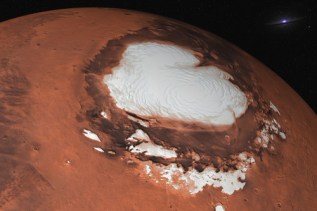 Evaporation is the only way that water can rise from the lower to the upper atmosphere and this is possible around every two years when Mars is nearest to the Sun and it’s summer in the southern hemisphere. In order to find out the weather dynamics of the Red Planet, a computer simulation was utilised by a team of scientists from the Max Planck Institute for Solar System Research (MPS) and the Moscow Institute of Physics and Technology.
 In the distant past, many of the discoveries found that Mars was covered with huge rivers. The question is – where did it all go? Since that time, the planet has experienced a dramatic change. There is only a little amount of frozen water on the ground and small traces of vapour in the atmosphere. Scientists state that Mars has lost about 80% of its water. In the upper atmosphere, water vapour is separated into hydrogen and hydroxyl radicals by the radiation from the sun. This hydrogen then escapes to space. Many researches prove that even today, water is lost through the same process. But, how does the water vapour reach the upper atmosphere when the middle layer can cool it down and covert it to ice?
 R. E. KEARNEY