Blog

Turning Back Time

We have all heard about “Time Travel” in films and books and the concept of traveling into the future. But, scientists are now focused on the real possibility of going back into the time.
The Latest Scientific Development

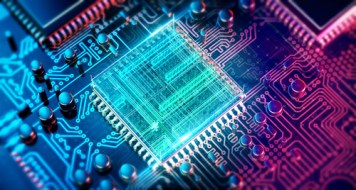
Although it sounds like a strange concept modern-day scientists are striving to make time travel a reality by using Quantum Computing – a completely new idea and concept of computing which relies on “Qubits” instead of “bits” in classical computing technology.

After reviewing today’s research and development in the area of modern-day technology, some Russian scientists have claimed that they have actually rolled back the flow of time in a Quantum Computing based experiment.

Findings from the Experiment

According to the research published on the journal Nature Scientific Reports by Gordey Lesovik, a quantum physicist at the Moscow Institute of Physics and Technology, he has created an artificial state that is capable of evolving in contrast to the thermodynamic arrow of time; however, the discovery is not at all capable of transforming its shape into a time machine.

Lesovik’s team has conducted numerous experiments to reverse time on a single electron programmed quantum system. Compared to the three-qubits system that is more complex and resulted in only 49% succession in the objective, they found it easier to achieve an unbelievable 85% of succession towards their desired goal with a two-qubit system.

It is imperative to understand that quantum computing has nothing to do with time traveling, but everything is currently unclear due to a lack of supporting arguments and evidence. Nevertheless, it is surprising to know that Russian scientists have made the impossible happen.

The majority of scientists, researchers, and analysts have concluded that an immense amount of comprehensive research and development is needed to achieve the desired effect from quantum computing. On the other hand, scientists continue to face several limitations to study and explore more about this subatomic discovery.

While looking at the current span of knowledge that we have about quantum physics and quantum computing, we have not yet stepped into an era where we are able to build a time machine for humans, but scientists from all over the world consider it a huge leap forward that will help them further explore quantum computing and the possibilities it may bring.

Turning Plastic Into Fuel

People all around the world are now trying to practice and actively advocate for environmental sustainability. The biggest revolution taking place these days is with the consumption of plastic items. Companies are introducing more environmentally friendly options for packaging. However, the biggest problem of plastic still remains: recycling and decomposition. More than 300 million tons of plastic actually adds up in landfills. The worst part: plastic takes centuries to decompose, killing off wildlife in the process.

However, scientists have found a way to make plastic more useful than harmful. We finally have the opportunity to turn plastic into fuel! Let’s learn more.

Who, What, Where, When?

At Purdue, the efforts of chemists finding a solution to our plastic problems have finally paid off. They have detailed their efforts and research in a paper that was published this year in Sustainable Chemistry and Engineering. The chemists have found that polypropylene, plastic commonly found in medical devices, product packaging and toys, can be converted into gasoline or dieselesque fuel.

The team have stated that the fuel is so pure that is can be used in place of ‘blendstock,’ which is a main element used in different motorized vehicles.

The waste that polypropylene contributes to the world is approximately 5 billion tons that have been filling up landfills globally during the past 50 years or so.

How?

They figured out that the way to convert polypropylene into usable energy would be through the use of supercritical water. Supercritical water is an underdeveloped stage of water when both the characters of gas and liquid can be demonstrated, keeping in mind the temperature and pressure conditions.

Linda Wang, one of the chemists at Purdue, along with her team heated H2O to a temperature between 716 degrees and 932 degrees Fahrenheit at the pressure of 2300 times more than atmospheric pressure found at sea level.

Thus, when a pure version of polypropylene waste was mixed into supercritical water, it was changed to oil in just a few hours, varying upon the temperature conditions. It was found that heating the water at 850 degrees Fahrenheit lowered the conversion time to less than an hour.

The main by-products of this conversion process were diesel and gasolineish oils. The researchers have claimed that this process can be used as a way to convert an estimated 90% of worldwide polypropylene waste into fuel every year!

Here is what Linda Wang said about this discovery: “Plastic waste disposal, whether recycled or thrown away, does not mean the end of the story. Plastics degrade slowly and release toxic microplastics and chemicals into the land and the water. This is a catastrophe because once these pollutants are in the oceans, they are impossible to retrieve completely.”

The Bottom Line

This discovery is a monumental breakthrough discovery that could possibly save the planet and all of its inhabitants! The way proposed can be adopted worldwide and will not only help us to keep our environment cleaner but help us make out lives more sustainable.

Russian Internet

The whole world is connected through one common medium: the internet. Wherever it could reach, it did and the whole world’s information is fed to this global monopoly. However, one country has realized the benefits and power that could be achieved if they significantly separated their internet traffic from the rest of the world. Let’s explore all that is currently known about the internet situation in Russia.

Disconnect To Connect

The Russian Government has already decided to disconnect the internet across Russia before April this year. However, Russians need not worry as they will only carry out the disconnection experiment for a brief moment. The brief internet interlude will help the government gain critical insights in order to provide feedback for modifications in accordance with the telecom law that was proposed in the Russian Parliament at the end of 2018.

The Government of Russia had already announced two years ago that they are planning to source 95% of internet traffic through local mediators. By 2020, they want to regulate incoming and outgoing internet traffic in complete isolation from the world.

Before April 1st of this year, the amendments to this law, also known as the Digital Economy National Program, must be submitted.

But… Why Exactly?

Apparently, Russia wants to strengthen its cybersecurity in efforts to secure themselves against other countries trying to invade them. This shutdown will help them test whether the local networks will be resilient enough and if all, or a massive proportion, of the internet traffic, can be filtered through. Internet providers in Russia will now have to abide by a newly introduced law that states that the internet traffic will only be directed through ‘government approved servers,’ making sure that content bans are enforced.

Will It Work?

President Putin’s endorsed law is fully expected to pass. Discussions are still going on as the technicalities are still being worked on. Disconnecting the entire country’s internet isn’t a joke, especially in this technology dominated world. They are trying to figure out a way in which Russia can be completely disconnected from the internet without hindering government bodies, companies and consumers and starting up again smoothly.

Russia’s biggest telecom regulator, Roskomnazor will be the ones to reroute the internet traffic in Russia to a specific exchange pointed managed by them.

What Could This Mean?

Of course, many people are speculating that Russia is trying to hide their plans and critical developments in the coming years, which could be considered as a big threat to other weaker countries and the superpowers as well. Alongside, The Russian Population will have very strict, regulated and monitored internet privileges.

It could be said that they are building The Great Firewall of Russia.

Fake Foliage

Finally, people have started to take the environment seriously! With vast deforestation, global warming and depletion of the ozone layers, we need to start being extremely careful in the way we live our lives. However, the University of Illinois at Chicago has developed fake plants that can actually ‘recycle’ carbon dioxide. This is an effort to reduce the amounts of harmful gases found in the atmosphere and thus, produce clean fuel.

This ‘fuel’ is generated by the sun, meaning it actually mimics plants during photosynthesis. The researcher Salehi-Khojin stated, “Real leaves use the energy from the sun and convert carbon dioxide to sugar. In the artificial leaf, we use the sun and we convert CO2 to (synthetic gas), which can be converted to any hydrocarbon, like gasoline.”

Seems incomprehensible? Well, the process basically involves the sun’s energy rearranging the chemical bonds composing carbon dioxide. The energy from the sun gets stored as a chemical bond, generating the ability to be burned as fuel. The technology companies face a lot of issues trying to store batteries. Particularly where solar panels and wind turbines have been developed to generate sustainable energy, providing corporations with an energy source in the form of solar and wind farms. But the ability to store the generated energy has not yet been discovered. Until now.

The director of the Institute for Sustainability and Energy at Northwestern University, Professor Micheal R, Wasielewski, said “Whether you use solar or wind to generate electricity, you have a source that’s intermittent and not storable, so what you need to do is find a storage method. This fake foliage closes the carbon cycle so you don’t have any excess CO2, so it’s an environmentally friendly way of storing renewable energy.”

The Salehi-Khojin team at the UIC found a compound that had the ability to break down and rearrange the chemical bonds composing carbon dioxide better than the traditionally used gold and silver. Salehi-Khojin thinks that a prototype could be ready for use in the next 5 years with the help of a suitable manufacturing company. They believe it can be placed in solar farms alongside the power plants in order to recycle the carbon dioxide collected and convert it to be used as energy.

Professor Nathan Lewis of the California Institute of Technology, who has been researching artificial photosynthesis and solar fields for over 40 years, says that the development by Salehi-Khojin is just the starting piece of a product that will be widely executed in the near future. “There’s a lot of steps that need to occur to envision how these things would translate into a commercializable system, but it’s a step for building a piece of a full system that may be useful. It’s going to take a lot of effort from a lot of people to really push this over the goal line.”

Salehi-Khojin are yet to patent their technology and they were recipients of a $330,000 grant by the National Foundation last year to help further their research.

This is still a groundbreaking discovery by UIC which can really help to transform our environmental state if employed correctly.

“Dream Chaser” Space Cargo Plane

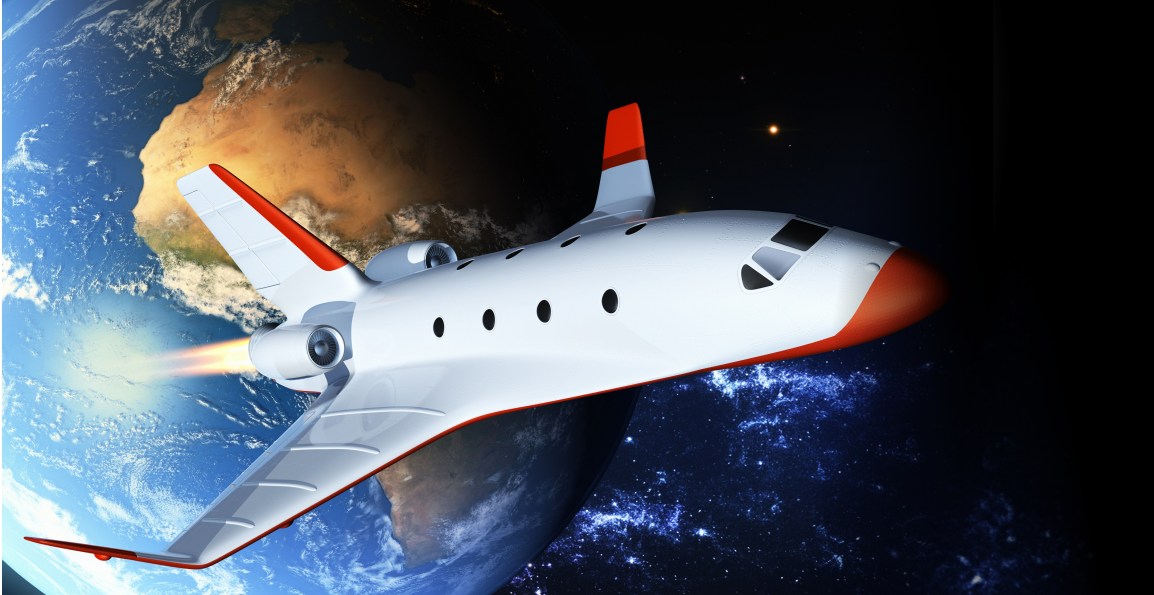
Make some space for the Dream Chaser, the newest commercial cargo plane, ready for service. NASA has given the green light to Sierra Nevada Corporation (SNC) to officially start mass producing the ‘Dream Chaser.’ The Dream Chaser is a commercial cargo plane specifically made to go into space. The first dream mission has been scheduled for 2020. SNC cleared the Commercial Resupply Services 2 contract and can now begin completely producing the space cargo carrier. These carriers can now carry cargo to the ISS. Let’s explore what this whole dream chaser situation is all about.

How Long Till Dreams Can Be Chased?

Originally, the ‘Dream Chaser,’ was conceptualized for the commercial crew program funded by NASA. However, NASA preferred the designs sent in by SpaceX and Boeing instead. The original Dream Chaser was redesigned and now has many new features. The new version is able to carry cargo weighing up to 5,500 kgs (12,125 lbs) up to the ISS and come back with 1,850 kgs (4078 lbs) of cargo back to Earth. It also has foldable wings.

Out of three companies, including Orbital ATK and SpaceX, SNC received a contract in 2016 for commercial cargo to be sent to the ISS by NASA. In this contract, each corporation is guaranteed a minimum of 6 ISS delivery missions.

Some components of the complete Dream Chaser design have been produced as well as tested already. SNC’s Space Exploration Systems VP, Steve Lindsey said in a conference in October 2018 that he was expecting the major part of the first Dream Chaser to be assembled and tested by October 2019.

Features of the Dream Chaser

The Dream Chaser is basically a multi-mission spacecraft that has been specifically designed to transport cargo and crew to destinations with low-earth orbit (LEO) just like where the ISS is situated.

The Dream Chaser showcases third-generation design and is 9 meters long, approximately ¼ of the length of traditional space shuttle orbiters. The dream chaser spacecraft contains a cargo bay which is spacious enough to carry a large cargo, for example, components to be used for the ISS or the Hubble Telescope.

The Dream Chaser will be able to not only deliver cargo and return with disposal but also be able to carry supplies such as science experiments, food and water and return back to Earth efficiently. The Dream Chaser is fully automated, launching, flying and landing by itself. This spacecraft that works on autopilot can be reused more than 15 times. The cargo and crew can be accessed immediately after landing. It is also compatible with commercial runways.

Future Of Space Exploration

Any commercial spacecraft manufacturing is usually hindered by the expensive costs. The more competition there is, the more likely new innovative ideas are likely to emerge. This is because 80% of the expenses are for the launching.

Just a mere year and a half is left till the Dream Chaser is set to chase some dreams and further space exploration.

New Hadron Collider

In the search for particles and in the name of science, physicists have gone to great lengths to satiate man’s hunger for knowledge. It wouldn’t be wrong to say that in this quest, the largest ever built machine would be the Hadron Collider, the particle accelerator. More commonly called the LHC (Large Hadron Collider) was built by the CERN (European Organization for Nuclear Research) which was established in the year 1954, the main purpose of this lab’s research is particle acceleration and detection.

The purpose of LHC has been to provide physicists enough grounds where they can practice and test their theories of particle physics. However, LHC will soon have a successor which in many ways will be bigger, and better – the Future Circular Collider (FCC).

Why did the world of science decide that LHC needed a stronger replacement?

Why the need of FCC

Image: Dominionart / Shutterstock.com

From its point of conception, LHC was definitely the most awaited machine in the physicist’s world as the previous models of subatomic particles and their interaction tests weren’t making sense. With the very existence of LHC, the most important thing that happened was the way it transformed how particle physics looked. The much-discussed discovery of Higgs Boson was made, that filled in the questionable gaps in the theories but after that, there has not been any new discoveries.

According to CERN, a new collider might be able to take a further leap into the mysteries of the particle world. Starting from the understanding of dark matter, the concept of matter in contrast to the antimatter. This may not be a very popular belief somehow, as there are other scientists who do not believe that a new bigger machine would lead to any newer discoveries.

CERNs’ Main Concern for Building FCC

CERN claims that this new collider would be three to four times the size and possess seven to ten times the power of the LHC making it faster and able to cover larger parameters with more precision.

What LHC has been able to do for science is give answers to several unanswered questions and paint a complete picture of the standard model of particle physics. This is precisely what CERN wishes to accomplish from the making of this newer version, perhaps uncovering many other unsolved, unanswered mysteries.