Scientists, and other researchers, spend much of their time developing ways to prevent possible disasters, both natural and unnatural, from taking place. History is famous for repeating itself, and there have been several recorded pandemics that were responsible for the deaths of a large percentage of the population. The Spanish Flu outbreak, in 1918, is one of the most deadly examples. An incredibly contagious form of influenza, this virus affected everybody and spread to some of the most remote parts of the planet. It is estimated that, over the course of two years, the Spanish Flu killed between 50-100 million people worldwide.
Although our medical techniques, and pharmaceuticals, have advanced significantly since the early 20th century; The General Director of the World Health Organization (WHO), Tedros Adhanom, has addressed the fact that we are still as unprepared for a pandemic as we were at the beginning of the 20th century. The dreaded event could begin in any country and spread quickly, before most nations were aware of its presence. Although this is a scenario we have witnessed many times in horror books, and films, the possibility of it happening in real life is much higher than most of us would like to admit.
 Tedros pointed out that, ‘Universal health coverage is the greatest threat to global health.’ He went on to explain that as many as 3.5 billion people still do not have access to essential health services. Others that can attain the services are often forced into poverty, because of the high costs of this care. To avoid this problem many people neglect seeking medical treatment, even when it is necessary. This results in many illnesses progressing further than can be treated, and an unnecessary spreading of infectious diseases. This negligence could result in the earliest signs of an outbreak being overlooked.
Each country’s health organization relies on funding from their government to monitor the spread of diseases, as well as ensure the proper treatment. The (CDC) Centre for Disease Control and Prevention, in the United States, has recently announced that its budget for the epidemic prevention programs is being cut by 80%. In light of a possibly outbreak occurring at any moment, other countries are also experiencing the same difficulties. This demonstrates that governments are viewing healthcare as an unnecessary cost, instead of a necessary investment.
 Tedros pointed out that healthy citizens are an advantage to the economy of any country. It has been proven that proper healthcare from children are in the womb, which is continued throughout their childhood, helps to make them stronger members of society. He also noted that at the moment a possible pandemic couldn’t be predicted, but dreads the terrible toll it would take on humanity. Despite there being no guarantee that a pandemic free world will ever be created, he is urging that we take back the control of our own lives. The best way to ensure our survival is by governments investing in proper healthcare, in every way possible, for each and every one of its citizens.

 blasted off from The Kennedy Space Center, in Florida, with a course set to take it in an elliptical orbit around the sun, before heading to Mars. In addition to being the world’s most powerful rocket, Falcon Heavy is also the largest to be launched, since NASA’s Saturn V in 1973. To demonstrate its ability to carry heavy cargo outside the Earth’s atmosphere, the rocket is transporting a limited edition Tesla Roadster (Elon Musk’s personal car) throughout its journey.

 Apart from the PBTR located in India, there is only one commercially operable Fast Breeder Nuclear Reactor in the world. This is the Beloyarsk Nuclear Power Plant, located in the Ural Mountains, Russia. This plant uses uranium to provide energy for various parts of the country. China is also experimenting with Fast Breeder Nuclear Reactors, but their progress is behind India’s by about a decade. The technology has proved extremely difficult to produce, and maintain, and other countries, such as France and Japan, have been unsuccessful in their attempts to utilize it. The world will continue to observe the capacity to which India can put their nuclear plant to use, and there may be attempts to replicate it in the future.
 Solar energy plants have a 30+ year lifespan, during which the molten salt will not need to be replace or topped up. It is made from an environmentally friendly mixture of sodium and potassium nitrates, which can be used as a high grade fertilizer once the plant has been decommissioned. The salt is stored in tanks at atmospheric pressure, and about 566°C. The sunshine is reflected by a field of mirrors onto a tower, which heats the salt up. Using the molten salt for both heat transfer and energy storage means that the number of storage tanks and the salt volumes can remain relatively low. The salt is circulated through highly specialized piping in the receiver, during the day, and kept in storage tanks at night.
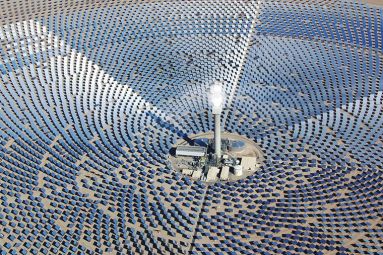 It facilitates thermal power plants operating in the same way as fossil fuel or nuclear power plants, without the associated harmful emissions as well as eliminating the cost for the fuel. These plants can also operate around the clock, providing power for both on-grid and off-grid applications.
 Energy – Fujisawa SSC’s energy system was created with the intention of consuming as well as generating energy within the boundaries of the city. 30% of the town’s energy comes from renewable sources, and each household can monitor its consumption online. All lighting fixtures are LED and buildings are equipped with solar panels, storage batteries, fuel celled co-generation units and heat pumped water heaters.
 Panasonic began as a company that enhanced lifestyles through the application of its products, but have an overall vision of creating a future where ‘smart cities’ dominate on a global scale. Their mission of ‘a better life, a better world’ continues to becomes a reality, as the company entered a partnership with Denver, Colorado to build their second smart city. The project began in 2016, and is expected to take at least ten years to come to fruition.
 R. E. KEARNEY