Blog

What is “Mirror Life?”

It was recently reported that a group of scientists called for the immediate stop to research into something called Mirror Life, because of the terrifying risks it could potentially pose for our future existence. But, what is Mirror Life? The concept of “mirror life” is a fascinating exploration into the possibilities of existence and consciousness beyond our conventional understanding. Mirror life, or mirror matter, hypothesizes the existence of a parallel form of matter that is a mirror image of the ordinary matter we know. This idea stems from attempts to explain certain physical phenomena and has intriguing implications for physics, cosmology, and even the search for extraterrestrial life.

Origins of the Concept

The notion of mirror life is rooted in the symmetries observed in particle physics. In the 1950s, physicists Tsung-Dao Lee and Chen-Ning Yang proposed the idea that parity, or mirror symmetry, might not be conserved in weak interactions. This was later confirmed in experiments, leading to a deeper investigation into the role of symmetry in the universe. The idea of mirror matter arises from the possibility that for every particle in our universe, there might be a corresponding mirror particle that interacts primarily with other mirror particles.

Mirror Matter and Dark Matter

One of the most intriguing aspects of mirror matter is its potential connection to dark matter, which is thought to make up about 27% of the universe’s mass-energy content. Dark matter does not interact with electromagnetic forces, meaning it doesn’t emit, absorb, or reflect light, making it invisible and detectable only through its gravitational effects. Mirror matter could be a candidate for dark matter, as it would similarly interact weakly with ordinary matter and might only be detectable through gravitational interactions.

Implications for Life

The concept of mirror life takes the idea of mirror matter a step further by speculating about the possibility of life forms made entirely of mirror matter. Just as ordinary matter forms the building blocks of life on Earth, mirror matter could theoretically form the building blocks of mirror life. These life forms would exist in a mirror universe or parallel dimension, fundamentally similar yet entirely separate from our own.

Mirror life could have its own biology, chemistry, and even consciousness, but it would be undetectable to us due to its weak interaction with ordinary matter. This idea stretches the boundaries of our understanding of life and challenges the notion that our universe is the only possible cradle for living organisms.

The concept of mirror life, while fascinating, is largely hypothetical and speculative. However, if we entertain the idea of mirror matter and mirror life, there are a few theoretical scenarios where interactions between mirror matter and ordinary matter could have destructive consequences for life on Earth.

Annihilation Events

One of the primary concerns is the potential for matter-antimatter-like annihilation events. If mirror matter and ordinary matter were to come into direct contact, they might annihilate each other, releasing a tremendous amount of energy. This kind of interaction could be catastrophic, akin to antimatter colliding with matter. In a worst-case scenario, if large quantities of mirror matter were introduced into Earth’s environment, it could lead to significant explosions and energy releases.

Gravitational Disruptions

Another hypothetical risk is the gravitational influence of mirror matter. While mirror matter is expected to interact very weakly with ordinary matter, its gravitational effects could still be significant. If substantial amounts of mirror matter were to accumulate in the vicinity of Earth, they could potentially disrupt orbital dynamics, leading to changes in Earth’s orbit or the orbits of other celestial bodies. Such gravitational disturbances could have profound impacts on the stability of Earth’s environment.

Ecological Impact

If mirror life forms were to somehow interact with Earth’s biosphere, there could be unpredictable ecological consequences. Mirror life forms might compete with ordinary life forms for resources or introduce new forms of disease. However, given the hypothetical nature of mirror life and its expected weak interaction with ordinary matter, this scenario seems less plausible.

Conclusion

The idea that mirror life could destroy life on Earth is rooted in speculative science and theoretical physics. While it provides an intriguing topic for scientific inquiry and science fiction, there is no concrete evidence to suggest that such interactions are possible or likely. Theoretical explorations of mirror matter and mirror life continue to expand our understanding of the universe, but for now, they remain within the realm of speculation rather than imminent danger.

Seaweed Biofuel

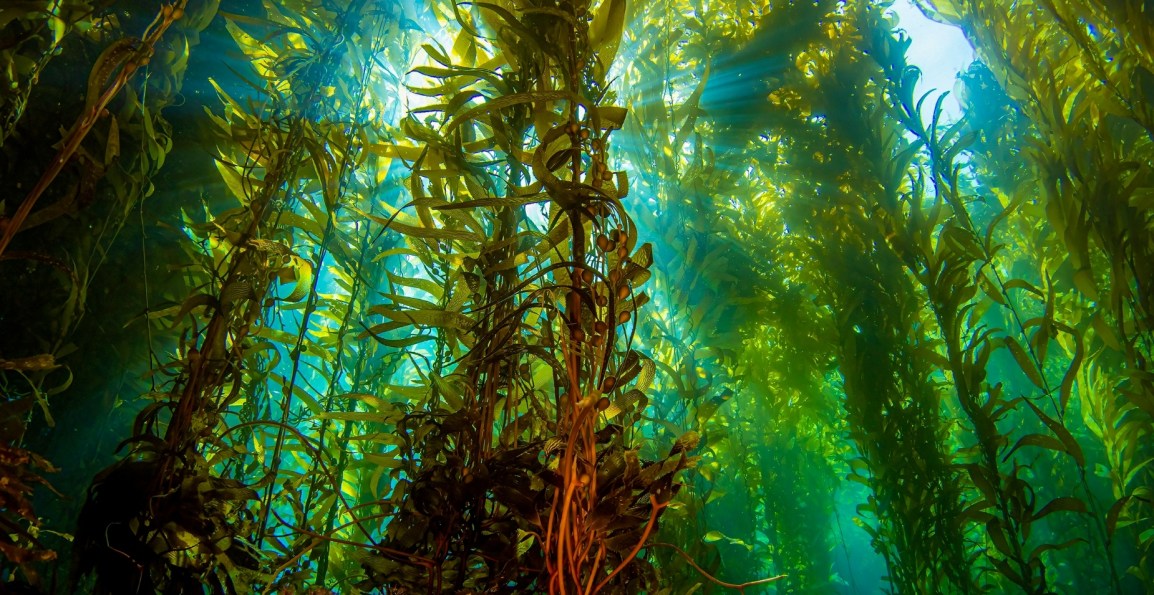
As the world grapples with climate change and the depletion of fossil fuels, the search for alternative and sustainable energy sources has intensified. Among the various renewable energy options, one of the more unconventional yet promising candidates is seaweed. This versatile marine plant could play a significant role in powering cars and reducing our reliance on traditional fuels.

The Science Behind Seaweed Biofuel

Seaweed, or macroalgae, is abundant in the world’s oceans and has a high growth rate, making it a sustainable resource. Unlike land-based biofuel crops, seaweed doesn’t compete with food production or require freshwater and arable land. This characteristic alone makes it an attractive option for large-scale biofuel production.

The process of converting seaweed into biofuel involves several steps. First, the seaweed is harvested and dried. Next, it undergoes a process called hydrothermal liquefaction, where it is subjected to high temperatures and pressure in the presence of water. This process breaks down the seaweed’s complex organic molecules into a crude oil-like substance known as bio-crude. The bio-crude can then be refined into various types of fuels, including biodiesel and bioethanol, which can be used to power cars.

Environmental Benefits

Using seaweed as a fuel source offers several environmental advantages. Seaweed absorbs carbon dioxide during its growth, helping to offset the greenhouse gas emissions produced during its conversion to biofuel. This carbon-neutral cycle can significantly reduce the overall carbon footprint of biofuel compared to fossil fuels.

Moreover, seaweed cultivation can contribute to ocean health. Seaweed farms provide habitat for marine life and help to absorb excess nutrients from the water, which can reduce harmful algal blooms and improve water quality. Additionally, since seaweed doesn’t require fertilizers or pesticides, it avoids many of the negative environmental impacts associated with land-based biofuel crops.

Economic and Social Impact

The development of seaweed-based biofuels also has the potential to stimulate economic growth, particularly in coastal communities. Seaweed farming can create jobs and provide new income streams for people living in these areas. Furthermore, investing in the infrastructure needed for seaweed cultivation and biofuel production can lead to technological advancements and increased energy security.

Challenges and Future Prospects

Despite its potential, several challenges must be overcome before seaweed biofuel can become a mainstream energy source. One significant hurdle is the cost of production. Currently, the technology and processes required to convert seaweed into biofuel are expensive, making it less competitive with traditional fuels. Research and development are ongoing to improve efficiency and reduce costs.

Another challenge is scaling up production. Large-scale seaweed farming requires careful management to avoid ecological disruptions and ensure sustainability. Regulatory frameworks and industry standards will need to be established to support the growth of this new sector.

Conclusion

Seaweed-based biofuel represents an exciting frontier in the quest for sustainable and renewable energy sources. While there are challenges to be addressed, the environmental, economic, and social benefits make it a promising alternative to traditional fossil fuels. With continued research, investment, and innovation, seaweed could one day power our cars and contribute to a greener, more sustainable future.

Effects of Space Travel on the Human Body

In my science-based fiction, Mars Madness, I described how living and working in space is a remarkable experience, but that it comes with unique challenges that affect an astronaut’s body in profound ways, particularly those who take part in long-duration space missions. Space is a harsh environment, and the absence of gravity, exposure to radiation, and isolation can lead to significant physiological and psychological changes.

Microgravity and Musculoskeletal Health

One of the most significant changes astronauts experience in space is microgravity. In the microgravity environment of space, the muscles and bones no longer need to support the body’s weight, leading to muscle atrophy and bone density loss. Studies show that astronauts can lose up to 20% of their muscle mass and 1-2% of their bone density per month.

To counteract these effects, astronauts follow rigorous exercise regimens while aboard the International Space Station (ISS). They use specially designed equipment, such as resistance machines and treadmills, to maintain muscle mass and bone density. Despite these measures, some degree of muscle and bone loss is inevitable, and recovery can take months after returning to Earth.

Cardiovascular Changes

In the absence of gravity, bodily fluids shift toward the upper body and head, causing a condition known as “fluid shift.” This shift can lead to facial puffiness and increased intracranial pressure. Additionally, the heart, which no longer has to work as hard to pump blood against gravity, can undergo changes in size and function.

Astronauts often experience orthostatic intolerance, a difficulty in standing upright without feeling faint, upon returning to Earth. This is due to the deconditioning of the cardiovascular system. Exercise and careful monitoring of fluid intake and blood pressure are essential to mitigate these effects.

Vision Impairment

A significant proportion of astronauts develop vision problems during long-duration missions, a condition known as Spaceflight-Associated Neuro-ocular Syndrome (SANS). Fluid shifts and increased intracranial pressure are thought to contribute to this syndrome, which can cause changes in the shape of the eyeball and optic nerve swelling. Researchers are actively investigating ways to prevent and treat these vision changes.

Radiation Exposure

Outside the protective shield of Earth’s atmosphere, astronauts are exposed to higher levels of cosmic radiation. This radiation can damage cells and increase the risk of cancer and other diseases. Prolonged exposure to radiation in space is one of the major concerns for missions to Mars and beyond.

To limit radiation exposure, spacecraft and habitats are designed with shielding materials. Additionally, mission planners carefully monitor solar activity and adjust schedules to minimize exposure during periods of high radiation.

Psychological Effects

The psychological challenges of living in space include isolation, confinement, and the absence of familiar social support networks. Astronauts must adapt to living in a small, enclosed environment with limited privacy and direct contact with friends and family.

NASA and other space agencies provide astronauts with psychological support, including regular communication with loved ones, access to counseling services, and recreational activities. Team cohesion and mental health are critical for mission success, and astronauts undergo extensive training to prepare for these challenges.

The effects of space travel on the human body are profound and multifaceted. While microgravity, radiation, and isolation present significant challenges, ongoing research and technological advancements continue to improve our understanding and mitigation of these effects. As humanity pushes the boundaries of space exploration, the lessons learned from current missions will pave the way for future journeys to Mars and beyond. The resilience and adaptability of the human body, coupled with the ingenuity of science and technology, will enable us to thrive in the final frontier.

Interstellar Tunnels

The concept of interstellar tunnels, also known as wormholes, has captured the imagination of scientists, writers, and dreamers alike. These hypothetical passages through space-time offer a tantalizing possibility: the ability to travel vast cosmic distances in a fraction of the time it would take using conventional means.

The Science of Wormholes

The idea of wormholes originates from the field of general relativity, which describes how gravity affects the fabric of space-time. In 1935, physicists Albert Einstein and Nathan Rosen proposed the existence of “Einstein-Rosen bridges,” which we now refer to as wormholes. These theoretical structures are like tunnels connecting two separate points in space-time, potentially allowing for rapid travel between distant regions of the universe.

Mathematically, wormholes can be described by solutions to the equations of general relativity. The most famous type is the Schwarzschild wormhole, also known as the Einstein-Rosen bridge. Another well-known example is the traversable wormhole, which was further developed in theoretical models by physicists Kip Thorne and Michael Morris. Unlike black holes, which are characterized by their event horizons and singularities, traversable wormholes would allow passage without being torn apart by extreme gravitational forces.

The Challenges

Despite the intriguing theoretical foundation, there are significant challenges to the existence and practical use of wormholes. One major issue is stability. Most solutions to the equations of general relativity suggest that wormholes would require “exotic matter” with negative energy density to remain open. This exotic matter is hypothetical and has not been observed in nature. Without it, a wormhole would likely collapse quickly, rendering it unusable.

Additionally, the creation and maintenance of a wormhole would require immense amounts of energy. The technology to harness such energy is far beyond our current capabilities. Even if we could generate this energy, the risk of unknown consequences, such as destabilizing space-time or causing catastrophic events, cannot be ignored.

Implications for Space Travel

If wormholes could be created and stabilized, they would revolutionize space travel. The distances between stars, which are currently measured in light-years, could be traversed almost instantaneously. This would open up new possibilities for exploration, colonization, and communication. Instead of taking thousands of years to reach a neighboring star system, humans could travel to distant galaxies in a single leap.

Wormholes in Popular Culture

Wormholes have been a staple of science fiction for decades, appearing in countless books, movies, and TV shows. They provide a convenient plot device for overcoming the vast distances of space. In the movie “Interstellar,” directed by Christopher Nolan, wormholes play a central role in humanity’s search for a new habitable planet. The depiction of wormholes in this film was grounded in scientific theories, with input from physicist Kip Thorne to ensure accuracy.

Another classic example is the Stargate franchise, where wormholes created by ancient devices called Stargates allow instant travel between different planets. These portrayals capture the sense of wonder and possibility that wormholes evoke, even if the science behind them remains speculative.

Conclusion

Interstellar tunnels, or wormholes, represent one of the most captivating ideas in theoretical physics. While they remain firmly in the realm of hypothesis, their potential to revolutionize our understanding of space travel continues to inspire. As our knowledge of the universe grows and technology advances, the dream of traversing the cosmos through these enigmatic tunnels might one day become a reality. Until then, wormholes will remain a fascinating subject for scientific inquiry and imaginative storytelling.

Life Around Underwater Thermal Vents

Deep beneath the ocean’s surface, where sunlight fails to penetrate and temperatures can reach extreme highs, underwater thermal vents create a unique and thriving ecosystem. These vents, also known as hydrothermal vents, are formed by tectonic activity that allows superheated water to escape from the Earth’s interior. While they may seem inhospitable at first glance, the life that exists around these vents is both diverse and fascinating, showcasing the resilience of life in extreme conditions.

The Environment of Hydrothermal Vents

Hydrothermal vents are typically found along mid-ocean ridges, where tectonic plates diverge. As seawater seeps into the ocean floor, it is heated by underlying magma before rising back up through cracks in the Earth’s crust. This process not only releases nutrient-rich water but also minerals, such as sulfides and methane, which are essential for supporting life in this dark, high-pressure environment.

The temperatures around these vents can soar to 400°C (752°F), and the water can be highly acidic and rich in toxic chemicals. However, rather than deterring life, these conditions have led to the development of a unique ecosystem that relies on chemosynthesis instead of photosynthesis.

Chemosynthetic Life Forms

At the heart of this ecosystem are chemosynthetic bacteria, which utilize the chemicals released by the vents to produce energy. Unlike plants that convert sunlight into energy, these bacteria thrive in darkness, using hydrogen sulfide and other compounds as their energy source. They form the foundation of the food web around hydrothermal vents.

These bacteria are often found in large colonies, providing food for a variety of organisms. One of the most iconic vent-dwelling species is the giant tube worm (Riftia pachyptila), which can grow up to 3 meters (10 feet) long. These worms harbor symbiotic bacteria in their bodies, which convert the vent chemicals into organic matter, allowing the worms to thrive in an otherwise nutrient-poor environment.

Diverse Marine Life

In addition to tube worms, hydrothermal vents host a rich diversity of life, including clams, mussels, and shrimp, many of which also rely on chemosynthetic bacteria for nourishment. For instance, species like the vent snail (Alviniconcha) have adapted to utilize the bacteria directly by forming symbiotic relationships. Crustaceans, such as the vent crab (Bythograea), are also commonly found, feeding on both the bacteria and other organisms.

Furthermore, vent ecosystems are often home to unique species that have evolved specific adaptations to their extreme environment. Some organisms possess specialized proteins that allow them to withstand high temperatures and pressure, while others have developed unique physical traits, such as thick shells or modified appendages for feeding.

The Importance of Hydrothermal Vents

Beyond their role as a fascinating biological hotspot, hydrothermal vents have significant implications for our understanding of life on Earth and potentially other planets. The extreme conditions in which these organisms thrive challenge traditional notions of where life can exist. Studying these ecosystems not only sheds light on evolutionary processes but also informs us about the potential for life in similar environments on celestial bodies like Europa or Enceladus, moons of Jupiter and Saturn, respectively.

In conclusion, underwater thermal vents are a testament to the adaptability and resilience of life. The intricate relationships formed between organisms in these extreme environments highlight the complexity of ecological systems and the importance of protecting these unique habitats from human activities, such as deep-sea mining and climate change. As scientists continue to explore these mysterious regions, they unlock more secrets about life’s potential and the Earth’s geological processes.

Solar Flares and Their Effects

Solar flares are among the most powerful and fascinating phenomena in our solar system. These intense bursts of radiation originate from the Sun and can have significant effects on Earth and its technological systems. Understanding solar flares is crucial for both scientific research and practical applications, as their impacts can range from beautiful auroras to disruptions in communication and power systems.

What Are Solar Flares?

Solar flares are sudden, intense bursts of electromagnetic radiation emanating from the Sun’s surface. They occur when magnetic energy that has built up in the solar atmosphere is suddenly released. This energy release can be so powerful that it emits radiation across the entire electromagnetic spectrum, from radio waves to gamma rays. The most intense solar flares are classified as X-class flares, followed by M-, C-, and B-class flares, with A-class being the smallest.

Causes of Solar Flares

The Sun’s surface is a dynamic and turbulent environment, primarily due to its magnetic field. Magnetic fields are generated by the movement of electrically charged gases within the Sun. These fields can become twisted and tangled due to the Sun’s rotation and convective motions. When the magnetic field lines near sunspots (regions of intense magnetic activity) become too twisted, they can snap and reconnect in a process known as magnetic reconnection. This process releases a tremendous amount of energy, resulting in a solar flare.

Effects on Earth

When solar flares are directed towards Earth, they can have several notable effects:

  1. Geomagnetic Storms: Solar flares can interact with Earth’s magnetosphere, causing geomagnetic storms. These storms can disrupt satellite operations, GPS navigation, and radio communications. In severe cases, they can even affect power grids, leading to widespread outages.
  2. Auroras: One of the most visually stunning effects of solar flares is the aurora borealis (northern lights) and aurora australis (southern lights). These occur when charged particles from the Sun collide with Earth’s atmosphere, causing the atmosphere to glow in beautiful colors.
  3. Radiation Hazards: Solar flares emit high-energy particles that can pose a risk to astronauts and high-altitude flights. The Earth’s atmosphere and magnetic field provide significant protection, but during intense solar activity, additional precautions may be necessary.
  4. Impact on Technology: Solar flares can induce electric currents in power lines, potentially damaging transformers and other electrical infrastructure. They can also affect the accuracy of satellite-based navigation systems and disrupt high-frequency radio communications.

Mitigation and Monitoring

To mitigate the effects of solar flares, scientists continuously monitor solar activity using a variety of space-based and ground-based instruments. Agencies like NASA and the National Oceanic and Atmospheric Administration (NOAA) provide forecasts and warnings of solar storms, allowing for preventive measures to be taken. For example, power companies can temporarily shut down vulnerable systems, and airlines can reroute flights to avoid high-radiation areas.

Conclusion

Solar flares are a testament to the dynamic and powerful nature of our Sun. While they can pose challenges to our technological infrastructure, they also offer opportunities for scientific discovery and awe-inspiring natural displays. By understanding and monitoring solar flares, we can better prepare for their impacts and continue to marvel at the wonders of our solar system.