Blog

Improved Photosynthesis – Steps Towards Decreasing World Hunger

As the world’s population continues to increase, the United Nations has estimated that the amount of crops that are currently produced will be insufficient to meet the associated rising food demand. The organization has also speculated that by 2050, many of the world’s poorest nations will be unable to feed the majority of their citizens. A collaboration between scientists at The University of Illinois and The University of California, Berkeley, has shown that it may be possible to create plants that will produce a greater output, and help feed these populations. The researchers genetically modified organisms to improve the rate at which they photosynthesize, reducing their recovery time and increasing their yield.

Photosynthesis is the method by which plants use carbon dioxide and sunlight to produce sugars and oxygen. Like animals, they are susceptible to sun damage but are able to shield themselves using a process known as nonphotochemical quenching (NPQ). After ideal conditions for photosynthesis resume, these plants can take up to 1/2 an hour to relax the NPQ process. During this period, light energy is lost as heat. Depending on the temperature and the type of plant, this may result in a decrease in productivity by up to 30%. The researchers aimed to devise a method which would cause the plants to reduce the amount of time taken to relax NPQ and, therefore, increase their efficiency.

The team were able to identify three proteins that are responsible for stopping NPQ. They speculated that plants with increased numbers of these proteins would be able to relax the process faster. The theory was tested using tobacco, because of the ease with which these plants are transformed and their ability to produce the layers of leaves necessary. Those that had additional proteins added weighed between 14% and 20% more than other tobacco plants. Many crops such as rice, soybeans and wheat, also produce layers. This suggests that the same method can be applied to these foods, increasing their yield. Even though the crops would be more difficult to modify, researchers are confident that this next step in the experiment can be achieved fairly quickly.

Once it has accomplished, both lab tests and field experiments will need to be performed to determine how the modified plants will respond to stresses, such as droughts and floods. After this the technology will be ready for use on a large scale basis and may be given to farmers, and other agricultural producers. Researchers not associated with the experiment also believe that this modification may be the beginning of the second ‘green revolution,’ and would significantly reduce world hunger.

Doomsday Seed Vault – Climate Changes Cause Disruption

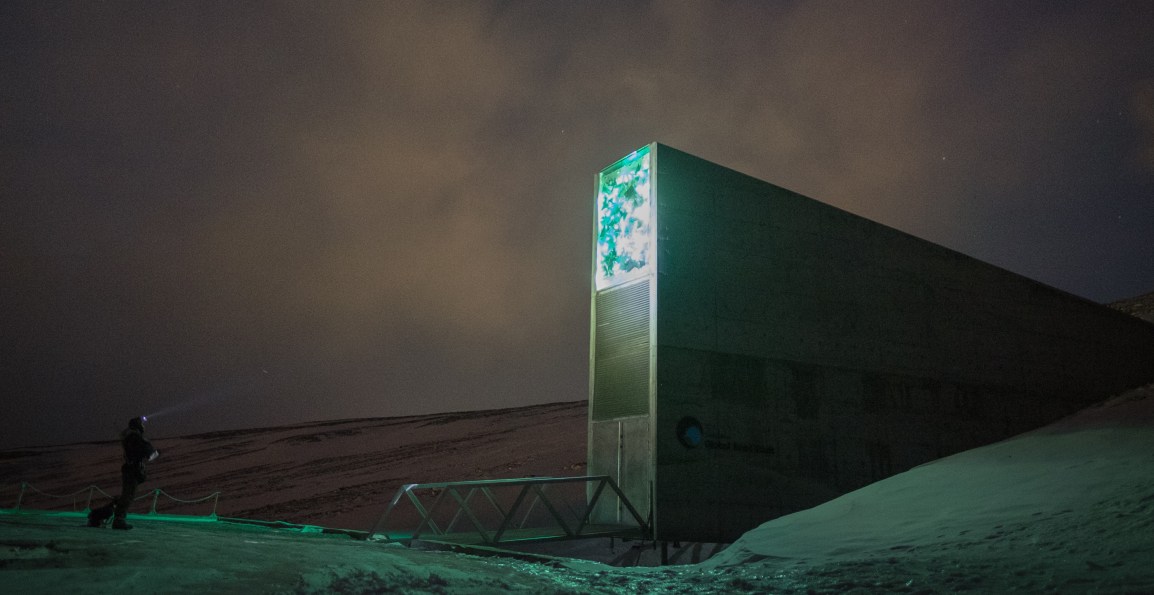
The Svalbard Global Seed Vault, also called The Doomsday Seed Vault, is a seed bank which is located in Norway. It is in within the Arctic Circle in close proximity to The North Pole, and contains duplicates of a wide variety of plant seeds that are held in other gene banks worldwide. The main purpose of its creation was to preserve these seeds, so that they will be available in the event of a global crisis. The seed bank is 120m inside a sandstone mountain on Spitsbergen Island, and the seeds within it are packed in special three-ply foil packets. These are then heat sealed to ensure that no moisture can get in. The vault contains approximately 1.5 million species of agricultural crops, which it is expected to keep unharmed for hundreds (or thousands) of years.

The site for the seed bank was chosen for a number of reasons, including the fact there the area has a minimal amount of tectonic activity. It is also surrounded by permafrost, which will aid in the preservation of the seeds. Another major factor was its height, 130m above sea level, which would allow the vault to remain dry in the event of the surrounding ice caps melting. This was not expected to take place for at least several decades, however. Unfortunately, with global warming accelerating at an alarming rate, the vault’s capabilities have already been put to the test.
The melting of the area’s permafrost, has recently caused a flood which resulted in water entering the Doomsday Seed Vault. Fortunately, the seeds remained out of the reach of the water, proving that the permafrost melting would not pose a problem in the future. One of the structure’s chief creators, Cary Fowler, has also put concerns to rest about the vault being able to withstand other threats of flooding. If the surrounding water levels rise drastically, or a pumping system failure occurs, and water enters the vault, it will encounter temperatures of -18 degrees Celsius. This would cause the water to refreeze, and create additional protection for the seeds.

The area surrounding the vault is currently one of the most susceptible to the dangers of global warming, as the temperatures in the Arctic rise quicker than the rest of the world. These dangers are increasing at an alarming rate, with 2016 being the hottest year to date and 2017 expected to surpass it. Even though the vault’s structure has proven to be safe for the seeds’ preservation, Norway is making improvements to the surrounding area to ensure that any water surrounding it will drain away properly. They have emphasized that these seeds are being preserved to benefit the entire world, and need to be protected at all costs. The country has also emphasized the need for worldwide changes to minimize the drastic acceleration of global warming.
The Cassini Probe – Exploring the Possibility of Life on Saturn

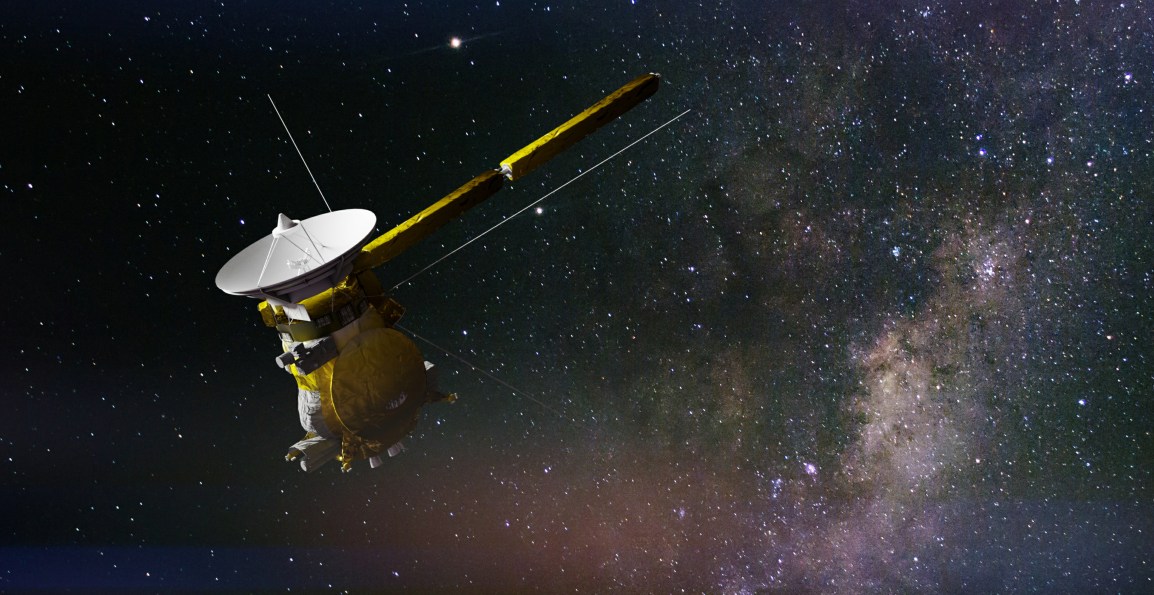
In 2004, the Cassini spacecraft began the first in-depth study of the planet Saturn. The vessel is equipped with 12 instruments, which have been designed to collect data about several areas of the planet: including its moons, rings, environment and magnetosphere. The knowledge that the spacecraft has uncovered is so extensive that the mission has been extended twice. The final mission, a seven year period called Cassini Solstice Mission, will end with ‘The Grand Finale.’ This event is scheduled to incorporate 22 deep dives between the planet’s clouds and innermost ring, ending with a massive plunge directly into its atmosphere.

Cassini has unveiled a significant amount of information about the planet’s system, it many moons and the rings which surround it. Its largest moon, Titan, has shown many features which scientists believe are similar to those that would have appeared on our planet, before life on Earth evolved. These include: lakes, rivers, dunes and possibly volcanoes. Another moon, Enceladus, has also yielded unexpected observations. This moon has a spray of icy particles that form a towering plume from its surface, which is three times its diameter. These geyser-like jets spew water vapor and ice particles into Saturn’s most expansive ring, the E ring, at an average of 800 miles per hour from an underground ocean beneath the moon’s icy crust. Measurements taken by the vessel, show the water body to be approximately 6 miles deep under an icy shell between 19 and 25 miles thick.

Coming as close as 15 miles to the moon, Cassini has unearthed that the fresh coating on it, and the icy particles fed into the E ring, originate from vents which are connected to a global subsurface saltwater ocean. The E ring is made mostly of ice droplets, but contains peculiar nanoparticles which Cassini detected. These can only be generated where liquid water and rock interact at temperatures greater than 90 degrees Celsius. This had led scientists to speculate that there may be hydrothermal vents beneath Enceladus’ icy shell, similar to those that can be found on Earth’s ocean floor. The information that Cassini has sent back to Earth, also revealed molecular hydrogen and carbon dioxide to be present. These factors are essential for methanogenesis, a process which sustains tiny life forms in dark underwater environments, to take place.

The plume venting from Enceladus’ south pole, the hydrocarbons within the plume, and a salty ocean with hydrothermal vents all point to a habitable surface and the possibility of locating life beyond Earth’s atmosphere. The three necessities for sustaining life: water, organic molecules, and an energy source have been found on Enceladus. This discovery is believed to be one of the most scientifically interesting finds about our Solar System to date and, as more information is collected from Cassini, there may be additional evidence that will help to prove the theory.

Chargeable Roads – Expanding the Use of Electronic Vehicles

Many countries are opting to use sustainable methods of public transport, such as electric vehicles, to create a safer, healthier environment for their citizens. There are disadvantages of their use, however, such as the large batteries that are needed for their operation and the need to plug them in at charging stations. To avoid these inconveniences, the Israeli government is collaborating with ElectRoad to install roads which will charge electric buses on their journey, starting with one of Tel Aviv’s current bus routes.

https://www.electroad.me/

ElectRoad is proposing to create a wireless system which will be economic enough to be adapted for cities worldwide. The company has no doubts that their ‘inductive charging’ technology is completely cost effective and allows buses to carry light, inexpensive batteries instead of the heavy ones currently equipping them. The buses will also be charged while on the go, eliminating the need for stationary periods to recharge. Once installed the infrastructure will be able to charge any vehicle which has a compatible battery.

The company demonstrated the technology at their headquarters in Caesarea, winning a $12,000 grant from Israel’s Ministry of Transport and Road Safety to help fund the installation of the new road. The route will be approximately 1/2 a mile in length and is expected to open in 2018. If it proves to be a worthwhile investment, the Israeli government plans to expand on the use of this technology. Other countries, including South Korea, have already installed several wireless bus routes. ElectRoad believes that their option is more affordable on a large scale, however, because of the cheaper transformers which are required and the shorter, more efficient installation process.

Induction charging is a process which has been used to create power sources since the 1890s and involves the creation of energy from the interaction of two electromagnetic fields. This will be the first time the technology will be applied to an item as large as a bus. Plates of copper will be embedded into the roads, which will be supplied with power from inverters placed along the sides. Copper plates will also be installed on the underside of the buses, allowing the two fields to interact as the buses drive over. The technology can be installed into existing roads with minor disruptions, and the buses will be able to travel off the charging road for about three miles. Each vehicle will be required to have a small battery onboard to facilitate acceleration, as well as travel outside the charging zone.

There are several disadvantages which have been raised about the installation of these roads, however, which ElectRoad are confident they will be able to overcome. This includes the fact that the buses might stray from the main strip or become misaligned. The batteries for electric vehicles are also becoming cheaper, lighter and more efficient. The company acknowledges that the prices of batteries have fallen significantly but also claim that their technology is to be used for citywide infrastructure on larger scales, and they remain optimistic about its expansion.

FCX-001 – Bell Helicopter’s Futuristic Flying Machine

Bell’s Helicopter unveiled their latest flying vehicle in March 2017 at the Heli-Expo in Dallas, Texas. Known as the FCX-001, it includes the latest advancements in flight technology. The advanced airframe design is constructed from sustainable materials, which will provide increased structural performance and can be adapted to suit different clients. They will also provide enhanced visibility, as well as a larger area for those that occupy the helicopter. The vehicle’s frame is its frontline for energy management where external energy, or unused system energy, is harvested, stored and distributed.

The FCX-001 is set to run on hybrid power, which will combine thermal engine cores with electric distribution and motors to drive the anti-torque system. This will allow for better control, simpler operations and less maintenance. In addition, the system’s flight control is operated via three separate and independent computers. During a journey, the system evaluates and calculates the optimal method to process the digital orders that the pilot has provided. This ensures that the aircraft will not be compromised during flight, and is supported by extra redundancy. The anti-torque system within the aircraft, is also designed to improve safety conditions, and monitor noise levels and performance parameters. It is embedded in the tail boom, and uses thrust vectoring control capability.

Image: Bell Helicopter

The company has been researching ways of applying morphing technology to different areas of flight, for an extended period. In the FCX-001, the morphing rotor blades have been designed so that the aircraft will be able to optimise its performance under different flight conditions. Individual morphing technologies were applied such as blades, inlets and aerodynamic surfaces, through advanced actuation, materials or a combination of both. The helicopter also has futuristic landing gear on board, which has been designed using non-traditional geometric structures. This will combine with its advanced building material to facilitate an increased function. The use of actuation was also applied to improve the vehicle’s manoeuvring capabilities, as well as absorb the landing energy for improved safety and comfort in ground operations.

Another area that the company focused on when designing the FCX-001 was the gradual transition to autonomous vehicles that is currently taking place. The cockpit is equipped with a single pilot seat, and the Multi Functional Display removed to enhance the pilot’s visibility during flights. The aircraft will be controlled using augmented reality and an artificial intelligence computer system. The pilot will be able to control the vehicle’s safety and the direction of the mission, while the computer operates as a co-pilot. This is a necessary step in moving over to include a fully autonomous pilot system in these aircrafts. As well as the pilot’s area, the cabin is enhanced with a flooring system which allows for seating changes to accommodate various passengers or cargo. It also contains fully customisable LED lighting and pop-down air ventilation systems, which will help to increase passengers’ comfort.

Cryogenics – Re-establishing Life After Death

The human body is capable of amazing things, such as healing broken bones and regenerating cells. Regardless of our regenerative abilities we are still unable to avoid death, and there are many people who would like to prolong their lives. For this reason they are preserving their body in liquid nitrogen, in a process called cryogenics, with the hope that science will soon be advanced enough to give them new life. Even though cryogenic freezing is only possible after a person has been declared legally dead, people with diseases which cause their death are also opting to be frozen, believing that they can be resurrected after a cure has been found.

The process of freezing the body begins as soon as possible after death to minimize potential brain damage. It is first cooled in an ice bath to gradually reduce its temperature, and in some cases CPR may be administered to prevent the death of brain cells. The blood is then drained from the person’s system and replaced with an anti-freeze fluid, to prevent harmful crystals from forming within the blood. After this initial process, it is packed in ice and transferred to a holding facility in either the United States or Russia.

Upon arrival, the body is put in an arctic freezing bag to be cooled by nitrogen gas to -196 C over a period of two days. Each one is then transferred to a storage facility, known as a ’patient care bay,’ where it remains suspended in liquid nitrogen until it will be time to resurrect it. The process can also be performed by removing the head and freezing it without the body. This is known as neuro-cryopreservation and is done in the expectation that a new body can be cloned, to attach the head to, when the technology becomes available.

Acclaimed neuroscientist, Dr. Sergio Canavero, has recently announced that the world’s first human head transplant will be attempted within the next 10 months. The operation will take place on a Chinese citizen, in Harbin, China, who will be the recipient of a donor body. Its success will also lead to even greater advances, as the team will then attempt to reawaken the first frozen head. Canavero will remove the brain from a cryogenically frozen head and transplant it in a donor body, resulting in the first technologically assisted human resurrection.

There have been no documented experiments to date, in which a mammalian brain has been re-awakened after being frozen in liquid nitrogen. This means that scientists are unsure of the possible complications that may occur. Irreversible damage may have occurred during the freezing process, and upon awakening the individual may display decreased mental facilities or great emotional trauma. In addition to possible complications, the success of the reawakening will answer other questions such as what really happens after death and how well the process of cryogenics really works.