
Aging is a subject that effects everyone and almost everyone in the modern world is busy finding effective and harmless ways to slow it down. Scientists have recently made an incredible step forward in their experiments by extending the life span of worms. According to a study published in July in the journal Cell Reports, a team of international researchers have made it possible for a worm, that lives typically for three or four weeks only, to live five times longer than his expected life-time. This is similar to a human being living 400 years. Scientists are confident that some additional research can turn this study into reality in near future.
 How will this be done?
Molecules in a cell act as the pathway to carry various cellular functions. One molecule receives a signal to do something then transfers that signal to another molecule. The other molecule transfers the message to the next one and so on until the signal or message is acted upon. As the field of biology is very wide, researchers found a link between the insulin signalling pathway and the aging signalling pathway.
All the experimenting was done on a worm. When scientists changed the first pathway, the life span of the worm doubled, but by altering the second pathway the life span increased by about thirty percent. So, logically it was concluded that by changing both the pathways the average life span can be increased by about 130 percent.
However, the scientists argued that doing this should actually increase the life span by about 500 percent. To support this statement Jarod Rollins of the MDI Biological Laboratory said in a press release “…the synergistic extension is really wild, the effect is not one plus one equals two, it is one plus one equals five. Our findings demonstrate that nothing in nature exists in a vacuum; in order to develop the most effective anti-aging treatments we have to look at the longevity networks rather than individual pathways…”
 These findings showed that aging is not simply the result of one specific gene or pathway acting on its own, but rather a union of networks all working together for the long term. This will certainly help explain why no single gene or pathway has been found that can provide longer life for worms, humans, or any other animal.
Although worms are not like humans, they do share many similar cellular pathways with us. So, scientists have now agreed that the process used to extend the lifespan of worms could also be applied to human beings.
Despite all efforts, the manner of interaction between pathways has not been found yet. The president of MDI Biological Laboratory Hermann Haller in a press release said “… by helping to characterize these interactions, our scientists are paving the way for much needed therapies to increase a healthy lifespan for a rapidly aging population…”

 “Carbon, the basis of all living forms and an important source of energy for humanity, is moving across the planet from the mantle to the atmosphere. To maintain a stable future, it is imperative that we understand the full carbon cycle”, said Marie Edmondson of the University of Cambridge, who participated in the DCO program.
 However, as usual when we talk about climate change, the problem is not the concentration, but the trend. To get an idea, when scientists started recording in 1959, the figures were at 315 ppm and most of the growth has occurred in recent years. According to the United States Oceanic and Atmospheric Administration (NOAA), three of the four largest increases in atmospheric CO2 have occurred in the last four years.
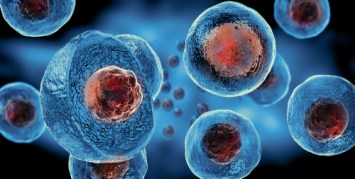 The steps that have been taken are just the beginning and there is a very long way to go until scientists are able to completely replicate a human brain and successfully implant it into a metal body.
 To proceed with the experiment, Dr. Muotri hooked the mini brains up onto a spider-shaped robot in order to study the neural activity. The results that he got from this could possibly prove that scientists are now able to generate partially conscious life in a laboratory.
 However, the downfall of this futuristic city is that it will force the local tribes to relocate that have existed in Saudi Arabia for centuries. It is also planned that a human gene-editing clinic will be placed within the city and the city will be under surveillance of the government 24 hours of the day. It seems that the city is more of a dystopian future in books rather than a futuristic, fun tourist spot.
 Facebook says that they are in collaboration with scientists and researchers at the University of California to work on this new invention. They stated that they want to connect the world without any limitations whether they are geographical, physical or mental. They want to make the world instantly accessible and completely hands-free. So with collaboration from researchers, Facebook is trying to build a device that will let patients with neurological diseases have a voice again by examining their brain’s activity in real-time.
 However, there is much more work to be done. Right now the project is just at the beginning stage where it is starting to take form. What the researchers aim to achieve will take many years of trials and practice. The researchers want to decode around 100 words per minute with a vocabulary of 1000 words, and they want less than a 17% chance of error. This is a huge goal for the researchers and if this is achieved, it could transform the technological world.
 The CO of SpaceX does not only want to send humans onto mars to visit but he even sees them starting a permanent settlement. If things go according to the Musk’s plan, a proper city and settlement on Mars could be developed as early as 2050.
 It is said that they will be using the Starship to start the mission onto Mars. The rocket is a 348-foot rocket, made out of stainless steel and is completely reusable, it holds a pressurized cabin which could easily hold up to 100 people within it and take them up to Mars. It is also made to carry payload to Mars, however only if SpaceX can solve the problem of adding more fuel during orbit.
 R. E. KEARNEY