Speaking to the Dead

Artificial Intelligence has come a long way in the last decade, but this latest advancement might be one of the most unusual applications for it – allowing the dead to speak to you!

In what was a surprise to the mourners at her funeral, Marina Smith was able to address them via a holographic conversational video experience, which was created by a startup company called StoryFile. Interestingly StoryFile was founded by Marina Smith’s son, Stephen Smith, based in LA. StoryFile was originally created to preserve the memories, recollections and stories of the Holocaust survivors. But, with Marina, they took 20 cameras and filmed her answering about 250 questions, allowing them to virtually recreate her in their software to make her appearance at her own funeral appear as natural as possible.

With so much visual and vocal data, Stephen Smith was able to converse with his mother at the funeral, as well as allowing other attendants to ask questions.

“The extraordinary thing was that she answered their questions with new details and honesty,” Stephen explained. “People feel emboldened when recording their data. Mourners might get a freer, truer version of their lost loved one.”

However, this wasn’t the first time StoryFile had used their technology to recreate a dead person at their own funeral. Earlier this year former Screen Actors Guild president Ed Asner answered questions from the mourners at his own funeral.

“Nothing could prepare me for what I was going to witness when I saw it,” said Matt Asner, Ed’s son. “Other attendees were ‘a little creeped out’ because it was like having him in the room.”

Currently, in Silicon Valley, there seems to be a bit of a trend to technology which allows users to speak to the dead. Amazon added a new feature to their Alexa speaker, allowing the voice of a dead relative to read a bedtime story to a child. Amazon made this possible, not by taking hours of recording in a studio, but by sampling less than a minute of speech. “We are unquestionably living in the golden era of AI, where our dreams and science fictions are becoming a reality,” said Rohit Prasad, head scientist for Alexa.

Whilst the application of mimicking a dead person’s voice might be comforting to some, it’s also seen by many as a step too far and an obscure use of Artificial Intelligence. It could also open up the possibilities for criminals using a person’s voice, dead or alive, for nefarious purposes.

Brain Implants

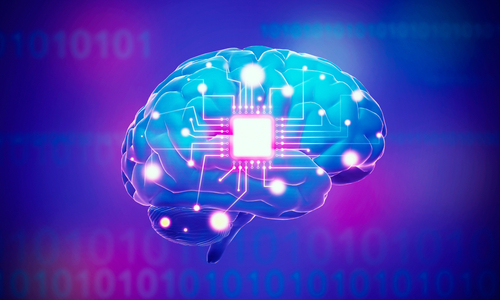
For many years medical teams have tried to come up with a permanent prevention or cure for paralysis, and it appears that scientists and medical researchers have made significant breakthroughs in the form of a brain implant.

Fortunately, brain implants have worked for many patients who were sure they were going to live the rest of their lives without being able to move their arms and legs due to severe spinal cord or head injuries. By using a brain-computer interface the lost connection between the brain and other organs was restored, allowing the patient to live their life like a normal healthy individual. It is a huge step forward in medicine.

There is an argument about whether the much sought-after treatment will be available for patients from all social classes? More importantly, will it be easily available in third-world countries where the rate of disease leading to paralysis is significantly high?

The procedure costs somewhere between $70,000 and $100,000 making it too expensive for most people with or without health insurance.

It will be quite a few decades until the procedure is available, but the procedure does not seem to be widely available due to the complex nature and cost. Even more common performed treatments like liver and kidney transplants are not easily available in many parts of the world.

Despite this, it is a remarkable discovery by scientists. Hopefully, with more researches and investment, more accessible options might be available for the benefit of everyone.

In a separate study, Scientists from Stanford successfully implanted a device into a man’s brain that allowed his paralyzed hands to type words with nothing more than the power of thought. Known as a Brain-Computer Interface (BCI), it enables the user to restore basic motor skills including talking and moving, by decoding the neural activity in the motor cortex. But this could only be the start of some incredible things to come, including curing mental health issues.

Theodore Berger, a neuroscientist in Southern California, has been working on a memory chip that mimics the function of the Hippocampus – the part of the brain responsible for memories. Using the chip Berger has successfully managed to restore long term memory in rats. Trials in humans are in the very early stages, but with millions of people suffering from neurodegenerative complications from Alzheimers, Strokes or brain injuries, it seems that there are many applications for Berger’s technology should it be successful in trial.

Restoring Sight

Scientists have been immersed in the journey of discovering great mysteries for decades. To comprehend the complexities of this earth to human life, we have witnessed exciting theories and claims over the years. However, this time, it is even more surprising as the collaborative efforts of these remarkable scientists have resulted in a fantastic discovery – reviving the twinkle in a dead human eye!

In medical science, the life space of human cells effects the process of organ transplants, for instance, kidneys remain usable 24 to 36 hours after the donor’s demise if preserved in the appropriate surroundings. However, this is not the case for human eye cells, as the nervous system stops working immediately after a human dies due to deprivation of oxygen. Nevertheless, earlier last week, an article was published in the New York Post spelling out the successful revival of photosensitive neurons, pioneering a revolution into the possibilities for brain and eye disorders, including blindness. 

This outcome gives hope to people with eye disorders. “Just being able to take these donor’s eyes and learn how the retina works, and what is going wrong in these illnesses is a significant deal,” said Fatima Abbas, lead author of the new study at the University of Utah.

Regrettably, light-sensing cells, termed ‘photoreceptors,’ do not communicate with neighboring cells due to oxygen deprivation after death. Therefore, a particular transport unit was designed to solve this problem that included artificial blood, oxygen, and essential nutrients. This approach found that they could make the retinal cells communicate in the same way they do in living bodies.

“Past studies have restored very little electrical activity in organ donor eyes, but never to the amount we have now proven,” said Frans Vinberg, a Moran Eye Centre scientist who also participated in the study.

This breakthrough might also contribute to advances in optogenetics, allowing some patients with eye illnesses to regain their eyesight. The University of Utah research has been published in the journal eLife.

Discovering Endurance

According to open-source data, there are currently approximately 3 million sunken ships at the bottom of the seas and oceans. The majority of them were sunk during war, the second reason owing to poor visibility and other situations, and the third due to old age. One of these was the ship “Endurance,” which sank off the coast of Antarctica in 1915 while being utilized by scientists as part of the Imperial Transantarctic Expedition. Researchers have tried numerous times to locate it, with the most recent attempt being in 2022 which was successful; the old ship was discovered at a depth of more than three kilometers in the Weddell Sea.

Imperial Transantarctic Expedition

In 1914, Endurance commenced service. The Imperial Transantarctic Expedition was organized by Ernest Shackleton, an Anglo-Irish explorer of the polar regions. The research mission’s goal was to traverse Antarctica’s entire landmass. He put together a crew of 56 people, and the Aurora and Endurance ships took them to the South Pole.

Search for the sunken ship Endurance

Many attempts have been made by modern scientists and explorers to determine the exact location of where the ship sank. Their interest stemmed from the fact that the ship should have been well preserved in the frigid waters of Antarctica, where there was no oxygen or light. The Endurance22 mission, which began in early 2022, attempted again to locate the ship. The ship was found in the quickest time feasible by a crew commanded by adventurer John Shears, based on information gathered on previous missions.

The members of the expedition began scanning the region in the Weddell Sea right away. The polar explorers were based on the “Agulhas II,” a South African ship. Saab Sabertooth search vehicles, which are equipped with sensors, lights, and cameras, were utilized to scan the seabed. The ship was discovered at a depth of 3008 meters after a brief search. The recovered vessel is well preserved, according to British maritime archaeologist Mensun Bound, which is exactly what the experts expected. The ship “Endurance” is now a historical landmark and a monument.

Today, millions of sunken ships lay at the bottom of the seas and oceans. Scientists consider them to be “time capsules” that may teach a lot about the lives of individuals from different historical periods by looking at them. Ancient Greek and Roman wrecks are particularly noteworthy because they frequently contain statues and other pieces of art. As a result, the famed Antikythera Youth statue was discovered in 1900, not far from the Greek island of Antikythera.

What If Artificial Intelligence Was Already Conscious?

The development of a general artificial intelligence is the ultimate objective of the majority of high-level AI research (GAI). In essence, they’re aiming for a computer brain to perform as well as a human brain in a body with equivalent capabilities.

We’re still decades away from anything like this, according to most experts. Nobody knows what GAI looks like yet, unlike other highly complicated problems like nuclear fusion or readjusting the Hubble Constant.

Researchers don’t have a complete grasp on the nature of intelligence in the human brain, or the nature of conscious experience in general. Our understanding of how intellect and consciousness arise in the human brain is still in its infancy.

For AI, we have only patched neural networks and smart algorithms in place of the GAI. To argue that modern AI will ever be able to think like a human and illustrate a route toward robot consciousness is extremely difficult, and even more difficult to do so. However, it’s not out of the question.

It’s possible that AI is already conscious.

An article on the nature of consciousness by mathematician Johannes Kleiner and physicist Sean Tull was recently pre-published. It suggests that the universe and everything in it are imbued with physical consciousness.

The Integrated Information Hypothesis of Consciousness (IITC) is a prominent theory that attempts to explain consciousness as a collection of interrelated information (ITT). Everything, according to this theory, is conscious in some way or other.

This is an intriguing hypothesis, because it is based on the premise that physical conditions lead to changes in awareness. This “capacity to experience” things makes you conscious. One way to tell if a tree has consciousness is to look at how it reaches out to the sun. An ant’s consciousness arises as a result of the ant-specific experiences it has, and so on.

It’s a little difficult to go from live things like ants to inanimate stuff like pebbles and spoons. As Neo found out in The Matrix: “There’s no spoon.” Those creatures, though, could be aware. In place of the spoons, there are merely molecules arranged in a spoon-like fashion. If you keep looking, you’ll eventually get to the subatomic particles that are shared by all of the universe’s physical entities. It’s the same material that’s in trees, ants, rocks, and utensils.

What does this have to do with artificial intelligence? Individual systems at the macro- and micro-scale that express the independent ability to act and react in response to external stimuli could be regarded as universal awareness.

If shared reality is what consciousness indicates, then intellect isn’t necessary; all that’s needed is the ability to perceive existence. So, if the math supports latent global awareness, AI already shows a consciousness level comparable to spoons and rocks.

This has mind-boggling consequences for the future. It’s hard to care about what it’s like to be a rock right now. Because of the IITC extrapolation, which assumes that we will solve GAI, robots with consciousness will one day be able to explain how it feels to be an inanimate item in this universe.

A Cure For HIV

Scientists reported last week that a woman of mixed race had become the third person believed to be cured of HIV through the use of a stem cell transplant from a donor naturally resistant to the virus. Success with the new umbilical cord blood technique could allow physicians to assist more patients of various genders and races.

AIDS-causing virus HIV has previously been treated in two patients who appeared to have recovered using a different procedure. When Timothy Brown and Adam Castillejo were diagnosed with HIV, they were given bone marrow transplants from donors with a genetic mutation that prevents HIV infection. Adult hematopoietic stem cells can be found in bone marrow and umbilical cord blood, which are supplied by the parents of newborns. All of the immune system’s blood cells are derived from these stem cells.

A donor with natural immunity to HIV was chosen for the female patient’s umbilical cord blood treatment for leukaemia in the belief that it would help her battle both illnesses. It’s been 14 months since the woman, who prefers to remain anonymous, has been rid of the virus, according to specialists.

The two male patients were the first to be cured of HIV with the use of umbilical cord blood, a less intrusive and more generally available therapy option than the more invasive bone marrow transplant. Because cord blood donors aren’t as closely matched to the recipient as bone marrow donors, it can be an alternative for patients with unusual tissue types.

AIDS expert Steven Deeks, who was not involved in the study, said: “The fact that she’s mixed race, and that she’s a woman, that is incredibly important scientifically and really important in terms of the community impact.”

In contrast to Brown and Castillejo, the woman was discharged from the hospital 17 days following her bone marrow transplant without showing any signs of graft-versus-host disease. It was a stem cell transplant that saved the lives of all three individuals who appeared to have beaten HIV.

Despite the apparent success of the medication, most of the 38 million people living with HIV around the world will not be able to benefit from it at the moment. HIV patients who receive cord blood stem cell transplants for cancer treatment are part of a bigger study that will follow a total of 25 people with HIV who receive transplants for aggressive malignancies like leukaemia.

Koen van Besien, director of Weill Cornell Medicine’s stem cell transplant programme and one of the clinicians engaged in therapy, estimates that there are roughly 50 individuals in the US each year that could benefit from this technique. For these individuals, the use of cord blood grafts that are only partially matched dramatically increases the chance of finding a compatible donor.