Dark Matter Exists

Astronomers may have finally glimpsed dark matter, with recent gamma-ray observations offering the strongest evidence yet of its existence. In late 2025, researchers at the University of Tokyo reported signals from NASA’s Fermi Gamma-ray Space Telescope that match long-standing predictions of how dark matter particles should behave, potentially marking the first direct detection of this elusive cosmic substance.

The Invisible Framework of the Cosmos

For nearly a century, scientists have wrestled with the mystery of dark matter, a hypothetical form of matter that does not emit, absorb, or reflect light. Its existence was first proposed in the 1930s by Swiss astronomer Fritz Zwicky, who noticed that galaxies in the Coma Cluster were moving too fast to be held together by visible matter alone. Later, in the 1970s, Vera Rubin’s studies of galactic rotation curves reinforced the idea that something unseen was exerting gravitational influence. Today, dark matter is thought to make up about 85% of the universe’s mass and roughly 25% of its total energy content, yet it has remained undetectable by conventional means.

The Recent Breakthrough
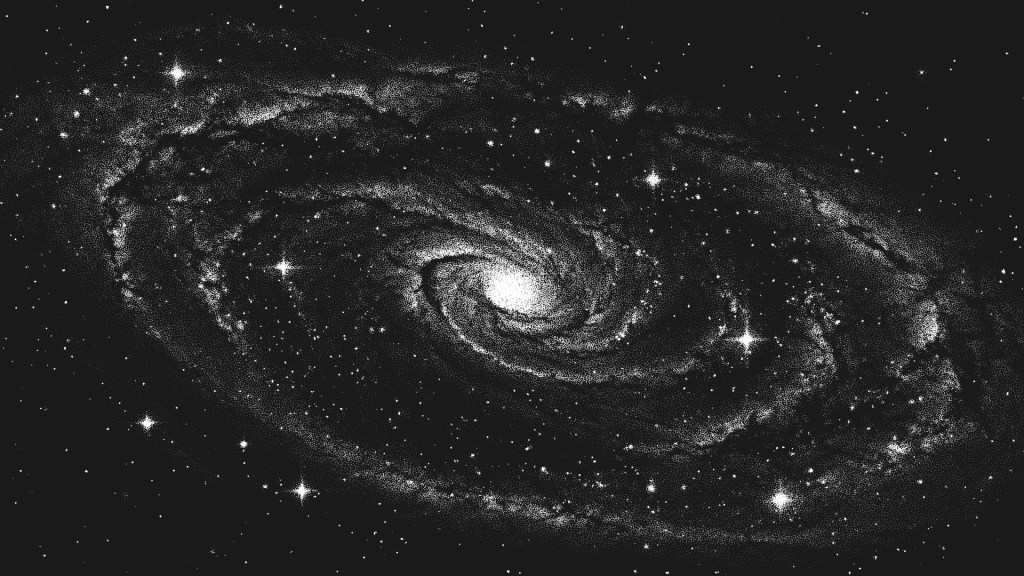
In November 2025, astronomer Tomonori Totani of the University of Tokyo analyzed 15 years of Fermi Telescope data and identified a halo of high-energy gamma rays surrounding the Milky Way’s center. These gamma rays align strikingly well with theoretical predictions of weakly interacting massive particles (WIMPs)—a leading candidate for dark matter. According to models, when WIMPs collide and annihilate, they should release photons at specific energy levels. The observed glow matches these expectations in both intensity and spatial distribution, making it one of the most compelling leads in decades.

Why This Matters

If confirmed, this discovery would represent humanity’s first direct observation of dark matter, a milestone comparable to the detection of gravitational waves in 2015. It could:

  • Validate decades of theoretical physics by confirming WIMPs as real particles.
  • Revolutionize cosmology, offering insights into galaxy formation and the large-scale structure of the universe.
  • Open new physics beyond the Standard Model, since dark matter does not fit neatly into existing frameworks.

Skepticism and Next Steps
Despite the excitement, scientists remain cautious. Gamma-ray signals can also be produced by astrophysical sources such as pulsars or black hole activity. Distinguishing between these and genuine dark matter annihilation requires further analysis. Independent teams will need to replicate the findings, and future instruments—such as the Cherenkov Telescope Array—may provide higher-resolution data to confirm or refute the claim.

Conclusion

Dark matter has long been described as the “invisible glue” holding the universe together. The recent gamma-ray detection may finally have given us a glimpse of this hidden substance, marking a turning point in astrophysics. While skepticism is warranted until the evidence is independently verified, the possibility that we are witnessing dark matter for the first time is both thrilling and profound. If confirmed, this breakthrough will reshape our understanding of the cosmos and open new frontiers in physics.


The Perilous Descent of Space Junk

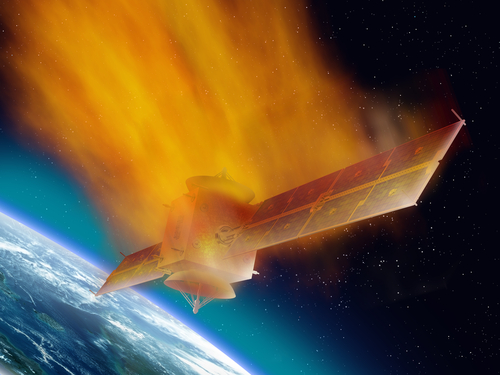
In the vast expanse above Earth, thousands of defunct satellites, spent rocket stages, and fragments from past missions orbit silently. This detritus—known as space junk—is the unintended legacy of decades of space exploration. While most of it remains aloft, some pieces inevitably succumb to gravity, reentering Earth’s atmosphere in fiery descents that can end in dramatic crashes.

What Is Space Junk?

Space junk, or orbital debris, includes any human-made object in space that no longer serves a useful purpose. This ranges from tiny paint flecks to massive rocket components. As of 2025, there are over 30,000 tracked pieces of debris larger than 10 cm, and countless smaller fragments that pose risks to spacecraft and satellites.

How Does It Fall to Earth?

Most space junk orbits in low Earth orbit (LEO), where atmospheric drag gradually slows objects down. Over time—sometimes decades—this drag causes them to spiral inward. When they reenter the atmosphere, friction heats them to extreme temperatures, often causing them to burn up. However, larger, denser components like fuel tanks or pressure vessels can survive the descent and crash to Earth.

Recent incidents highlight the unpredictability of these reentries. In October 2025, a charred, smoldering object was discovered on a remote road in Western Australia. Experts believe it was a composite-overwrapped pressure vessel from a Chinese Jielong-3 rocket launched the previous month. The debris, made of carbon fiber, was still smoking when mine workers found it, prompting a multi-agency investigation.

Tracking and Risk Management

Agencies like NASA and ESA monitor space debris using radar and telescopes. When a large object is predicted to reenter, alerts are issued. Yet pinpointing the exact time and location of reentry is notoriously difficult due to variables like atmospheric density and object shape.

While most debris falls harmlessly into oceans or uninhabited regions, the risk to people and property isn’t zero. The failed Soviet Venus lander Kosmos 482, for example, orbited Earth for over 50 years before crashing into the Indian Ocean in May 2025. Though it caused no damage, experts warned of a “not-trivial chance” it could have struck land.

Mitigating the Threat

To curb the growing hazard, space agencies are adopting debris mitigation strategies. These include designing satellites to deorbit safely, using propulsion to steer defunct objects into controlled reentry paths, and developing technologies to capture or push debris into disposal orbits.

Private companies and international coalitions are also exploring active debris removal—essentially space cleanup missions. Concepts range from robotic arms to nets and harpoons, aiming to reduce the clutter before it becomes catastrophic.

A Shared Responsibility

As humanity’s presence in space expands, so does our responsibility to manage its byproducts. Space junk isn’t just a technical challenge—it’s a reflection of our stewardship of the final frontier. Whether through smarter design, better tracking, or international cooperation, the goal is clear: keep the skies safe, and ensure that what goes up doesn’t come crashing down unexpectedly.

Bioluminescent Plants

In a breakthrough that feels plucked straight from the world of Avatar, scientists have unveiled a new generation of bioluminescent plants—succulents that glow in vivid hues after absorbing sunlight. This development, led by researchers at South China Agricultural University, marks a significant leap in sustainable lighting and bioengineering.

Unlike previous attempts that relied on genetic modification using bioluminescent genes from fireflies or fungi, this new method uses “afterglow” phosphor particles. These particles, made from strontium aluminate and other metals, are injected into the leaves of succulents. Once exposed to light, they absorb energy and slowly release it over time, emitting a soft glow that can last for hours.

What sets this innovation apart is its simplicity and versatility. The particles are carefully sized—about 6 to 8 micrometers, roughly the width of a red blood cell—allowing them to diffuse efficiently through plant tissues while still producing a strong luminescent effect. The result? Succulents that shine in a rainbow of colors, including green, red, blue, and violet. Researchers even created a wall of 56 glowing plants bright enough to read by.

The implications of this technology are both practical and poetic.

Sustainable Lighting
Imagine replacing streetlights with glowing trees or using bioluminescent plants as ambient lighting in homes, offices, or public spaces. These living lights could reduce energy consumption and carbon emissions, especially in regions with abundant sunlight. Unlike traditional bulbs, they require no wiring, batteries, or electricity—just a dose of daylight.

Art and Design
Bioluminescent plants open new doors for landscape architecture and interior design. From glowing garden paths to radiant centerpieces, they offer a dynamic, eco-friendly alternative to artificial lighting. Their multicolored glow can be tailored to evoke specific moods or aesthetics, transforming spaces into immersive, living art installations.

Educational and Scientific Tools
These plants could serve as engaging tools in classrooms and labs, helping students visualize concepts like energy transfer, photosynthesis, and material science. Their glow also makes them useful for imaging and tracing in biological research, where visibility in low-light conditions is crucial.

Environmental Monitoring
Future iterations might integrate sensors that respond to environmental changes—glowing brighter in response to pollutants or temperature shifts. This could turn ordinary plants into bioindicators, offering real-time feedback on ecosystem health.

While the current method involves injecting particles manually, researchers are exploring ways to make the process scalable and even self-sustaining. The dream is to engineer plants that can absorb and emit light naturally, without external intervention.

As study lead Shuting Liu puts it, “Picture the world of Avatar, where glowing plants light up an entire ecosystem. We wanted to make that vision possible using materials we already work with in the lab”.

With this luminous leap forward, the line between nature and technology continues to blur—inviting us to imagine a future where our cities glow not with neon, but with life.

Earth’s Ever-Changing Spin

The Earth spins on its axis at roughly 1,670 kilometers per hour at the equator, completing one full rotation every 24 hours. This constant turning defines our day and night, but intriguing fluctuations in Earth’s rotational speed have puzzled scientists for decades. These variations—sometimes speeding up slightly, other times slowing down—aren’t just trivia for astronomers. They’re subtle fingerprints of powerful forces acting on our planet from within and beyond.

Why Earth Spins—and Why It Shouldn’t Be So Constant

The Earth’s rotation is a relic of its formation. Billions of years ago, colliding dust and gas formed our planet, and the conservation of angular momentum from that chaotic birth gave Earth its initial spin. With no friction in the vacuum of space, it would seem Earth’s rotation should remain unchanged—but our world isn’t isolated.

In reality, the rotation is affected by many internal and external forces, turning this steady spin into a cosmic balancing act.

The Braking Force of Tides

One of the most influential factors slowing down Earth’s rotation is tidal friction. The gravitational pull of the Moon and Sun on Earth’s oceans creates tides, which don’t perfectly align with the Moon’s position. These misalignments exert drag on the planet, acting as a brake.

Over millions of years, this friction has gradually extended our day length. In fact, fossil records suggest that during the Devonian period about 400 million years ago, a day lasted just over 21 hours.

Quakes, Glacial Melt, and Earth’s Inner Dynamics

Sometimes, Earth unexpectedly speeds up. Large-scale geological events can redistribute Earth’s mass and subtly tweak its spin. For example:

  • Major earthquakes—like the 2004 Sumatra-Andaman quake—shift enormous land masses, slightly altering Earth’s moment of inertia and causing microseconds of rotational speed increase.
  • Melting glaciers and polar ice from climate change push more water toward the equator. This redistribution can slow rotation, akin to a spinning skater stretching out their arms.
  • The core-mantle interaction—the swirling movement of Earth’s molten interior against its solid crust—can create rotational wobbles and long-term shifts known as “length-of-day” variations.

Atmospheric Winds and Seasonal Changes

Earth’s atmosphere also plays a surprising role. Powerful jet streams and El Niño events can transfer angular momentum between the air and the solid Earth. Think of it as invisible currents tugging at the surface. These effects are small, but measurable by atomic clocks and satellite laser ranging systems.

Why It Matters

Beyond curiosity, understanding Earth’s rotation has real-world implications. GPS satellites rely on precise timing derived from Earth’s spin; even microsecond shifts must be accounted for. Astronomers also use Earth’s rotation to align telescopes and predict celestial movements with accuracy.

These shifts remind us that Earth isn’t a static orb in space—it’s an active, responsive body engaged in a cosmic ballet with the Moon, the Sun, and its own restless interior.

Illuminating the Cosmic Dawn

The “cosmic dawn” refers to a pivotal era in the history of the universe—the moment when the first stars and galaxies ignited, casting their light into a cosmos that had been dark since the Big Bang. Occurring roughly 100 to 400 million years after the universe’s birth, this epoch marked the end of the so-called “cosmic dark ages.” Although invisible to conventional telescopes, scientists can probe this ancient time through a unique and elusive fingerprint: the 21-centimeter hydrogen line.

The 21-centimeter line arises from a subtle energy transition in neutral hydrogen atoms, the universe’s most abundant element at the time. When the spins of the proton and electron in a hydrogen atom shift from parallel to antiparallel, the atom emits a photon with a wavelength of 21 centimeters. As these atoms were pervasive before and during the cosmic dawn, their signal offers a powerful tool to trace the distribution and state of matter across the early universe.

Crucially, this signal does not remain at 21 centimeters when observed today. Due to cosmic expansion, it is redshifted—stretched into longer wavelengths—allowing researchers to pinpoint the epoch from which it originated. By scanning different radio frequencies, astronomers effectively map a three-dimensional timeline of cosmic evolution, unlocking details about the formation of the first stars, galaxies, and black holes.

Detecting this faint signal is no small feat. It is buried beneath foreground radio noise from our galaxy and human-made sources by factors of over 10,000. Yet several ambitious projects aim to isolate it. Experiments like the EDGES (Experiment to Detect the Global Epoch of Reionization Signature) telescope have already provided tantalizing hints. In 2018, EDGES reported an unexpected absorption feature at 78 MHz (corresponding to a redshift of about 17), suggesting that hydrogen gas was cooler than predicted—or that some unknown physics, such as interactions with dark matter, could be at play.

This absorption indicates that the primordial hydrogen was absorbing background radiation, likely from the cosmic microwave background (CMB), before being heated by the first luminous objects. As stars formed, they emitted ultraviolet photons that ionized and warmed the surrounding hydrogen, gradually erasing the 21-centimeter signal in a process known as reionization.

Understanding the 21-centimeter signal offers more than just a glimpse into the universe’s earliest starlight—it provides a cosmic laboratory to test fundamental physics, constrain models of dark matter, and map the architecture of the infant cosmos. With next-generation observatories like the Square Kilometre Array (SKA) on the horizon, scientists are poised to turn these whispering hydrogen atoms into a detailed narrative of how structure first bloomed in the vast, silent void.

Extreme Nuclear Transients

Extreme nuclear transients are among the most enigmatic and energetic phenomena in astrophysics. These fleeting yet profoundly powerful events involve nuclear processes that release immense amounts of energy in short bursts, often leaving behind traces that challenge our understanding of fundamental physics.

Understanding Extreme Nuclear Transients

Extreme nuclear transients refer to highly energetic astrophysical occurrences where nuclear reactions—whether fusion or fission—occur under extreme conditions. These can manifest as sudden bursts of radiation, high-energy particles, or the rapid transformation of matter into exotic states. Some well-known examples include neutron star mergers, gamma-ray bursts (GRBs), and certain types of supernovae.

Unlike steady nuclear fusion in stars, which sustains energy production over millions to billions of years, these transients unleash their energy in a matter of seconds to minutes, often triggering secondary cosmic events. The study of extreme nuclear transients has implications for astrophysics, nuclear physics, and even cosmology, as they reveal details about the composition and evolution of matter in the universe.

Key Examples of Extreme Nuclear Transients

1. Gamma-Ray Bursts (GRBs) – GRBs are among the most extreme examples of nuclear transients. Originating from either the collapse of massive stars (long-duration GRBs) or the merger of compact objects like neutron stars (short-duration GRBs), these explosions release as much energy in mere seconds as the Sun would emit over its entire lifetime. The nuclear reactions involved create exotic elements and high-energy radiation detectable across vast cosmic distances.

2. Neutron Star Mergers – When two neutron stars spiral toward each other and collide, they create a brief but violent nuclear transient. This event produces gravitational waves—ripples in spacetime first detected in 2017—and extreme nuclear reactions. The aftermath of such mergers often includes kilonovae, where heavy elements like gold and platinum form through rapid neutron capture.

3. Pair-Instability Supernovae – Some of the most massive stars undergo a rare nuclear process called pair-instability, where high-energy gamma rays spontaneously create electron-positron pairs. This disrupts the star’s equilibrium, leading to a runaway nuclear reaction that results in a catastrophic explosion. Unlike typical supernovae, pair-instability events leave behind no remnant—just vast clouds of newly forged elements.

4. Magnetar Outbursts – Magnetars—neutron stars with ultra-powerful magnetic fields—occasionally undergo sudden magnetic reconnection events that trigger extreme nuclear reactions. These transients emit intense X-rays and gamma rays, sometimes causing observable disruptions in nearby astrophysical environments.

Implications for Science and Technology

Extreme nuclear transients provide unique opportunities to test theories of fundamental physics, including quantum mechanics and relativity. Studying them enables scientists to refine models of nuclear reactions in extreme environments, potentially leading to new insights into controlled fusion technology. Moreover, understanding these events enhances our ability to detect cosmic signals, such as gravitational waves and high-energy neutrinos, aiding the search for undiscovered physics.

As observational techniques improve, including deep-space telescopes and advanced detectors, we may uncover new types of nuclear transients that challenge our existing models. These phenomena remain at the frontier of astrophysics, offering a glimpse into the universe’s most violent and transformative moments.

Extreme nuclear transients serve as cosmic laboratories, revealing physics under conditions unattainable on Earth. By studying them, we inch closer to unlocking the mysteries of energy generation, matter formation, and the ultimate fate of the cosmos.