Potential new Epidemic in Congo

A mysterious and alarming disease has recently emerged in the northwest of the Democratic Republic of Congo (DRC), causing significant concern among health officials and the global community. The outbreak began on January 21, 2025, in the village of Boloko, after three children consumed a bat carcass and subsequently died within 48 hours. This new illness has since spread rapidly, resulting in 419 reported cases and 53 deaths as of late February.

The symptoms of this disease are particularly distressing, with affected individuals experiencing fever, vomiting, internal bleeding, and hemorrhagic fever-like symptoms. The rapid progression from the onset of symptoms to death, often within just 48 hours, has heightened the urgency of the situation. Health officials have ruled out common hemorrhagic fever diseases such as Ebola and Marburg, as well as other known illnesses like dengue and yellow fever.

The World Health Organization (WHO) has been closely monitoring the situation and has deployed experts to the affected areas to investigate the cause of the outbreak and implement measures to contain its spread. The WHO’s Africa office has emphasized the significant public health threat posed by this new illness, which has a fatality rate of approximately 12.3%. The rapid spread of the disease and the high number of deaths have raised concerns about the potential for a larger epidemic if not swiftly contained.

The origins of this outbreak echo the beginnings of the COVID-19 pandemic, which is believed to have jumped from bats to humans in China before spreading worldwide. The consumption of wild animals, such as bats, has long been a concern for public health officials due to the potential for zoonotic diseases to emerge and spread among human populations. The DRC has experienced a surge in such outbreaks over the past decade, with the number of zoonotic disease incidents increasing by more than 60%.

In addition to the current outbreak, the DRC has been grappling with other public health challenges, including a major outbreak of Mpox (formerly known as monkeypox) and a previous outbreak of acute respiratory infections complicated by malaria. The country’s weak healthcare infrastructure and ongoing political instability further exacerbate the difficulties in managing and containing these outbreaks.

Despite the alarming nature of this new disease, health officials are working diligently to reassure the public that it is unlikely to trigger the next global pandemic. University of Southampton senior research fellow Michael Head has noted that while genuinely new illnesses can emerge, they are relatively rare, and most outbreaks are brought under control relatively quickly. However, the high number of cases and deaths in this instance is concerning and underscores the need for immediate and coordinated efforts to contain the outbreak.

As the investigation continues, it is crucial for the global community to remain vigilant and support efforts to identify the cause of this new disease and prevent its further spread. The situation in the DRC serves as a stark reminder of the importance of robust public health systems and the need for ongoing research and preparedness to address emerging infectious diseases. By working together, we can help mitigate the impact of such outbreaks and protect the health and well-being of communities worldwide.


Switching off the internet

In an era where smartphones have become an extension of ourselves, recent studies have shown that blocking internet access on these devices can significantly improve mental health, well-being, and cognitive functioning. This revelation comes from a series of controlled experiments that aimed to understand the impact of constant online connectivity on our psychological state.

One such study, conducted by researchers from various universities, including the University of Texas at Austin and the University of Alberta, involved a month-long randomized controlled trial with 467 participants. The participants were asked to install an app on their smartphones that blocked all internet access, including browsers and social media, while still allowing calls and text messages. The study found that blocking mobile internet for just two weeks led to significant improvements in mental health, subjective well-being, and sustained attention.

The researchers discovered that participants who blocked internet access on their smartphones spent more time engaging in offline activities such as socializing in person, exercising, and being in nature. These activities contributed to the improvements in their psychological functioning. The study also found that the positive effects of blocking internet access persisted even after participants regained access to the internet, suggesting long-lasting benefits.

One of the most striking findings of the study was the improvement in sustained attention. Participants who blocked internet access showed an increase in their ability to focus, equivalent to erasing a decade of age-related cognitive decline. This improvement in attention span is particularly significant in a world where distractions are just a tap away.

The study also highlighted the impact of blocking internet access on mental health. Participants reported a reduction in symptoms of depression, with the improvement being larger than the average effect of pharmaceutical antidepressants. This finding suggests that reducing constant online connectivity can be a powerful tool in managing mental health.

Moreover, the study found that blocking internet access led to an increase in subjective well-being, including life satisfaction. Participants reported feeling happier and more content with their lives when they were not constantly connected to the online world. This increase in well-being can be attributed to the increased time spent in meaningful offline activities and the decreased time spent consuming media.

The implications of these findings are profound. In a world where smartphones have become ubiquitous, and constant online connectivity is the norm, taking a break from the internet can have significant benefits for our mental health and cognitive functioning. The study suggests that we are not adapted to deal with constant connection to everything all the time, and that reducing our online presence can lead to a more balanced and fulfilling life.

As we continue to navigate the digital age, it is essential to find ways to manage our online presence and prioritize our mental health.

What is “Mirror Life?”

It was recently reported that a group of scientists called for the immediate stop to research into something called Mirror Life, because of the terrifying risks it could potentially pose for our future existence. But, what is Mirror Life? The concept of “mirror life” is a fascinating exploration into the possibilities of existence and consciousness beyond our conventional understanding. Mirror life, or mirror matter, hypothesizes the existence of a parallel form of matter that is a mirror image of the ordinary matter we know. This idea stems from attempts to explain certain physical phenomena and has intriguing implications for physics, cosmology, and even the search for extraterrestrial life.

Origins of the Concept

The notion of mirror life is rooted in the symmetries observed in particle physics. In the 1950s, physicists Tsung-Dao Lee and Chen-Ning Yang proposed the idea that parity, or mirror symmetry, might not be conserved in weak interactions. This was later confirmed in experiments, leading to a deeper investigation into the role of symmetry in the universe. The idea of mirror matter arises from the possibility that for every particle in our universe, there might be a corresponding mirror particle that interacts primarily with other mirror particles.

Mirror Matter and Dark Matter

One of the most intriguing aspects of mirror matter is its potential connection to dark matter, which is thought to make up about 27% of the universe’s mass-energy content. Dark matter does not interact with electromagnetic forces, meaning it doesn’t emit, absorb, or reflect light, making it invisible and detectable only through its gravitational effects. Mirror matter could be a candidate for dark matter, as it would similarly interact weakly with ordinary matter and might only be detectable through gravitational interactions.

Implications for Life

The concept of mirror life takes the idea of mirror matter a step further by speculating about the possibility of life forms made entirely of mirror matter. Just as ordinary matter forms the building blocks of life on Earth, mirror matter could theoretically form the building blocks of mirror life. These life forms would exist in a mirror universe or parallel dimension, fundamentally similar yet entirely separate from our own.

Mirror life could have its own biology, chemistry, and even consciousness, but it would be undetectable to us due to its weak interaction with ordinary matter. This idea stretches the boundaries of our understanding of life and challenges the notion that our universe is the only possible cradle for living organisms.

The concept of mirror life, while fascinating, is largely hypothetical and speculative. However, if we entertain the idea of mirror matter and mirror life, there are a few theoretical scenarios where interactions between mirror matter and ordinary matter could have destructive consequences for life on Earth.

Annihilation Events

One of the primary concerns is the potential for matter-antimatter-like annihilation events. If mirror matter and ordinary matter were to come into direct contact, they might annihilate each other, releasing a tremendous amount of energy. This kind of interaction could be catastrophic, akin to antimatter colliding with matter. In a worst-case scenario, if large quantities of mirror matter were introduced into Earth’s environment, it could lead to significant explosions and energy releases.

Gravitational Disruptions

Another hypothetical risk is the gravitational influence of mirror matter. While mirror matter is expected to interact very weakly with ordinary matter, its gravitational effects could still be significant. If substantial amounts of mirror matter were to accumulate in the vicinity of Earth, they could potentially disrupt orbital dynamics, leading to changes in Earth’s orbit or the orbits of other celestial bodies. Such gravitational disturbances could have profound impacts on the stability of Earth’s environment.

Ecological Impact

If mirror life forms were to somehow interact with Earth’s biosphere, there could be unpredictable ecological consequences. Mirror life forms might compete with ordinary life forms for resources or introduce new forms of disease. However, given the hypothetical nature of mirror life and its expected weak interaction with ordinary matter, this scenario seems less plausible.

Conclusion

The idea that mirror life could destroy life on Earth is rooted in speculative science and theoretical physics. While it provides an intriguing topic for scientific inquiry and science fiction, there is no concrete evidence to suggest that such interactions are possible or likely. Theoretical explorations of mirror matter and mirror life continue to expand our understanding of the universe, but for now, they remain within the realm of speculation rather than imminent danger.

Seaweed Biofuel

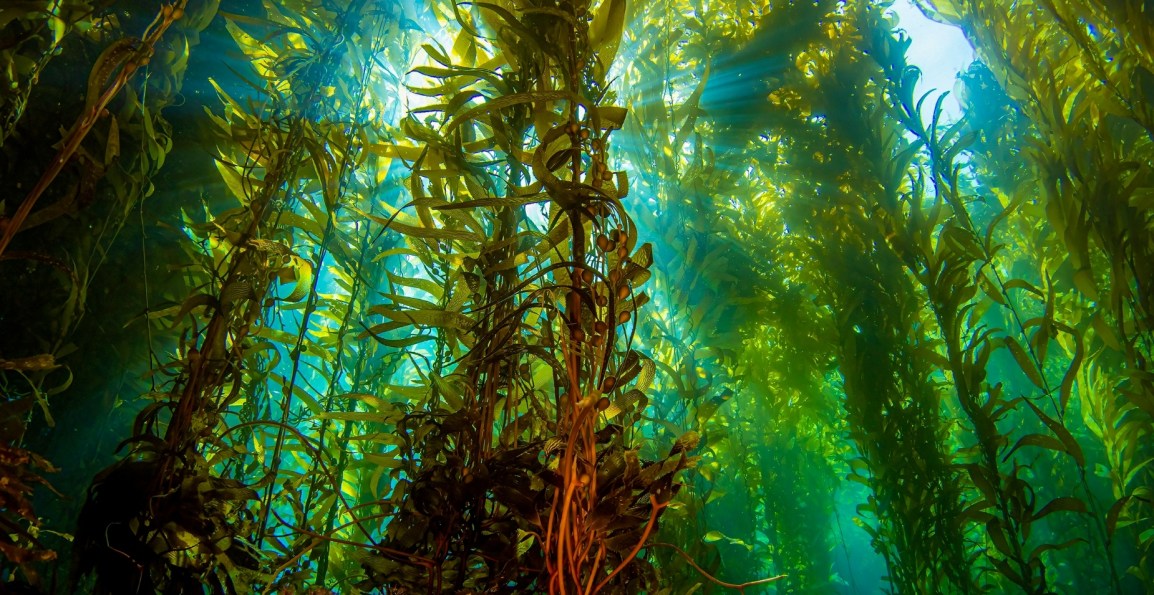
As the world grapples with climate change and the depletion of fossil fuels, the search for alternative and sustainable energy sources has intensified. Among the various renewable energy options, one of the more unconventional yet promising candidates is seaweed. This versatile marine plant could play a significant role in powering cars and reducing our reliance on traditional fuels.

The Science Behind Seaweed Biofuel

Seaweed, or macroalgae, is abundant in the world’s oceans and has a high growth rate, making it a sustainable resource. Unlike land-based biofuel crops, seaweed doesn’t compete with food production or require freshwater and arable land. This characteristic alone makes it an attractive option for large-scale biofuel production.

The process of converting seaweed into biofuel involves several steps. First, the seaweed is harvested and dried. Next, it undergoes a process called hydrothermal liquefaction, where it is subjected to high temperatures and pressure in the presence of water. This process breaks down the seaweed’s complex organic molecules into a crude oil-like substance known as bio-crude. The bio-crude can then be refined into various types of fuels, including biodiesel and bioethanol, which can be used to power cars.

Environmental Benefits

Using seaweed as a fuel source offers several environmental advantages. Seaweed absorbs carbon dioxide during its growth, helping to offset the greenhouse gas emissions produced during its conversion to biofuel. This carbon-neutral cycle can significantly reduce the overall carbon footprint of biofuel compared to fossil fuels.

Moreover, seaweed cultivation can contribute to ocean health. Seaweed farms provide habitat for marine life and help to absorb excess nutrients from the water, which can reduce harmful algal blooms and improve water quality. Additionally, since seaweed doesn’t require fertilizers or pesticides, it avoids many of the negative environmental impacts associated with land-based biofuel crops.

Economic and Social Impact

The development of seaweed-based biofuels also has the potential to stimulate economic growth, particularly in coastal communities. Seaweed farming can create jobs and provide new income streams for people living in these areas. Furthermore, investing in the infrastructure needed for seaweed cultivation and biofuel production can lead to technological advancements and increased energy security.

Challenges and Future Prospects

Despite its potential, several challenges must be overcome before seaweed biofuel can become a mainstream energy source. One significant hurdle is the cost of production. Currently, the technology and processes required to convert seaweed into biofuel are expensive, making it less competitive with traditional fuels. Research and development are ongoing to improve efficiency and reduce costs.

Another challenge is scaling up production. Large-scale seaweed farming requires careful management to avoid ecological disruptions and ensure sustainability. Regulatory frameworks and industry standards will need to be established to support the growth of this new sector.

Conclusion

Seaweed-based biofuel represents an exciting frontier in the quest for sustainable and renewable energy sources. While there are challenges to be addressed, the environmental, economic, and social benefits make it a promising alternative to traditional fossil fuels. With continued research, investment, and innovation, seaweed could one day power our cars and contribute to a greener, more sustainable future.

Life Around Underwater Thermal Vents

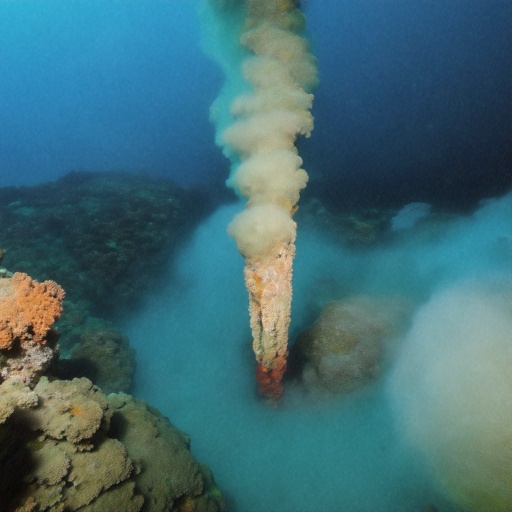
Deep beneath the ocean’s surface, where sunlight fails to penetrate and temperatures can reach extreme highs, underwater thermal vents create a unique and thriving ecosystem. These vents, also known as hydrothermal vents, are formed by tectonic activity that allows superheated water to escape from the Earth’s interior. While they may seem inhospitable at first glance, the life that exists around these vents is both diverse and fascinating, showcasing the resilience of life in extreme conditions.

The Environment of Hydrothermal Vents

Hydrothermal vents are typically found along mid-ocean ridges, where tectonic plates diverge. As seawater seeps into the ocean floor, it is heated by underlying magma before rising back up through cracks in the Earth’s crust. This process not only releases nutrient-rich water but also minerals, such as sulfides and methane, which are essential for supporting life in this dark, high-pressure environment.

The temperatures around these vents can soar to 400°C (752°F), and the water can be highly acidic and rich in toxic chemicals. However, rather than deterring life, these conditions have led to the development of a unique ecosystem that relies on chemosynthesis instead of photosynthesis.

Chemosynthetic Life Forms

At the heart of this ecosystem are chemosynthetic bacteria, which utilize the chemicals released by the vents to produce energy. Unlike plants that convert sunlight into energy, these bacteria thrive in darkness, using hydrogen sulfide and other compounds as their energy source. They form the foundation of the food web around hydrothermal vents.

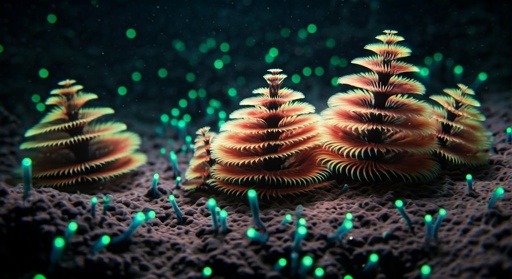
These bacteria are often found in large colonies, providing food for a variety of organisms. One of the most iconic vent-dwelling species is the giant tube worm (Riftia pachyptila), which can grow up to 3 meters (10 feet) long. These worms harbor symbiotic bacteria in their bodies, which convert the vent chemicals into organic matter, allowing the worms to thrive in an otherwise nutrient-poor environment.

Diverse Marine Life

In addition to tube worms, hydrothermal vents host a rich diversity of life, including clams, mussels, and shrimp, many of which also rely on chemosynthetic bacteria for nourishment. For instance, species like the vent snail (Alviniconcha) have adapted to utilize the bacteria directly by forming symbiotic relationships. Crustaceans, such as the vent crab (Bythograea), are also commonly found, feeding on both the bacteria and other organisms.

Furthermore, vent ecosystems are often home to unique species that have evolved specific adaptations to their extreme environment. Some organisms possess specialized proteins that allow them to withstand high temperatures and pressure, while others have developed unique physical traits, such as thick shells or modified appendages for feeding.

The Importance of Hydrothermal Vents

Beyond their role as a fascinating biological hotspot, hydrothermal vents have significant implications for our understanding of life on Earth and potentially other planets. The extreme conditions in which these organisms thrive challenge traditional notions of where life can exist. Studying these ecosystems not only sheds light on evolutionary processes but also informs us about the potential for life in similar environments on celestial bodies like Europa or Enceladus, moons of Jupiter and Saturn, respectively.

In conclusion, underwater thermal vents are a testament to the adaptability and resilience of life. The intricate relationships formed between organisms in these extreme environments highlight the complexity of ecological systems and the importance of protecting these unique habitats from human activities, such as deep-sea mining and climate change. As scientists continue to explore these mysterious regions, they unlock more secrets about life’s potential and the Earth’s geological processes.

Solar Flares and Their Effects

Solar flares are among the most powerful and fascinating phenomena in our solar system. These intense bursts of radiation originate from the Sun and can have significant effects on Earth and its technological systems. Understanding solar flares is crucial for both scientific research and practical applications, as their impacts can range from beautiful auroras to disruptions in communication and power systems.

What Are Solar Flares?

Solar flares are sudden, intense bursts of electromagnetic radiation emanating from the Sun’s surface. They occur when magnetic energy that has built up in the solar atmosphere is suddenly released. This energy release can be so powerful that it emits radiation across the entire electromagnetic spectrum, from radio waves to gamma rays. The most intense solar flares are classified as X-class flares, followed by M-, C-, and B-class flares, with A-class being the smallest.

Causes of Solar Flares

The Sun’s surface is a dynamic and turbulent environment, primarily due to its magnetic field. Magnetic fields are generated by the movement of electrically charged gases within the Sun. These fields can become twisted and tangled due to the Sun’s rotation and convective motions. When the magnetic field lines near sunspots (regions of intense magnetic activity) become too twisted, they can snap and reconnect in a process known as magnetic reconnection. This process releases a tremendous amount of energy, resulting in a solar flare.

Effects on Earth

When solar flares are directed towards Earth, they can have several notable effects:

  1. Geomagnetic Storms: Solar flares can interact with Earth’s magnetosphere, causing geomagnetic storms. These storms can disrupt satellite operations, GPS navigation, and radio communications. In severe cases, they can even affect power grids, leading to widespread outages.
  2. Auroras: One of the most visually stunning effects of solar flares is the aurora borealis (northern lights) and aurora australis (southern lights). These occur when charged particles from the Sun collide with Earth’s atmosphere, causing the atmosphere to glow in beautiful colors.
  3. Radiation Hazards: Solar flares emit high-energy particles that can pose a risk to astronauts and high-altitude flights. The Earth’s atmosphere and magnetic field provide significant protection, but during intense solar activity, additional precautions may be necessary.
  4. Impact on Technology: Solar flares can induce electric currents in power lines, potentially damaging transformers and other electrical infrastructure. They can also affect the accuracy of satellite-based navigation systems and disrupt high-frequency radio communications.

Mitigation and Monitoring

To mitigate the effects of solar flares, scientists continuously monitor solar activity using a variety of space-based and ground-based instruments. Agencies like NASA and the National Oceanic and Atmospheric Administration (NOAA) provide forecasts and warnings of solar storms, allowing for preventive measures to be taken. For example, power companies can temporarily shut down vulnerable systems, and airlines can reroute flights to avoid high-radiation areas.

Conclusion

Solar flares are a testament to the dynamic and powerful nature of our Sun. While they can pose challenges to our technological infrastructure, they also offer opportunities for scientific discovery and awe-inspiring natural displays. By understanding and monitoring solar flares, we can better prepare for their impacts and continue to marvel at the wonders of our solar system.