
Spiritual leaders have been claiming that the universe is a conscious being for many years. Physicist Gregory Matloff has recently published a paper which suggests that this theory is possible, and science may be able to prove it. Matloff is a veteran at the New York City College of Technology and, even though his paper is unable to confirm universal consciousness (panpsychism) he is encouraging more research into the theory. In his publication, Matloff suggests that humans may not only model the universe in substance, but in spirit as well. This would indicate that the universe is self-aware, and has a possible consciousness field that would extend through all of space.
The theory of ‘panpsychism,’ has already been suggested and explored by other scientists. Sir Roger Penrose, a British physicist, theorized that quantum physics holds the key to consciousness. His views, which were expressed more than 30 years ago, suggests that consciousness itself exists in the microscopic spaces between brain neurons. Bernard Haisch expanded on this theory by speculating that the quantum fields that permeate empty space, also known as quantum vacuums, can produce and transmit consciousness. This would then create a self-awareness in any physical structure which has an energy system running through it, including the universe.
 Matloff attempted to test and expand these theories, by locating astronomical objects that unexpectedly adjust their behavior in response to stimuli. This led to his study of Paranego’s Discontinuity, which is a theory that demonstrates where cooler stars orbit our galaxy at a faster pace than hotter ones. Science has attributed this phenomena to the stars’ interactions with gas clouds. Matloff noted that these changes only occurred in stars that were cool enough to have molecules in their atmosphere and, therefore, a more complex chemical composition. He also noted that some stars emit jets that only point in a single direction, which caused them to move in a different way.
Matloff’s theory suggests that the way in which these stars move is being consciously changed. He claims that if the process was caused by outward elements, it would begin to vary depending on the star’s location in the galaxy. An internal response, such as consciousness, would result in the stars’ behavior being the same despite their locations. The physicist also noted that more detailed data will be available, to further test his theory, after scheduled information is received from Gaia Star Mapping Space Telescope in 2018.
Other researchers have been testing the possibility of the universe’s consciousness, by observing humans as they are made up of the same components. Scientists currently define consciousness as ‘the ability of a system to be influenced by its previous state and to influence its next state.’ This means that it is associated with the complexity of a system, and its ability to choose. Research has shown where this could also be true of simple systems, which are neither organic nor biological. Scientists are hopeful that the true complexity of the Universe will be revealed in the near future, and they can then confirm whether our conscious abilities are really just a small part of a greater mass consciousness.
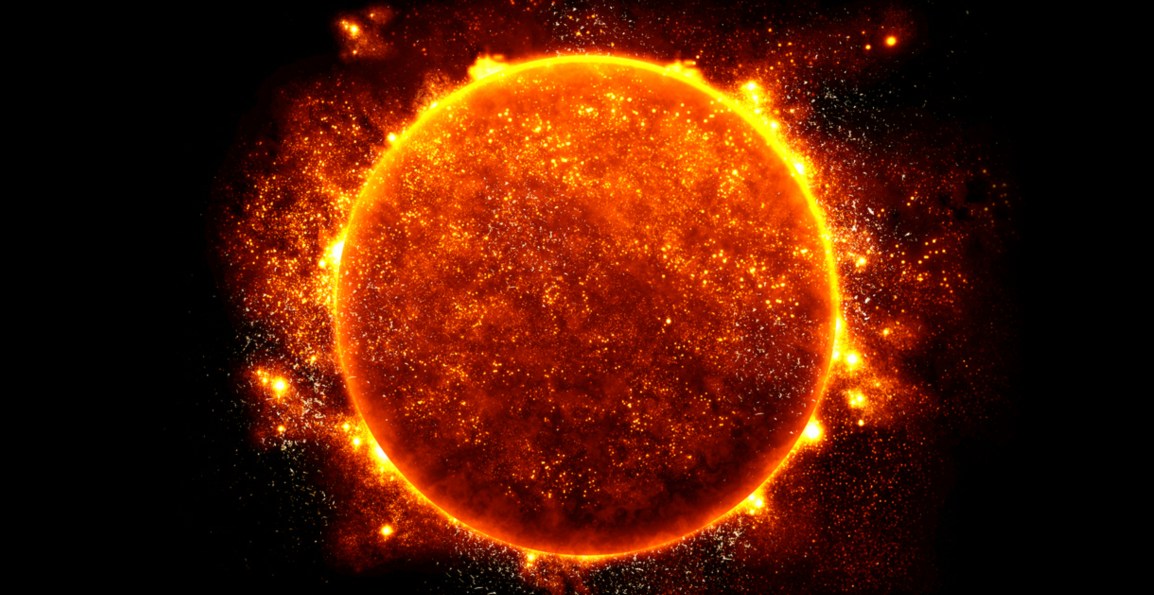
 The size of the star determines the amount of energy that it can produce. Larger ones have more heat and pressure, and can fuse heavier elements in a process known as nuclear fusion. Our sun, and other stars that are similar in size, produces energy in the core when Hydrogen atoms are converted into Helium. During this fusion, matter is released from the nuclei and converted to photons. It is estimated that 620 million metric tons are fused in our sun’s core in a single second. This is enough energy to power a large city for approximately 100 years!
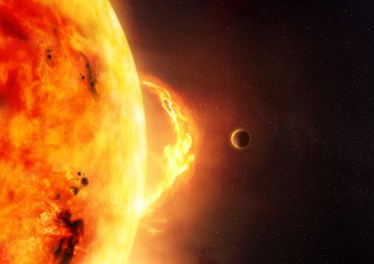 This energy is essential to the survival of life on our planet. Once it arrives at our atmosphere, much of the UV radiation produced during nuclear fusion is filtered by The Ozone Layer, making it less harmful to our organisms. The benefits of the sun’s rays to our planet, are extensive and include warming our seas, generating weather patterns and providing energy for plants that in turn create food and oxygen for other lifeforms. Scientists have observed where the sun’s nuclear fusion patterns are relatively stable, even though there have been slight irregularities throughout many years. They are unsure of what has caused these short-lived changes, or the effects that the more drastic ones may have on our planet since the sun affects the way in which the entire Solar System functions.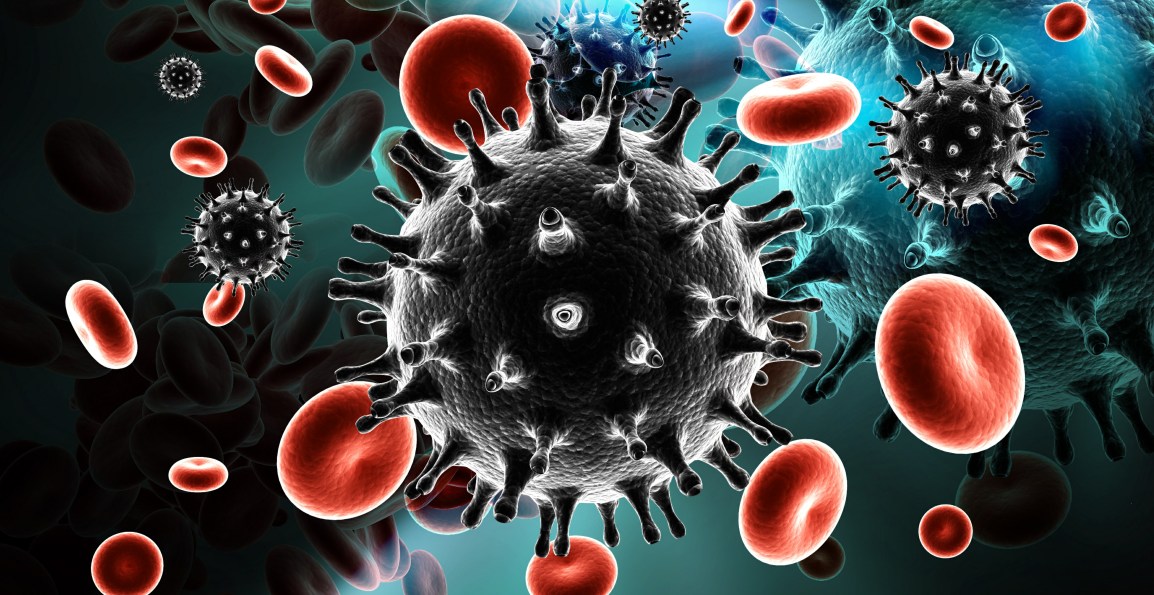
 Scientists from The University of Massachusetts Medical School have published an article in Nature, which states the possibility of decreasing the spread of HIV using cells which occur naturally in our bodies. Ironically, these are the same cells which the virus attacks. HIV breaks down the immune system by infecting and destroying CD4 positive ‘helper’ T-cells.
 The researchers found that there are proteins in the T-cells in our immune system which naturally fight HIV. SERINC5 and SERINC3, two host cell proteins, are able to stifle HIV-1 by greater than 100-fold. The HIV-1 genome has nine genes which can be replicated in the host cell, which then produce virions (the infectious part of the virus). They begin a cycle of infection by looking for new cells to infect. One of these, NEF (which is a key part in the development of AIDS) helps the process by blocking the SERINC proteins, so that they are unable to reach the cell’s surface. This means that they will no longer become a part of the newly formed virions. Developing a drug to restrict NEFs would allow the system to fight HIV, as the virions would then include SERINC3 and SERINC5 making them unable to infect new cells. This process could then be applied to other infectious viruses with NEF proteins.
 The team were able to identify three proteins that are responsible for stopping NPQ. They speculated that plants with increased numbers of these proteins would be able to relax the process faster. The theory was tested using tobacco, because of the ease with which these plants are transformed and their ability to produce the layers of leaves necessary. Those that had additional proteins added weighed between 14% and 20% more than other tobacco plants. Many crops such as rice, soybeans and wheat, also produce layers. This suggests that the same method can be applied to these foods, increasing their yield. Even though the crops would be more difficult to modify, researchers are confident that this next step in the experiment can be achieved fairly quickly.

 A team of researchers from the University of California, have recently developed a drug which can restore insulin sensitivity in people with diabetes. It would be administered via a single pill taken daily, and works by inhibiting LMPTP (low molecular weight protein tyrosine phosphatase) which contributes to the reduction in cell sensitivity to insulin. Decreasing the amount of the enzyme in the body, causes the cells (especially those in the liver), to become receptive to insulin once again. This then restores the body’s ability to regulate blood sugar levels, ultimately reversing the condition.
 The concept of reversing diabetes is not a new one, and has previously been achieved using a combination of drugs, a strict diet and a regular exercise regime. Scientists at Cornell University have also found that probiotic pills, containing live bacteria, can help reverse the effects of Type 2 diabetes by ‘rewiring’ the body. The probiotic pill was also tested on rodents, and managed to shift the control of the body’s blood sugar levels from the pancreas (which normally controls glucose levels within the body) to the upper intestine. By shifting where the blood sugar levels are controlled, scientists found that the animals’ insulin levels increased by up to 30%. They believe that a higher dose of this probiotic pill may become a cure for both Type 1 and Type 2 diabetes.
 R. E. KEARNEY