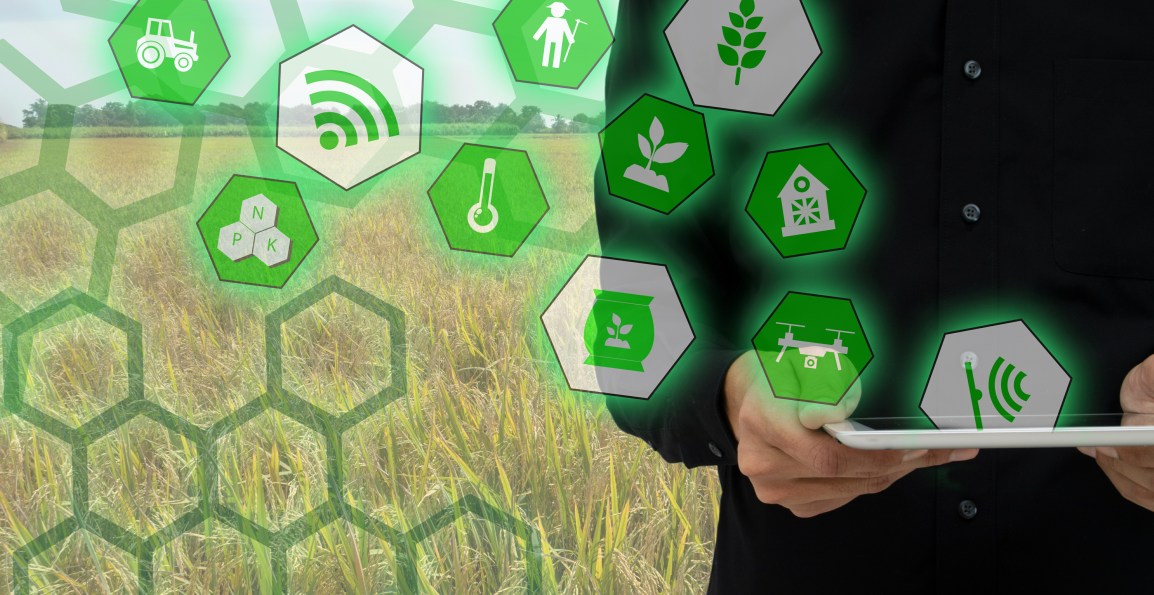
Having technology which can run itself makes production quicker and easier in all areas, including farming. The autonomous tractor has recently been displayed by Case IH, and is designed with safety features that make it possible for the vehicle to be operated remotely. The world’s population is constantly increasing and with it the need for more food. The autonomous tractor would be able to maximise the efficiency of fields and growing produce, by working 24 hours per day and in adverse weather conditions.
Case IH has played a major role in the development of farming with their introduction of a form of GPS, in the 1990s, which showed the amount of produce that each field yielded. This system has been improved with technological advancements, and is still used by farmers to show where planting adjustments need to be made.
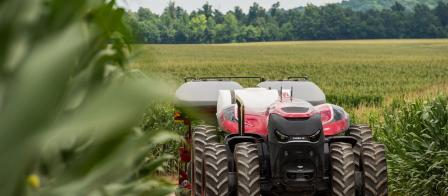
More recently, self-steering systems have been included in farming vehicles to decrease the amount of overlapping and missing areas that occurs during planting crops. This minimizes wastage and workload, yet still requires qualified drivers to operate. Finding them is becoming more difficult, as the hours can be long and tedious. Autonomous machines can be used alongside existing ones, significantly decreasing the amount of labor needed to run a farm.
As they would be remotely controlled, the tractors have been designed without a cab. The vehicles are also able to warn operators of possible threats, by stopping when there is an item that might damage them in the vicinity. The operator is alerted, and will then decide whether it should continue or change paths. The tractors are programmable, and can make their way to and from different fields. Their progress can be viewed through the mapping system, controlled by an app, or remotely accessed via ‘tractor view’ through its feed.
Developers are working on ways that the vehicles will be able to interpret external data, such as weather conditions, and use it to decide what is the best time to plant and reap crops, independent of human input. This attention to detail would save on wastage, as it would control the planting of the crops as well as weeding between rows to reduce the use of pesticides.
The tractor’s designers are currently working with farmers to test the technology. They are demonstrating the way in which its use will affect all aspects of the business, including labour and farm management. Other autonomous features will be integrated into current farm vehicles, and these can be adapted for use on small as well as large-scale farms. As the technology becomes more readily available, costs are expected to decrease and more areas will be able to use it for widespread food production. The current expectation is that this will help to decrease hunger worldwide.

 One of the simplest plants in our atmosphere is algae, which has proven its resilience repeatedly due to the extreme earthly environments in which they can exist. As a part of the Biology and Mars Experiment (Biomex), scientists decided to put the plant’s durability to the test. They released algae into the universe next to the International Space Station, located outside of the earth’s perimeter, for a total of 16 months.
 Even though the plants were exposed to extreme temperature changes, and both cosmic and UV radiation, the algae were retrieved alive and many of the strands even thriving. Further tests of the species will be crucial to future space travel, as they will demonstrate some of the conditions that may be faced by astronauts and show possible ways to overcome them. Algae might also be used as a source of food for these explorers, as it can be eaten when grown in large quantities. The plant can be transported to Mars, and many scientists believe it might be the key to breathable air on the planet, as algae survives by taking in carbon dioxide and releasing oxygen, which is essentially to human and animal life.
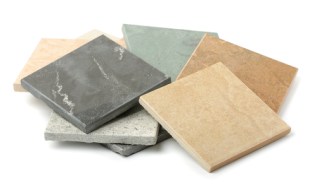 The normal production method used has previously made it impossible to put the waste back into the production process. Lifeceram is a project which has been undertaken to change this, and was formed with two main objectives. These are:
 The major benefits that companies will achieve using this new process are:
 The first form of digital currency to be developed was Bitcoin, from an idea proposed by Satoshi Nakamoto. Created and held electronically, this type of money is known as cryptocurrency and is based on blockchain technology. It is produced using software designed to solve mathematical problems. One of the major differences between Bitcoin and paper currency is the fact that it can’t be decentralised, meaning that no single institution would be able to control the network. The currency is created digitally by a group of people that anybody can join, and a limit has been placed on the number of Bitcoins that can be ‘mined’ in this controlled online environment. To encourage transparency, the mathematical formula which is used for Bitcoin production is available for everybody to view online.
 These currencies have set Africa apart as the pioneers of a new era of financial stability. The security and transparency of the blockchain technology, means that the system cannot be tampered with and the economy will be allowed to thrive. After being introduced into circulation in Senegal the eCFA will be introduced in other countries that currently use the West African franc including: Ivory Coast, Benin and Niger.



 Breakthrough Message – A competition with the top prize of $1,000,000 has been announced for individuals, or groups, to design a complete message about life on our planet and its people. This should be made with the intention of communicating with any extra-terrestrials that might be found. The public is included in order to create awareness of the mission, and get the general outlook behind space exploration.
 R. E. KEARNEY