Life on Earth

Mankind’s desire to try to discover life on other planets to prove “we are not alone” in the universe appears to be an endless quest that up until now, has been relatively fruitless. However, there are a group of researchers that believe we should be looking a lot closer to home for evidence of alien planets.
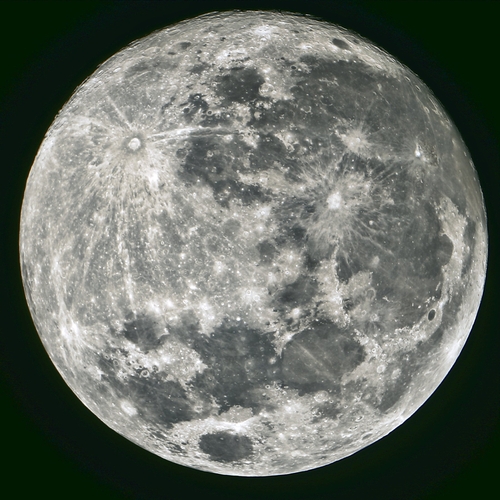
NASA recently completed an atomic analysis of a Moon rock that was collected during the 1972 Apollo 17 mission, and found that the Moon was formed around 40 million years earlier than scientists had previously thought. It’s believed that the Moon was created when another planet collided with the Earth releasing debris into space which, over a long period of time, eventually fused to form the orbiting Moon.

The impact was a “cataclysmic event for Earth and changed Earth’s rotational speed,” explained cosmochemist Philipp Heck. “After that, the Moon had an effect of stabilizing Earth’s rotational axis and slowing down Earth’s rotational speed. The formation date of the Moon is important as only after that Earth became a habitable planet.”

Around 4.5 billion years ago a planet the size of Mars, called Theia, smashed into Earth, shattering huge amounts of debris into space. Now, a team of scientists from China claim to have uncovered evidence that suggests chunks of Theia became lodged deep inside the Earth, and are still there.
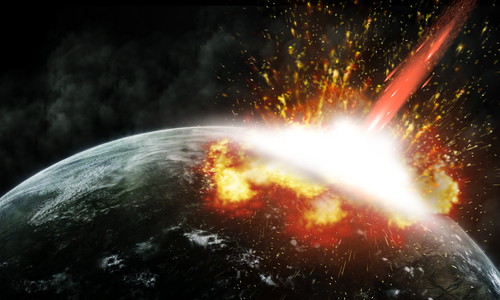
Using a simulation of the impact, the team demonstrated how the upper half of the Earth’s mantle would have melted and only 10% of Theia would have made its way deep into the Earth. Due to convection currents the remains of Theia would get churned around, growing in size as they attached to other debris. The Chinese team has identified two possible massive clusters of matter buried deep below Africa and the Pacific Ocean which they believe could be Theia at their core. Estimates suggest that the remaining 10% of Theia could account for 2 to 3 percent of the Earth’s overall mass.

“In most of the Moon-forming impact simulations, most of the lunar materials come from the impactor,” explained geophysicist Quian Yuan. This would mean that testing these clusters of matter inside the Earth to see if the chemical signature matches lunar mantle rock would confirm the presence of Theia in our own planet. But gathering the samples from deep within the Earth is currently an impossibility.

If Earth is also made from matter from another planet, and life only began after the collision, could alien life already be part of life on Earth? Integrated and evolved, amalgamated and merged into what we consider “normal” Earth flora and fauna.


Microplastics

Microplastics have been discovered in the most unexpected places, but most notably in our oceans, resulting in tiny fragments of plastic inside fish and consequently inside ourselves. Now scientists in Japan have even found microplastics in rain clouds, falling down on us, polluting the air, the ground, our water and crops. It seems that nowhere can escape plastic pollution.

The scientists discovered nine types of plastic as well as one type of rubber in samples they examined from the mist around Mount Fuji and Mount Oyama.

“If the issue of ‘plastic air pollution’ is not addressed proactively, climate change and ecological risks may become a reality, causing irreversible and serious environmental damage in the future,” explained Hiroshi Okochi, lead author of the research.

While the contamination created from the presence of microplastics in rain clouds falling on to the ground might seem obvious, there are also other worrying effects that could contribute to global warming. Airborne microplastics degrade quicker in the upper atmosphere than they do on the ground because of the stronger ultraviolet radiation. But the result of degradation is the release of harmful greenhouse gases.

Another study recently discovered that exposure to microplastics created dementia and behavioral changes in mice, most notably in older mice. The study showed that microplastics found their way to every organ in the mouse’s body including their brain. “The brain-blood barrier is supposed to be very difficult to permeate. It is a protective mechanism against viruses and bacteria, yet these particles were able to get in there,” explained study leader Jamie Ross. “It was actually deep in the brain tissue.” So far it’s not been demonstrated in humans, but there seems no reason not to suspect the similar results in every animal.

Fortunately there might be a glimmer of hope. In 2001 a team of scientists discovered a bacteria called Ideonella Sakaiensis that successfully breaks down the carbon in plastics. Since then the team has discovered other similar organisms as well as successfully manipulating bacteria to produce enzymes that break down plastic at a rate which might be fast enough to be able to combat the massive global problem. Despite a lack of funding, scientists constantly search landfill sites hoping to discover a better performing bacteria, a problem made even harder due to the different types of plastics we use and dispose.

In a similar study, another group of scientists discovered high levels of plastic degrading enzymes in deeper depths of the ocean, 60% of which had never been discovered before. “The next step would be to test the most promising enzyme candidates in the lab to closely investigate their properties and the rate of plastic degradation they can achieve,” Aleksej Zelezniak, associate professor of biology at Chalmers University of Technology, explained. “From there you could engineer microbial communities with targeted degrading functions for specific polymer types.”

As microplastics infiltrate every part of the planet, at least there might potentially be a way to contain the problem for the future.

Space Junk

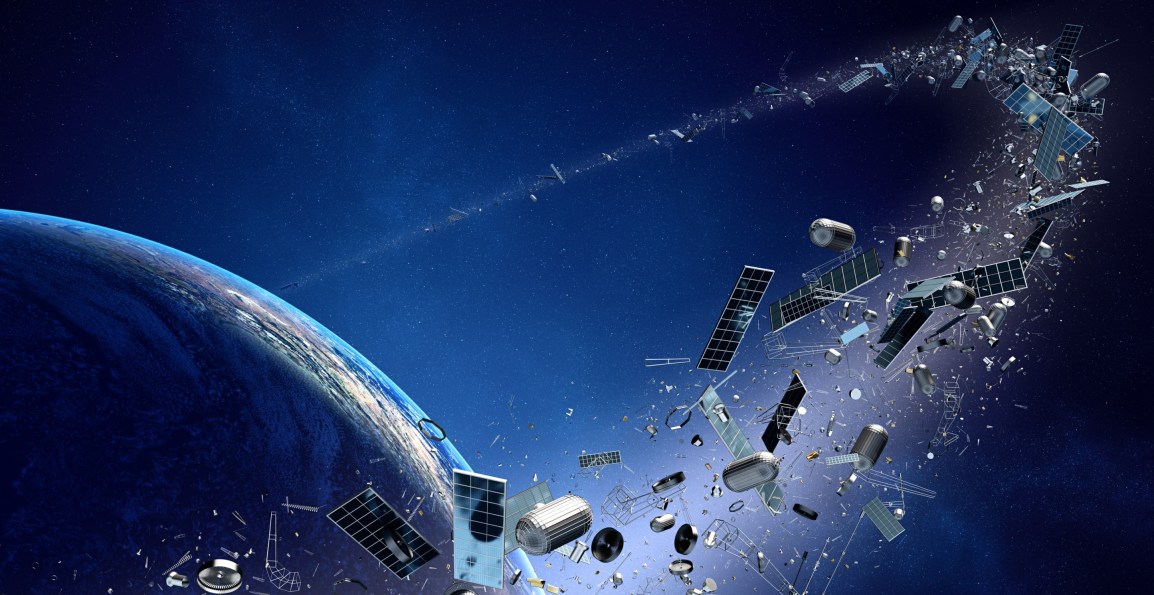
Since the space race began the accumulation of junk that circles the Earth has been growing. And no more so than in the last twenty years as more countries propel satellites into orbit, and companies rely more on space technology for interconnectivity to function. But what happens to all the abandoned, outdated, or broken objects once they have no purpose. Until now – nothing. They’ve been left to continue circling the Earth indefinitely.

And it’s becoming a very crowded space as different countries, as well as commercial companies, launch thousands of satellites each year. It’s been necessary for the International Space Station to change its orbiting position several times to avoid colliding with stray debris. Since 1999, the Space Station has changed its course 30 times, a number that has increased recently. Debris could cause massive amounts of damage and even loss of life if a single piece strikes the ISS. Debris travels at around 15,000 mph. Fortunately, NASA constantly track around 30 square miles of space around the ISS for any nearby debris. If any enter this area it triggers the alteration.

Not only is the human race polluting the planet, it’s now discarding waste into space, without any real concern for the consequences. Every space ship that is launched from Earth has to navigate through the minefield of debris orbiting the planet before it truly enters space, a significant problem as we look towards other possibly habitable planets.

Some might consider a solution would be to simply blow up any redundant satellites, but this only creates additional problems. Over 15 years ago a redundant Chinese weather satellite was intentionally targeted by a missile. The result – over 3,500 smaller objects that now need to be tracked as they spin around Earth.

A recent attempt by the European Space Agency to begin removing space junk has sadly encountered a problem. Their intention was to attempt to remove a large discarded conical rocket adapter which has been orbiting the Earth for the last ten years. The ESA craft has been created with four adaptable arms to grab the rocket adapter before flying back to Earth towing the debris behind.

But that wasn’t to be. Ironically another piece of space junk recently hit the rocket adapter breaking it into even more pieces of junk, altering it’s orbit and disrupting the ESA’s plans.

“The most significant threat posed by larger objects of space debris is that they fragment into clouds of smaller objects that can each cause significant damage to active satellites,” the ESA said. “We must urgently reduce the creation of new space debris and begin actively mitigating the impact of existing objects.”

Fortunately the ESA hadn’t intended to launch to collect the debris until 2026 anyway, so adjustments, recalculations and additional planning are now required, but they remain determined to begin cleaning the orbit surrounding Earth.

Shrinking Populations

With the world’s population hitting the 8 billion point recently, it’s easy to think that the human race is continuing to grow and expand at an uncontrolled rate, absorbing land, exploiting the Earth’s resources, polluting the sea and air, and taking us to an inevitable point of mutual destruction. But, that’s not necessarily true – at least not for every part of the planet.

Surprisingly Japan’s population has been dropping year on year, and it’s getting so bad it’s created an internal crisis that could have devastating effects on the country. During 2022, the total number of Japanese residents fell by more than 800,000 in just one year. This follows thirteen years of continual population contraction. Other figures released by the Ministry of Internal Affairs also highlighted the increasing death rate of over 1.56 million on top of only 771,000 births – the lowest since records began.

Life expectancy is high in Japan, but coupled with low fertility rates, which is also seen in many other east Asian countries too, Japan is seeing a rapidly aging population. In order to balance a stable population Japan needs approximately two births per woman, but the fertility rate is currently only 1.3 births.

As the population gets older, so does the workforce, which also slowly starts to decline, resulting in disastrous implications for almost all areas of the economy. Prime Minister Fumio Kishida has even been stated saying that “Japan is standing on the verge of whether it can continue to function as a society.” The number of schools closing in rural areas has increased rapidly while the number of small businesses are stuck with aged owners and no one to take them over.

There are ways to counter a declining population. The simplest is to relax immigration rules, allowing workers from other countries to settle and work, which Japan has done, however that has still not had the desired effect. The number of foreign residents hit a record high recently, but that was still not sufficient to balance the declining population.

Japan is not the only country in the world where the decrease in population is becoming significant. The number of people living in Europe has been declining since 2020 for much the same reason – longer life expectancy and decreasing birth rates. This immediate decline could also be as a result of the COVID pandemic disproportionately increasing the number deaths. China’s population also fell for the first time in 2022 since the 1960’s.

Scientists and researchers now believe that instead of persistent exponential global population growth, the numbers might stabilize around 2100 before consistently falling. That could be a good thing, but could also create one of the biggest social problems for humanity.

Fungal Structures

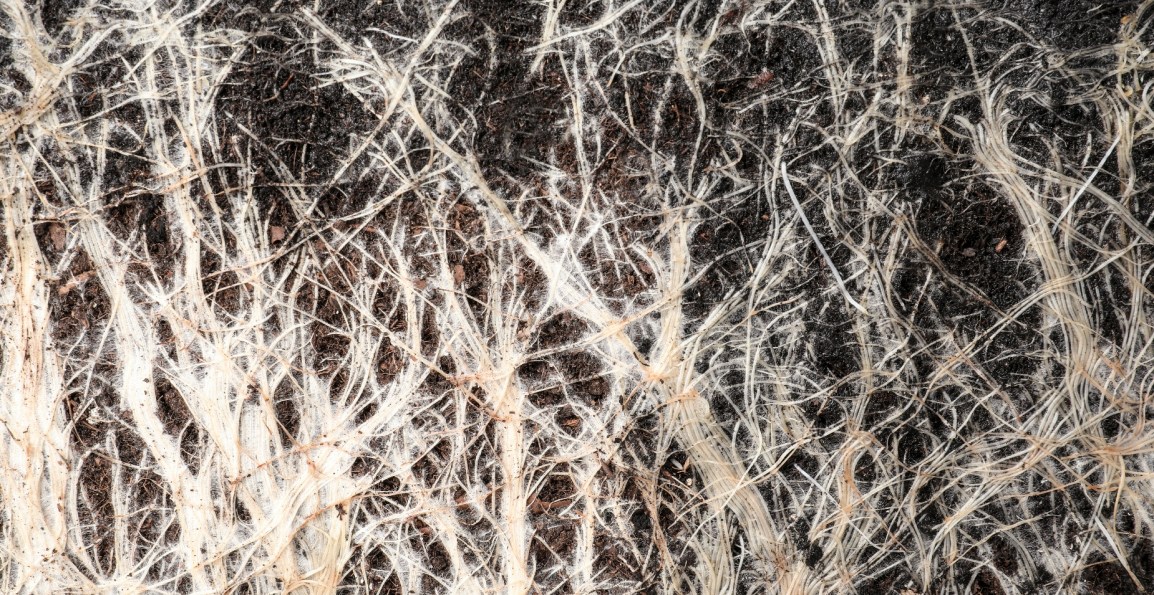
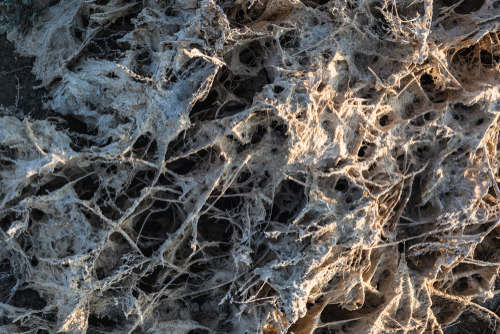
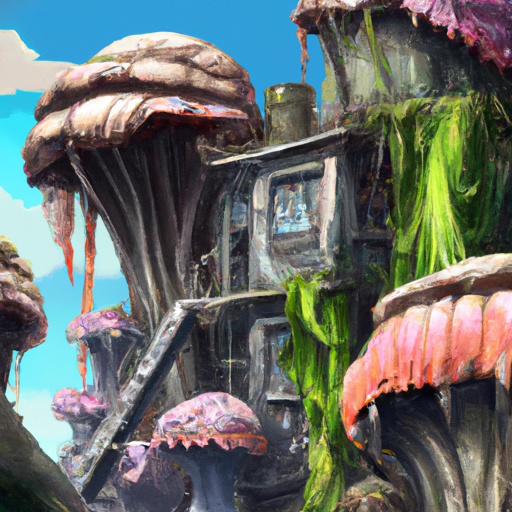
As mankind develops and expands, the need for buildings and other structures grew with it. Most of those building involved concrete, sometimes on a huge scale, which is damaging to the environment on so many levels. Other materials like wood and plastic are also not sustainable or suitable either. However, a group of scientists believe that we could theoretically create buildings from fungus – and not just the structure, but the internal plumbing and electrics too, making a sustainable, self growing and repairing building.

“We propose to develop a structural substrate by using live fungal mycelium,” explained the European academics in their paper. “Fungal buildings will self-grow, build, and repair themselves.”

In a world which has already begun to see the physic changes caused by climate changes, the need for biological building materials would be a huge step forward in reducing fossil fuels and environmentally-destructive mining processes.

“Fungal materials can have a wide variety of mechanical properties ranging from foam-like to wood-like to polymer-like to elastomer-like,” explained co author microbiologist Han Wösten from The Netherlands’ Utrecht University. “The fact that we can make wood-like materials implies that we can use it for the building industry. The selling point of our materials is that it is biodegradable, thereby helping to create a circular economy. At the same time, it should not degrade when actually used as a building material. We can work around this apparent paradox by coating the material. In fact, we also coat wood with paint of oils to protect it against degradation.”

You might be surprised to know that NASA is also testing whether or not fungus could potentially grow in Martian soil, with an aim to using it to build low cost, sustainable structures on Mars. So far, all experiments have involved killing off the fungus once a structure has been built so that it solidifies and hardens sufficiently to carry the loads needed in structural walls. The aim is to find a way to keep the fungus alive so that it remains a living structure, allowing for further growth, repairs and alterations.

And it doesn’t stop with the main structure. Computer scientist, Andrew Adamatzky, another author of the paper, explained that they are looking to build fungal neuromorphic circuits to replace the electronics inside the building. “The living circuits will be self-growing, self-assembling and self-repairing, which no traditional circuitry can do.”

Overall, a circular economy for construction is the goal, minimizing the use of the Earth’s limited resources and reducing energy consumption.

Amazon Deforestation

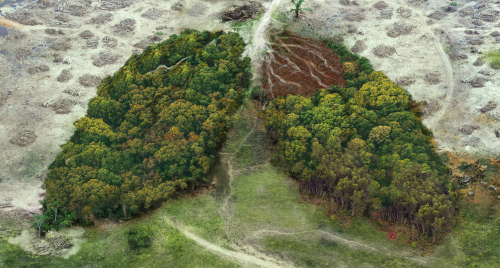
Brazil’s former far-right President Jair Bolsonaro was responsible for one the worst periods of destruction of the Amazon rainforest over the last fifteen years, following his removal of environmental protection legislation. However, following the election of a new President, things are beginning to look a little hopeful for the future of the rainforest, as well as the rest of the planet.

The Amazon rainforest is huge, covering an area the size of Australia. It absorbs carbon, soaking up damaging greenhouses gases and releasing essential Oxygen into the atmosphere – it’s no coincidence that it’s called the “lungs of the planet”. Higher carbon dioxide levels in the atmosphere increases the temperature of the planet, melting the icecaps, affecting crop success, increasing droughts, flooding, fires and extinction events.

During the first six months of Brazil’s new President, Luiz Inacio Lula da Silva, destruction of the rainforest has reduced to the lowest levels since 2019, and shows a 33% reduction in deforestation compared to the same period last year. But, don’t get too excited. That still represents 1000 square miles of forest that has been cleared. President Lula has vowed to eliminated deforestation completely by 2030, so a positive start, but is his goal achievable, especially when there is so much economical pressure on him.

During Bolsonaro’s term in office Brazil’s environmental agency was stripped of the majority of it’s enforcement agents, something that President Lula will need to rapidly change if the control and eventual elimination of the destruction of the world’s largest forest is to be enforced effectively.

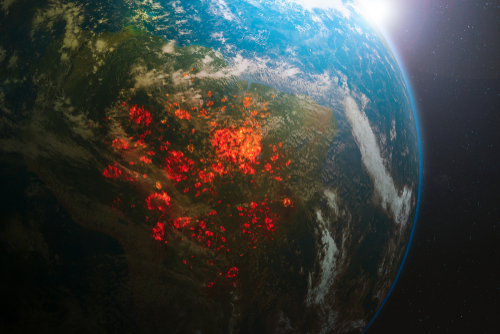
The destruction of the forest is not only man made. In June, the number of fires hit a record high of over 3000, thought to be the result of the deforestation caused last year, weakening the forest and making it more susceptible to fires in the face of droughts.

To support the preservation aim, President Lula has launched a grant program for the indigenous population in the region to sustain their livelihood and serve as wards of the rainforest, whilst at the same time increasing the amount of recognized indigenous land.

It’s long been documented that there is a direct link between the health of the rainforest and climate change, and this is perhaps mankind’s greatest chance to prevent that change from escalating and taking the planet over the tipping point.