Chinese Space Construction

While a lot of space agencies are looking towards Mars as a possible future solution for the survival of the human race, China is looking a lot closer to home – somewhere you can see every night from your window. The Moon.

A Chinese state run news outlet has recently reported that China intends to begin building a Moon base within the next five years. But they’re not shipping tons of concrete to the lunar surface, they intend to make the bricks for the building from the Moon soil itself, making it the first country to build a permanent structure outside of the Earth that is anchored to another celestial body. It’s proposed that the Moon base will be manned and is also likely to involve robots too.

In a show of serious intent, 100 researchers from China’s scientific community came together at a conference to discuss everything from building the infrastructure to the use of robots.

“Eventually, building habitation beyond the earth is essential not only for all of humanity’s quest for space exploration, but also for China’s strategic needs as a space power,” Ding Lieyun, a scientist at the Huazhong University of Science and Technology, told state-run news outlet China Science Daily during the conference.

Ding Lieyun demonstrated how an egg-shaped prototype could be constructed from 3D printed bricks made from lunar soil by a robot, called ‘Chinese Super Mason’, which takes the bricks and builds the structure, eliminating the need to transport labor to the Moon.

This isn’t the only interest China has in the Moon. They’re already planning a mission to the far side of the Moon which is as yet a lot less studied. The mission is to bring samples back for examination and is scheduled to begin in 2025.

As well as interest in the Moon, China is also intending to launch a total of 13,000 satellites that will become it’s own broadband-beaming mega constellation in low Earth orbit later this year. This comes on top of the development of their Long March 5B rocket platform which has enabled modules to be delivered to the Tiangong space station.

The space race is still well and truly on and is becoming a very competitive commercial area.

Population Contraction

There’s no denying that the world’s population has grown at such a rapid rate over the last fifty years that it has literally put the future existence of our planet in danger. Overcrowding, animal displacement, global warming, plastic pollution – they can all be linked to the disproportionate volume of human beings living on a world that surpassed the level of a sustainable population back in the 1970’s. Some scientists predict the human population will continue to increase at an even fast rate leading to a sixth mass extinction event, but a new report suggests the opposite.

Researchers have found that population growth rates, which although they have continued to rise, have done so at a slower rate than was actually expected. Although the rate is still growing, it also looks possible that the global population will peak this century before starting to fall. Currently we have around eight billion people on the planet, a number that has quadrupled since just 1968. At that rate of growth the population could be estimated to increase to sixteen billion by 2100, but new research considers we might hit nine billion before it then starts to decrease.

“The global population could peak at a much lower level — around nine billion — by mid-century,” the Earth4All nonprofit collective research predicts. “And if the world invests more in economic development, education, and health, the global population could fall to levels at which everyone on Earth can have sustainable access to clean energy, shelter, food, and water.”

While the research may have retrospectively looked at population growth and found it hadn’t increased as rapidly as was initially predicted (even though it’s still at an alarming level) it seems to rely on life changes to make a difference for the future. And change, particularly when asking humans to alter their habits, is a very difficult thing to achieve.

“This research gives us evidence to believe the population bomb won’t go off, but we still face significant challenges from an environmental perspective. We need a lot of effort to address the current development paradigm of overconsumption and overproduction, which are bigger problems than population.”

If we don’t address social and environmental problems, and individually and collectively make a choice to change, it will be that which destroys the planet, not overpopulation.

Zombie Virus

Viruses have been the talk of the town, particularly since Covid changed life on every corner of the planet in 2020. But the threat from viruses is nothing new, even going back to the dark ages and Spanish Flu, Norovirus, Sars – the list goes on. Covid, is the just the most recent virus to effect the modern global community in a big way.

So, how would you feel if scientists have decided to resurrect an ancient virus, especially one that carries the ominous name of “Zombie” virus? As the climate warms and Siberia’s permafrost melts, the possibility of viruses frozen in time suddenly being released back into the world is highly likely. French researcher Jean-Michel Claverie is currently testing a 48,000 year old virus which he believes could be one of a potential seven he’s detected that could be released from the permafrost as it melts. While the scientists are unsure whether these viruses have the ability to jump hosts and infect humans, there’s still a real possibility that they could make us ill.

“You must remember our immune defense has been developed in close contact with microbiological surroundings,” Birgitta Evengård, professor at Umea University in Sweden. “If there is a virus hidden in the permafrost that we have not been in contact with for thousands of years, it might be that our immune defense is not sufficient,” she said. “It is correct to have respect for the situation and be proactive and not just reactive. And the way to fight fear is to have knowledge.”

At the moment, the viruses that Claverie has managed to isolate and revive from the permafrost infect only single-cell amoeba’s, his concern is their effect on humans and animals. “We view these amoeba-infecting viruses as surrogates for all other possible viruses that might be in the permafrost,” the French scientist explained. “We see the traces of many, many, many other viruses, so we know they are there.”

Because these frozen viruses were present on the Earth so many years ago, they pose less of a threat to mankind than recent viruses which have evolved and changed to survive in a modern day environment and develop defenses against advanced medical treatment.

While calling a virus a “Zombie” virus sounds scary and likely to cause concern, it only derives it’s name because of being reanimated from a frozen inactive state to an active state, not because it is likely to cause humans to become the undead feeding off the brains of the living. Don’t panic.

Plastic Ocean

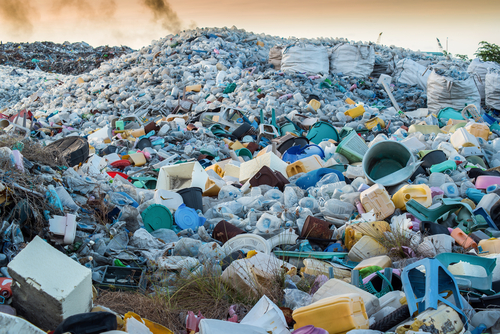
Despite years of warnings, numerous studies, and shocking images, the volume of plastic now found in the oceans of the planet have reached unprecedented levels. Is there anything we can do to turn the tide, or is it too late?

Shockingly, the latest study on plastic levels in our oceans reveals a mass of 2.3 million tons of plastic has invaded the planet’s water, made up of a staggering 171 trillion microplastic particles. While decades ago we looked to the sky and saw clouds of pollution created by burning fossil fuels, car exhausts and industrial smoke, beneath the waves a new “plastic smog” has been growing. And the news gets worse – the increase in plastic particles has been increasing at an unprecedented rate since 2005.

This recent study was based on water data collected over a 40 year period from over 12,000 monitoring stations around the world. Eight to ten million tons of general plastic waste is dumped in the oceans each year, but the microplastics (fine particles) the make up the plastic smog are creating a much bigger problem. They’re easily ingested by marine life, but also seep toxic chemicals into the water, changing the chemical nature of the water and altering the fragile ecosystem of marine life. And the volume of plastic waste is likely to increase by 2.6 times by 2040 unless something drastic is done to change our obsession with plastic and the careless way we discard it. While “fishing” plastic out of the oceans might help reduce the level of larger plastic waste, it doesn’t make much of a difference to the microplastic pollution.

“It is much higher than previous estimates,” study co-author Lisa Erdle, director of science and innovation at the environmental non-profit 5 Gyres explained. “We clearly need some solutions that have teeth.” Meaning we have no alternative but to limit and reduce the amount of plastic we produce and waste.

“Cleanup is futile if we continue to produce plastic at the current rate, and we have heard about recycling for too long while the plastic industry simultaneously rejects any commitments to buy recycled material or design for recyclability,” said study co-author Marcus Eriksen.

As well as microplastics, it seems that the amount of sewage in the ocean has also reached an unhealthy level. In an article in ‘Environmental Sciences & Technology,’ it was found that the spray from the ocean around San Diego’s Imperial Beach contained sewage bacteria, effecting the air people in the area breathed and increasing the risk of E Coli, Salmonella, and Norovirus.

When will we take action to prevent our careless disregard for the planet we call home?

Turning Waste into Fuel

Two problems seem to be plaguing the planet and our survival as a species – the ever growing mass of plastic waste we produce, and our dwindling supplies of fossil fuels. But surprisingly there could be one solution that solves both problems at the same time. And even better – it’s solar powered!

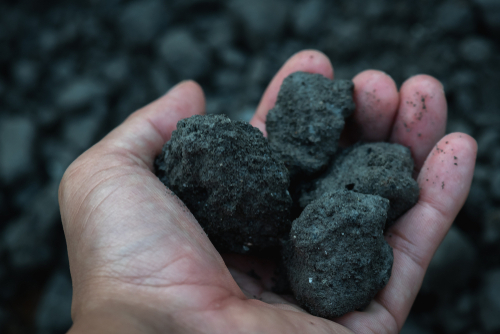
Researchers at the University of Cambridge claim that they have created a machine that takes CO2 as well as plastic waste and turns it into fuel using solar power. Their “Photoelectrochemical” system uses two compartments inside a reactor, one for greenhouse gases, and one for plastic waste. A light absorber called Perovskite and a chemical catalyst are then used to absorb enough light from the sun to convert the waste into carbon, a basic fuel.

“What’s so special about this system is the versatility and tunability — we’re making fairly simple carbon-based molecules right now, but in the future, we could be able to tune the system to make far more complex products, just by changing the catalyst,” explained Cambridge chemist Subhajit Bhattacharjee.

“Generally, CO2 conversion requires a lot of energy, but with our system, basically you just shine a light at it, and it starts converting harmful products into something useful and sustainable,” added coauthor Motiar Rahaman.

As well as carbon based fuels, the Photoelectrochemical system was also able to convert plastic bottles and CO2 into synthetic gas, and glycolic acid. Synthetic gas is an important part of liquid fuels.

On a side note, the Perovskite and catalyst combination could also help transform the solar power industry by making solar panels more productive and efficient in converting sun light into power.

But they’re not stopping there. While the system would be valuable in removing waste products from the planet and at the same time creating a fuel, the team at Cambridge believe that within the next five years they will be able to adapt the Photoelectrochemical system to transform other, more complex, materials and possibly create a solar recycling plant.

“Developing a circular economy, where we make useful things from waste instead of throwing it into landfills, is vital if we’re going to meaningfully address the climate crisis and protect the natural world,” explained Professor Erwin Reisner, a scientist at Cambridge’s Yusuf Hamied Department of Chemistry. “And powering these solutions using the sun means that we’re doing it cleanly and sustainably.”

Humanity Time Bomb

With global warming and violent conflict around the world, it’s not surprising that the question of humanity’s future longevity on planet Earth is being asked. But, while we speculate in response to news headlines, Stanford Scientists are taking a more clinic approach and have come to the conclusion that civilization will end in the “next few decades.”

This comes following a recent appearance on CBS’s 60 Minutes program where scientists discussed global mass extinction. Stanford Biologist Tony Barnosky, suggested that, through his work examining fossil records and ecosystem changes, current extinction rates are roughly 100 times higher than typically seen at any other point in Earth’s four billion year history.

Earth is currently experiencing the worst mass extinction event since the dinosaurs. Although the Earth may continue to turn after extinctions, life on the planet does not. But will that include humans?

Paul Ehrlich published a book in 1968 called ‘The Population Bomb’ where he addressed overpopulation and mass extinction. Today, over 50 years later, his predictions are becoming more and more real.

Even if the human race survives its society will crumble because of changes in habitat destruction, soil infertility and changes in our food chain. It’s all down to too many people and too much consumption. “Humanity is not sustainable,” explained Paul Ehrlich. “To maintain our lifestyle (yours and mine, basically) for the entire planet, you’d need five more Earths.”

“It is too much to say that we’re killing the planet, because the planet’s gonna be fine,” added Tony Barnosky. “What we’re doing is we’re killing our way of life. There are five times in Earth’s history where we had mass extinctions, at least 75% of the known species disappearing from the face of the Earth. Now we’re witnessing what a lot of people are calling the sixth mass extinction where the same thing could happen on our watch.”

And this warning is only repeated by other experts. In fact, it’s more unlikely that you find an expert who doesn’t think we’re in an extinction crisis, than does.

The World Wildlife Fund’s research found that life on Earth was sustainable in the year 1970 when there were 3.5 billion people on the planet. Today there are 8 billion people – a number which is growing at an alarming rate and forcing animals to different parts of the planet in an attempt to survive. The research also added that since 1970, 69% of global wildlife has collapsed. Humans have taken over 70% of the planet as well as 70% of the freshwater, pushing other animals, and plants, into extinction.

Could things change? Mexican ecologist Gerardo Ceballos believes the only solution would be to save the one third of Earth that is currently wild and is involved in a scheme to pay farmers to stop cutting the forests in Guatemala. But these small scale schemes need to be scaled up 10,000 times to have any chance of making a difference.

Paul Ehrlich’s thoughts for the future: “there’s no political will to do any of the things that I’m concerned with, which is exactly why I and the vast majority of my colleagues think we’ve had it; that the next few decades will be the end of the kind of civilization we’re used to.”