Reengineering the Wooly Mammoth

Ever thought the giant sized tusked wooly elephants who went extinct some 10,000 years ago and only recently seen in animated movies & ancient history programs will come to life on this earth again? That’s exactly what US based startup Colossal Biosciences has announced and already secured funding of $15 million.

The project spearheaded by Harvard geneticist George Church aims to use CRISPR gene editing technology to engineer Asian elephant embryos with characteristics closest to the now extinct Wooly Mammoths. The idea is to create and then release these giants in the Arctic Tundra region in a bid to positively impact the ecosystem and play their role in environmental conservation. The scientists at Colossal Biosciences also believe that if they are successful in recreating the Wooly Mammoths, they might even be able to prevent the extinction of other endangered species.

Possible Hurdles that Scientists Face in Reengineering Mammoths

While it all sounds pretty fascinating, the whole idea or reintroducing the Wooly Mammoths into the wild will need a lot of thinking. There’s a lot that needs to be addressed before the scientists in George Church’s team attempt to recreate the giants. For instance, scientists are already questioning how will these giant Mammoths be gestated? While there is no mature technology for artificial wombs which could be used to gestate the Mammoth embryos, scientists around the world are quite skeptical about using an Asian elephant as the mother, which are listed as endangered species themselves.

Also, it must be considered that the present day human race knows very little about the Wooly Mammoths. With such little knowledge, releasing these giants into the Arctic Tundra is another point of concern.

Real Mammoths or Hybrids

Another big question being raised by scientists is that whether or not these Wooly Mammoths will be what Colossal Biosciences claims them to be. Asian elephants generally share 99% of their DNA with this particular mammoth species but with smaller ears and a stark shaggy coat, this animal will most likely be an elephant-mammoth hybrid and not the real ancient mammoths.

While researchers have previously discovered calves of wooly mammoths in the permafrost, scientists at Colossal Biosciences agree that it might be really hard to study the properties of the mammoth and that it is highly likely this project might very well be impossible to successfully complete.

What Does this Mean for Biosciences?

Church’s cofounder at Colossal, software entrepreneur Ben Lamm, said “I hope the tech could prevent the extinction of endangered mammals like elephants and rhinoceroses, or even let conservationists tinker with the genetic code of existing creatures to help them survive a changing climate.”

“We can leverage these genetic tools,” he further said, to “allow for species to not be isolated to one geographic location, but be adaptable to others.”

Nipah virus outbreak in India

The deadliest situation has arrived in Kerela, India after the outbreak of the extremely severe Nipah virus took the life of a twelve-year-old boy. After the diagnosis of brain swelling, the boy had been admitted to a private hospital. While figuring out how to treat this infectious Nipah virus is pretty much a work in progress, there have been significant advances.

Nonetheless, the Nipah virus remains a matter of concern not only in India but for the rest of the world as well. WHO classifies it as a “virus of concern” for future pandemics because it can be easily transmitted to a healthy person from the infected one, especially through the contaminated food.

Nipah Virus Vs Corona Virus:

According to a CBS news reports, Nipah is considered to be one of the most poisonous viruses to ever infect humans. Previously, the virus has killed more than 18 individuals who were infected. The disease is far less contagious than the Covid-19 pandemic which is still infecting thousands of people daily, although the availability of vaccines has reduced the impact of this virus. However, there’s still a possibility of neurological symptoms among the survivors.

However, the Nipah infection does not spread as quickly as Coronavirus does, mainly because of the short amount of time from infection to death.

Aftermath precautions:

Following the boy’s death, public health authorities swung into action by connecting with the boy’s family, friends, and doctors. They identified and isolated at least 188 people who interacted with the boy physically. Additionally, they sealed off the entire area within about three miles from the boy’s residence in an attempt to prevent the spread of the virus.

As a consequence of this inspection, the healthcare assistants who treated the boy have shown the symptoms of the Nipah virus, and both of them have been hospitalized.

Besides Coronavirus, Nipah infection has been listed as a priority because of its great spreading potential. After the USA, India has the second-highest progressive covid-19 case count in the world.

Predictions about the virus:

In September 2020, the Chief Medical Advisor of the White House warned the public about the impending doom of the outbreaks of viruses, including Nipah and Corona. He evaluates that these viruses will enter the world of humanity and will only grow increasingly common.

Sociologically, the Nipah virus constantly appears in Southeast Asia. It is because the continuing environmental destruction has destroyed the wildlife and made the animals, including all the bat species to remain in closer proximity to human societies than ever before. To avoid this reunion, the Kerala officials are warning all the citizens to eschew bats and to trash any food that shows signs of insects taking a nibble.

In the long run, additional research will be completed on the Nipah virus and the development of effective treatments.

Life on Saturn’s Moon

For decades scientists around the world have been fascinated by the idea of finding life somewhere else in the universe, and now they might have found a place which they believe could harbor life.

Earlier in July, NASA announced that it had found the best clue yet about life elsewhere in the universe. NASA and the European Space Agency’s (ESA) Cassini-Huygens spacecraft collected evidence for a potential home for life on a moon of Saturn called Enceladus.

Commonly known as the ice moon, Enceladus is totally covered in ice and snow and for long has fascinated space scientists. Underneath the icy shell, and above the rocky core, Enceladus has an ocean of liquid water. The ice on the surface of the moon has large cracks through which the ocean is leaking and spewing water vapor geysers into space, all of which has been a source of great fascination for scientists and people alike.

The spacecraft Cassini-Huygens flew through those geysers and sampled their chemical makeup, which indicates that there could be some form of a microbial activity going on at the bottom of the Enceladus Ocean. A study of the chemical makeup revealed that these plumes not only contained hydrogen but also a high concentration of methane, which is considered a very strong by-product of life and quite frequently associated with the hydrothermal vents at the bottom of the Earth’s oceans.

What Are Hydrothermal Vents?

When the cold water at the bottom of the ocean seeps through the rocks into the ocean floor passing around heat sources such as magma/lava, it leads to the formation of minerals & gases that are then spewed out in the water through hydrothermal vents. Microorganisms such as bacteria at the bottom of the ocean consume the dihydrogen produced in these gases as their source of energy, a process known as chemosynthesis, creating methane & carbon dioxide as a by-product. These bacteria are then consumed by clams, shrimps & crabs, thus creating an entire ecosystem in the darkness. Scientists have a strong reason to believe that if it is happening on the earth, it could be happening on the Saturn moon too.

Scientists Suggest Gases Come From Hydrothermal Activity by Extra Terrestrial Microbes

Researchers from the University of Arizona and Paris Sciences et Lettres University published a research paper in Nature Astronomy suggesting that the high concentration of methane in the plumes could literally mean microbial activity. 

“We wanted to know: Could Earth-like microbes that ‘eat’ the dihydrogen and produce methane explain the surprisingly large amount of methane detected by Cassini?” said Regis Ferriere, an associate professor at the University of Arizona and the co-author of the study.

He further added that searching for such microbes, known as methanogens, at Enceladus’ seafloor would require extremely challenging deep-dive missions that are not in sight for several decades.

In their research, the scientists also constructed mathematical models & carried out computer simulations to study if the amount of methane found in the geysers actually suggested there was indeed some sort of microbial activity going on in the ocean of Enceladus.

“Obviously, we are not concluding that life exists in Enceladus’ ocean. Rather, we wanted to understand how likely it would be that Enceladus’ hydrothermal vents could be habitable to Earth-like microorganisms,” Ferriere concluded.

9 Other Places That May Support Life:

For decades, NASA has been launching space missions to find life elsewhere in the universe and has in fact concluded that in addition to Enceladus, the moon of Saturn, there are 9 other icy worlds that may support life. Scientists have been particularly excited about Europa, the moon of Jupiter, which is also covered in ice and has cracks on the surface spewing plumes out into the space, all of which appears to be exactly the same phenomenon that is happening at Enceladus.

If these ice worlds literally have these hydrothermal vents then it is likely that there could be marine communities where life could exist within this solar system and in order to confirm it scientists need to go back there and hunt in depth.

The ocean is losing its oxygen.

Oregon State University scholar Francis Chan’s started his profession as a postdoctoral specialist preparing for his first examination, but a sudden call sent him on a unique scientific voyage.

Beginning of strange happenings:

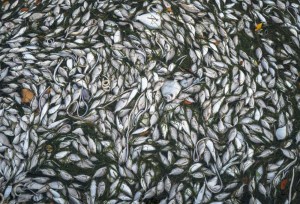
Fishermen begun pulling out tons of dead crabs from the ocean. An octopus crawls up the fisherman’s rope to avoid something that wasn’t clear to their sight. The Oregon Department of wildlife requested Chan to go and find out what was happening.

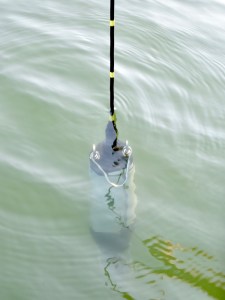
Chan dropped underwater sensors into the area of water and found the level of dissolved oxygen decreased severely in some areas. As a consequence, all the sea creatures had to find an escape while many had already died. After examining these low oxygen zones, Chan discovered that it had never happened before and is known as “hypoxic zones”.

Existence of Hypoxic zones:

A report in the Washington post states that dangerous waves extended across 7,700 square miles during 2021 creating a hypoxic zone along the Oregon shoreline.

According to Chan, there are two causes for hypoxic zones:

1. Warm water isn’t capable of containing dissolved gas as much as cold water can. Chan explains how water arrives at the west coast of the U.S.A having started around Japan.

2. The other cause is due to the changing flow of wind. A hypoxic zone begins when the up-surging wind blows the water away from the shore, and combines with the area of lower-oxygen water.

Chan considered climate change as the sole reason for these two causes. He further said that oceans will be more prone to hypoxic zone in the future.

There are several eye-witnesses, including Chan’s colleagues and fishers who notified Chan about the death of crabs and lobsters in South Africa due to suffocation, or more precisely, due to the lack of oxygen.

The emergence of Dead zones:

According to Chan the progression of “dead zones” across the pacific coast is likely to be more drastic and severe in the future.  Similar to the Portland conditions, the scientists have already indicated unusual regions of low oxygen in California.

The tracking sensors are expensive and can’t be placed everywhere in the ocean. For this purpose, the assistance from the Government fishers and commercial agencies is needed.

The plot to “The Day after Tomorrow” might be real

A researcher has warned that the 2004 blockbuster movie “The day after tomorrow” is no longer just a part of science fiction but is already happening in reality. In movies, abrupt climate change effects can show up overnight, but in reality most climate change appears over decades of change.

Image: 20th Century Fox

The movie “The Day after Tomorrow” is generally based on the theory of “abrupt climate change”. As a consequence of global warming, the currents that circulate the ocean water around the world shut down, boiling up the tropics and freezing the North Atlantic.

Research suggests that the Atlantic Ocean’s Meridional Overturning Circulation (AMOC) which also produces the Gulf Stream, is getting close to the dropping point, causing a wide area of North America and Europe to experience freezing temperatures for many years to come.

Running Atlantic’s Ocean Meridional Overturning Circulation (AMOC):

As of a recently published report, environment researcher Niklas Boers discovered that it’s turning out to be increasingly more likely that the AMOC could shut down unexpectedly.

The framework is responsible for moving warm surface streams from the tropical regions to Europe and Greenland through the Atlantic, where it freezes and sinks to the seafloor. Without this realistic transport line system, a huge part of North America’s east coast and Europe would be diving into freezing temperatures. The last ice age was caused by a huge ice lake cracking with a surge of freshwater upsetting the Atlantic Ocean, and was probably the last time when AMOC collapsed.

Was it destroyed?

While most of the movie is safely in the domain of science fiction, there is some practical scientific reasons  to support the concerns about potentially irreversible alterations in our climate within a couple of decades that would influence our communities, infrastructure, health, and ecosystems.

In the movie, the weathercaster Jack Hill, whose character was played by Dennis Quad, who already warned that climate change could create an ice age. Just after the warning, marine zoologists noticed a sudden chilling in the Atlantic Ocean, activating hurricanes off New York City.

According to Boers, it’s all an over-exaggeration because the effects would take hundreds of years, and also North America won’t get as chilly as the movie suggests. However, it is still a matter for concern. If the AMOC ever subsides; the long term effects could be catastrophic.

A Car That Collects Pollution

A London-based designer and architect, Thomas Heatherwick of the Heatherwick Studio has come up with a state-of-the art electric car concept that could clean air pollution as it drives around.

The concept car was introduced earlier in April 2021, after the designer was approached by a Chinese vehicle manufacturing company, IM Motors, to design the concept car, which is not only friendly to the environment, but also looks quite different.

The Airo, as it is being called, is a compact electric car, with its front grills containing air filters which could collect air pollutants amounting up to the size of a tennis ball in a year. The car uses the HEPA-Filter technology and doesn’t cause its own pollution but also actively contributes to vacuuming up all the pollutants from the cars driving alongside on the roads. If such a mechanism is introduced in all of the cars in China alone, it could create a significant change.

Talking to the BBC, the designer of the car said, “Think of a tennis ball in your lungs that is contributing to cleaning the air, and with a million vehicles in China alone that adds up.”

In addition to its pollutant collection functionality, the car looks nothing like your usual car. The interior of the car has more of a living room appeal with a table in the middle of four adjustable chairs, which can even be converted to a bed. The steering wheel of the car is hidden in the dashboard allowing extra room making it a good choice for sustainable living.

According to sources at the IM Motors, Heatherwick was approached intentionally knowing that he had no experience in designing cars and will come up with a novel idea, one that hasn’t ever been on the books before. Combining his knowledge of interior design with the blank canvas of eco-friendly car design, the London-based designer came up with the unique concept of Airo, which is now expected to go in production in China by 2023.

“Car manufacturers are falling over themselves to make electric cars, but a new electric car shouldn’t just be another one with a different look,” the designer of the car said.

While many welcomed the concept, the car has received a lot of criticism from automotive experts as well as environmentalists who are quite skeptic about the ability of the car to cut down pollution.

Peter Wells, a professor of business and sustainability at the Cardiff Business School’s Centre for Automotive Research believes that the car will not make any significant contribution towards eradicating environmental pollution. He also firmly believes that the car is not practical for most vehicle owners.

According to Peter Wells, since the car only gathers a tennis ball’s worth of pollutants in a year, it’s contribution in the urban areas of China alone will be insignificant and almost impossible to measure.