Mixed Species Embryos

Finding human organ donors for transplant is a matter of grave concern worldwide. Thousands of patients succumb to death waiting in line for organ donors. For years scientists have struggled to find alternatives and have chiefly resorted to stem-cell research hoping to grow human organs in animals such as sheep and pigs. However, the approach has not reaped any fruitful results so far.

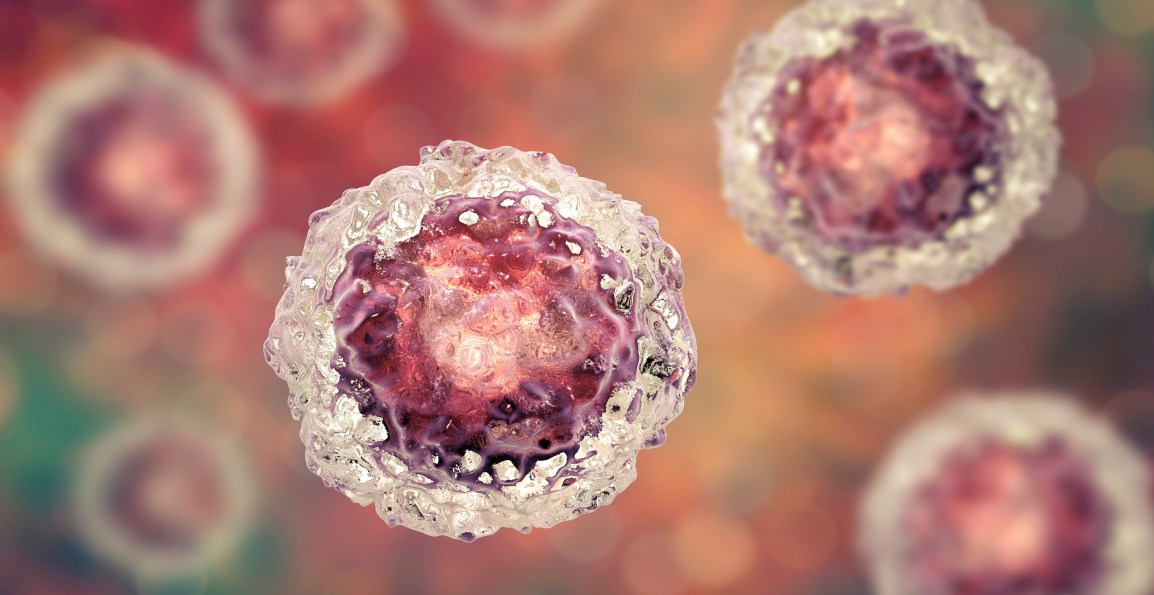
Recently, however, scientists from various international institutes have attempted to create mixed-species embryos by injecting stem cells from humans into macaque (monkey) embryos. Monkey embryos are mainly used for this purpose because monkeys are genetically the closest to the human species.

Scientists injected 25 induced pluripotent stem cells from humans into 132 macaque embryos. The embryos were each 6-days old. All cells survived and grew inside the 132 embryos in the first 24 hours. After a lapse of 10 days, 29 embryos expired leaving only 103 chimeric embryos behind. By the 19th day, all except 3 chimeric embryos died, which too were terminated.

Researchers have marked this a great victory and believe that the rate the human cells grew inside the monkey embryos for the first 24 hours is remarkable and could be a great breakthrough in genetic engineering.

“This knowledge will allow us to go back now and try to re-engineer these pathways that are successful for allowing appropriate development of human cells in these other animals,” Juan Carlos Izpisua Belmonte, a genetics professor at the Salk Institute for Biological Sciences in La Jolla, California, and co-author of the study told NPR.

“We are very, very excited,” he added.

“Our goal is not to generate any new organism, any monster,” Belmonte told the broadcaster. “We are trying to understand how cells from different organisms communicate with one another.

All these experiments have led to promising results, as pointed out by the researchers.

Integration of the cells was not a challenge, but the survival was proving to be difficult so eventually the researchers investigated some new ways to conduct screening for drugs. This assisted in generating transplantable cells, tissues, and even organs.

Even though the idea is serving as a major breakthrough in the world of genetics, the experiment has already been tried before but with little success. In 2017, some scientists designed human-pig chimeras by introducing human cells into pig embryos. The cells were then incubated for a period of four weeks and just when they thought it would work, the number of cells grown proved to be insufficient.

This is why the researchers focused on producing a higher rate of growth.

The experiment does raise questions on ethicacy.  “My first question is: Why?” research fellow at Rice University’s Baker Institute Kirstin Matthews told NPR. “I think the public is going to be concerned, and I am as well, that we’re just kind of pushing forward with science without having a proper conversation about what we should or should not do.”

Weaponizing Space

The competition between the world superpowers to dominate each other with nuclear weapons is something that makes headlines almost every week. Making its mark in the world of science and tech, China is now posing to be a threat to these powers, especially the US.

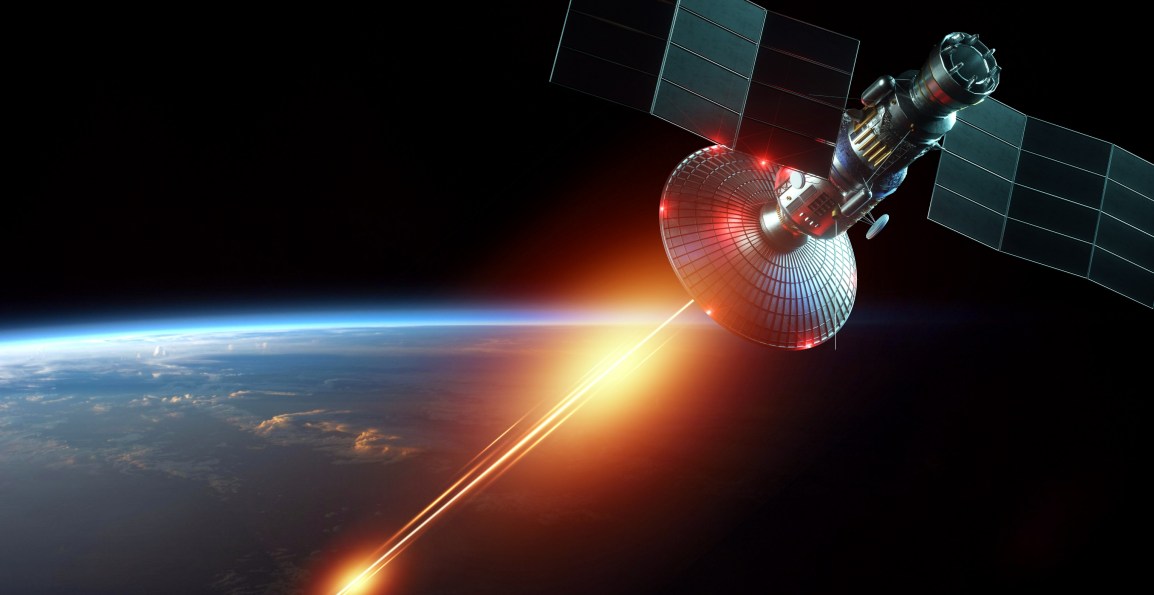
Recently, the US Intelligence community has warned the world about China making space weapons to increase its hold and terrorize the US. It has labeled the Asian giant as “the top threat” to the US in space and has accused the Chinese government of manufacturing weapons that could be used outside of Earth to threaten the superpower.

The Office of the Director of National Intelligence (ODNI) published a new Global Risk Assessment report which highlights a huge increase in China’s military and commercial activities in the planet’s orbit. One of the primary concerns raised in the report is that China has developed the weapons to shoot down other satellites with missiles or disable them with high-speed lasers, according to Defence News Analysis. This points towards an extremely specialized industry and expertise of the Chinese military that might result in a potential danger to the US, which by far is the country that dominates space.

The threat of China as a potential contender for colonizing space has challenged the global order which was previously dominated by the US and the USSR. Right now, the US is the sole global authority in the world but by the use of well-planned economic, military and social reforms, China seems all set for world domination.

According to Defence News, ODNI Director Avril Haines told lawmakers, “I think there’s just no question, as a general matter, that China is focused on achieving leadership in space and has been working hard on a variety of different efforts in this area to try to contest what has been presumed our leadership.”

China has upped its game in science and tech and is making great investments in research and development. Even with a global pandemic that originated in the country, it has managed to pull itself out of the economic crisis and is adding a significant amount to the world GDP.

So with an impressive growth rate, China will be ready to construct its next space station in orbit quite soon and even though it is not a military action that threatens any state in particular, it is a statement on its own that the country is ready to compete with other superpowers. The International Space Station is going to retire soon and the United States is making a strong case to the committees about preventing Chinese supremacy that could potentially change the whole global order in favor of the East.

DNA Mutation

While quantum physics deals with the study of bizarre behavior or matter on a subatomic level, scientists since the early 1920s have looked at how the quantum mechanics play a role in the living cells, thus introducing Quantum Biology, a relatively new field putting nuclear physicists, biochemists and molecular biologists together to understand the behavior of living cells at a DNA level.

A research paper published early 2021 in the journal, Physical Chemistry Chemical Physics suggested that an unusual quantum phenomenon could be causing point mutations in the DNA structures.

Scientists at the University of Surrey’s Leverhulme Quantum Biology Doctoral Training Center used computer simulations and various quantum mechanical methods to study proton tunneling, a purely quantum phenomenon which occurs on the hydrogen bonds linking together the spiraling DNA stands.

Proton tunneling is when a proton from the hydrogen atom vanishes from one spot and reappears elsewhere. This can cause the atoms to occasionally be found on the wrong strand of DNA thus causing point mutations in the genetic code.

Even though these genetic mutations are usually short lived, and the DNA molecules readjust to their real order in a reasonable short amount of time, the scientists believe that some of these mutations could survive the DNA replication process inside the cells and possibly cause health consequences thus increasing the risk of cancer.

In a press release issued by the team of researchers, the lead author of the research Marco Sacchi said that many had long suspected that the quantum world which is weird, counter-intuitive, and wonderful plays a role in life as we know it. While the idea that something can be present in two places at the same time might be absurd to many of us, this happens all the time in the quantum world, and our study confirms that quantum tunneling also happens in DNA at room temperature.”

The scientists believe that quantum biology has a long way to go and there’s a lot more left for scientists to understand when it comes to studying the biological processes at a subatomic level, however, this recent research by the scientists at University of Surrey has proven the point that quantum mechanics are definitely at play on a biological level.

The co-author of the study and co-director of the Leverhulme Quantum Biology Doctoral Training Center, Jim Al Khalili, said that it has been thrilling to work with this group of young, diverse and talented thinkers – made up of a broad coalition of the scientific world. This work cements quantum biology as the most exciting field of scientific research in the 21st century.

Other scientists not involved in the study directly have labeled it as a massive step towards understanding quantum biology however, they believe that a much more improved computing power and methodology will be required to model entire DNA strands.

Faster Than Light Travel

Are you fascinated by Star Trek’s famous superluminal spacecraft propulsion system, the Warp Drive? The one that would enable space crafts to travel faster than light? Guess what? Scientists have finally come up with theories grounded in conventional physics that might just make FTL travel through a warp drive possible!

In a new bombshell dropped by astrophysicist Dr. Erik Lentz of Germany’s Gottingen University, bending the fabric of space and time to the will of scientists is quite possible. Lentz introduced the first theoretical design of Warp Drive grounded in the concepts of conventional physics which will allow scientists to overcome the vast expanse between humans and stars and making Faster-Than-Light (FTL) travel quite possible.

Lentz’s theory published in the peer-reviewed journal, Classical and Quantum Gravity, reimagined the shape of the warp space thus overcoming the dependence on exotic materials as suggested in models suggested by scientists previously.

“The suggested theory has opened up new dimensions for studies of FTL travel moving it a step away from theoretical physics and closer to engineering,” said Lentz in a statement.

The Warp drive concept is quite fascinating to scientists and researchers particularly because if the concept really comes to life, it will enable humans to travel to the Alpha Centauri, the nearest star system, in 3 years or less. If a usual modern rocket were to travel the same distance, it will take more than 50,000 years, and thus practically impossible.

While the fictional star trek model of FTL Warp Drive worked by the collision of matter and antimatter generating explosive energy which would be used to propel the space ship faster than the speed of light, the idea was no more than fiction.

In 1994, physicist Miguel Alcubierre proposed a Warp Drive model which is known as the Alcubierre Drive. In his research paper abstract, Miguel wrote, “by a purely local expansion of spacetime behind the spaceship and an opposite contraction in front of it, motion faster than the speed of light as seen by observers outside the disturbed region is possible.”

The idea of Alcubierre was based on expanding massive amounts of energy, however, particle physics knows of no such mechanism capable of creating this amount of negative energy.

Lentz’s paper suggests a new method of warp drive, one that isn’t dependent on exotic matter. In his research he discovered spacetime bubbles, taking the shape of solitons, which the scientists working previously had overlooked.

Applying the same Einstein’s equations of general relativity for various configurations of solitons, Lentz was able to finally find one equation that could work with conventional energy resources and didn’t need negative energy.

“The next step is to figure out how to bring down the astronomical amount of energy needed to within the range of today’s technologies, such as a large modern nuclear fission power plant. Then we can talk about building the first prototypes,” Lentz said.

Smart Fabrics Turning Your Clothes into a Walking Digital Display

Imagine walking around with your clothes lighting up like a digital display, allowing you to send messages and emails and turning into a keyboard. Even more shocking, imagine a direct communication with your clothes allowing them to adapt to varying temperatures or share crucial fitness information with your instructor while you are in the middle of a marathon run.

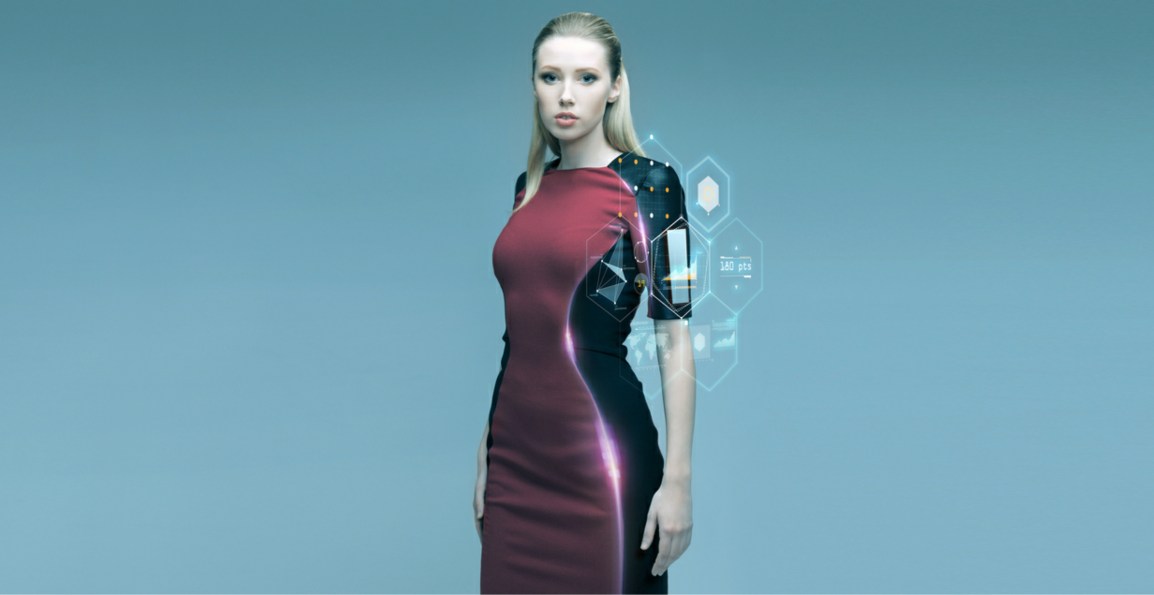
While it sounds like an ironman suit straight out of science fiction, smart fabric is quite real and scientists from the Fudan University in China have been able to create a fabric with embedded digital components that can conveniently be used as a digital display and communication tool while being folded, washed, and worn like your regular clothes.

The introduction of durable smart fabrics are set to revolutionize the world of wearable gadgets. According to experts the market size is expected to exponentially increase by 30.4% from 2019 to 2025.

The attempts at building conductive yarns that could be woven into fabrics had been going on for decades, but most attempts barely made it out of the research labs and onto people’s bodies since the resulting fabrics were extremely fragile and couldn’t withstand the abuse our clothes are usually put through.

Other smart fabrics which have been able to make it to market operate in predetermined ways such as the high-end beachwear manufactured by a French startup Spinali Design, with ultraviolet sensors which notify users when to apply sunscreen.

However, this new fabric developed by the researchers in China has been able to withstand over 100 washing and drying cycles and its display continues to work just fine, becoming a revolutionary leap forward in the field of electronic textiles that will have an insurmountable impact on industries worldwide, according to research published in the journal “Nature.”

The authors of the research journal suggest that the practical use for smart fabrics will not just be limited to fashion designer being able to integrate adaptive electronic displays into their outfits, but will have far more serious and life changing applications.

People with physical or cognitive impairments will be able to conveniently communicate with the smart fabrics. In addition, the speech-to-text display will allow communicating in foreign languages. The use of smart fabrics for the advertising industry will also evolve the concepts of marketing & advertising allowing people to turn into walking billboards.

Many tech giants around the world have been actively working on integrating the smart fabric technology to new applications. For instance, Google has been working with Levis for quite a few years to develop a smart denim jacket using Google’s Project Jacquard Smart Tech giving built in touch controls to the sleeves of the jacket. Similarly, Apple filed a patent to integrate health monitoring technology into clothing. 

There’s still some time until we see our local clothing outlets displaying digital clothing on their mannequins, but it may just happen in the very near future.

Cloud Seeding

As concerns of water scarcity in the wild west of the United States grow, scientists continue to resort to modern weather modification techniques to create rain in areas of the West Coast facing the worst drought in centuries. With limited rainfall and continuing droughts, the Colorado River and its water-banks are running dry, risking the water supply to over 30 million Americans.

To overcome the drought, in the snowcapped mountains of the West Coast, crushed particles of a chemical compound are being launched from the ground up into the sky or being directly injected into the clouds through airplane flares. The purpose of injecting these particles in the clouds is simple: encourage precipitation, in common terms, provoke rainfall.

While the idea of a cloud making machine may sound as if it’s out of a comic, this process is called cloud seeding, and it is very real. The technique uses particles of silver iodide injected in the clouds. The structure of silver iodide is very similar to ice and thus attracts droplets causing them to cluster and freeze eventually resulting in rainfall/snow. The snow melts during the warmer months and the water is added to the running streams increasing the supply to the population.

The concept of cloud seeding has been around for over 5 decades. It has been used not only to encourage rainfall, but to also reduce hailstone size and to cause clouds to precipitate earlier than when they are expected to.

The effectiveness of the process is still a point of huge discussion as most of the experiments done in the second half of the 20th century didn’t yield satisfactory results and no significant increase in precipitation was ever recorded. However, scientists working on the cloud seeding project believe that right now is the best time to address the issue as global temperatures continue to rise, posing an even greater risk of drought that could last for decades.

Scientists believe that in order to better manage the water supply across America, authorities have only two choices. The first is to reduce the demand by introducing conservation and recycling methods and the second is to somehow increase the water supply. “Cloud seeding is a relatively inexpensive proposition,” remarked Jeff French, an atmospheric scientist at the University of Wyoming.

While Jeff French himself is doubtful about cloud seeding being a viable option to increase rain/snow in the regions, it is a technique worth trying to help regions prone to drought.

The states of Utah, Colorado, and Wyoming, among others are not holding back in their attempts to modify the weather of the region and induce rainfalls and have all introduced cloud seeding projects.

Research recently suggested a 5 – 15% increase in rain/snow fell in regions where the technique was implemented, but unfortunately, scientists haven’t been able to draw a concrete link between increased rain and cloud seeding.