Brain Reading Wearables

According to foreign media reports, Facebook CEO Mark Zuckerberg said that he wants to create a wearable device that can read brain waves to “control virtual reality (VR) or augmented reality (AR).”

Editorial credit: Frederic Legrand – COMEO / Shutterstock.com

It may also reveal what you are thinking.

After Facebook bought CTRL-Labs in September 2019, Facebook founder Zuckerberg recently revealed that he intends to focus on wearable devices and implant technology with brain control.

The Chan Zuckerberg BioHub Research Center, funded by Zuckerberg and his wife in Silicon Valley, said that the ultimate goal of brain technology development is to enable people to think and control through virtual reality or augmented reality head-mounted devices. Freedom in your mind.

CTRL-Labs is working on a wristband device that allows people to control signals from the spinal cord. After the transaction is completed, CTRL-labs will join Facebook Reality Labs, which is working on augmented reality smart glasses.

If technology companies really want to read brain waves, implant technology seems to be a must. From a medical perspective, a speech-limited disease such as a stroke could indeed be decoded by implanted technology to turn internal speech into a voice that people can understand in real time. However, there are also health risks.

In fact, since the establishment of “Building 8” in Facebook in 2016, the company has already been engaged in the development of brain computing technology. In July 2019, Facebook revealed that it had been funding the University of California to assist in the development of brain computing.

A paper published by the University of California pointed out that it developed a software that only had to be trained. 76% of the software could identify the problems heard by people with epilepsy, and 61% knew what epileptics wanted to know. Of course, the brain-reading software developed by the project is only applicable to pre-programmed sentences, but scientists believe that the software also lays a good foundation for the development of a more powerful system in the future. On the whole, it takes a long way to go to commercialize reading brain technology.

Most worrying, once the brain technology is commercialized, it could invade people’s privacy. Facebook believes that even if the future brain-reading technology matures, its application will be greatly restricted, so it will not invade personal privacy.


Electricity from Snow?

Scientists from the United States have developed a technology that allows you to receive electricity from snow. The device can be installed permanently, or attached to a bicycle wheel or shoe sole.

In 2019, it is difficult to surprise anyone with solar or wind power stations, electric energy recovery systems in electric vehicles or wireless charging systems which can recharge a smartphone.

However, researchers from California have gone further and created a technology that allows electricity to be generated directly from the snow. According to Science Alert, Nanotech Energy has developed a device that can generate electricity from contact with snow.
The system became possible due to the triboelectric effect i.e. the creation of an electric charge created by friction generated between certain materials. The smallest particles of snow carry a positive electrical charge, and scientists needed to use a suitable negatively charged material to create electricity. Silicon turned out to be such a material.

The device that the company developed is called a Triboelectric Nanogenerator (TENG). Nanotech Energy printed the main electrode on a 3D printer and used silicon as the triboelectric layer that collects electricity.

It is reported that with the help of such a device it is possible to produce electricity both from simple snowfall as well as by attaching the electrode to vehicles or clothing.

A chemist at the University of California explained that static electricity comes from one material that can attract electrons and another material that can give them away. “In this way, you can create electricity out of thin air.”

True, there’s not so much “electricity from nothing”: TENG can generate an instantaneous electromagnetic energy density of up to 0.2 mW/m2, open circuit voltage up to 8 Volts and current density up to 40 μA/m2. In comparison, for bright room lighting, you need an incandescent lamp with an electromagnetic energy density of 20 W/m2.

Nanotech Energy suggests using TENG as a small weather station for real-time weather monitoring, which will be able to provide information on snowfall speed, rainfall, wind direction, etc. In addition, the device can be something like a fitness bracelet for athletes in winter sports, and help them track the movement of the body and its performance.

However, Science Alert also writes that in the future, TENG could be installed in solar panels and used during snowfalls when solar activity is not so high. Given that about 46 million square kilometers of the Earth’s surface are subject to snowfall every year, this technology has a chance of scale and growth.

Harnessing electricity from snow by the triboelectric effect is not the first such technology of its kind. Previously, researchers also showed devices that can produce electricity from rain, physical movements, friction of car tires, and walking on a wooden surface.

Porsche and Boeing are working on a flying car concept

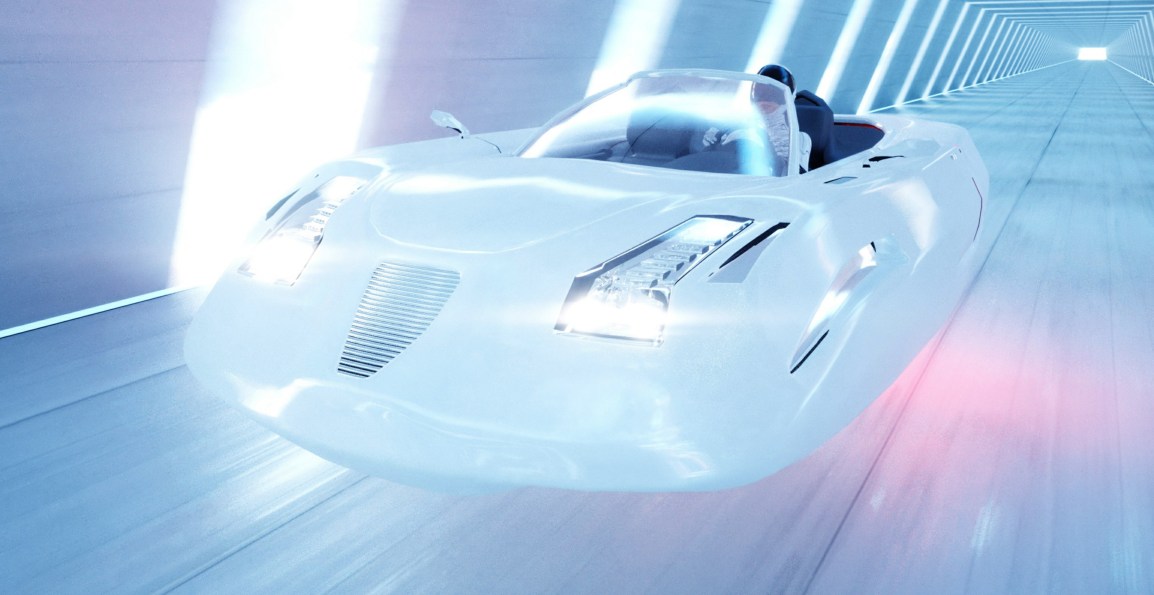
Porsche automaker and aircraft manufacturer Boeing announce work on a flying car concept. Both companies see this niche as a potential market, particularly in the context of urban air taxis.

Porsche and Boeing have joined forces by signing a memorandum of understanding to address the case of urban flying. The signing took place on October 10th.

Both companies will create a vertical take-off and landing aircraft (VTOL) concept, which will lead to a working prototype design. These efforts indicate that the future of transport is soon going to revolutionize and it’s no more a far-fetched idea to make air travel available for everyone as a luxury.

There are other companies inspired by the idea too. The group RATP and Airbus are studying the integration of autonomous flying vehicles in urban transport.

Aerial urban mobility is at the heart of car manufacturers’ concerns. While the Japanese company Hyundai has just announced the creation of a specific division, and the Chinese investing in the German start-up Volocopter in early September, it is the turn of Porsche to position itself. On Thursday, October 10, 2019, the German manufacturer unveiled a collaboration with aircraft manufacturer Boeing to study the development of a flying car.
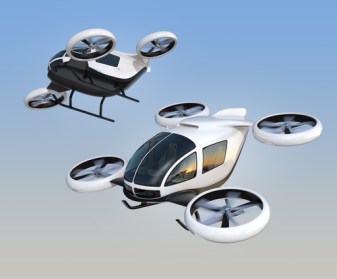
Porsche requires it to be a luxury vehicle, which would take off and land vertically (VTOL) and use electric motors. A team of international researchers will be set up to analyze the potential of this future market and imagine the first cases of use.

ANTICIPATING ACCELERATION IN 2025

This agreement recalls the one between the Europeans’ Audi and Airbus, who are developing a similar concept. Why such an interest? A study conducted by Porsche in 2018 shows an acceleration in urban air mobility from 2025 because it is faster and more efficient compared to the current terrestrial transport means. This would paradoxically cost more to produce and exploit, while being less flexible in uses.

“Porsche is looking to expand its business by becoming a flagship brand of premium mobility, which could mean, in the longer term, the need to address the third dimension in our travels,” Detlev von Platen said in a statement. “We combine the strengths of two of the leading companies in the sector to position ourselves in a key potential market in the future.”

For his part, Boeing NeXt’s vice president and general manager, Steve Nordlung, said, “Together, Porsche and Boeing can think of innovative technologies and design, to boost the air-to-air urban mobility world”. However, this is not the first attempt that the American aircraft manufacturer has made in this area. Since 2016, Boeing have participated in the Uber Elevate flying taxi project, whose first prototypes will take off during 2020.

There are several of flying car prototypes in the testing phase. Kitty Hawk is perfecting several, and Uber expects to make the Uber Air service a reality very soon.

Human Brain Robots

We have all seen countless movies in which robots take over the world and wipe out humanity, where robots behave like humans and form a whole force to fight against the beings that created them. Most of us didn’t really believe that one day, robots that behave like humans, would actually become real. Until now. Scientists have been able to make tiny human brains and hook them up to robots! For many, it is still unbelievable, but scientists are actually moving closer and closer to creating life in a laboratory.

The steps that have been taken are just the beginning and there is a very long way to go until scientists are able to completely replicate a human brain and successfully implant it into a metal body.

Scientists have been able to come up with ways to make robots behave like humans. They were able to produce organoids which generate brain waves that could show signs of consciousness, and reproduce qualities of the human brain like being capable of sentience (capacity to feel, perceive, or experience subjectively) and of feeling pain, agony and distress.

It all started at the University of California, San Diego lab, of biologist Alysson Muotri, where the scientists used stem cells to grow organoids. These are tiny, self-organized three-dimensional tissue cultures. These organoids were then packed into a box and shipped to space to see how they develop in a zero gravity environment. As said by Muotri, they are most likely ‘replicating like crazy’ in space. It was then observed that the organoids produced were giving off brain waves or complex designs of neural activities. As the organoids matured, it was observed that they showed changes in the brain waves, similar to the changes that take place in the developing brain of a premature baby. This peculiar finding is forcing the scientists to revisit the limitations of lab-grown mini-organs and the ethical issues surrounding them.

To proceed with the experiment, Dr. Muotri hooked the mini brains up onto a spider-shaped robot in order to study the neural activity. The results that he got from this could possibly prove that scientists are now able to generate partially conscious life in a laboratory.

Dr. Muotri emphasized the fact that these are just clusters of replicating brain cells, not actual brains. Another point to state is that the mini brains barely scratch the surface of a human brain’s capabilities. The human brain is immensely complex, whereas the mini-brains are just a simple ball of neurons. But, of course, creating these simple balls of neurons, somewhat similar to the human brain, was also once believed to be an impossible task.

As the scientists agree, there is a long way to go to make human brain robots a success in the world of science and technology. But, this is also a huge landmark and many scientist across the globe are experimenting with and are hopeful that this research will not stop here.

Airships

Traveling by air is the fastest and safest mode of traveling. Today, it has become the most frequently used mode of travel, but long before commercial airplanes flew, the skies were dominated by Airships. Airships, as the name suggests, were tremendous in size and flew passengers locally. In terms of design, they consisted of a huge balloon-like structure which received its lift through gasbags. The gasbags generally contained helium but since it wasn’t cheap and an excessive amount of gas was required to keep the airship in the sky, Helium was later replaced with a much cheaper alternative; hydrogen which was notoriously known for being flammable.

There are three types of Airships, classed by structure – they are rigid airships, semi-rigid airships and non-rigid airships. The non-rigid airships have no structural framework and retain their shape solely by internal pressure. The rigid airships have a structural framework in addition to the gasbags. While the semi-rigid airship combines the structural properties of both rigid and non-rigid airships. Rigid airships were the most frequently used and had a better safety record. First flown by the German General Count Zeppelin, the rigid airships soon received a new name and were all referred to as the Zeppelin.

Developed in 1893, Zeppelin wasn’t commercially flown until the 19th century when a German airline took off carrying passengers in 1910. 4 years later and the airline had already completed more than one thousand flights carrying over ten thousand passengers. By then airships were being used commercially as a mode of travel on a larger scale. Apart from commercial uses, Zeppelins played a crucial role for Germany in World War 1. Used as bombers and deployers, Airships had proved to be useful for both military and commercial travel. This all changed when a German airship carrying 97 onboard abruptly caught fire on May 6th, 1937 in New Jersey, killing almost 37 people. This, along with a number of other incidents, took away people’s faith and marked the end of airships and the beginning of commercial airplanes on a broad scale which were much safer and faster and could fly internationally.

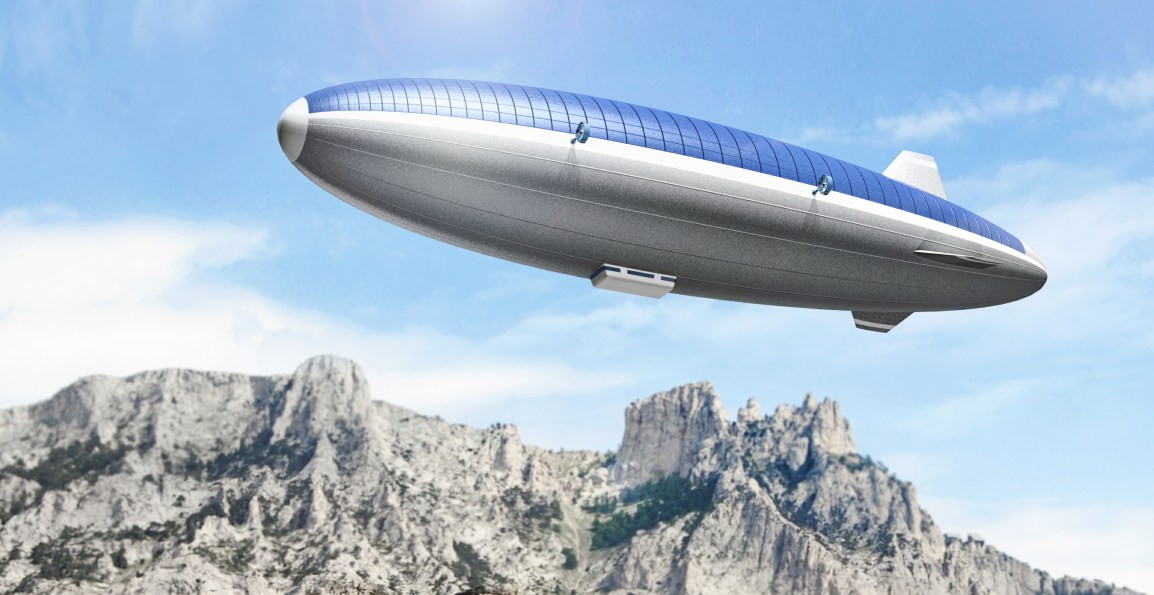
Now, almost 80 years later, airships are almost unheard of. However, a team of Austrian scientists are currently proposing an airship ten times greater than the Hindenburg for the sole purpose of carrying cargo. This new and unique airship will be capable of lifting more than 20,000 tons of cargo across land and sea. Furthermore, wind speeds at high altitudes can easily cross 150+ kilometers. Using this airspeed could allow the airship to travel around the world in just 14 days. As well as carrying cargo much faster than ships on the same route. Of course, the incident of Hindenburg is the first thing that comes to mind when talking about airships and safety. In this in mind, scientists propose to use carbon fiber as a durable framework as well as automating them so even if an incident is met, there is no loss of life.

Neom – Future city

Neom is a future city that is being planned by the Saudi government and especially the crown prince of Saudi Arabia, Mohammad Bin Salman. He plans to create a city that will be out of a movie using all sorts of technology and advancements. Some of the features of the city were listed in a 2,300-page document that has been created by the Saudi government while planning for this mysterious and futuristic city.

The city will have many attractions that the tourists will love and will definitely want to see. They will have an artificial moon that will light up the night sky, every night. They plan to have Jurassic park inspired robotic dinosaurs that people interact and mingle with. They also will have robot maids, glow in the dark beaches and even flying cars! This ambitious city looks like something that will attract the whole world and will encourage people to visit Saudi Arabia, which hasn’t really been a hub for tourism, except the holy pilgrimage.

However, the downfall of this futuristic city is that it will force the local tribes to relocate that have existed in Saudi Arabia for centuries. It is also planned that a human gene-editing clinic will be placed within the city and the city will be under surveillance of the government 24 hours of the day. It seems that the city is more of a dystopian future in books rather than a futuristic, fun tourist spot.

The location that has been planned for this city is the North-west of Saudi Arabia, which at the moment is barren except for a few tribes that live there. The city is said to cost around 500 billion dollars and will need a lot of investment from very rich people and the crown prince himself, who will also be overseeing the construction of the city.

Right now the place where Neom is said to be created is barren and is a large desert, like most of Saudi Arabia. However, the crown prince plans on using the method of cloud seeding, which means that they engineer the clouds to produce rain and this will not only improve the climate of the city but also enable fresh produce to grow on a barren land.

According to the document, Neom plans to have more Michelin star restaurants in one city than anywhere around the world. The city also plans on having the best education provided to children who inhabit the city with holographic teachers. The crown prince wants to give people the best-paying jobs and wants to create a healthy economy where both parties are satisfied.

The chief executive of the city says that they plan on using the latest and most advanced technology; hence this is the reason why some of it is still theoretical and may take time to develop.