
According to foreign media reports, Facebook CEO Mark Zuckerberg said that he wants to create a wearable device that can read brain waves to “control virtual reality (VR) or augmented reality (AR).”

It may also reveal what you are thinking.
After Facebook bought CTRL-Labs in September 2019, Facebook founder Zuckerberg recently revealed that he intends to focus on wearable devices and implant technology with brain control.
The Chan Zuckerberg BioHub Research Center, funded by Zuckerberg and his wife in Silicon Valley, said that the ultimate goal of brain technology development is to enable people to think and control through virtual reality or augmented reality head-mounted devices. Freedom in your mind.
 CTRL-Labs is working on a wristband device that allows people to control signals from the spinal cord. After the transaction is completed, CTRL-labs will join Facebook Reality Labs, which is working on augmented reality smart glasses.
If technology companies really want to read brain waves, implant technology seems to be a must. From a medical perspective, a speech-limited disease such as a stroke could indeed be decoded by implanted technology to turn internal speech into a voice that people can understand in real time. However, there are also health risks.
In fact, since the establishment of “Building 8” in Facebook in 2016, the company has already been engaged in the development of brain computing technology. In July 2019, Facebook revealed that it had been funding the University of California to assist in the development of brain computing.
A paper published by the University of California pointed out that it developed a software that only had to be trained. 76% of the software could identify the problems heard by people with epilepsy, and 61% knew what epileptics wanted to know. Of course, the brain-reading software developed by the project is only applicable to pre-programmed sentences, but scientists believe that the software also lays a good foundation for the development of a more powerful system in the future. On the whole, it takes a long way to go to commercialize reading brain technology.
Most worrying, once the brain technology is commercialized, it could invade people’s privacy. Facebook believes that even if the future brain-reading technology matures, its application will be greatly restricted, so it will not invade personal privacy.

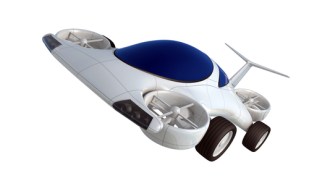 Aerial urban mobility is at the heart of car manufacturers’ concerns. While the Japanese company Hyundai has just announced the creation of a specific division, and the Chinese investing in the German start-up Volocopter in early September, it is the turn of Porsche to position itself. On Thursday, October 10, 2019, the German manufacturer unveiled a collaboration with aircraft manufacturer Boeing to study the development of a flying car.
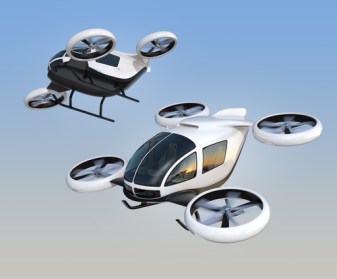 For his part, Boeing NeXt’s vice president and general manager, Steve Nordlung, said, “Together, Porsche and Boeing can think of innovative technologies and design, to boost the air-to-air urban mobility world”. However, this is not the first attempt that the American aircraft manufacturer has made in this area. Since 2016, Boeing have participated in the Uber Elevate flying taxi project, whose first prototypes will take off during 2020.
 “Carbon, the basis of all living forms and an important source of energy for humanity, is moving across the planet from the mantle to the atmosphere. To maintain a stable future, it is imperative that we understand the full carbon cycle”, said Marie Edmondson of the University of Cambridge, who participated in the DCO program.
 However, as usual when we talk about climate change, the problem is not the concentration, but the trend. To get an idea, when scientists started recording in 1959, the figures were at 315 ppm and most of the growth has occurred in recent years. According to the United States Oceanic and Atmospheric Administration (NOAA), three of the four largest increases in atmospheric CO2 have occurred in the last four years.
 To believe that Earth is the only planet suited to support life amongst is foolish. For years intellectuals have argued that there may exist a planet with conditions somewhat similar to Earth on which life could bloom but so far we have been unable to find it. Until recently, when a planet that goes by the name K2-18b fell under the sight of NASA’s Kepler telescope.
 The most important aspect of determining whether a planet can sustain life or not is by determining if there is water present on the planet. Water compromises about 70% of the Earth, without it, life cannot survive let alone thrive. So, to find a planet that could potentially support life, water is the first priority. 2 years after K2-18b’s discovery, NASA’s sole objective was to search for water on the planet. They found that every time the planet moved in front of the dwarf, the wavelength absorbed by the water dropped. Similarly, as the planet crossed, the wavelength rose. For NASA, this confirmed the presence of water vapors. Further studies show that K2-18b is much bigger than Earth nearly twice the size and has a temperature ranging from 0 to 40 degrees Celsius which is optimal in regards to supporting life. In addition to that, studies show that it may be made up of 50% water.
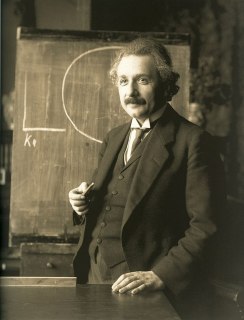 Wormholes are based as a solution to Albert Einstein’s equation of general relativity – the equation for which accounts for the short child wormholes, or Einstein Rosen Bridges, which essentially acts as giant blackhole linking two areas of space time. The theory suggests that the matter and light that is absorbed from one end escapes out of the other at the point known as a whitehole. This whitehole will be located somewhere else in the galaxy or maybe even in some other dimension.
 Next step into space travelling or travelling to other dimensions, this theory relies on the many-world’s hypothesis and interpretation of Quantum Mechanics that reveals infinite universes in timelines. According to this idea, every choice or branching path that we take, exits in the endless list of others. Experts like Stephen Hawking suggest that the wormholes could be all around us but they are microscopically small existing in very deceptive spacetime as nothing is completely flat or solid. According to this theory, there are incredibly small holes in every piece of matter including the time itself, even smaller than the atoms. However, being so tiny we can’t even begin to imagine traveling between them or manipulating them.
 However, the downfall of this futuristic city is that it will force the local tribes to relocate that have existed in Saudi Arabia for centuries. It is also planned that a human gene-editing clinic will be placed within the city and the city will be under surveillance of the government 24 hours of the day. It seems that the city is more of a dystopian future in books rather than a futuristic, fun tourist spot.
 R. E. KEARNEY