Growing Plants in Space

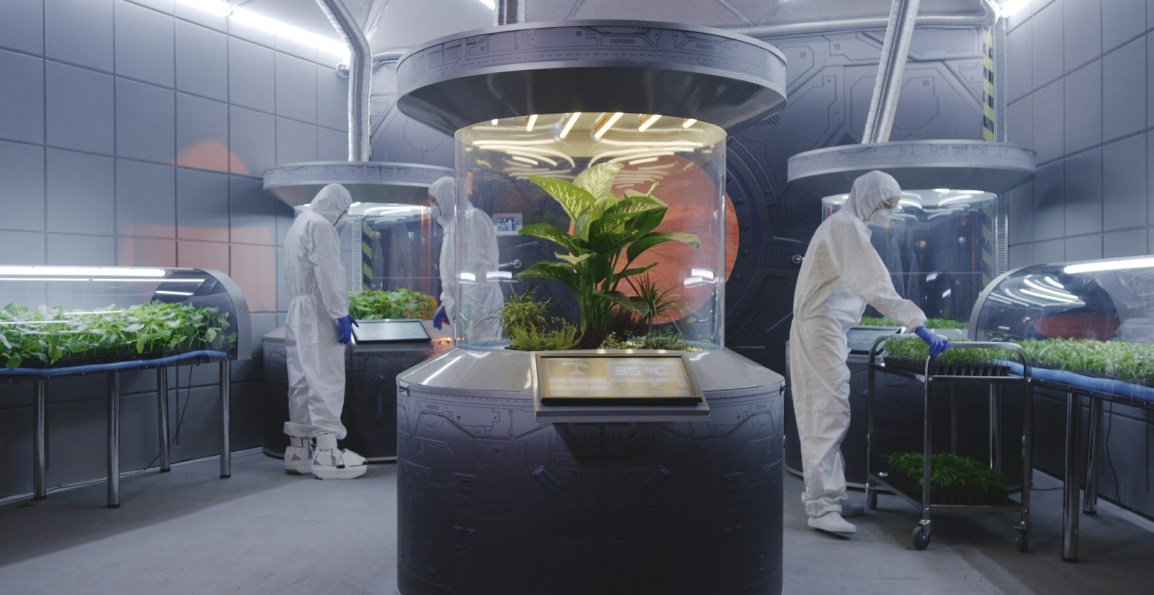
As humans venture into space, the need to sustain life becomes paramount. Fresh produce is essential for astronauts’ health during long-duration missions, but resupply shipments won’t suffice for deep space exploration. Enter astrobotany—the study of plant growth in space environments. Here’s what we’ve learned so far:

In space, plants face unique stressors like microgravity, ionizing radiation, and oxidative stress. These stressors can cause genetic alterations in plant metabolism pathways. Researchers aim to understand how plants adapt and thrive under these conditions.
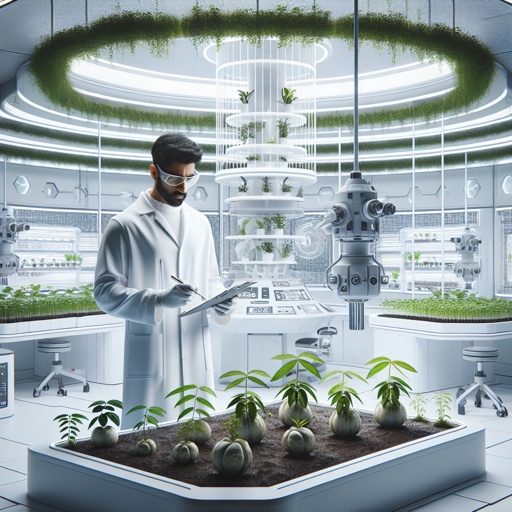
NASA’s Vegetable Production System (Veggie) is a space garden on the International Space Station (ISS). Veggie helps study plant growth in microgravity while providing fresh food for astronauts. Microgravity affects water distribution, root development, and nutrient uptake. The garden, about the size of carry-on luggage, typically holds six plants. Each plant grows in a “pillow” filled with clay-based growth media and fertilizer. LEDs above the plants emit a spectrum of light suited for growth, resulting in a magenta pink glow.

Astronauts have successfully grown lettuce, radishes, and tomatoes in Veggie. These crops provide essential nutrients and contribute to psychological well-being.

Veggie’s success encourages the development of more advanced space gardens. Self-sufficiency in food production will be crucial for long-duration missions. Future missions may involve more advanced space gardens, allowing self-sufficiency. The challenge remains: How do we cultivate fresh produce in a closed environment without sunlight or Earth’s gravity?

Plants on Mars: Challenges and Possibilities

In my book, Mars Madness, I introduced the idea of how fungi could be grown on Mars to support life. In reality, growing plants on Mars is a fascinating endeavor, but it comes with significant challenges:

Martian Soil: Martian soil contains essential plant nutrients, but their levels are too low for healthy growth. Fertilizers would be necessary to enhance soil conditions for plants.
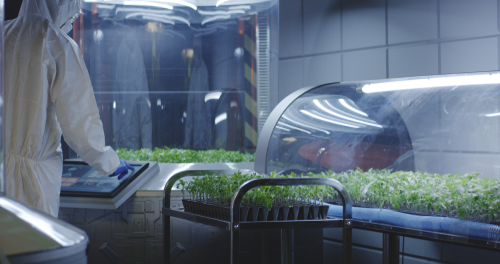
Harsh Environment: Mars has thin air, extreme cold, and sterilizing radiation. A Martian greenhouse would shield plants from direct exposure. During the day, plants would face high solar ultraviolet radiation due to the lack of ozone in the Martian atmosphere. Nighttime temperatures drop well below freezing.

Designer Plants: Scientists are genetically modifying plants to withstand Martian conditions. They splice genes from extremophiles (microscopic organisms that thrive in harsh environments on Earth) into plants. These modified plants could provide oxygen, food, and medicine for astronauts while recycling waste.

Current research focuses on demonstrating feasibility and identifying technical challenges. Martian plants won’t be a reality for at least a decade or more.
Warp Drives: Bridging the Stars with Hypothetical Technology

Faster-than-light travel has long captured the imagination of science fiction enthusiasts and physicists alike. The prospect of journeying between stars in a reasonable timeframe necessitates surpassing the cosmic speed limit imposed by the speed of light. While faster-than-light travel remains theoretical, recent research suggests that warp drives, once confined to science fiction, might not be entirely out of reach.

A warp drive, if realized, would revolutionize our understanding of time and space. Here’s how:

Space Compression:

A warp drive would compress space in front of a spacecraft, allowing it to cover vast interstellar distances more quickly. Our perception of distance and travel time would drastically change. What once took centuries could become feasible within days or weeks.

Time Dilation:

According to Einstein’s theory of relativity, as an object approaches the speed of light, time slows down relative to an observer. A warp drive, by bending spacetime, could lead to time dilation effects. Crew members might experience less time passing during their journey than observers outside the warp bubble.

Temporal Paradoxes:

Faster-than-light travel could introduce temporal paradoxes. For instance, a ship arriving at its destination before it even left could challenge causality. Our understanding of cause and effect would need reevaluation.

Cosmic Neighborhood:

Warp drives would allow us to explore neighboring star systems within a human lifetime. Our perspective of the cosmos would shift from distant points of light to reachable destinations.

Warp drives would redefine our notions of distance, time, and the fabric of spacetime itself, opening up new frontiers for exploration and challenging our fundamental understanding of the universe, but is it a genuine possibility?

The Alcubierre Warp Drive:

In 1994, physicist Miguel Alcubierre proposed a mathematical framework for a warp drive. It involves creating a bubble of compressed spacetime in front of the spacecraft and expanded spacetime behind it.

The challenge lies in the need for negative energy—a hypothetical form of energy that remains unobserved. If harnessed, negative energy could encapsulate the warp bubble.

Recent Advances:

Previous warp drive concepts required exotic matter with negative energy density. However, a new approach avoids this requirement. Physicists Alexey Bobrick and Gianni Martire recently proposed a warp drive design that adheres to known physics. Their model doesn’t violate energy conservation laws and doesn’t rely on exotic matter. While challenges remain, these recent developments suggest that warp drives may be theoretically possible.

Physicist Jared Fuchs, along with a team of researchers, has proposed another novel solution for a constant-velocity subluminal warp drive that adheres to the principles of general relativity. The solution combines a stable matter shell with a shift vector distribution similar to the Alcubierre metric, but unlike previous models, it doesn’t require exotic matter or violate energy conservation laws. While theoretically feasible, the mass required for this warp drive exceeds current technological capabilities, in fact it would require a mass greater than that of the Sun.

In conclusion, warp drives remain tantalizingly distant but not entirely implausible. As we continue to explore the cosmos, humanity’s dream of bridging the vast interstellar distances may one day become a reality

Solar Power

With the urgent need to find a cleaner replacement to fossil fuels as a source of energy – solar, wind and tidal energy sound like they are the best alternative. And the planet certainly needs one. Global temperatures are climbing, as evident from the wildfires that swept across the globe during 2023, sea levels are rising, ice caps are melting, and some naturalists believe we have already entered the next mass extinction event. But with governments and big businesses being slow in their attempts to hit targets for reducing emissions it’s easy to think that time is rapidly running out.

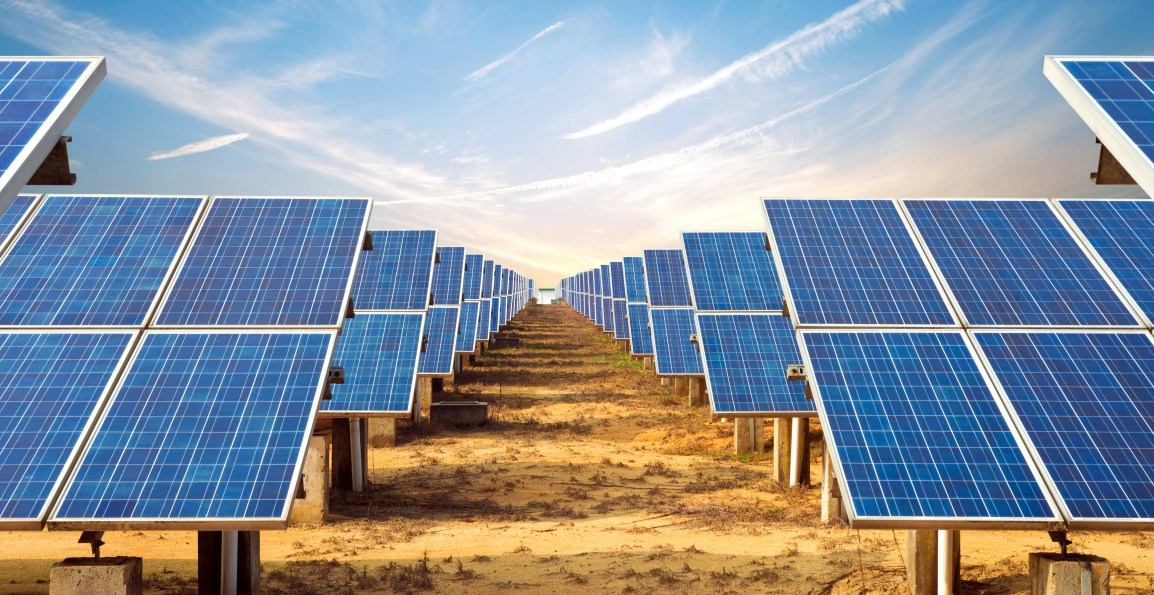
But, all might not be lost. At the current rate of growth, it appears that solar power could potentially be on track to become the dominant power source by 2050. Decreasing costs in solar panel construction are partly to thank for this potentially good news. Researchers in the UK used simulated scenarios that looked at 22 different types of energy, including nuclear, and found that solar was most likely to generate 50% of all energy in 72% of the scenarios they generated.

“We currently have a fossil fuel-dominated system and without additional policies, we arrive at a state that’s dominated mostly by solar,” explained University of Exeter lecturer and study lead author Femke Nijsse.

Sadly, it’s not as simple and straight-forward as you might expect. There are factors and uncertainties which could still create hurdles for solar power adoption. The most obvious is the instability of energy production and how that might affect the power grid. The level of sunlight varies every day, fluctuating the level of power. To overcome this better infrastructure of power grids would need to be implemented together with more efficient batteries to store excess power on good days.

While the adoption of solar power in wealthy countries is easier to integrate, developing countries and those with political instability may find financing change a lot more difficult, especially if there are job losses associated from the fossil fuel industry such as a decrease in demand for raw materials and the supply chain that surrounds it. This could be offset by the creation of new jobs for mining the different metals needed to create a solar panel.

The prospect of solar becoming a dominant source of power in the future faces various challenges, but at least it is more environmentally friendly than burning fossil fuels. However, there are a growing number of voices suggesting that nuclear might be the way forward. Long branded dangerous and not environmentally friendly by groups such as Greenpeace, despite a third of the clean energy in EU coming from nuclear power.

“Greenpeace is stuck in the past fighting clean, carbon-free nuclear energy while the world is literally burning,” complained 18 year old climate activist Ia Anstoot. “We need to be using all the tools available to address climate change and nuclear is one of them.”

Additionally Greta Thunberg has also changed her stance on nuclear power, admitting that nuclear plants in Germany should be kept running – at least in place of coal.

As the climate situation becomes more urgent every year, could a nuclear/solar power combination be the answer? Whichever direction the planet decides to go, all agree that burning fossil fuels must be drastically reduced.

Electric Vehicles going the distance.

The most common complaint held by motorists against electric vehicles is the distance they can travel before needing to be charged up. For long journeys it necessitates lengthy stops every couple of hundred miles to recharge the battery, significantly adding additional time to a long journey. Not only that, but the number of charging points at highway services is still very low compared to the growing number of electric vehicles that join the roads every year.

However, that all might be about to change. In Germany, the Technical University of Munich has built an electric vehicle called “muc022” which has travelled 1,600 miles on just a single charge, smashing the current record for the longest distance driven without recharging. Amazingly, the students in Germany managed the 1,600 miles with just a 15.5 kilowatt-hour battery. Previously the 2023 commercially available Lucid Air vehicle had managed a 516 distance mainly due to a 118 kilowatt-hour battery. But at a base price starting at $140,000 it’s not going to be in most people’s budget.

Muc022 is a wedge shaped single seater vehicle and weighs just 375 pounds. It’s designed to reduce weight and air resistance to a minimum, stripping away luxuries, travelling at a consistent speed of 26mph, meaning there is no option for additional power draining luxuries such as Air Conditioning or music.

The previous distance record was achieved way back in 2017 by global tech company IT Asset Partners. Their vehicle, named The Phoenix, was made from 90% recycled waste, and managed to travel 999 miles on one charge.

Other recent developments in the Electric Vehicle world include the amazing acceleration power of a mini racer from 0 to 62mph in less than one second, powered from a battery! Built by the Academic Motorsports Club Zurich, the 309 pound vehicle was built from “in-house” components, including lightweight carbon and aluminum honeycomb structures. With 326 horsepower, the problem of “sticking” itself to the ground during acceleration was overcome with a device that worked in a similar way to a vacuum cleaner.

Not to get left behind, US carmaker Dodge is expected to release an all electric muscle car soon, but with a slightly different twist. “The company’s upcoming EV will “tear up the streets, not the planet,” Dodge CEO Tim Kuniskis said. He also explained the Dodge would not be selling electric cars but will instead be making “American eMuscle” in an attempt to promote electric performance vehicles. “Our customers purchase an experience, not a technology,” explained Kuniskis.

Fungal Structures

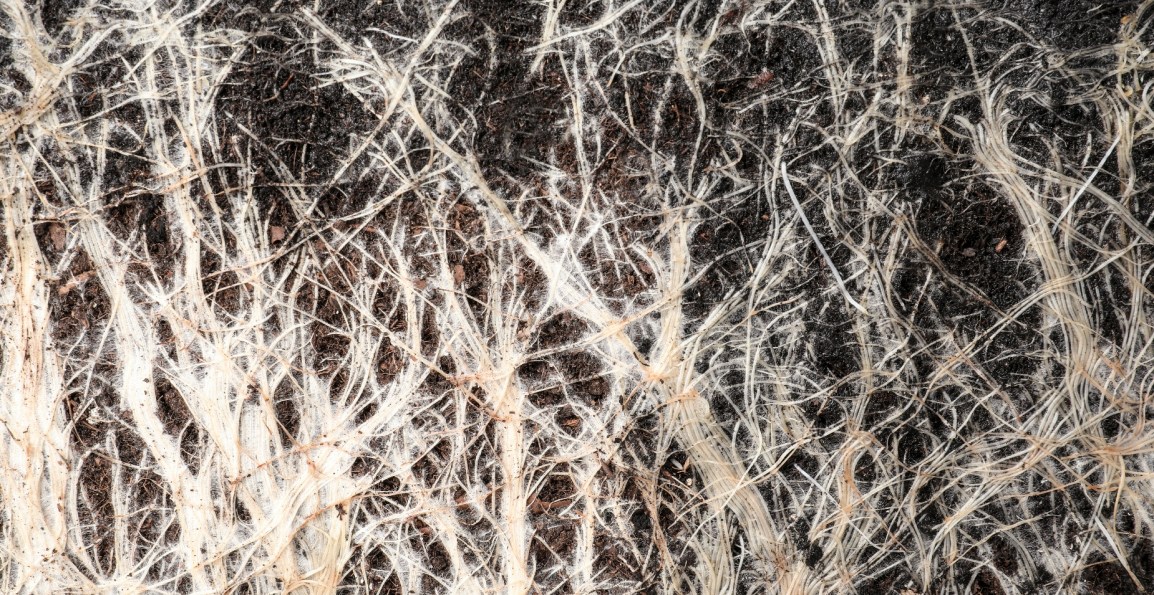
As mankind develops and expands, the need for buildings and other structures grew with it. Most of those building involved concrete, sometimes on a huge scale, which is damaging to the environment on so many levels. Other materials like wood and plastic are also not sustainable or suitable either. However, a group of scientists believe that we could theoretically create buildings from fungus – and not just the structure, but the internal plumbing and electrics too, making a sustainable, self growing and repairing building.

“We propose to develop a structural substrate by using live fungal mycelium,” explained the European academics in their paper. “Fungal buildings will self-grow, build, and repair themselves.”

In a world which has already begun to see the physic changes caused by climate changes, the need for biological building materials would be a huge step forward in reducing fossil fuels and environmentally-destructive mining processes.

“Fungal materials can have a wide variety of mechanical properties ranging from foam-like to wood-like to polymer-like to elastomer-like,” explained co author microbiologist Han Wösten from The Netherlands’ Utrecht University. “The fact that we can make wood-like materials implies that we can use it for the building industry. The selling point of our materials is that it is biodegradable, thereby helping to create a circular economy. At the same time, it should not degrade when actually used as a building material. We can work around this apparent paradox by coating the material. In fact, we also coat wood with paint of oils to protect it against degradation.”

You might be surprised to know that NASA is also testing whether or not fungus could potentially grow in Martian soil, with an aim to using it to build low cost, sustainable structures on Mars. So far, all experiments have involved killing off the fungus once a structure has been built so that it solidifies and hardens sufficiently to carry the loads needed in structural walls. The aim is to find a way to keep the fungus alive so that it remains a living structure, allowing for further growth, repairs and alterations.

And it doesn’t stop with the main structure. Computer scientist, Andrew Adamatzky, another author of the paper, explained that they are looking to build fungal neuromorphic circuits to replace the electronics inside the building. “The living circuits will be self-growing, self-assembling and self-repairing, which no traditional circuitry can do.”

Overall, a circular economy for construction is the goal, minimizing the use of the Earth’s limited resources and reducing energy consumption.

Virgin Births

Recently we heard stories about a captive crocodile that had given birth to a baby despite never coming into contact with a male crocodile to create a viable fertilized embryo. Although the baby was stillborn, it shared virtually all DNA with the mother, confirming its single parent origin. Could this be part of a new phase of evolution in the animal kingdom – in order to survive, even in captivity, could they adapt to still produce the next generation without the normal reproductive processes? I suppose, only time will tell if we eventually hear of a successful virgin birth.

Never to be outdone – humans are at it too!!! While the process of fertilization of a viable human egg with a donor’s sperm outside of the human body has been used for several years, it still requires a mother and a father, as well as implantation of the fertilized egg inside the mother to enable it to grow and survive. However, things are beginning to change.

A group of scientists have used stem cells to create a completely synthetic human embryo without an egg, and without sperm. These fabricated embryos are in the very early stages of development so it’s unknown how far they could continue to viably grow or whether they would even reach a “birth” stage. At present they have not been allowed to develop sufficiently to form a brain or heart. Scientists have agreed not to allow the embryos to grow beyond 14 days, but it’s clearly a step towards something new and different for the human race.

The purpose of this research and experimentation is to help study genetic disorders as well as the causes of miscarriages.

“Our human model is the first three-lineage human embryo model that specifies amnion and germ cells, precursor cells of egg and sperm,” explained team leader Magdalena Zernicka-Goetz, biological engineering professor at the University of Cambridge. “It’s beautiful and created entirely from embryonic stem cells.”

The cells are developed to form a yolk sac, placenta, and embryo. With this type of research being such a sensitive area, Professor Zernicka-Goetz gave some clarity on the synthetic embryo. “I just wish to stress that they are not human embryos. They are embryo models, but they are very exciting because they are very looking similar to human embryos and a very important path towards discovering why so many pregnancies fail, as the majority of the pregnancies fail around the time of the development at which we build these embryo-like structures.”

Previously, Zernicka-Goetz and her team have taken mice stem cells and developed them into early embryos that possess the early growth of a brain and a heart.

There is some confusion on whether or not these synthetic embryos should be governed by the same laws that apply to actual human embryos. Clearly, the creation of synthetic human beings as well as the birth of AI, are huge challenges for the future of mankind.