Innerspace

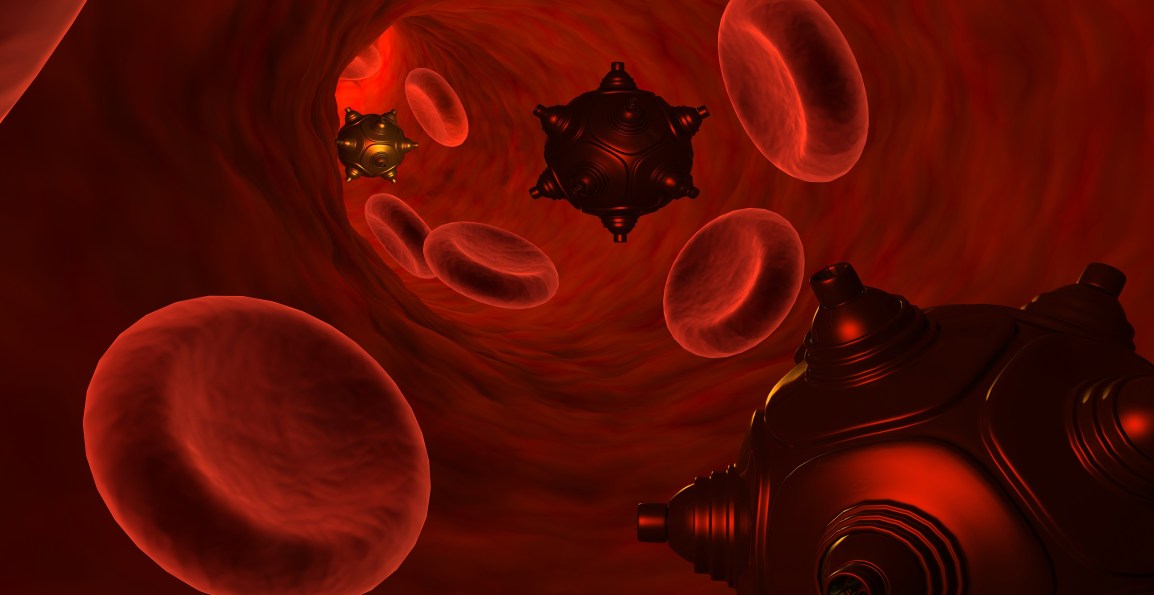
It seems that science fiction movies have yet again been able to accurately predict the future. Back in 1987 Dennis Quaid starred in a film called Innerspace, where a man and his machine were shrunk down so much that they could then be injected into the blood stream of Martin Short. From there he could interact with the cells, nerves etc.

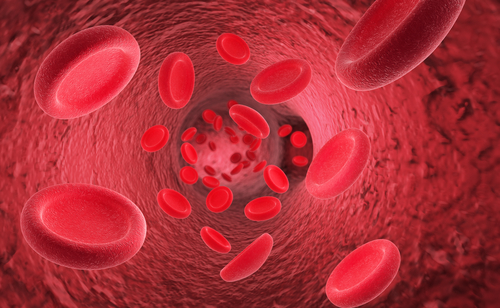
Whilst the movie may be just been a work of fiction at the time, just 35 years later a team of scientists in Israel have created a micro robot that is so small it can inspect individual cells to assess their health, as well as move cells to a different location by electro magnetic means. The scope for these micro robots is huge and this progress could be a game changer in the diagnosis and treatment of diseases.
“Developing the micro-robot’s ability to move autonomously was inspired by biological micro-swimmers like bacteria and sperm cells,” said Gilad Yossifon, biomedical engineering professor at Tel Aviv University. “This is an innovative area of research that is developing rapidly, with a wide variety of uses in fields such as medicine and the environment and as a research tool.”

“Our new development significantly advances the technology in two main aspects — hybrid propulsion and navigation by electric and magnetic mechanisms that are very different. In addition, the micro-robot has an improved ability to identify and capture a single cell for local testing or retrieval and transport to an external instrument.”

As well as being able to identify healthy and dying cells, the team is now looking to develop the micro robot so that it can also be used as an effective drug carrier that can precisely target specific areas of the body.

The merging of robot and animals has been experimented with in many ways over the years. Early in 2023 scientists managed to make a robot move using muscle cells taken from a mouse, laying the path for potential complex cyborg technology in the future.

Like a scene from Frankenstein, the experimental cyborg was created from a 3D printed skeleton, wireless LED control chip and lab grown mouse muscle cells, and maneuvered through a maze. The power to move the cells came from the use of light and heat on the LED controllers. “You can basically beam energy into the chip,” explained Mattia Gazzola, mechanical engineer at the University of Illinois, “so that means that you don’t need power onboard.”

Combine this with the recent explosion in AI development and biohybrid robots with their own intelligent neural network and internal self healing micro robots could possibly overtake the human race as the dominant species on planet Earth.

Chinese Space Construction

While a lot of space agencies are looking towards Mars as a possible future solution for the survival of the human race, China is looking a lot closer to home – somewhere you can see every night from your window. The Moon.

A Chinese state run news outlet has recently reported that China intends to begin building a Moon base within the next five years. But they’re not shipping tons of concrete to the lunar surface, they intend to make the bricks for the building from the Moon soil itself, making it the first country to build a permanent structure outside of the Earth that is anchored to another celestial body. It’s proposed that the Moon base will be manned and is also likely to involve robots too.

In a show of serious intent, 100 researchers from China’s scientific community came together at a conference to discuss everything from building the infrastructure to the use of robots.

“Eventually, building habitation beyond the earth is essential not only for all of humanity’s quest for space exploration, but also for China’s strategic needs as a space power,” Ding Lieyun, a scientist at the Huazhong University of Science and Technology, told state-run news outlet China Science Daily during the conference.

Ding Lieyun demonstrated how an egg-shaped prototype could be constructed from 3D printed bricks made from lunar soil by a robot, called ‘Chinese Super Mason’, which takes the bricks and builds the structure, eliminating the need to transport labor to the Moon.

This isn’t the only interest China has in the Moon. They’re already planning a mission to the far side of the Moon which is as yet a lot less studied. The mission is to bring samples back for examination and is scheduled to begin in 2025.

As well as interest in the Moon, China is also intending to launch a total of 13,000 satellites that will become it’s own broadband-beaming mega constellation in low Earth orbit later this year. This comes on top of the development of their Long March 5B rocket platform which has enabled modules to be delivered to the Tiangong space station.

The space race is still well and truly on and is becoming a very competitive commercial area.

“Life Finds A Way”

Science fiction often has a way of accurately predicting the possibilities of the future. When Michael Crichton wrote Jurassic Park in 1990 he obviously did a lot of research into genetic engineering, but little could he have known that his novel was going to have a direct link to the resurrection of the Dodo thirty years later.

The Dodo has been extinct since around 1662 due to habitat loss and hunting, but a biotech startup called Colossal Sciences, is planning to resurrect the flightless bird in a similar way the dinosaurs were in Jurassic Park. Colossal Sciences is a “de-extinction” company who have previously floated plans to revive other long lost animals including the Wooly mammoth and Tasmanian tiger. And they’re not alone in their vision – since 2021 they have acquired $225 million in investment to make their proposals a reality.

Interestingly one of Colossal’s biggest backers is Thomas Tull (through States Innovative Technology Fund) who is also the producer of the Jurassic World films. Like the films foretold, reintroducing an extinct animal into a new ecosystem can have disastrous consequences, many of which might not be predictable.

If we’ve learned anything from Jurassic Park, we know that the first thing you need in order to recreate an animal is its DNA. Colossal Sciences lead paleogeneticist Beth Shapiro claims they are now in the possession of a complete Dodo genome after taking extracts from preserved remains in Denmark. But this isn’t to create a theme park, there’s a serious reason for trying to bring the Dodo back – to find a way to combat the current extinction crisis affecting the planet.

“We’re clearly in the middle of an extinction crisis,” Shapiro said. “And it’s our responsibility to bring stories and to bring excitement to people in a way that motivates them to think about the extinction crisis that’s going on right now.”

But can a true Dodo be recreated, or would it just a hybrid who’s DNA has been altered slightly?

The theory that resurrecting extinct animals from their DNA in the future could be a viable science is also confirmed by Chester Zoo, UK, whose animal researchers have teamed up with Nature’s SAFE to cryogenically freeze genetic material from animals at the zoo that have died, preserving their DNA for the future in the event of extinction.

Sadly, some scientists think that these efforts might be too late as human population and activity means we’re already in the process of a mass-extinction event, with some unique animal DNA lost forever.

Space Cave Dwellers

Fancy living in a cave in space? That appears to be the potential solution for astronauts looking to live on Mars. The Geological Society of America has identified nine different potential caves that they believe could be viable for colonization should astronauts reach Mars.

The environment on the surface of Mars is known to be harsh so protection from the elements is essential, and naturally occurring caves could provide an immediate answer. With temperatures dropping to below minus 148 degrees Fahrenheit, exposure to harsh solar radiation and even the danger posed by meteorites, it’s no wonder a cave could be the solution!

The potential nine habitable caves have been narrowed down from over one thousand identified, based on factors including distance from potential landing sites, as well as elevation level.  It’s also important that the caves extend underground, allowing enough space for astronauts, their equipment, as well as supplies. The next stage is to maneuver the NASA rovers into the area to get a surface-level look.

Once suitable caves have been located, a team of planetary scientists from the Washington Academy of Sciences suggest settlements are constructed into the caverns lava tubes. This would provide potentially 82 percent protection from solar radiation. The idea of building in the lava tubes is not a new one – as recently as 2017, Japan’s space agency made the same suggestion for Moon settlement.

The moon is certainly a lot more accessible than Mars, but the problems are very similar. The moon has no atmosphere resulting in temperature variations and radiation risks. Lava tubes are structurally very stable. Once the lava has stopped and drained out, the remaining tubes are strong solid structures, often large enough to house a city.

A potential lunar base has been identified near Marius Hills, a set of volcanic domes which as yet have an unknown depth. The US government has been noted to say the “the moon was ‘a vital strategic goal’ that would improve our ability to travel further than ever before” – possibly hinting at a colonized Mars.

Earlier this year NASA researchers discovered “pits” in the moon surface that maintain a temperature of 63 degrees Fahrenheit, compared to the normal surface temperature range of between minus 280 and positive 260 degrees. The pits are shaded from the Sun, trapping heat during the night whilst protecting it from heat exposure during the day. These pits could protect astronauts and might even join to cave structures capable of providing homes.

Researchers are looking into the possibility of using remotely operated robots and drones to explore the pits and cave systems further.

“Humans evolved living in caves, and to caves we might return when we live on the Moon.”

Arming Robots

It’s another step closer to the story line from James Cameron’s Terminator movies, but one that’s being seriously considered by police in Oakland. They believe that the society we now live in justifies taking a bold step forward in weaponizing robots.

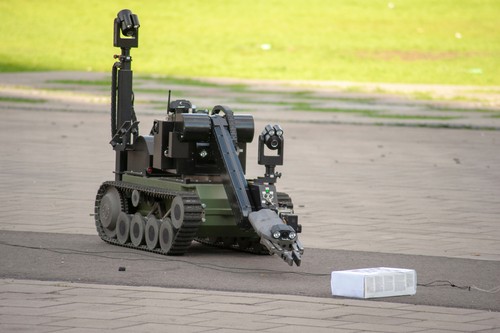
Oakland Police have added a “Percussion Actuated Nonelectric Disruptor (PAN Disruptor) as a top priority for 2022. A PAN is a laser-aimed shotgun-like attachment for wheeled robots which until now have previously been used in war zones or for sending in to diffuse or detonate a bomb. These robots are not autonomous. Similar robots have been weaponized by the US military with machine guns, although the military say they are for shooting suspected explosive devices. The gun can be loaded with blanks as well as live rounds making them potentially lethal.

 “One can imagine applications of this particular tool that may seem reasonable,” said Liz O’Sullivan, CEO of the AI bias-auditing startup Parity and a member of the International Committee for Robot Arms Control, “but with a very few modifications, or even just different kinds of ammunition, these tools can easily be weaponized against democratic dissent.”

Oakland Police Department had originally promised to only use the killing machines when deemed necessary, during “certain catastrophic, high-risk, high-threat, or mass casualty events.” However, they would not rule out the potential to use live ammunition “if they need it for some situation later on.”

A 2021 subcommittee meeting looked at the potential for arming robots, and agreed the robots could not be used to kill humans, but would allowed them to be armed with pepper spray.

“We will not be arming robots with lethal rounds anytime soon,” Lieutenant Omar Daza-Quiroz told the Intercept. “If and when that time comes each event will be assessed prior to such deployment.”

Incredibly this isn’t the only police department that is considering upgrading their staff. In 2016 Dallas Police Department used a wheeled robot to take down an alleged cop-killing sniper. The robot placed a bomb near the suspect who was cornered in a parking garage. Allegedly the suspect said he’d placed explosives around the city. “After a prolonged shootout we saw no other option but to use our bomb robot and place a device on it for it to detonate where the suspect was. Other options would have exposed our officers to grave danger,” explained Dallas Police Chief David O. Brown.

Also, in 2014 Albuquerque police deployed a bomb robot to release tear gas on an armed suspect.

In a similar way, North Dakota has legalized the use of police drones equipped with tasers and pepper spray. It seems like Oakland Police is merely following a trend to weaponize robots, which hopefully will continue to remain in the control of a human operator.

Reassured yet? Whilst the use of a robot in dangerous situations will undoubtedly save the lives of police and emergency responders, arming a robot could be a step too far.

Living Longer

With the world on the brink of a potential nuclear Armageddon, sea levels rising, and micro plastics poisoning our oceans as well as our bodies, perhaps the last thing on your mind right now would be how to extend the length of time you endure on planet Earth. However, scientists have discovered a way to extend the life expectancy of mice by ten percent – which some people are considering a potential answer to extending human life.

Scientists from Harvard Medical School, administered a drug called Rapamycin into 130 genetically different mice during the first 45 days of life through their mother’s milk. 40 other mice also took part in the study, acting as a control group, and were not provided with Rapamycin. All of the 170 mice were kept in exact conditions until they reached a natural end to their life.

Those mice who had received Rapamycin during the early days of their lives lived significantly longer than those who hadn’t. Not only did they live longer, but scientists also believed that the aging process actually slowed down in the male mice, taking them longer to progress through the normal life cycles expected in rodents. In addition, the male mice were also faster, stronger and healthier than normal.

But why would this be? Once the study had finished the scientists found that there were cellular changes that made the mice live longer. They appeared to have younger liver transcriptomes (genetic codes) giving additional fuel to the hypothesis than the secret to anti-ageing begins with our early development.

“Overall, the results demonstrate that short-term Rapamycin treatment during development is a novel longevity intervention that acts by slowing down development and aging,” the study explains, “suggesting that aging may be targeted already early in life.”

Researchers have also tested the drug on a crustacean with similar results.

Rapamycin is an immunosuppressive drug used in the treatment of cancers, as well as being used to prevent rejection during organ transplants, but has gained the attention of medical scientists as a potential anti-ageing drug.

This study could be merely the beginning to a whole new scientific breakthrough in extending life on earth. Although it appears to work in mice, the administration of Rapamycin for humans could be a long way away, with health implications for a human remaining unclear.