Brain Implants

For many years medical teams have tried to come up with a permanent prevention or cure for paralysis, and it appears that scientists and medical researchers have made significant breakthroughs in the form of a brain implant.

Fortunately, brain implants have worked for many patients who were sure they were going to live the rest of their lives without being able to move their arms and legs due to severe spinal cord or head injuries. By using a brain-computer interface the lost connection between the brain and other organs was restored, allowing the patient to live their life like a normal healthy individual. It is a huge step forward in medicine.

There is an argument about whether the much sought-after treatment will be available for patients from all social classes? More importantly, will it be easily available in third-world countries where the rate of disease leading to paralysis is significantly high?

The procedure costs somewhere between $70,000 and $100,000 making it too expensive for most people with or without health insurance.

It will be quite a few decades until the procedure is available, but the procedure does not seem to be widely available due to the complex nature and cost. Even more common performed treatments like liver and kidney transplants are not easily available in many parts of the world.

Despite this, it is a remarkable discovery by scientists. Hopefully, with more researches and investment, more accessible options might be available for the benefit of everyone.

In a separate study, Scientists from Stanford successfully implanted a device into a man’s brain that allowed his paralyzed hands to type words with nothing more than the power of thought. Known as a Brain-Computer Interface (BCI), it enables the user to restore basic motor skills including talking and moving, by decoding the neural activity in the motor cortex. But this could only be the start of some incredible things to come, including curing mental health issues.

Theodore Berger, a neuroscientist in Southern California, has been working on a memory chip that mimics the function of the Hippocampus – the part of the brain responsible for memories. Using the chip Berger has successfully managed to restore long term memory in rats. Trials in humans are in the very early stages, but with millions of people suffering from neurodegenerative complications from Alzheimers, Strokes or brain injuries, it seems that there are many applications for Berger’s technology should it be successful in trial.


Plastic Eating Superworms

The Garbage crisis has been an alarming threat to our environment with warnings that the escalating rate of global waste will be 70 percent higher than present levels by 2050 if preventive actions aren’t initiated. 

Our world potentially produces 400 million tons of plastic annually. Moreover, the plastics are stuffing the landfills and adversely impacting our natural environment. Plastic waste has become prevalent to such an extent that its particles are encountered in our air, food, and blood. Furthermore, plastic particles have significantly contaminated several habitats especially, the ocean and wildlife. 

According to scientific research, plastic may take millennia to biodegrade. However, recently scientists from different regions have been trying to find a natural method to eradicate or at least minimize the potential crisis. This collaborative research involved locating micro-organisms that can digest plastic, equivalent to the process of biodegradation. They have since discovered “superworms” that can survive and grow by consuming polystyrene, familiarly known as styrofoam. This study was published in the journal Microbial Genomics.

The named “Superworm” is a colloquial identity for larval stages of the darkling beetle. In addition, the researchers identified natural enzymes that can be utilized to recycle styrofoam.

In an email, Chris Rinke, a senior lecturer at the Australian Center for Ecogenomics (ACE) at the University of Queensland and the study’s principal author, stated, “Insect larvae have a strong track record of destroying and digesting plastics. Other scientists have mentioned that waxworms and ordinary mealworms can consume plastic, so we reasoned that if these relatively small larvae can do it, the huge superworms (up to 5.5 cm long) could be even more productive.”

He further said, “It came out that superworms had a strong hunger for polystyrene. When we started our studies, we didn’t know if superworms could thrive on plastic, but we had great expectations.”

Rinke and his colleagues arrived at this result by dividing 171 superworms into three categories, each with a distinct diet: one group ate primarily polystyrene, another ate bran, and the third were not fed. According to the study, incidents of cannibalism amongst fasting superworms “lead to our modified experimental setup keeping the hungry comparison group creatures in seclusion, whilst individuals in the other two groups were kept together throughout the feeding trial.”

Superworms are tough little organisms, with over 95% of each group surviving their three-week diets. The bran-fed worms acquired the most weight, but the polystyrene-fed larvae were also somewhat heavier and more active than the starving worms, indicating that they were able to obtain nutrients from the plastic waste—albeit at a cost to their health.

“We now have a catalog of all the bacterial enzymes transcribed in the superworm stomach, and we aim to look into the enzymes that degrade polystyrene,” Rinke added. “Over the next few years, we’ll profile them in more depth to identify the most efficient enzymes, which may subsequently be further enhanced via enzyme engineering.”

To conclude, Rinkie anticipates finding economical and practical methods to recycle plastic. This contribution can tremendously assist in reducing the global waste crisis.

Dark Matter Fuel

According to scientists, if humanity can interact with dark matter, it will change the entire human race. And humanity could get an unlimited supply of energy if it learned to interact with the mysterious substance. Until now, the nature of dark matter remained a mystery to scientists. But if humanity learned to interact with this substance, it would receive a new unlimited source of energy and fuel for spacecraft. No one knows what can be done with dark matter until we know what it really is. We assume that due to the fact that this substance causes light to refract during observations of other galaxies, it is a very powerful substance, and most likely, it could be used as a new source of energy.

Before the moment when humanity learns to interact with dark matter, hundreds, maybe even thousands of years may pass. But this would be an incredible source of energy that would allow our spacecraft to overcome interstellar distances faster. Dark matter, in scientific terminology, is a matter that can’t be identified by electromagnetic interactions, which means it can’t reflect light and is thus invisible. It is the densest and thus heaviest substance in the cosmos, weighing up to 100 suns (in its full form). The dark matter is so thick that a single pound weights more than ten thousand tons.

Dark matter might have the following properties:

  • It does not emit electromagnetic radiation;
  • It participates in gravitational interaction;
  • Dark matter particles have a large mass (WIMP);
  • It is non-relativistic;
  • It can annihilate and decay, forming all sorts of particles and antiparticles.

The Large Hadron Collider is famous for its search for and breakthrough of the God particle, but in the two decades since it collided protons at energies never before achieved, researchers have been using it to try to find another exciting particle: the hypothetical particle that may form up an invisible kind of matter known as dark matter, which is five times more prevalent than ordinary matter and without which there would be no life on Earth. They attempted to utilize the particle accelerator to break up some dark matter. They built a meta-particle crystal that improved dark matter as a fuel, as well as an anti-reverse crystal that could render all dark matter worthless if it came within 30 cm of the fuel crystal. Such a model suggests that the universe will eventually be dominated by dark matter. 

Mega Drought

In the previous two decades, the American west has been subjected to the most extreme mega drought in at least 1,200 years, according to scientists. Human-caused climate change is cited as a major factor in the current devastating conditions in a recently released study, and the researchers predict that more drier decades lie ahead.

Park Williams, a climate scientist at the University of California, Los Angeles and the study’s lead author, says, “Anyone who has been paying attention knows that the west has been dry for most of the last two decades.”

Human-caused global warming has played a significant role in raising the temperature. In other studies, researchers have found that the climate problem “will increasingly boost the likelihood of lengthy, widespread and severe mega droughts. This worst-case scenario already looks to be coming to pass,” according to a report from the National Oceanic and Atmospheric Administration (NOAA).

It expands on a previous study, also led by Williams, which found that the decade from 2000 to 2018 was the second driest in the past 12,000 years of record-keeping. However, 2021 – 2022’s record-breaking heat, dwindling reservoirs, and increase in dangerously unpredictable and uncontrollable fires were worse still.

Researchers from UCLA, NASA, and Columbia University studied soil moisture levels in landscapes stretching from Montana to northern Mexico and from the Pacific Ocean north to the Rocky Mountains. They looked at tree ring patterns to figure out how much moisture was in the soil over time. Stunted development patterns can be seen in the rings where they appear closer together.

Researchers discovered that mega droughts, which are extended periods of dryness lasting more than two decades, are woven into history. Water availability fluctuated across time, even before humans began using it for industrial purposes. The climate catastrophe, on the other hand, has exacerbated this variability. In the last 22 years, soil moisture deficiencies have doubled compared to the 1900s, according to their research. More than 40% of the rise in severity was caused by humans.

The researchers are concerned that the West is reaching a tipping point in its rising trajectory. It’s been shown in numerous studies that human-caused global warming and drought are linked, and that these climate calamities compound over time. Heat waves are expected to grow in size, intensity, and frequency in the coming years, according to a substantial body of research. This study, on the other hand, provides information that shows how quickly and steeply these changes are taking place in the context of history.

There are many experts and campaigners who think this will be a wake-up call to prepare for a future that is quickly becoming reality. Unsustainable systems are already showing signs of weakness. A declining water bank account, Williams explains, “means that our spending must be curtailed before the account goes dry.”

A Cure For HIV

Scientists reported last week that a woman of mixed race had become the third person believed to be cured of HIV through the use of a stem cell transplant from a donor naturally resistant to the virus. Success with the new umbilical cord blood technique could allow physicians to assist more patients of various genders and races.

AIDS-causing virus HIV has previously been treated in two patients who appeared to have recovered using a different procedure. When Timothy Brown and Adam Castillejo were diagnosed with HIV, they were given bone marrow transplants from donors with a genetic mutation that prevents HIV infection. Adult hematopoietic stem cells can be found in bone marrow and umbilical cord blood, which are supplied by the parents of newborns. All of the immune system’s blood cells are derived from these stem cells.

A donor with natural immunity to HIV was chosen for the female patient’s umbilical cord blood treatment for leukaemia in the belief that it would help her battle both illnesses. It’s been 14 months since the woman, who prefers to remain anonymous, has been rid of the virus, according to specialists.

The two male patients were the first to be cured of HIV with the use of umbilical cord blood, a less intrusive and more generally available therapy option than the more invasive bone marrow transplant. Because cord blood donors aren’t as closely matched to the recipient as bone marrow donors, it can be an alternative for patients with unusual tissue types.

AIDS expert Steven Deeks, who was not involved in the study, said: “The fact that she’s mixed race, and that she’s a woman, that is incredibly important scientifically and really important in terms of the community impact.”

In contrast to Brown and Castillejo, the woman was discharged from the hospital 17 days following her bone marrow transplant without showing any signs of graft-versus-host disease. It was a stem cell transplant that saved the lives of all three individuals who appeared to have beaten HIV.

Despite the apparent success of the medication, most of the 38 million people living with HIV around the world will not be able to benefit from it at the moment. HIV patients who receive cord blood stem cell transplants for cancer treatment are part of a bigger study that will follow a total of 25 people with HIV who receive transplants for aggressive malignancies like leukaemia.

Koen van Besien, director of Weill Cornell Medicine’s stem cell transplant programme and one of the clinicians engaged in therapy, estimates that there are roughly 50 individuals in the US each year that could benefit from this technique. For these individuals, the use of cord blood grafts that are only partially matched dramatically increases the chance of finding a compatible donor.

Solar Powered Tesla

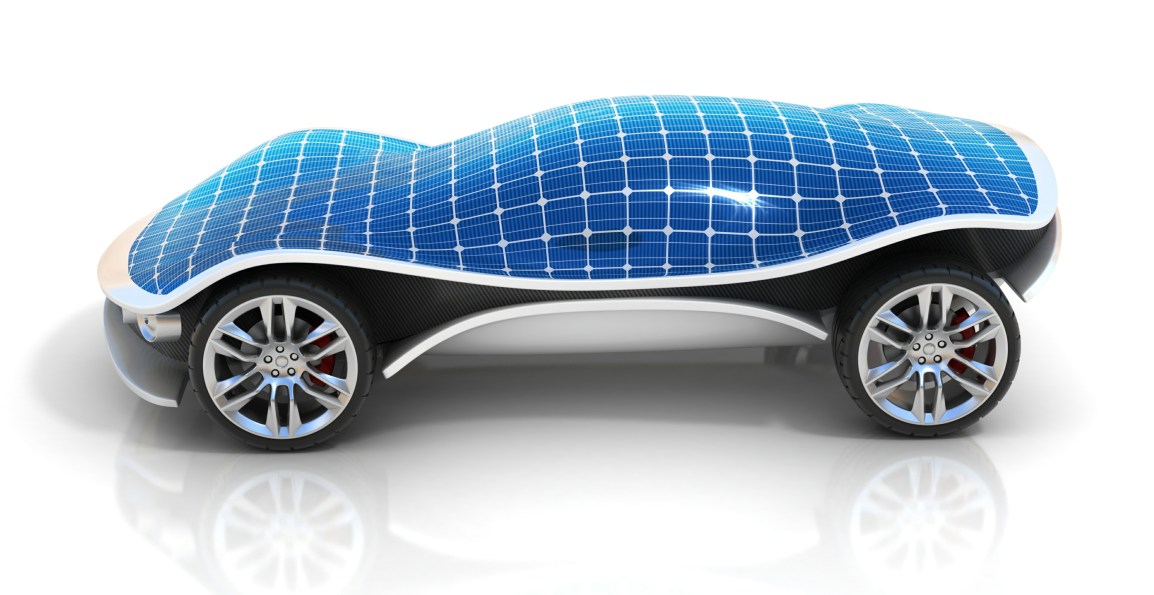
EV Solar Kits is a business founded by Steele Wasik, their main focus is to encourage the usage of solar energy instead of burning fossil fuels and polluting the atmosphere. Wasik believes that if you install an EV Solar Kit in your car, it can totally depend on the sun’s energy if your car gets enough hours of solar energy. Steele Wasik started this business by following in the steps of his father and grandfather, who were both design engineers for Cadillac. EV Solar Kits claim that your Tesla model 3 standard range 50kw battery can add up to 60 miles of charge per day when charged with 6 hours of direct sunlight. These solar kits can be installed over Tesla’s Model 3 and Model Y cars’ roofs where they can easily access the solar energy. These kits are still not installed in any of the vehicles but they do claim to have tested their kits in the Austin, TX area however no photographic proof has been provided. Steele Wasik’s reasoning behind not providing the proof is that “the final design of the panels isn’t yet finalized”.

Image : canadianPhotographer56 Shutterstock

Wasik also said that he’s working on solar kits that can be used on other cars by attaching them on the trunk. He said that those trunk panels will be easily compatible with all electric vehicles. Steele Wasik’s company is also planning to launch a crowdfunding campaign in the future. He suggests that there are thousands of potential buyers willing to try these new EV Solar Kits. EV Solar Kits stated on the website Indiegogo that, “[we] are excited to bring our vision to life with our range of kits from EVSK. We have a top tier engineering and design team building a series of products to eliminate range anxiety and allow you to get the most out of your vehicle! It will allow your car to charge while you drive!” and intend to “make EVs more attainable for those with an adventurous lifestyle.”

According to a study, the average North American drivers 31 miles a day, while the average driver from Europe goes 25 miles a day, which means that if what Steele Wasik is claiming about charging up to 60 miles is right, then these drivers will be able to drive powered by the Sun without having to use any fuel! Their kit consists of a rooftop solar panel system, an extendable solar panel that can be stored in the trunk, and a battery for emergency charge. The amount of charge will mainly depend on the weather conditions, and where the car users park their vehicles because the most important part of getting the extra 60 miles will be having the right amount of solar power for your EV Solar Kit to gain energy from.