The Future of Humans and Robots

Presently, Neuralink is developing brain-computer interfaces, and judging by the CEO’s role at the company, the platform is striving to enable machines and human to work as one, despite his recent statements.

Furthermore, Neuralink officials have reiterated multiple times that machines will replace the manual worker, and it’s a warning that will cause many to worry about the progression of cutting-edge technologies. The platform suggests that humans must physically merge with robotic advancements or become obsolete.

The fate of humanity:

The deceased co-founder of Neuralink, Max Hodak has predicted a creepy clichéd story on the fate of human beings. He implied that robots will occupy space and will leave the human race behind. The keystone to his argument suggests that robots probably won’t cling to humanity’s political and economic models for a community.

The former co-founder believed that the ‘value systems’ that humans have used for structuring societies for decades, might become irrelevant in the coming years. He further expressed his belief about the flexibility of machines and how well-organized they are.

From the beginning, Max Hodak was cautious about the arrival of robots and how dramatically they’ll reshape the world. However, there is extensive reluctance to even identify it as a tangible issue, making it harder to seek for potential solutions to prevent potential adverse impacts.

In the late 1990s, researchers began placing instructions within the brains of paralyzed computer cursors to let them display the movements of robot arms through signals. Also, it analyzed how mice with visual impairment could perceive infrared rays. Relying on these experiments, Neuralink hopes to progress the development of a brain-computer interference to the point that every individual could operate computers with brain signals efficiently.

Mankind’s progression in robotics will permit us to proceed with efficient ways to identify future obstacles, but, according to Max Hodak, this kind of transformation requires an entire generation. However, if there ever becomes a situation where a human’s input becomes unnecessary, machines can effortlessly proceed without it, and it would ultimately lead to our termination from the technological world.


Covid-19 Origin Examined

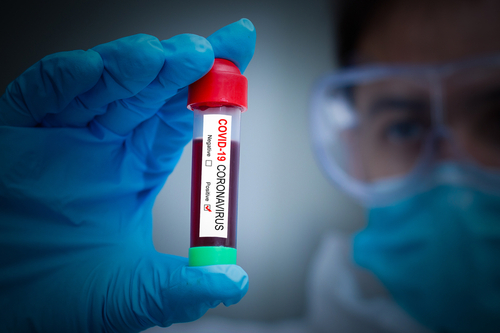
According to CNN reports, China is preparing to run tests on tons of blood samples collected and stored in Wuhan to uncover the origins of Covid-19 in the following weeks.

Wuhan is located in central China’s Hubei province and is considered as the source of the global pandemic. During the initial stages of the pandemic, researchers suggested obtaining blood samples from the urban residents so they might help examiners discern how the pandemic started.

In a report by the World Health Organization, a foreign team of investigators visited Wuhan to probe if the collected blood samples contained antibodies to the virus or not. If stored correctly, the samples could contain significant signs of the first antibodies produced by humans against the disease.

Escalation of Covid-19 in Wuhan:

Chinese officials confirmed the spread of the virus in Wuhan in 2019. Unfortunately, China has been criticized for not revealing enough information or being sufficiently transparent as researchers have been working to comprehend the virus’s origin.

Chinese executives have kept more than 200,000 samples at the Wuhan Blood Centre in case the blood samples are required as evidence against any lawsuits. Some of these samples, which were collected at the beginning of covid-19, have to be reserved for two years as per the Chinese regulations.

In an interview with CNN, a senior fellow for global health, Yanzhong Huang stated that it provides the closest insights to the appearance of the covid-19 pandemic and helps us easily acknowledge the timings of an outbreak.

Assumptions by experts:

Previously, the World Health Organization announced the investigation into the spread of Covid-19 in China, given that its origin remains unconfirmed. Some researchers and politicians from the USA have already blamed China for concealing the causes and studies of the outbreak, claiming that the virus has leaked from a science lab in Wuhan.

Numerous scientists concluded that probably the pandemic escalated through an insect-like animal, or possibly a bat that might have passed the virus onto an intermediary host that infected human beings, possibly at a wild creature farm in Southern China.

Several WHO officials who formerly visited China stated that Chinese executives refuse to provide any confidential information that might have helped determine the source of Covid-19.

Are Chinese pandemic reports trustworthy?

If researchers are fortunate, the blood samples might emerge with antibodies against the Covid-19, which might serve as a proxy for the appearance of a pandemic. However, with the increasing unreliability, the question is whether Chinese officials will conduct the research with their standard of secrecy or if the transparent reports will make it to the external world.

Microwave-Powered Spacecraft

A group of researchers from the University of Tsukuba in Nagoya, Japan, is experimenting with ground-centered microwave pillars for controlling rockets with an aim to make the spacecraft lighter, as a significant portion of a rockets weight is taken by its fuel.

Technological advancements helped engineers.

A study published in the Journal of Spacecraft and Rockets says that during recent tests, the engineers managed to assign a tiny gliding four-rotor drone with a versatile microwave. This test was implemented for making sure that their idea was viable.

According to the engineers, they weren’t certain about the flexibility of their idea regarding the experiment, but these adjustments were made so that the microwave beams might not only enable the upgrading of an aircraft but also take a rocket into orbit someday.

Former experiments:

These researchers weren’t the first ones who implemented versatile spacecraft with a microwave beam. However, this latest attempt by researchers in Japan had stronger beams and advanced tracking systems, which made this experiment succeed where the former ones failed.

According to the head author and Tsukuba engineer Kohei Shimamura, the team of engineers used a futuristic beam tracking system for ensuring that the drone received maximum power. Furthermore, for improving the transmission efficiency, they carefully rearranged the microwave phase utilizing an analog phase sifter, which was integrated with a GPS. The propulsion technique might appear a bit unusual, but it was enough to maintain a four-engine drone upwards.

However, the technology is still quite premature, and it’s unlikely that we’ll get to witness microwave-powered NASA rockets going to space anytime soon. Presently, a huge obstacle is the energy that’s lost during the procedure. According to the examiners, the comprehensive energy efficiency obtained in the experiments was relatively low, reaching just a rate of 0.43%.

Currently, it’s still low, but more feasible than the 0.1% achieved in former experiments. Further work to tackle the problem of energy efficiency continues.

Shimamura evaluated that this outcome shows that more improvement is expected to further develop the transmission effectiveness and success for aircraft, space apparatus, and rockets of the future.

Even though microwave-controlled rocket propulsion is still in the initial phases, one day it could potentially be a better way of dispatching rockets into space without the massive fuel demands currently being used by conventional spacecraft.

Reengineering the Wooly Mammoth

Ever thought the giant sized tusked wooly elephants who went extinct some 10,000 years ago and only recently seen in animated movies & ancient history programs will come to life on this earth again? That’s exactly what US based startup Colossal Biosciences has announced and already secured funding of $15 million.

The project spearheaded by Harvard geneticist George Church aims to use CRISPR gene editing technology to engineer Asian elephant embryos with characteristics closest to the now extinct Wooly Mammoths. The idea is to create and then release these giants in the Arctic Tundra region in a bid to positively impact the ecosystem and play their role in environmental conservation. The scientists at Colossal Biosciences also believe that if they are successful in recreating the Wooly Mammoths, they might even be able to prevent the extinction of other endangered species.

Possible Hurdles that Scientists Face in Reengineering Mammoths

While it all sounds pretty fascinating, the whole idea or reintroducing the Wooly Mammoths into the wild will need a lot of thinking. There’s a lot that needs to be addressed before the scientists in George Church’s team attempt to recreate the giants. For instance, scientists are already questioning how will these giant Mammoths be gestated? While there is no mature technology for artificial wombs which could be used to gestate the Mammoth embryos, scientists around the world are quite skeptical about using an Asian elephant as the mother, which are listed as endangered species themselves.

Also, it must be considered that the present day human race knows very little about the Wooly Mammoths. With such little knowledge, releasing these giants into the Arctic Tundra is another point of concern.

Real Mammoths or Hybrids

Another big question being raised by scientists is that whether or not these Wooly Mammoths will be what Colossal Biosciences claims them to be. Asian elephants generally share 99% of their DNA with this particular mammoth species but with smaller ears and a stark shaggy coat, this animal will most likely be an elephant-mammoth hybrid and not the real ancient mammoths.

While researchers have previously discovered calves of wooly mammoths in the permafrost, scientists at Colossal Biosciences agree that it might be really hard to study the properties of the mammoth and that it is highly likely this project might very well be impossible to successfully complete.

What Does this Mean for Biosciences?

Church’s cofounder at Colossal, software entrepreneur Ben Lamm, said “I hope the tech could prevent the extinction of endangered mammals like elephants and rhinoceroses, or even let conservationists tinker with the genetic code of existing creatures to help them survive a changing climate.”

“We can leverage these genetic tools,” he further said, to “allow for species to not be isolated to one geographic location, but be adaptable to others.”

U.S forces Anti-aging pill

The coming years are going to be exciting for the U.S armies. It is because the U.S military’s Special Operations Command (SOCOM) will test an experimental pill that it states can repulse the results of aging on the soldiers. It appears that the U.S army officials are not only advancing in smart weaponry and Artificial Intelligence but are also working to improve the performance of their manpower.

Prediction about the Experiment:

Reportedly, the Special Operations Command is working on an anti-aging pill that could improve the long term performance of their soldiers.

According to the Breaking Defense report, this research is a significant part of expanding human capability and soldier’s health for a long period. Additionally, these scientific experiments could also prove to be beneficial to the entire human race.

While communicating with the Breaking Defense reporters, SOCOM’s mediator and Navy Commander Tim Hawkins clarified that this experiment isn’t about developing unusual characteristics that don’t already exist naturally. In fact, it aims to improve or maintain the enhancement of abilities that tends to decline with age.

Improves Coenzymes Central to Metabolism:

NAD+ is a coenzyme median to metabolism. The Genetic Engineering and Biotechnology news state that this pill is an initial nicotinamide adenine dinucleotide, oxidized state improver. NAD+ levels decrease with age so increasing NAD+ preserves health.

MetroBiotech website defined the importance of NAD+, referring to it as a key factor in preserving health and metabolic functions.

Metro International Biotech has gathered a team of industry-leading scholars for driving its lead compound, MIB-626, through the scientific development and fuel the company’s versatile R&D engine, fabricating a library of next-generation analogs with NAD+ increasing properties.

The plot to “The Day after Tomorrow” might be real

A researcher has warned that the 2004 blockbuster movie “The day after tomorrow” is no longer just a part of science fiction but is already happening in reality. In movies, abrupt climate change effects can show up overnight, but in reality most climate change appears over decades of change.

Image: 20th Century Fox

The movie “The Day after Tomorrow” is generally based on the theory of “abrupt climate change”. As a consequence of global warming, the currents that circulate the ocean water around the world shut down, boiling up the tropics and freezing the North Atlantic.

Research suggests that the Atlantic Ocean’s Meridional Overturning Circulation (AMOC) which also produces the Gulf Stream, is getting close to the dropping point, causing a wide area of North America and Europe to experience freezing temperatures for many years to come.

Running Atlantic’s Ocean Meridional Overturning Circulation (AMOC):

As of a recently published report, environment researcher Niklas Boers discovered that it’s turning out to be increasingly more likely that the AMOC could shut down unexpectedly.

The framework is responsible for moving warm surface streams from the tropical regions to Europe and Greenland through the Atlantic, where it freezes and sinks to the seafloor. Without this realistic transport line system, a huge part of North America’s east coast and Europe would be diving into freezing temperatures. The last ice age was caused by a huge ice lake cracking with a surge of freshwater upsetting the Atlantic Ocean, and was probably the last time when AMOC collapsed.

Was it destroyed?

While most of the movie is safely in the domain of science fiction, there is some practical scientific reasons  to support the concerns about potentially irreversible alterations in our climate within a couple of decades that would influence our communities, infrastructure, health, and ecosystems.

In the movie, the weathercaster Jack Hill, whose character was played by Dennis Quad, who already warned that climate change could create an ice age. Just after the warning, marine zoologists noticed a sudden chilling in the Atlantic Ocean, activating hurricanes off New York City.

According to Boers, it’s all an over-exaggeration because the effects would take hundreds of years, and also North America won’t get as chilly as the movie suggests. However, it is still a matter for concern. If the AMOC ever subsides; the long term effects could be catastrophic.