
Blog

U.S forces Anti-aging pill

The coming years are going to be exciting for the U.S armies. It is because the U.S military’s Special Operations Command (SOCOM) will test an experimental pill that it states can repulse the results of aging on the soldiers. It appears that the U.S army officials are not only advancing in smart weaponry and Artificial Intelligence but are also working to improve the performance of their manpower.

Prediction about the Experiment:

Reportedly, the Special Operations Command is working on an anti-aging pill that could improve the long term performance of their soldiers.

According to the Breaking Defense report, this research is a significant part of expanding human capability and soldier’s health for a long period. Additionally, these scientific experiments could also prove to be beneficial to the entire human race.

While communicating with the Breaking Defense reporters, SOCOM’s mediator and Navy Commander Tim Hawkins clarified that this experiment isn’t about developing unusual characteristics that don’t already exist naturally. In fact, it aims to improve or maintain the enhancement of abilities that tends to decline with age.

Improves Coenzymes Central to Metabolism:

NAD+ is a coenzyme median to metabolism. The Genetic Engineering and Biotechnology news state that this pill is an initial nicotinamide adenine dinucleotide, oxidized state improver. NAD+ levels decrease with age so increasing NAD+ preserves health.

MetroBiotech website defined the importance of NAD+, referring to it as a key factor in preserving health and metabolic functions.

Metro International Biotech has gathered a team of industry-leading scholars for driving its lead compound, MIB-626, through the scientific development and fuel the company’s versatile R&D engine, fabricating a library of next-generation analogs with NAD+ increasing properties.

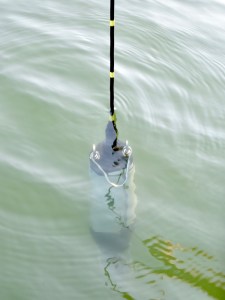
The ocean is losing its oxygen.

Oregon State University scholar Francis Chan’s started his profession as a postdoctoral specialist preparing for his first examination, but a sudden call sent him on a unique scientific voyage.

Beginning of strange happenings:

Fishermen begun pulling out tons of dead crabs from the ocean. An octopus crawls up the fisherman’s rope to avoid something that wasn’t clear to their sight. The Oregon Department of wildlife requested Chan to go and find out what was happening.

Chan dropped underwater sensors into the area of water and found the level of dissolved oxygen decreased severely in some areas. As a consequence, all the sea creatures had to find an escape while many had already died. After examining these low oxygen zones, Chan discovered that it had never happened before and is known as “hypoxic zones”.

Existence of Hypoxic zones:

A report in the Washington post states that dangerous waves extended across 7,700 square miles during 2021 creating a hypoxic zone along the Oregon shoreline.

According to Chan, there are two causes for hypoxic zones:

1. Warm water isn’t capable of containing dissolved gas as much as cold water can. Chan explains how water arrives at the west coast of the U.S.A having started around Japan.

2. The other cause is due to the changing flow of wind. A hypoxic zone begins when the up-surging wind blows the water away from the shore, and combines with the area of lower-oxygen water.

Chan considered climate change as the sole reason for these two causes. He further said that oceans will be more prone to hypoxic zone in the future.

There are several eye-witnesses, including Chan’s colleagues and fishers who notified Chan about the death of crabs and lobsters in South Africa due to suffocation, or more precisely, due to the lack of oxygen.

The emergence of Dead zones:

According to Chan the progression of “dead zones” across the pacific coast is likely to be more drastic and severe in the future.  Similar to the Portland conditions, the scientists have already indicated unusual regions of low oxygen in California.

The tracking sensors are expensive and can’t be placed everywhere in the ocean. For this purpose, the assistance from the Government fishers and commercial agencies is needed.

The plot to “The Day after Tomorrow” might be real

A researcher has warned that the 2004 blockbuster movie “The day after tomorrow” is no longer just a part of science fiction but is already happening in reality. In movies, abrupt climate change effects can show up overnight, but in reality most climate change appears over decades of change.

Image: 20th Century Fox

The movie “The Day after Tomorrow” is generally based on the theory of “abrupt climate change”. As a consequence of global warming, the currents that circulate the ocean water around the world shut down, boiling up the tropics and freezing the North Atlantic.

Research suggests that the Atlantic Ocean’s Meridional Overturning Circulation (AMOC) which also produces the Gulf Stream, is getting close to the dropping point, causing a wide area of North America and Europe to experience freezing temperatures for many years to come.

Running Atlantic’s Ocean Meridional Overturning Circulation (AMOC):

As of a recently published report, environment researcher Niklas Boers discovered that it’s turning out to be increasingly more likely that the AMOC could shut down unexpectedly.

The framework is responsible for moving warm surface streams from the tropical regions to Europe and Greenland through the Atlantic, where it freezes and sinks to the seafloor. Without this realistic transport line system, a huge part of North America’s east coast and Europe would be diving into freezing temperatures. The last ice age was caused by a huge ice lake cracking with a surge of freshwater upsetting the Atlantic Ocean, and was probably the last time when AMOC collapsed.

Was it destroyed?

While most of the movie is safely in the domain of science fiction, there is some practical scientific reasons  to support the concerns about potentially irreversible alterations in our climate within a couple of decades that would influence our communities, infrastructure, health, and ecosystems.

In the movie, the weathercaster Jack Hill, whose character was played by Dennis Quad, who already warned that climate change could create an ice age. Just after the warning, marine zoologists noticed a sudden chilling in the Atlantic Ocean, activating hurricanes off New York City.

According to Boers, it’s all an over-exaggeration because the effects would take hundreds of years, and also North America won’t get as chilly as the movie suggests. However, it is still a matter for concern. If the AMOC ever subsides; the long term effects could be catastrophic.

A Car That Collects Pollution

A London-based designer and architect, Thomas Heatherwick of the Heatherwick Studio has come up with a state-of-the art electric car concept that could clean air pollution as it drives around.

The concept car was introduced earlier in April 2021, after the designer was approached by a Chinese vehicle manufacturing company, IM Motors, to design the concept car, which is not only friendly to the environment, but also looks quite different.

The Airo, as it is being called, is a compact electric car, with its front grills containing air filters which could collect air pollutants amounting up to the size of a tennis ball in a year. The car uses the HEPA-Filter technology and doesn’t cause its own pollution but also actively contributes to vacuuming up all the pollutants from the cars driving alongside on the roads. If such a mechanism is introduced in all of the cars in China alone, it could create a significant change.

Talking to the BBC, the designer of the car said, “Think of a tennis ball in your lungs that is contributing to cleaning the air, and with a million vehicles in China alone that adds up.”

In addition to its pollutant collection functionality, the car looks nothing like your usual car. The interior of the car has more of a living room appeal with a table in the middle of four adjustable chairs, which can even be converted to a bed. The steering wheel of the car is hidden in the dashboard allowing extra room making it a good choice for sustainable living.

According to sources at the IM Motors, Heatherwick was approached intentionally knowing that he had no experience in designing cars and will come up with a novel idea, one that hasn’t ever been on the books before. Combining his knowledge of interior design with the blank canvas of eco-friendly car design, the London-based designer came up with the unique concept of Airo, which is now expected to go in production in China by 2023.

“Car manufacturers are falling over themselves to make electric cars, but a new electric car shouldn’t just be another one with a different look,” the designer of the car said.

While many welcomed the concept, the car has received a lot of criticism from automotive experts as well as environmentalists who are quite skeptic about the ability of the car to cut down pollution.

Peter Wells, a professor of business and sustainability at the Cardiff Business School’s Centre for Automotive Research believes that the car will not make any significant contribution towards eradicating environmental pollution. He also firmly believes that the car is not practical for most vehicle owners.

According to Peter Wells, since the car only gathers a tennis ball’s worth of pollutants in a year, it’s contribution in the urban areas of China alone will be insignificant and almost impossible to measure.

Radioactive Hybrid Pigs

A little over a decade after the horrifying 2011 Tsunami which led to the meltdown of a reactor at Japan’s Fukushima Daiichi Nuclear Power Plant, Japanese scientists have found a hybrid wild boar species in the radioactively dangerous zone of Fukushima.

This discovery suggests that the flora and the fauna of the region has thrived ever since the eviction of humans, allowing them to reclaim their space and adapt to life in a new environment. The hybrid pigs are a proof of the thriving fauna.

Scientists believe that the livestock that people were forced to abandoned at their homes during the 2011 evacuation have started breeding with the local wild boar to create these new hybrids.

A study by PhD students at the Fukushima University revealed that a large population of the wild boar in Fukushima had a European domesticated pig DNA variation. These wild boar-pig hybrids were first discovered in 2015, and since then their frequency has remained stable.

The study which was carried out by Donovan Anderson, a PhD student at the Fukushima University with other colleagues, included them studying samples of 243 different types of boars, pigs & hybrids. Of the sample studied, 16% were hybrid suggesting that the local population of wild boar bred with the abandoned domesticated pigs. The study also revealed that over 75% of the hybrid boar population was discovered within the initial 20km radius of the radioactive-eviction zone.

Donovan Andersen, the co-author of the study also suggests that that the hybrid boars are less likely to remain hybrids in the longer term since they had only 8% of pig’s DNA, further indicating that the domesticated pigs had poor adaptive capabilities and survival characteristics in the wild

“We do not expect these adaption changes in boar, likely caused from the absence of people, to maintain in populations especially as [human] disturbance returns,” Anderson said.

What Happened in the Fukushima Daiichi Nuclear Disaster?

On March 11, 2011, an earthquake measuring 9.0 Magnitude struck with its epicenter near Japan’s largest island Honshu. Less than 1 hour after the earthquake, Tsunami waves as high as 15 meters hit the Fukushima Daiichi Power Plant, flooding the basements, and shutting down the diesel generators. The reactors 4, 5 and 6 were already shut down for scheduled maintenance when the earthquake hit, however, reactors 1, 2 and 3 were operating at the time.

When the flooding water disabled the diesel generators for all except the 6th unit. First level emergency was announced, and the state machinery was immediately put to work in order to avoid the meltdown of reactors and devise alternate cooling mechanisms. However, reactors 1, 2 and 3 went through meltdowns followed by hydrogen explosions, making the region extremely hazardous and inhabitable, forcing over 160,000 people out of their homes. 

As human life now readies to return to Fukushima, authorities continue to hunt down wild boars in the area that may still be radioactive and pose a threat to the human population.

Scientists puzzled by a blinking star

The universe is full of beautiful stars, and each one of them is distinctive. The reality is every star in the galaxy follows a similar route to producing the colorful twinkling.

According to a recent article, scientists have discovered a mysterious star located towards the center of our galaxy more than 25,000 light-years away, that appears to be only the second one of its kind. The star seems to be particularly dramatic and it is known as “exceptionally rare” because it kept on blinking on and off.

Observations by the scientists:

An international team of researchers observed the star, labeled VVV-WIT-08, and predict it is 100 times the size of the Sun. While numerous stars modify their brightness level because they are eclipsed by another star in the solar system, it’s strange for a star to have a period of several months of darkness and then light up again.

Furthermore, scientists observed that it is not the first blinking star. Multiple blinking stars were spotted with the VVV-WIT-08, but the researchers don’t have enough details on these.

University of Hertfordshire scientist Philip Lucas finds it hard to recognize the existence of giant “blinking stars”. Another study in Monthly Notices of the Royal Astronomical Society reports that the “blinking star” is surrounded by an orbital companion, which might be another planet or a star. This companion surrounds the giant star, causing it to disappear and reappear in the sky when it passes across it. Researchers can only speculate on the origin of the elongated and large object between the earth and the distant star.

Scientists have been searching for explanations for the puzzling activities of the twinkling star. An analytical theory by an astronomer states that since the blinking star is located in the dense region of the galaxy, it’s possible that an anonymous dark object could have drifted in front of the giant star unintentionally, but demographically that’s unlikely to happen. However, another possibility says that the planet orbiting the star is surrounded by a huge dust cloud and that occasionally blocks the view almost entirely.

Presently, there appear to be multiple potential stars of this kind, and there are certainly more to be discovered but now the challenge is to find the potential hidden planet.