
The concept of human extinction seems like a future topic or myth. Whenever we do consider destruction, our mind usually goes towards weapons of mass destruction like nuclear weapons or biological warfare. Research that has been conducted by the students at Oxford University shows that in any year the chance of human destruction are 1 in 14000. When we consider that statistic objectively, the chance seem to be very likely. The study took into account things like super volcano eruptions and asteroids crashing into Earth.
 Another piece of research done at Oxford showed that we do not consider mass extinction of humans as a very tragic thing. The 2,500 participants included residents of the United States of America and the United Kingdom. They were given the option of choosing between best to worst-case scenarios where the options were: no catastrophe, a catastrophe that wipes 80% people off the Earth, and a catastrophe that causes mass extinction. Most people considered the no catastrophe situation as the best-case scenario as predicted. However, when asked about the severity of the situation and which one made them feel bad, they chose the 80% of humans being wiped out, rather than mass extinction of humans, showing that humans do not consider mass extinction a tragic event. However, when the questions were switched from humans to zebras, it turned out that people considered losing all zebras as the worst possible outcome and felt very bad and sad about that possibility.

This is because we as humans consider death of some worse than the death of all, while in zebras they do not think death of a few zebras is as impactful or saddening as the death of all zebras.
Even though there isn’t much we can do about asteroid attacks or volcanic eruptions, when it comes to nuclear warfare, we humans have a way to change that if we believe that there is a better future, when hope and optimism is instilled within people.
The research also stated that when we consider all species that have ever lived on this planet, all of them have gone extinct at some time. Some are in the process of going extinct while others have already gone extinct. Homo sapiens are the only species who have been on this Earth for 200,000 years, so the research concludes that the chances of humans becoming extinct in any given year are likely to be 1 in 14,000, at the moment.
Experts believe that we are in the sixth mass extinction and there is no one to blame, but us. Due to the activities we have been doing on Earth, we are destroying the planet in some way or another and the extreme climate change which has been a result of this could ultimately lead to human extinction.

 One such step taken towards the future is the construction of the world’s first hologram that can be touched, seen and even heard. Researchers from the University of Sussex have developed a prototype device by the name Multimodal Acoustic Trap Display (MATD).
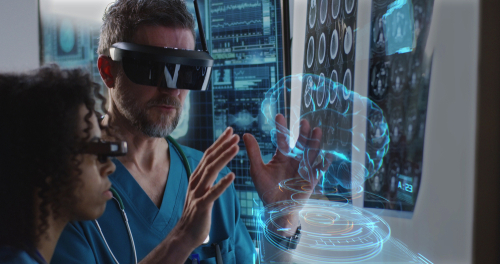 Moreover, as far as the sensory and auditory feedback is concerned, Multimodal Acoustic Trap Display makes use of ultrasound waves, which are a type of mechanical wave that carry energy through the air. So when a hologram is displayed it utilizes the energy of the ultrasound waves to create a sensory and an audible feedback.

 CTRL-Labs is working on a wristband device that allows people to control signals from the spinal cord. After the transaction is completed, CTRL-labs will join Facebook Reality Labs, which is working on augmented reality smart glasses.
 However, researchers from California have gone further and created a technology that allows electricity to be generated directly from the snow. According to Science Alert, Nanotech Energy has developed a device that can generate electricity from contact with snow.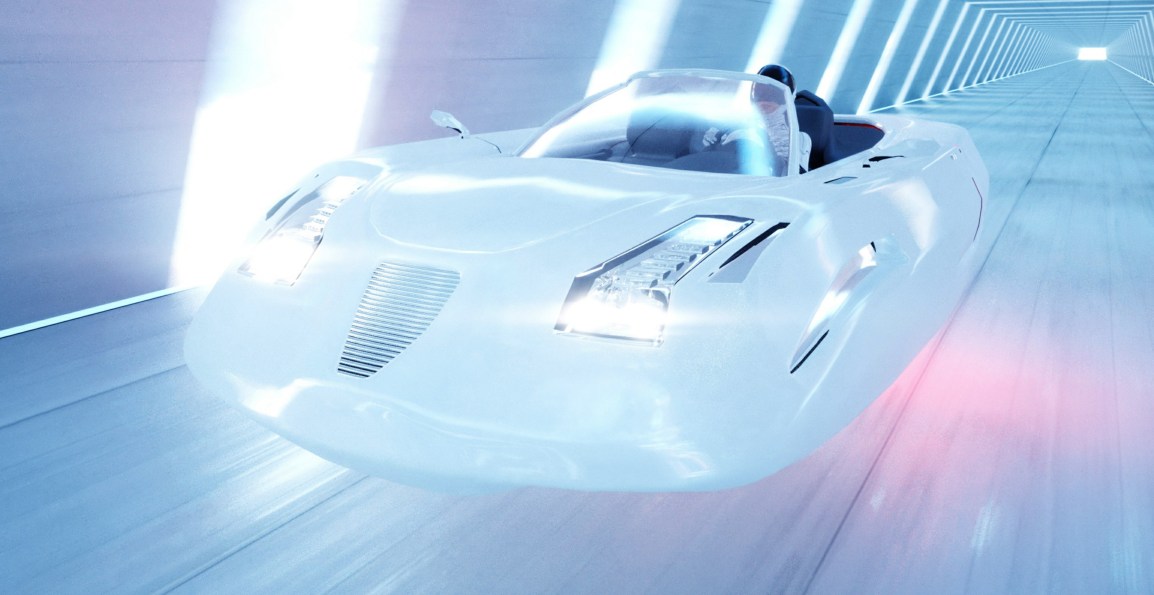
 Aerial urban mobility is at the heart of car manufacturers’ concerns. While the Japanese company Hyundai has just announced the creation of a specific division, and the Chinese investing in the German start-up Volocopter in early September, it is the turn of Porsche to position itself. On Thursday, October 10, 2019, the German manufacturer unveiled a collaboration with aircraft manufacturer Boeing to study the development of a flying car.
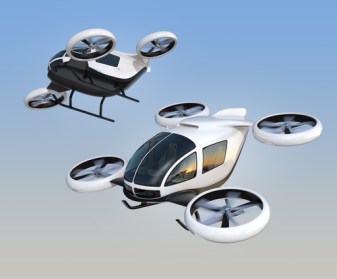 For his part, Boeing NeXt’s vice president and general manager, Steve Nordlung, said, “Together, Porsche and Boeing can think of innovative technologies and design, to boost the air-to-air urban mobility world”. However, this is not the first attempt that the American aircraft manufacturer has made in this area. Since 2016, Boeing have participated in the Uber Elevate flying taxi project, whose first prototypes will take off during 2020.
 “Carbon, the basis of all living forms and an important source of energy for humanity, is moving across the planet from the mantle to the atmosphere. To maintain a stable future, it is imperative that we understand the full carbon cycle”, said Marie Edmondson of the University of Cambridge, who participated in the DCO program.
 However, as usual when we talk about climate change, the problem is not the concentration, but the trend. To get an idea, when scientists started recording in 1959, the figures were at 315 ppm and most of the growth has occurred in recent years. According to the United States Oceanic and Atmospheric Administration (NOAA), three of the four largest increases in atmospheric CO2 have occurred in the last four years.
 R. E. KEARNEY