
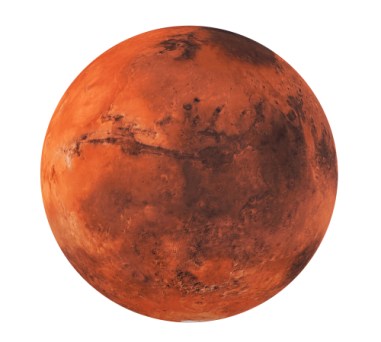
Elon Musk has decided to build a city on Mars, the neighboring planet to Earth. It is said that if it were to be built, it would be the most expensive construction in human history and could even cost up to 1/8 of the world’s total economy.
 The CO of SpaceX does not only want to send humans onto mars to visit but he even sees them starting a permanent settlement. If things go according to the Musk’s plan, a proper city and settlement on Mars could be developed as early as 2050.
After that, there are many questions that may arise. Specialists believe that the people living there could develop and evolve according to the conditions of the planet; they could inhabit the planet and even build an economy from ground up. Musk even suggests that they plan on selling people return tickets to Mars at the same price as a house may cost in the United States.
It is said that the new futuristic city will cost within 100 billion dollars to 100 trillion dollars. These assumptions of the numbers are based upon the fact that around 1 million tons of cargo would be needed on Mars and would be transported from Earth to Mars. Hence, the extremely high cost.
 It is said that they will be using the Starship to start the mission onto Mars. The rocket is a 348-foot rocket, made out of stainless steel and is completely reusable, it holds a pressurized cabin which could easily hold up to 100 people within it and take them up to Mars. It is also made to carry payload to Mars, however only if SpaceX can solve the problem of adding more fuel during orbit.
The journey, however, could only take place when Earth and Mars are closest. Hence to build a city by the year 2025, Musk believes that the ships need to start going up to Mars by 2024. He plans to update people in August 2019. He also said that they will be sending 4 ships of which 2 will be manned and other 2 will be unmanned.
The reason that Musk says he wants to carry out this project is that he believes that humans need something to look forward to. Due to climate change and global warming, our future seems to be bleak and depressed. He believes that space travel may be exciting for people and will free humans from the confinements of Earth. It could also be a way to solve all the global warming issues and save the human race from extinction that we are progressing towards, due to the current conditions within the world.

 Carbon Energy, which is backed by billions of dollars of support, has finally been able to gather enough money to start the design process for their negative emissions project. The purpose of the project is to suck the carbon dioxide out of the atmosphere and re-use it to create energy. This facility is based in Calgary, Canada at the moment. The company has been able to raise 68 billion dollars for its project of using carbon dioxide from the air to create energy and is to date the most money raised for technology.
 What the company plans to do is to use the carbon dioxide in the air and create carbon out of the air. The carbon will then be stored under-ground in the 230-acre factory and used to create fuel for different cars. Many different companies, like Chevrolet, might be interested in the company as a way to decrease their carbon footprint.
 The project is called the “Deep Density Displacement model” or D3M for short. This is the name given to it because of the speed and accuracy of the project, which was not the biggest shock to researchers rather the fact that it could accurately predict how the universe would look after tweaking certain parameters. Shirley Ho says that it was like “teaching image recognition software with lots of pictures of cats and dogs, but then it’s able to recognize elephants.”
 A deep neural network powers the D3M by feeding it 8000 different simulations from the highest accuracy model. The neural networks take training data and make calculations on the information, and then researchers compare the resulting outcomes with the expected outcomes. As time goes by, neural networks become faster and adapt.
 There are various ways to read or manipulate brain waves and neural connections within our brain. Some are non-invasive and use tools like helmets to read brain waves. A perfect example is an EEG. Yet, it is quite imprecise. However, there are invasive ways of interfering with the brain’s functioning. They are more precise, but can harm the individual too. For example, brain surgery. The probes used in it are big and cause destruction. Neuralink also has an invasive product, but it will not have huge probes, rather it will be a microchip inserted within the brain. It will read the brain with minuscule probes weaving through.
 Neuralink has developed an application that is available on your iPhone. The chip will connect to your iPhone through an application and the person using it will be trained through that as well. There will be no big probes – it will all be through Bluetooth.
 What is Graphene?
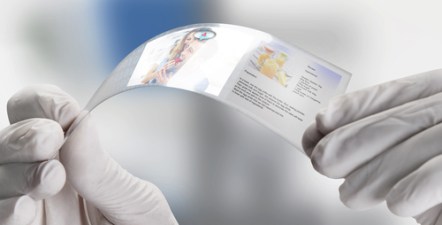 portable electronics. Our smartphones and tablets could become way more durable and could even be folded like a piece of paper with the help of Graphene. Also, another use could be wearable electronics. With Graphene, these could fit the skin perfectly and could fit any size or shape. Another use for Graphene could be solar cells. As it is highly conductive, it is the perfect material for conduction of solar energy. Its photovoltaic properties will also allow it to develop better sensors for cameras.
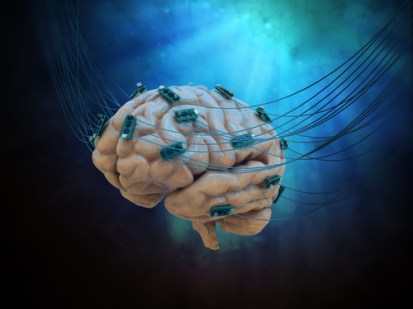 Doctors believe that this is a ray of hope for those who are completely blind and have lost their eyesight due to a disease or accident. They believe that if the camera completely erases the purpose of the eyes, it could lead to many more opportunities for people who cannot see.
 It is believed that the square which was shown to the patients may just be the beginning. If they were to introduce many more electrodes within the brain, they would be able to create a proper image, which would show the blind person everything around them. What they aim to do is use the reference of a style of painting. When you paint tiny thousands of spots, they come together and represent a full picture – this could be done in the brain too. When electrodes are stimulating thousands of places in the brain while the camera is feeding the information, there is potential that a proper image may be created in the same way as a painting.
 R. E. KEARNEY