
One of the major quests of the human species is finding a way to prolong our lives. Unfortunately, as we age our stem cells decrease and deteriorate, making us more susceptible to age-related illnesses. Scientists believe that many of these diseases can be slowed down, or stopped entirely, using our own stem cells. Although more research needs to be conducted into ways to use them to prolong our lives, and our healthy years, one study has already shown that mice injected with stem cells began aging more slowly. The best stem cells to be used in any medical process would be the ones that we have in our youth, before the deterioration process begins.
 Forever Labs has developed a system to harvest and store these ideal stem cells for future use, where necessary. The company has partnered with doctors, predominantly plastic and orthopedic surgeons, to extract stem cells which their labs will keep for an annual fee. The extraction is a fifteen-minute process, and the company’s website provides those interested with a list of doctors that do the procedure. The process is virtually pain free, with little or no recovery period. This means that you could essentially be saving your own life, with an effortless procedure, conducted during your lunch break!
The stem cells are collected from the bone marrow, near the hip, which has the highest number in the body. The bone marrow produces most of our blood, supports the immune system and the connected tissue, as well as the vasculature and soft muscle systems. Scientists at Forever Labs believe that replacing the stem cells in the bone marrow (with younger ones) as we age, can help to prolong our lives and health. Most age-related diseases are caused by problems arising at the cellular level, which then extends to the tissues. If they can be addressed at this stage they can be controlled before they become debilitating, essentially prolonging a healthy life.
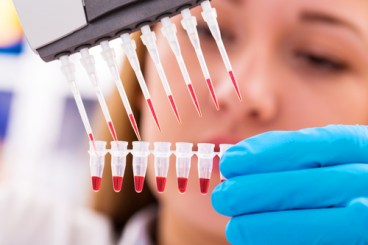 The procedure is straightforward, harmless and, for most patients, risk-free. Those that may face risks will be told beforehand. Scientists continue to research the possibilities that exist with stem cell treatment including: combating Alzheimer’s, osteoarthritis, heart disease and strokes. A study conducted with rats has shown where stem cell application may even be able to treat alcoholism. Regardless of the cures that will arise, most scientists believe that harvesting stem cells at a younger age will give individuals a higher fighting chance if they find themselves dealing with age-related diseases in the future.

 Tokyo Institute of Industrial Science have recently created a biohybrid robotic finger with the ability to bend itself up and down. They published the results in Science Robotics recording that the finger remained functional for more than a week.
 to undertake specific tasks. The inclusion of muscle tissue would result in smoother, steadier overall movements. Scientists are planning to use these biorobots for more detailed exploration of the human body, as well as to enhance our medical capabilities. This could be partially accomplished by performing tests on the biorobots, instead of humans. In addition, they would increase the manufacturing ability of robots, currently limited due to intricate parts and assembly necessary, and their ability to monitor certain environments.
 generate energy to be stored in the batteries, with the excess being sent back to the centrally controlled grid to help power the rest of the state.
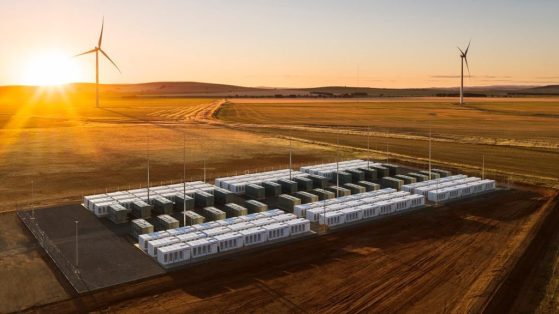 The funding for the program will come from a grant of AU$2,000,000, plus a loan of AU$30,000,000 from a state technology fund. The project’s total cost is expected to be AU$800,000,000, with the remaining funding provided by investors. Interest in the program has already been expressed by 6500 investors, and its scale may be increased if this number grows. The government expects that the virtual power plant will provide 20% of the state’s average daily requirements, as well as cut the costs of power by 30%. The project’s success will also prove South Australia as a leader in the use of renewable energy and could encourage more countries to invest in the same layout.
 Although not currently on the market, the technology shows immense potential. Messages would be secured by coding them in the form of small molecules, that would be absorbed by a napkin. They could only be decrypted using the key, which would be the molecule’s structure. The method has been developed by German company Karlsruher Institut fur Technologie. Their molecular library has at least 500,000 keys that, because of their structural diversification, would be impossible to decode without the sample. The message can also only be revealed after being scanned with the same equipment used by microbiologists to analyze new compounds in their research. Researchers plan on expanding the technology to including DNA which would increase the number of keys that could be made, making passwords even more secure.
 to a study published in Journal of the American Chemical Society. Most florescent molecular sensors generate discreet optical signals but the one used was able to generate a unique optical ‘fingerprint’ for each chemical, making it possible to differentiate between them.
 The fundamental purpose of blockchains is to distribute their ledgers across a decentralized network of nodes, replacing the need for a centralized third party to verify transactions. This method enables thousands of copies of the ledger to be stored, across all the nodes, ensuring that a single point cannot be targeted by hackers. In addition, it makes it possible for anybody with a computer, and internet access, to become a part of the ledger’s maintenance.
 By decentralizing currency, blockchain technology and ‘mining’ gives a chain of people the power to introduce new money into the economy. It also presents the opportunity for them to manage the currency currently controlled by the banks, and other appointed systems. ‘Mining’ is crucial in determining that there is value to the new currency being introduced, because of the costs associated with the running of the nodes. This idea of money being stored outside of government control is appealing, especially in countries where state finances are unpredictable. Although the technology is in its infancy, there is the high possibility that its use will expand before long, as more people are beginning to trust the system and move away from government control.
 The mission is scheduled to arrive on Mars in February 2021, where the helicopter will be deployed from the transport rover and placed on the ground. After its battery has been charged and several operational tests performed, the transport vehicle will then drive to a safe distance from which to issue commands. Although they will be sent at the speed of light, any instructions from Earth will take several minutes to reach the helicopter. During its first 30 days on Mars, the helicopter will have five different flight missions. The flights will gradually increase in time and distance, with the first lasting 30 seconds, at 20 feet off the ground.
 R. E. KEARNEY