
Everything in a computer’s memory takes the form of binary digits (BITS). Each one is stored in a memory cell that can have two values, zero and one. Files and programs are comprised of these bits and are processed in the central processing unit, CPU, which is the computer’s ‘brain.’ Like a human’s, it has both long-term, to store things permanently, and short-term memory, for immediate tasks. These two types of computer memory are:
Random Access Memory (RAM) – This acts as a system’s short-term memory, from which it can quickly access data. This data is lost when the device shuts down, however. RAM is also responsible for our ability to run programs, through which data can be retrieved and modified, or new data made. The length of time it takes for the system to do this is called the memory’s ‘latency.’ To process and access data quickly, the information can be retrieved in any order. The data only remains in the RAM while the device is on.
 Dynamic RAM (D-RAM) is the most common type of RAM, in which each memory cell consists of a transmitter and a capacitor to store electrical charges. The memory is referred to as dynamic because it is only held briefly before it leaks away and needs to be charged periodically to retain data.
Another type of RAM is Static RAM (S-RAM), which is made up of 6 interlocking transistors that don’t need to be refreshed. S-RAM is the fastest memory in a computer system.
Read Only Memory (ROM) – This is a system’s long-term memory and is responsible for the booting up of devices. Data must be stored in a device’s ROM to be kept long-term. There are currently three types of ROM, which all have less than a ten-year storage guarantee because of the breakdown of the materials used.
The cheapest and most common is magnetic storage, which imprints data on a disc coated with magnetic film.
Optic storage, such as DVDs, is a second option and encodes BITS as light and dark spots, which are read by a laser.
Solid state drives, such as USB drives, are the newest and fastest long-term storage option. These use floating gate transistors to store BITS, by trapping or removing electrical charges within their internal structures.
The number of BITS that need to be stored is growing continuously, and scientists are trying to develop other cost-effective ways to store them. This includes making memory devices at the quantum level to ensure that they are faster, smaller and more durable. Scientists from Fudan University, in Shanghai, have published a study in Nature Nanotechnology detailing a type of computer memory that can perform both long and short-term memory functions. The technology would also let the user decide how long the data should be stored for, creating enhanced features and bespoke devices. Researchers are currently unsure when the product will be debuted, but anticipate it becoming a serious competitor against RAM and ROM.

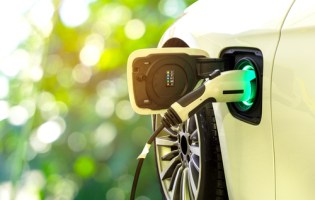 fossil fuels by 2030. The government has already drafted a map to install more electric charging roads to keep the batteries of electric vehicles affordable, as well as to prevent them from losing their charge during a journey.
 Cyber-attacks require extensive knowledge of an organization’s systems, and between 50 and 80% of them have access to insider information. A significant percentage of cybercrime is accomplished by phishing emails, of which the most successful are Spear Phishing. These emails are careful crafted to appear like they are coming from a legitimate source, such as known company executives, and may include detailed information about the person and their job. These sophisticated attacks often require multi-pronged responses. After a cyber-attack, major companies have suffered reputational damage which can be just as devastating. Companies are finding that as their technology increases, they also have to employee increasing cyber security measures which may offset profits.
 Most cybercrime takes place using malicious software that attacks computers, through various methods, which includes:
 In 2010, Andrew Schmeder and Don McPherson founded Enchroma Inc., to perfect technology which could be used to enhance color, for those previously unable to see it. They created lenses by combining optic technology with the latest discoveries in color perception neuroscience. Humans see when our eyes project light onto our retina, which use six million cone cells to transfer the image into neural signals. These signals are transmitted to the visual cortex, where we interpret them as images. Each cell is color specific and responds to light of a different frequency, which corresponds to the primary colors of light: red, green and blue.
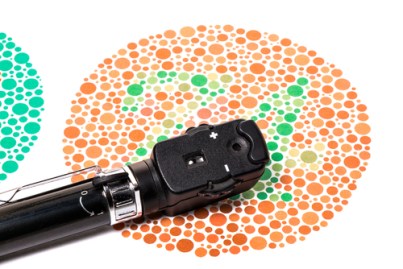 Color blindness is caused when an individual’s retinal cone cells respond to light in an abnormal manner. There are three types of color blindness, which are determined by the cones that are affected: for red-light cells, it is protan-type; green-light cells, deutan-type and blue-light cells tritan-type. Most color blindness is caused by red and green sensitive retinal cones having an overlapping response to light. Enchroma lenses are designed to remove wavelengths of light, exactly where the overlap occurs, and are expected to be able to help 80% of people with color vision deficiencies. This can be determined by getting a personal assessment done, by a qualified Enchroma specialist.

 MIT has collaborated with a new company, Commonwealth Fusion Systems (CFS), in the hopes of bringing the world’s first successful fusion power plant to working order within the next 15 years. The collaboration is using a unique form of production, called SPARC, which will build smaller, more powerful field magnets using new high-temperature superconductors. The material that will be used in their creation has recently been introduced to the market, and will result in the magnets being four times stronger than any previously used in fusion experiments. Development time for these has been estimated to be within the next three years.
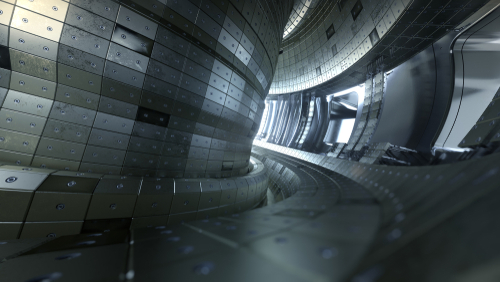 magnets would result in fusion power being used as an alternative energy source, helping to decrease climate change due to its lack of emissions.
 R. E. KEARNEY