
The human body is capable of amazing things, such as healing broken bones and regenerating cells. Regardless of our regenerative abilities we are still unable to avoid death, and there are many people who would like to prolong their lives. For this reason they are preserving their body in liquid nitrogen, in a process called cryogenics, with the hope that science will soon be advanced enough to give them new life. Even though cryogenic freezing is only possible after a person has been declared legally dead, people with diseases which cause their death are also opting to be frozen, believing that they can be resurrected after a cure has been found.
 The process of freezing the body begins as soon as possible after death to minimize potential brain damage. It is first cooled in an ice bath to gradually reduce its temperature, and in some cases CPR may be administered to prevent the death of brain cells. The blood is then drained from the person’s system and replaced with an anti-freeze fluid, to prevent harmful crystals from forming within the blood. After this initial process, it is packed in ice and transferred to a holding facility in either the United States or Russia.
Upon arrival, the body is put in an arctic freezing bag to be cooled by nitrogen gas to -196 C over a period of two days. Each one is then transferred to a storage facility, known as a ’patient care bay,’ where it remains suspended in liquid nitrogen until it will be time to resurrect it. The process can also be performed by removing the head and freezing it without the body. This is known as neuro-cryopreservation and is done in the expectation that a new body can be cloned, to attach the head to, when the technology becomes available.
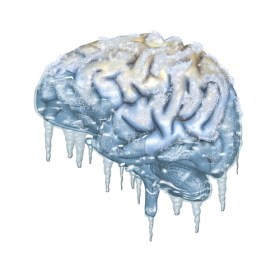 Acclaimed neuroscientist, Dr. Sergio Canavero, has recently announced that the world’s first human head transplant will be attempted within the next 10 months. The operation will take place on a Chinese citizen, in Harbin, China, who will be the recipient of a donor body. Its success will also lead to even greater advances, as the team will then attempt to reawaken the first frozen head. Canavero will remove the brain from a cryogenically frozen head and transplant it in a donor body, resulting in the first technologically assisted human resurrection.
There have been no documented experiments to date, in which a mammalian brain has been re-awakened after being frozen in liquid nitrogen. This means that scientists are unsure of the possible complications that may occur. Irreversible damage may have occurred during the freezing process, and upon awakening the individual may display decreased mental facilities or great emotional trauma. In addition to possible complications, the success of the reawakening will answer other questions such as what really happens after death and how well the process of cryogenics really works.


 Previously unused technology has been applied to the vehicle’s design and manufacturing process, but Musk says consumers are unlikely to notice the changes. In 2014, Tesla introduced their semi-autonomous driving system, Autopilot, which will also be included in the Model 3’s features. Self-driving vehicles increase road safety, and Tesla has plans to include this it in all their productions. Due to its Autopilot capabilities, the Model 3 will be equipped with a single dashboard, since the driver will need to view less information.
 A team of researchers from the University of California, have recently developed a drug which can restore insulin sensitivity in people with diabetes. It would be administered via a single pill taken daily, and works by inhibiting LMPTP (low molecular weight protein tyrosine phosphatase) which contributes to the reduction in cell sensitivity to insulin. Decreasing the amount of the enzyme in the body, causes the cells (especially those in the liver), to become receptive to insulin once again. This then restores the body’s ability to regulate blood sugar levels, ultimately reversing the condition.
 The concept of reversing diabetes is not a new one, and has previously been achieved using a combination of drugs, a strict diet and a regular exercise regime. Scientists at Cornell University have also found that probiotic pills, containing live bacteria, can help reverse the effects of Type 2 diabetes by ‘rewiring’ the body. The probiotic pill was also tested on rodents, and managed to shift the control of the body’s blood sugar levels from the pancreas (which normally controls glucose levels within the body) to the upper intestine. By shifting where the blood sugar levels are controlled, scientists found that the animals’ insulin levels increased by up to 30%. They believe that a higher dose of this probiotic pill may become a cure for both Type 1 and Type 2 diabetes.
 The World Economic Forum (WEF) has also published a report, stating that renewable energy sources have become more efficient. It states that many of them are now able to compete with the price of fossil fuels, and are even cheaper in many cases. Large companies, as well as entire countries, have begun investing in wind and solar technology. Infrastructure for major organisations and projects now includes solar panels, that have been installed to save on energy costs.
 With increased use of renewable energy being a part of the global plan to monitor climate change, governments are doing their part in making these changes. Many countries are working with car manufacturers to create a transportation system that lowers the use of vehicles that burn fuel. The manufacturers are making more electric vehicles, and governments have approved the installation of more charging stations. In addition to this, solar panels are also being provided at lower costs for use in homes, and many new buildings come with them pre-installed.
 R. E. KEARNEY