Blog

Rio Olympics 2016 – Protecting the Athletes

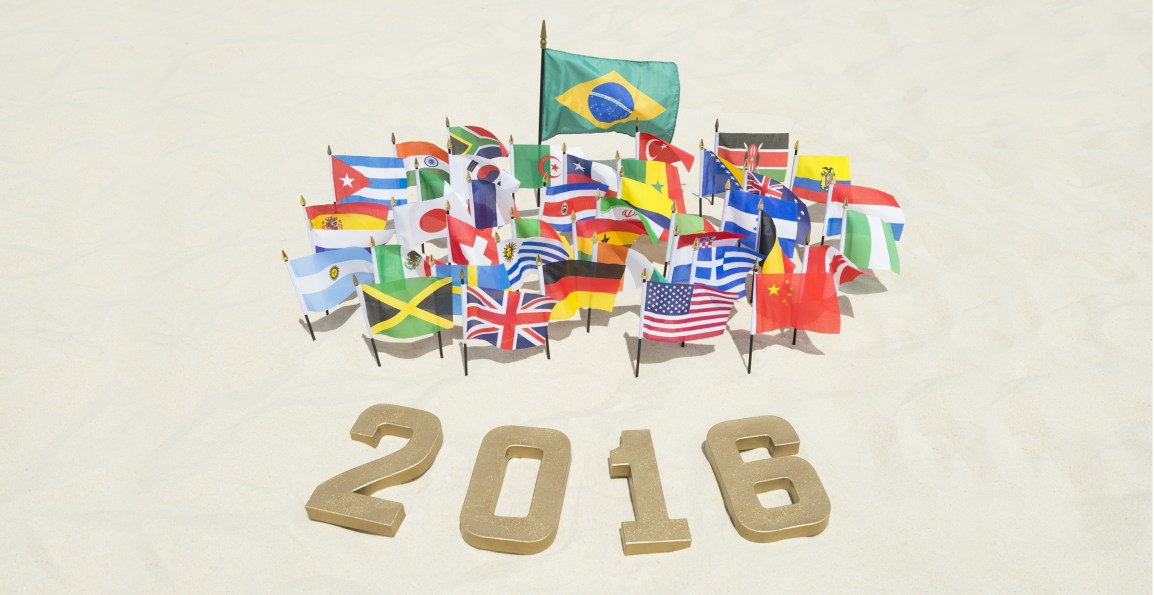
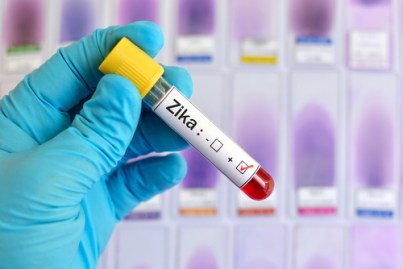
There has been a rampant outbreak of the Zika virus in warmer climates, including Brazil, over the past few months. The disease is mosquito borne, and passed to humans when they are bitten. Even though the majority of the people who contract the virus are asymptomatic, athletes and spectators are being warned that there are serious health risks to unborn babies. If infection occurs in the mother while pregnant, there is the possibility of the child being born with an abnormally small head and incomplete brain development.

WHO (The World Health Organization) has declared this outbreak a global emergency and have recommended that athletes, and anybody else attending the Olympics in Rio, take precautionary methods. This means wearing mosquito repellent, using condoms or abstaining from sex completely while in Brazil and for eight weeks after returning home, and wearing cool clothing that covers most of the body.

shutterstock_363993479The Brazilian organisers have given Olympic teams the option of having a mosquito screen in the athletes’ rooms. These would need to be paid for by each country requiring them. The Brazilian team has already put in their request, as well as suggested that their main sponsor, Nike, provide more long-sleeved apparel. The rooms that the athletes will be staying in are also air conditioned to prevent mosquitos from accessing the interiors. Spectators are advised to book accommodation with ac themselves wherever possible.

Other countries are also doing their best to protect their athletes. The British Olympic Association has been meeting with specialists from the London School of Tropical Medicine to find strategies that will lessen the chance of being bitten and acquiring the virus. Australia has taken a common sense approach to keeping their team safe. All the athletes are being supplied with condoms that have shown ‘near complete’ defence against the Zika virus in laboratory studies. These dual protection condoms have a physical barrier as well as an anti-viral lubricant. The Olympic team has also signed a contract with a repellent supplier to ensure an adequate amount for the duration of the games.

Most athletes have accepted that the bug bites and possibility of being affected with Zika are just a disadvantage associated with the host country, but others have taken their safety concern into their own hands. Greg Rutherford, the United Kingdom long jump champion, has every intention of going to defend his title but will be freezing his sperm before he attends. His partner will also remain in the UK, in order to ensure the health of any children they have afterwards.

Other athletes have pulled out of the games this year altogether, feeling that their health is more important than their performance. Australian golfer, Marc Leishman, and American cyclist, Tejay van Garderen, whose wife is pregnant, are among these. The Olympic Games themselves will continue as planned, however, and the competition will more than likely be no less fierce than it always has been.

Spaced Out

What would your life be like without your cell telephone or GPS or Internet or satellite television? Could we function as a society?

Imagine satellites crashing in space. Colliding with each other. Bouncing and banging like billiard balls. The first one smacks a second which cracks a third that whacks a fourth and on and on. Could it happen? Yes. Should we worry? Yes! Why? Our world depends on satellites.

There is not as much space up in space as you think. According to NASA, there are currently around 22,000 objects in orbit that are big enough for officials on the ground to track and countless more smaller ones that could do damage to human-carrying spaceships and valuable satellites. Overall, it is estimated that there are as many as 370,000 pieces of space junk floating in Earth’s orbit, travelling at speeds of up to 22,000 mph. The amount of space junk orbiting Earth has reached a tipping point.

shutterstock_70801954How did all of this space junk and clutter arrive in the atmosphere surrounding us? Well, accidents do happen. For example, In February 2007, a Russian Briz-M booster stage exploded in orbit over South Australia. The booster had been carrying an Arabsat-4A communication satellite but malfunctioned before it could use all of its propellant creating a cloud of space debris or junk.

But as I learned recently while researching to write a military exercise scenario, one major source of debris is the result of the testing of anti-satellite weapons carried out by the US and Soviet Union in the 1970s and 1980s. That testing of anti-satellite weapons stopped for a while, but now it is back and worse than before. In 2007, for example, China destroyed one of its own satellites in its first successful anti-satellite weapons test, an exercise that produced thousands of particles in Earth’s orbit and threatened hundreds of spacecraft. And this is the development that should worry us all.

Russia and China are currently developing anti-satellite weapons systems, which could disrupt operations by the militaries of their adversaries (like the US) and create debris clouds that threaten all satellites and spacecraft. Both nations have already tested their versions of direct ascent anti-satellite missiles. Also in 2007, China destroyed one of its own satellites in its first successful anti-satellite weapons test, an exercise that produced thousands of particles in Earth’s orbit and threatened hundreds of spacecraft. Gen. John Hyten, the commander of Air Force Space Command, recently reported that Russia and China’s construction of “kinetic energy anti-satellite weapons” poses long-term problems for space travel. “It creates an environment that will be there for decades, if not centuries,” he said. “And you can’t get rid of it.”

Thus, creating space junk and debris by exploding satellites in space could be the battles of the next war. It will be a battle we will never actually see or hear, but it will be just as destructive to our society as any war. And just as with nuclear weapons, the fact that the US can destroy Russia’s or China’s satellites and Russia or China can destroy US satellites deters it from happening.

So, the next time you look up into the sky think about the importance to your life of those things that you cannot see, and those things you hope you never see.

Time Travel – The Possibility of Leaping into the Future

For a long time humanity has entertained the idea of going back in time to change the past, or going forward to see what the future holds. Physicists have been exploring ways of accomplishing this for almost as long as the idea has been around. Even though they haven’t been able to prove that a certain method will definitely work, there are several theories which show how this can be achieved. It is not expected that this will be done in our generation, but with continued research and exploration our civilization will one day make that physical journey through the ages. Some of the ways in which we may get there are:

  1. shutterstock_357220352Going through an Immense Black Hole – Black holes are extremely dense, so moving through one significantly slows down the speed at which time passes. If a spaceship enters a black hole its physical movement would be half the speed of one that was moving anywhere outside. This would enable it to enter in one period of time and reappear in another.
  2. Travel at the Speed of Light – Light travels at the unbelievable speed of 186,000 miles per second. If a spaceship was able to accelerate at the same speed it would be possible for it to leap into the future. Unfortunately, even if we were able to achieve this, the spaceship would have to make the journey without passengers as the human body would be unable to withstand the pressure resulting from the jump.
  3. Cosmic Strings – Cosmologists have observed these one-dimensional cracks in the universe closely enough to conclude that they might be the key to allowing humans to travel in time. They are thought to be either infinite or looped and each contains a large amount of mass. This makes it possible to twist time around them, if two of them are parallel. This connection would then create a bend in time and space, allowing us to make the journey. In order to facilitate this, our society would need to drastically increase the control we have over our energy resources.
  4. shutterstock_313598879Wormholes – These are connections, or bridges, through time and space that scientists are certain exist throughout the universe. So far no wormholes have been discovered, but time travel would be possible by manipulating their entrances to make a path or road from one to another. The only problem physicists think might prevent us from using this method, if the possibility arises, is the fact that there might be a significant amount of radiation caused by the manipulation.

Einstein’s theory of general relativity proves that time travel is possible, and as our knowledge of the universe expands scientists will continue to work towards finding a way to make this possibility a dream come true.

Watermelon Snow – A Beautiful but Hazardous Phenomenon

The Arctic is one of the coldest regions on the earth, and has a protective snow blanket for much of the year. Unfortunately, the ice and snow in the Arctic has started to melt at an alarming rate over the past few years. This is partially due to the unique phenomenon of watermelon or pink snow, which is the result of a species of algae that are able to survive well in extremely cold temperatures. Even though the algae are green they take on a pink hue, which is then transferred to the snow. Although the effect is quite beautiful, the pink snow is causing ice in the Arctic to fall below the level that should be maintained.

The algae are mostly dormant during the winter, but when the temperature increases in spring they blossom and spread out into the ice and snow. The study of 21 glaciers in the European Arctic shows that this expansion is increasing the amount of snow that is melting each season, as well as the speed at which it is doing so. This is because the algae reduce the snow’s reflectivity (albedo), meaning that more heat is absorbed melting the snow faster. With the glacier melts occurring earlier every year, the algae’s growth is faster than ever.  This creates a cycle that keeps increasing the rate at which the ice and snow melt, which is having adverse effects on the Arctic environment.

shutterstock_30191596The Effects of Watermelon Snow

  1. The planet is absorbing more heat – As the snow’s albedo decreases, more heat is absorbed into the ocean. After this, the heat is released into the atmosphere causing warmer temperatures around the globe.
  2. Rising sea levels – As the sea rises coastal areas are flooded, which destroys the habitat of many creatures. In addition, permanent residents for humans as well as many food sources are no longer within easy access.
  3. Permafrost Melting – Once permanent frozen land masses are now melting and are releasing carbon dioxide and methane while doing so. Both carbon dioxide and methane add significantly to the greenhouse effect, with methane having a global warming potential that is 21 times that of carbon dioxide. Greenhouse gases are the main cause of the atmosphere’s unnatural temperature increase.
  4. Unforeseeable Weather Changes – Winter in the northern hemisphere has become unpredictable. Each year it seems that spring arrives earlier and winter approaches later. Animals that are used to the climate changes are now unable to adapt, as well as unexpected landscape changes that are taking place throughout the region.

Scientists plan to continue observing the watermelon snow, and the algae that produce it, and decide whether or not the changes can be slowed down or even stopped altogether without harming the species.

Seasteading – Benefits of Living on the Water

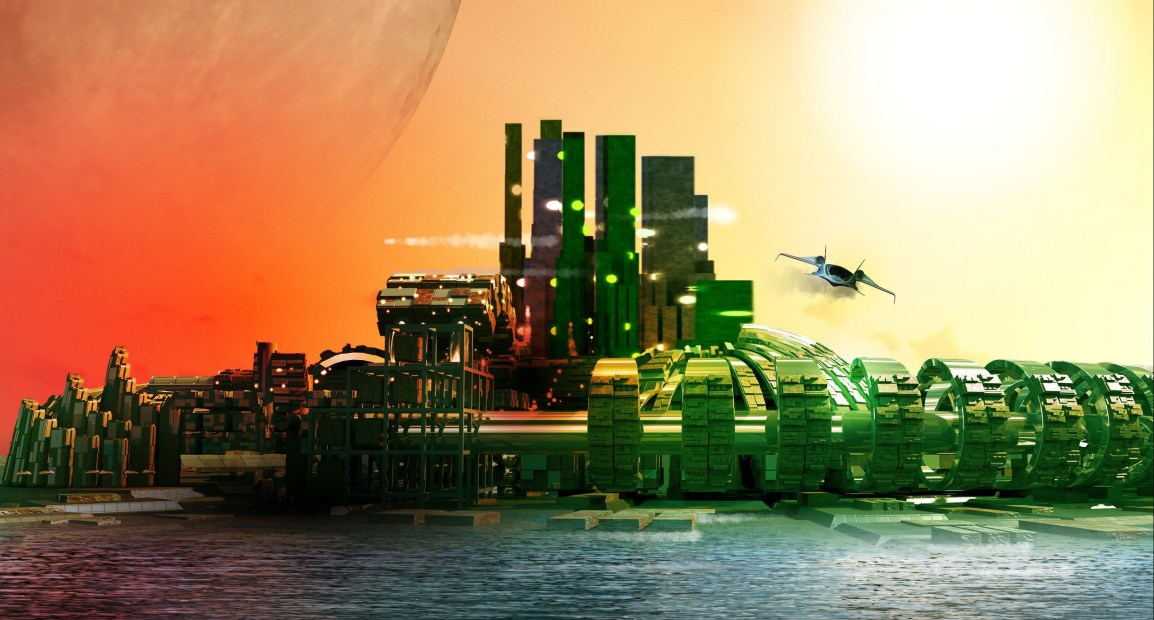
Our generation has brought about significant changes in the way that we live, and it is now expected that whatever we do will enhance the lives of those that come after us. Seasteading is just another one of these opportunities for change which may lead to a better future. While we wait to see where and when the first floating city will arise, we continue to examine the possibilities for improvement. As with any new venture there are unpredictable changes that will occur, but the initial gains that these new cities will bring are:

  1. Personal Freedom – Pioneers in change, the first residents of any seasteading nation will be in charge of themselves. As the only unclaimed territory on our planet, the water provides Seasteadingthe chance for a clean start, and occupants will need to find ways of redeveloping government and collaboration to benefit the limited population. It is imperative that they learn from the mistakes that other nations have made before, and improve on all their strong points.
  2. Chance to Increase Wealth – Whenever humans expand their colonisation, there is always the opportunity for many to gain a significant monetary advantage. The new seasteading nations will need goods and services, and ways in which they can continue to exist outside regular society. This close proximity to the ocean will also allow for further exploration into harvesting its strength for energy.
  3. An Alternative to Continued Destruction of Land Masses – Our disregard for the planet has led to a serious depletion of natural resources, resulting in the breaking down of the earth itself. Instead of destroying more land masses in an effort to accommodate our ever expanding population, creating one that will sustain itself while floating on the sea may help the earth to heal and, over time, rebuild necessary resources.
  4. Expanding our Horizons – Living on the sea will give us more of an understanding of the obstacles presented in occupying a different type of habitat. This may be the first step into furthering our knowledge enough in order to branch off into living in the unknown.

Even though seasteading is a relatively new phenomenon, the building of an independent nation in the middle of the ocean has been attempted before. In 1971, a wealthy real estate mogul, Michael Oliver, began setting up his dream of a self-sufficient territory on a small land mass situated in the Pacific Ocean, about 250 miles away from Tonga. Oliver’s idea was to eliminate taxes and economic intervention, and create a nation whose main source of income was tourism. The people who lived there were expected to support themselves by fishing, trading and agriculture. His dream was becoming a reality after he extended the land mass, to build The Republic of Minerva with its own declaration of independence and currency. Unfortunately, before the island became acknowledged worldwide, Tonga declared their ownership and the project had to be abandoned.

In the science based fiction ENDLESS FIRE FUTURE FURIES, the corporate state of SPEA establishes the seasteaded city-state of Venus in the Pacific Ocean Kiribati island chain. The seasteaded state is established to acquire intellectual freedom, escape onerous US immigration and religious laws and to achieve fiscal, energy and environmental self-sufficiency. Due to advances in engineering, communications and food production, a seasteaded city-state such as SPEA’s Venus is now possible.

Mankind’s Survival – The Biggest Threats to our Existence

Scientists have proven that the Earth had existed for billions of years before the evolution of mankind. This means that humans are not necessary for the planet’s survival, but the perfect conditions need to exist for the continuation of our species. There have been many others on Earth which have become extinct for one reason or another. Humans are also susceptible to extinction, and some the biggest threats to our survival are:

  1. A Pandemic

Due to the fragility of the human body, our most deadly enemies are actually the ones that are physically the smallest. Microscopic viruses have proven fatal for a considerably large number of people worldwide and, even with our advanced medical knowledge, it is still possible for an infectious virus to develop and rapidly deplete a significant amount of the world’s population as it spreads. A virus’ survival instinct would not allow it to kill all its hosts, but a high percentage of the remaining human population would die as a result of events taking place due to so many other fatalities. An example would be the deaths of the elderly and extremely young, because of the absence of their caregivers.

  1. The Eruption of a Super Volcano

Whenever a volcano erupts there is major damage done to the surrounding area. The last super volcano eruption occurred approximately 27000 years ago, and would shutterstock_90131104have been responsible for an excessive amount of damage to the planet. Remnants of this eruption, and others, have provided geologists with clues about the devastation that would occur if one was to take place in the near future.

The blast would shoot approximately 1000 cubic kilometres of ash and rock into the air, and lava and debris would flow to cover an area larger than the European continent. Sulphur gases emitted would expand in the atmosphere, to create a thin layer of sulphuric acid that would reflect sunlight. With its source of heat blocked, there would be extremely cold temperatures (significantly below freezing) everywhere on the earth for between 5-6 years after the eruption. Only the most resilient and adaptive plant and animal life would survive.

Scientists have only been able to identify the location of a surprisingly few number of super volcanoes around the world, but are aware of the fact that there are many more. They have also concluded that there is no way to predict an eruption, as well as no means of preventing one from taking place.

  1. shutterstock_323772509An Asteroid Impact

The diameter of the asteroid that is believed to have been the cause of the obliteration of the dinosaurs was approximately 6.2 miles in diameter. An asteroid that is 1mile wide is expected to hit the earth at an incredible speed only once in every million years. The explosion on impact, as well as the after-effects (such as a worldwide ice age, acid rain and rampaging fires) would ensure that humans follow the dinosaurs to their unfortunate demise.