
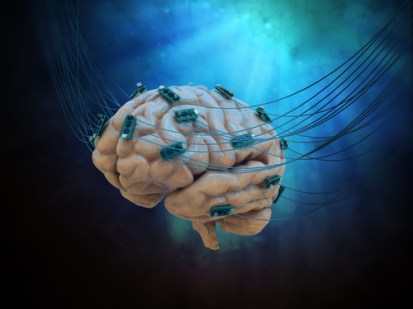
Due to various diseases including cancer, many people become blind. It really is a sad story, however, it is their eyes that cause the issue and not their visual cortex. In this way, their visual cortex which is part of the brain is completely fine and undamaged, but as there is no information coming in from the eyes, it holds no use for the person. This, however, is not the case anymore. Through an amazing medical trial, 6 people who were blind are now able to partially see. The device that helps achieve this is called Orion. It takes pictures from a camera and inputs them directly into the brain, acting as the eyes for the person.
 Doctors believe that this is a ray of hope for those who are completely blind and have lost their eyesight due to a disease or accident. They believe that if the camera completely erases the purpose of the eyes, it could lead to many more opportunities for people who cannot see.
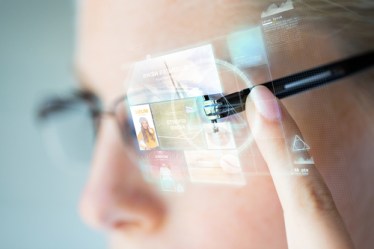
Orion is made up of 2 parts. It includes an implant within the person’s brain and a pair of glasses which contain the camera. The camera in the glasses takes pictures and sends information to 60 electrodes which are placed in the implant within the brain. These electrodes process information and present it to the visual cortex. This then shows the blind person a partial image of what is in front of them. Meaning the device removes the need for natural eyesight.
For testing the device, researchers used a computer. They first chose completely blind people and showed them a black screen on a computer with a white square, which moved within a random pattern. They would then ask them to point at the square at whatever position it was at. They pointed at the correct place, making scientists believe their invention truly worked.
 It is believed that the square which was shown to the patients may just be the beginning. If they were to introduce many more electrodes within the brain, they would be able to create a proper image, which would show the blind person everything around them. What they aim to do is use the reference of a style of painting. When you paint tiny thousands of spots, they come together and represent a full picture – this could be done in the brain too. When electrodes are stimulating thousands of places in the brain while the camera is feeding the information, there is potential that a proper image may be created in the same way as a painting.
Even the way the device is at the moment, it really has the potential of changing lives.
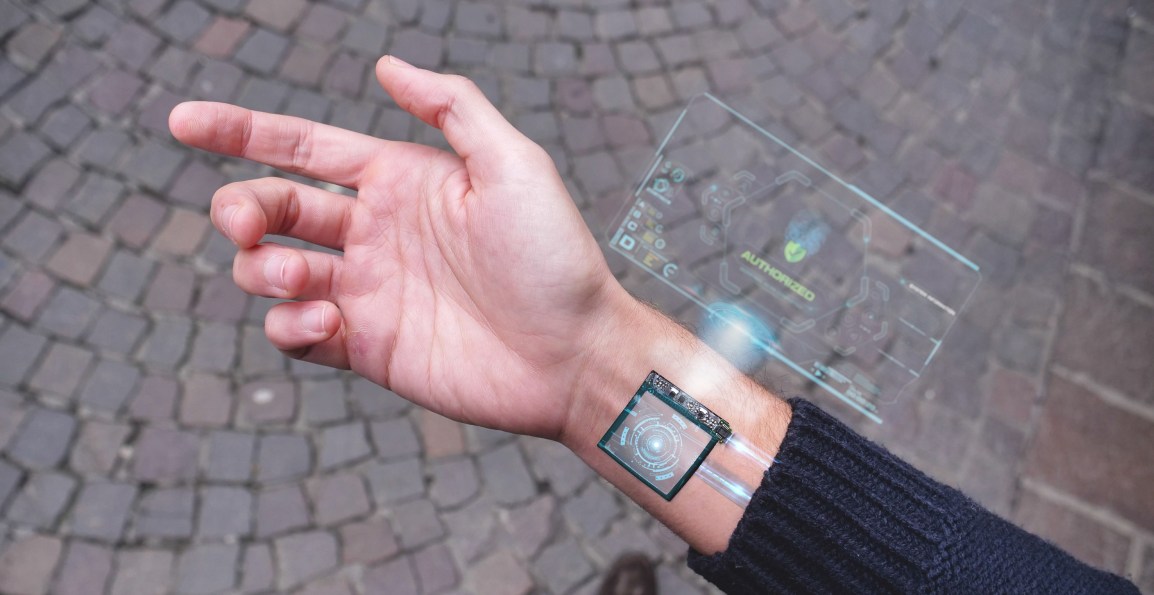
 Perhaps this is the beginning of a future where humans even have augmented senses – eyesight like an owl, or the hearing capability of a bat. A future where we can start to wipe out some of the most common medical issues we face. A technology that can grow with us and perhaps even lengthen our lifespan.
 Becoming a Diamond
  An Atmospheric Release
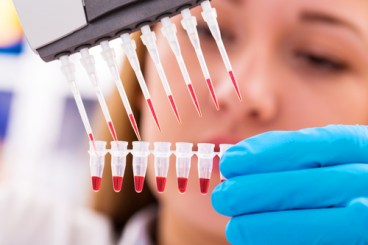
 Forever Labs has developed a system to harvest and store these ideal stem cells for future use, where necessary. The company has partnered with doctors, predominantly plastic and orthopedic surgeons, to extract stem cells which their labs will keep for an annual fee. The extraction is a fifteen-minute process, and the company’s website provides those interested with a list of doctors that do the procedure. The process is virtually pain free, with little or no recovery period. This means that you could essentially be saving your own life, with an effortless procedure, conducted during your lunch break!
 The procedure is straightforward, harmless and, for most patients, risk-free. Those that may face risks will be told beforehand. Scientists continue to research the possibilities that exist with stem cell treatment including: combating Alzheimer’s, osteoarthritis, heart disease and strokes. A study conducted with rats has shown where stem cell application may even be able to treat alcoholism. Regardless of the cures that will arise, most scientists believe that harvesting stem cells at a younger age will give individuals a higher fighting chance if they find themselves dealing with age-related diseases in the future.
 Tokyo Institute of Industrial Science have recently created a biohybrid robotic finger with the ability to bend itself up and down. They published the results in Science Robotics recording that the finger remained functional for more than a week.
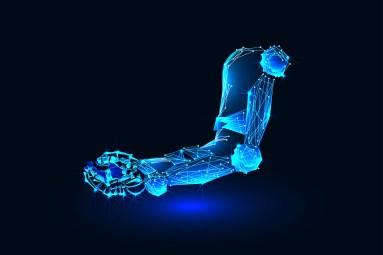 to undertake specific tasks. The inclusion of muscle tissue would result in smoother, steadier overall movements. Scientists are planning to use these biorobots for more detailed exploration of the human body, as well as to enhance our medical capabilities. This could be partially accomplished by performing tests on the biorobots, instead of humans. In addition, they would increase the manufacturing ability of robots, currently limited due to intricate parts and assembly necessary, and their ability to monitor certain environments.
 Although not currently on the market, the technology shows immense potential. Messages would be secured by coding them in the form of small molecules, that would be absorbed by a napkin. They could only be decrypted using the key, which would be the molecule’s structure. The method has been developed by German company Karlsruher Institut fur Technologie. Their molecular library has at least 500,000 keys that, because of their structural diversification, would be impossible to decode without the sample. The message can also only be revealed after being scanned with the same equipment used by microbiologists to analyze new compounds in their research. Researchers plan on expanding the technology to including DNA which would increase the number of keys that could be made, making passwords even more secure.
 to a study published in Journal of the American Chemical Society. Most florescent molecular sensors generate discreet optical signals but the one used was able to generate a unique optical ‘fingerprint’ for each chemical, making it possible to differentiate between them.
 R. E. KEARNEY