
Gold mining, coal mining, salt mining, etc. are common terms which a layman can understand, but the concept of ‘space mining’ is not in the knowledge of many people. It basically involves the extraction of iron and other raw materials from the asteroid belt and other minor planets. These raw materials mainly include hard rock metal and precious metals. It has a lot of advantages and disadvantages attached to it.
 The asteroid belt is rich in assets. There are certain metals and other natural resources that are rare on earth, but not on the asteroids. These metals can be used in the production of many products. For example, electric vehicles, turbines, and many other types of electronics.
Extraction of raw materials from space could widen the resource bank within earth. Moreover, space mining opens up opportunities for space exploration. This eventually brings ideas for innovative creations beyond Earth like space colonies for humans. Moreover, it could relieve the environmental destruction currently caused by conventional mining industries on our planet.
On the flip side, it is believed that the process exploits all the resources mentioned above. For this reason, scientists do not consider the concept of space mining healthy at all. According to scientists, space mining is ruining the solar system and it needs to stop. Otherwise, it will force future generations to face an extreme crisis.
In addition to this, space mining has a huge potential for causing pollution. The preparation required for exploring outer space can be lethal for our planet. It requires the manufacturing of huge robots, machines and other mining-related equipment, as well as the rockets to launch these robots to outer space and bring them back too. This opens multiple doors for pollution which we already have enough on the planet.
Other than the environmental effects, the success of space mining can drastically affect the world’s economy. It may lead to huge job losses in the conventional mining industry. Obviously, who would consider mining on earth when they can find abundant resources in space? However, this could create jobs in the technology sector, but it may take time for people to adjust to the new changes.
 Space mining seems to become easier with the advances in technology and research. Several companies have now started focusing on this version of mining. They are investing in technology and research to come up with workable ways to mine in space. However, things need to be done to consider the long term effect. Space mining does not seem like the best idea in the distant future. It can ruin the areas beyond Earth while trying to make survival easier on earth. Alternatively, it could turn out to be very beneficial for companies and the general public on Earth.

 Interestingly, now these drones will be able to carry around enough larvicide that can be sprayed across more than 2 acres. This is a task that would normally be handled by helicopters that are very expensive. However, this technology will make it less costly and efficient to treat the remote pools and eradicate mosquitoes. Florida Keys Mosquito Control District wants to start with a precise location to test first.
 A few days ago, residents in Key West woke up from the noise of a mosquito control helicopter that was there to spray larvicide to the Aedes aegypti mosquito after heavy rainfall. The Aedes aegypti mosquito carries diseases like dengue and Zika virus. These helicopters and drones will become a common sight during the summer as the plans are to spray larvicides on the saltmarsh mosquitoes in remote areas. The idea of using drones is a cost-effective and an efficient alternative compared to helicopters.
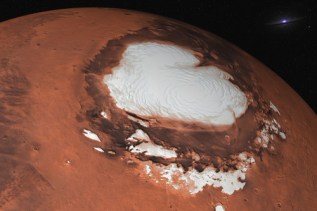 Evaporation is the only way that water can rise from the lower to the upper atmosphere and this is possible around every two years when Mars is nearest to the Sun and it’s summer in the southern hemisphere. In order to find out the weather dynamics of the Red Planet, a computer simulation was utilised by a team of scientists from the Max Planck Institute for Solar System Research (MPS) and the Moscow Institute of Physics and Technology.
 In the distant past, many of the discoveries found that Mars was covered with huge rivers. The question is – where did it all go? Since that time, the planet has experienced a dramatic change. There is only a little amount of frozen water on the ground and small traces of vapour in the atmosphere. Scientists state that Mars has lost about 80% of its water. In the upper atmosphere, water vapour is separated into hydrogen and hydroxyl radicals by the radiation from the sun. This hydrogen then escapes to space. Many researches prove that even today, water is lost through the same process. But, how does the water vapour reach the upper atmosphere when the middle layer can cool it down and covert it to ice?
 Once he emerged victorious in the aftermath of the elections, experts lauded Modi for pioneering the use of holograms in the country and using them to great effect. In a vast country such as India, embracing the technology meant that Modi was able to reach remote villages and garner greater support for his cause.
 In terms of substance, asteroids are rocky and airless in nature. The vast majority of these are the leftovers from the inception of the solar system and date back almost 4.6 billion years! Furthermore, there are approximately eight hundred thousand asteroids in the solar system.
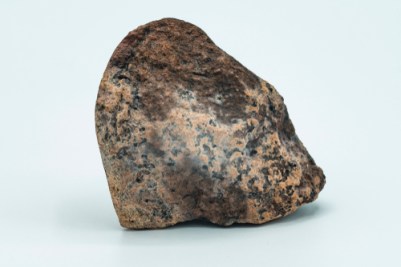 These are extremely dark in nature and are similar to carbonaceous chondrite meteorites. They have the same composition as the sun. However, the key difference is that they do not contain volatiles like hydrogen and helium.
 The Latest Scientific Development
 Lesovik’s team has conducted numerous experiments to reverse time on a single electron programmed quantum system. Compared to the three-qubits system that is more complex and resulted in only 49% succession in the objective, they found it easier to achieve an unbelievable 85% of succession towards their desired goal with a two-qubit system.
 R. E. KEARNEY