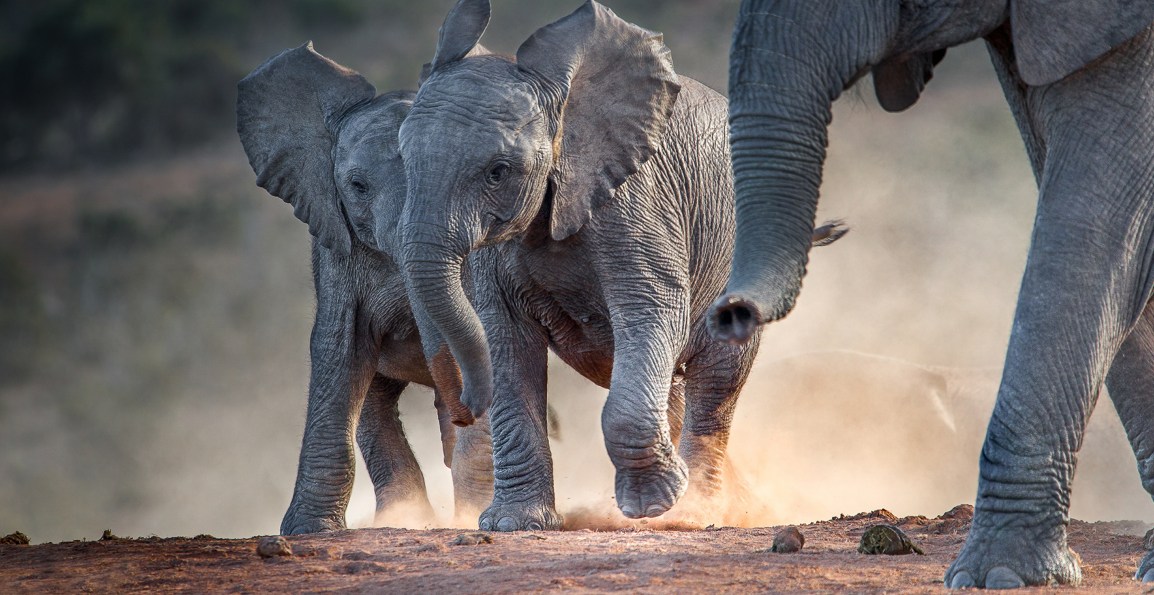
Leon C. Megginson once stated, “It is not the strongest of the species that survives, nor the most intelligent. It is the one that is most adaptable to change.” Animal poaching is a horrendous act which, in most cases, results in death, because it is done in order to take valuable assets of the animal, such as its horns or fur, to sell them off. Animals such as rhinos and elephants are at the brink of extinction due to this. However, poaching has not only decreased the population of different animal species, but has also changed the way they breed. Elephants are evolving and it is interesting and disconcerting all at the same time.
What Is The Phenomenon That Is Occurring?
New research shows that poaching has led to an intriguing phenomenon occurring within the elephant population. The stress of the activity is almost forcing elephants to evolve in order to survive. Female elephants are birthing elephants who are naturally tusk less. Historically speaking, only 2-4% of the female elephants in Africa were biologically tusk less. And now one-third of the entire African female elephant population is.
How Widely Is the Phenomenon Occurring?
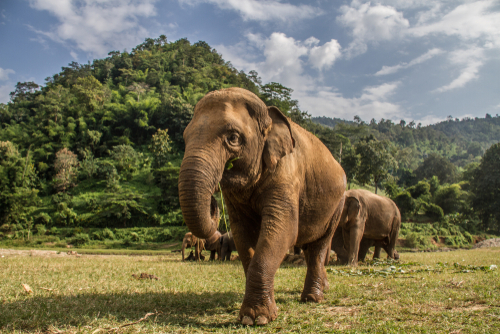 However, it is important to take the disheartening statistics of how many elephants are now left into account. Just a few decades earlier there used to be over 4000 elephants residing in Gorongosa National Park, Mozambique. Ever since the civil war, there are only 200 adult females left now as Joyce Poole’s research suggests. Joyce Poole is an expert in elephant behaviour who is bringing light to this astounding occurrence. Out of the 200 adult females in Mozambique, 51% of the elephants older than 25 are without tusks. 32% of the elephants that were born after the war are biologically tusk less. This phenomenon is not just occurring in Mozambique, as 98% of the 200 female African elephants found in Addo Elephant National Park are also without tusks. In Tanzania’s Ruaha National Park, there was a heavy amount of poaching done during the 70s and 80s. Josephine Smit, an elephant behaviour researcher who has been tracking these female elephants has noticed that approximately 21% of females that are older than the age of five are born without tusks.
Adapting To Their Environment without Tusks
Of course, the decrease in tusks also means that how elephants fend for themselves has to change. Joyce Poole’s intensive research has proven that elephants are still surviving and 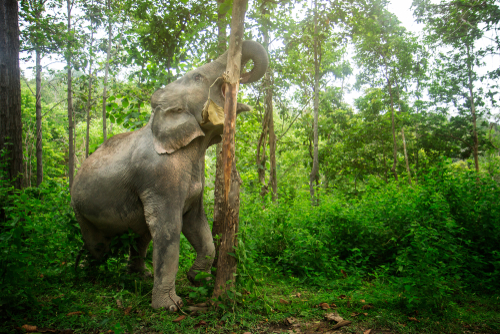 healthy even without their tusks. Scientists have observed that with the handicap of tusklessness, elephants are adapting accordingly to their environment. Tusks are useful, besides just being overgrown teeth. They were used in the daily life of elephants in order to dig up water and minerals from the ground, debark trees to get some fibre-laden food and help males in their competition for females. Elephants have been observed to now use their trunks and teeth to strip off bark from trees for food.
Even with the dark history behind them, the evolutionary female African elephants are a reminder of the adaptability and perseverance of nature during the most stressful of times.

 According to the most recent news, evidence has been found that shows signs of microbes and even fossils on Mars. However, only photographic evidence has been sent as yet; more cannot be found out until samples from Mars are brought back to earth for examination. However, this has made it certain that there is some presence of life, or at least the precursor of life in the form of microbes, on Mars.
 Tersicoccus phoenicis is a bacteria that has only been found where space crafts are assembled and can be used as a key technique by explorers to differentiate between Mars and Earth organisms. The microbes present in the space crafts can be used in order to monitor contamination levels. If there is a sample from Mars that contains the same or similar microorganisms to the spacecraft assembly rooms, then it can indicate contamination rather than sign of life on Mars. Technology can also help distinguish between Alien matter and Earth matter, and even if both come out as similar, genomes sequencing can be done in order to confirm that it belongs to Mars.
 The benefits of being able to efficiently convert our solid waste into usable biofuels are tremendous, from powering vehicles and creating heat sources to the obvious – cleaning up our world oceans and landfills. Not to mention that our current fossil fuel system contributes to greenhouse gas emissions at every step of its production and use, from extracting it, to processing and shipping and burning it as fuel. Already we can see that this gasification process for solid wastes is contributing more positively than the harm caused by utilizing fossil fuels, and the hope is that plants built and run in certain locations across the globe (those most affected by trash build-up) will lead to more plants being built, thus a clean energy cycle can begin to perpetuate itself, instead of the wasteful fossil fuel/combustion system we are currently stuck in.
 The biofuel created through the gasification process is called syngas and can be used for a variety of things. The most common use is as a fuel additive. By combining it with regular gasoline it acts as an ethanol mix. Many cars are now able to use gasoline with added ethanol and some vehicles even run on up to 85% ethanol mixes.
 Historically, the Russians have a lot of ‘firsts’ under their belt in the space exploration arena. The first living Human Being to orbit Earth in 1957, the first manned spaceflight in 1961, the first spacewalk in 1965, the first unmanned landing on a celestial body other than Earth in 1966, and the first space station in 1971 can all be attributed to Russia.
 Space tourism has become a recent addition to our knowledge and use of the outer atmosphere as well. Many people dream of going to space and a handful of companies have recently unveiled plans for luxury hotels, spaceflights, and private space stations.
 Recently though, there have been advancements made in renewable energy resources, solar and wind power particularly, and these new sources of energy are causing fossil fuels to be less necessary.
 Old technologies are often eclipsed by up and coming ideas and are often deemed obsolete after a time when more efficient means of producing results are generated. The fossil fuel industry is likely headed in this direction given the popularity of renewable resources and the fight on carbon pollution.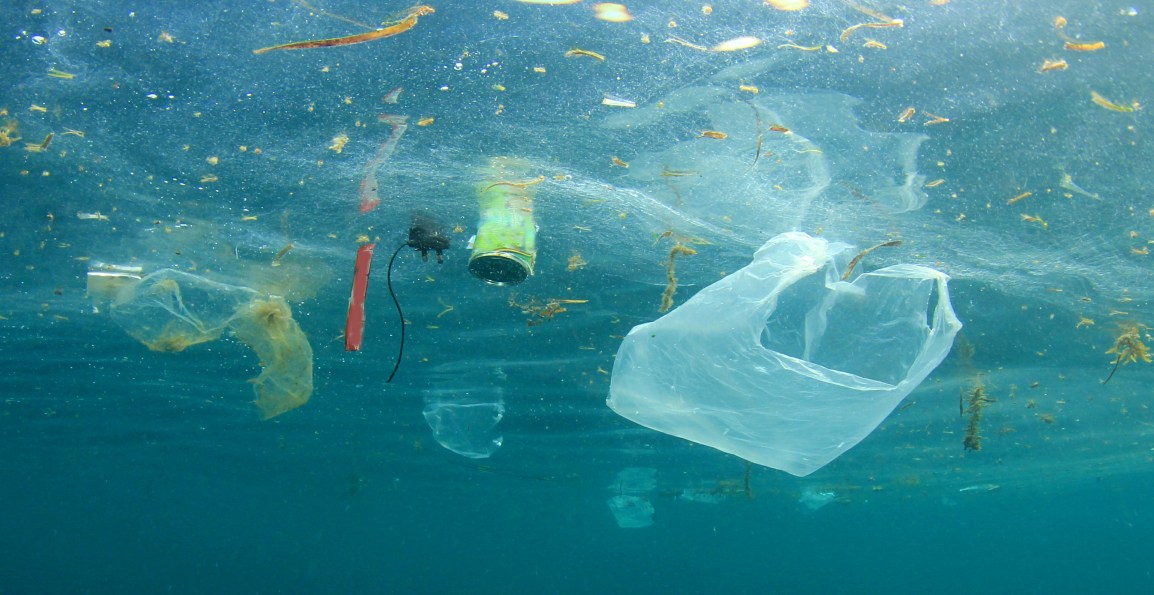
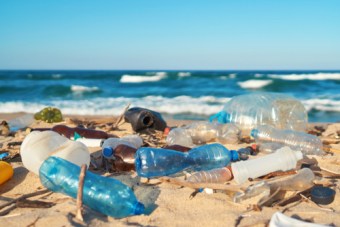 But plastic doesn’t biodegrade in any feasible time frame. In a landfill, plastic can take up to 1,000 years to decompose. A plastic water bottle alone needs 450 years to break down. And with the ‘single-use’ plastic products so widely utilized today, we now face a major ecological issue.
 R. E. KEARNEY