Urban Development is Causing an Unprecedented Rise in Species Evolution

The evolution of a species has always depended upon the ‘survival of the fittest,’ meaning that only those able to adapt will continue on. Urbanization has played a major role in changing the way of life for many species. The number of animals in certain areas has increased, and pollution and environmental changes have caused entirely new species to emerge. Our planet’s evolution has entered a new age, known as The Anthroposcene or ‘Era of Man.’ Instead of adapting to the earth’s changes, like humans have been doing for thousands of years, we have begun intentionally recreating the world around us. Man’s footprints on the earth will now be visible for millions of years in the future, as we have altered about 50% of the land and pumped an exorbitant amount of pollutants into the air. This has led to the planet undergoing its sixth mass extinction, caused primarily by the deeds of man.

In the midst of this mass extinction, the creatures sharing our urban spaces are evolving drastically so that they can survive. Biology professors, Marc Johnson and Jason Munshi-South, have published a paper which illustrates the evolution of these animals. Notable species changes, listed in their document, include:

  • The beaks of finches, and other domesticated birds, have lengthened to facilitate eating from bird feeders.
  • Puerto Rico’s crested anole lizard has experienced a growth in its limbs, and its toes have become stickier.
  • Many fish, and other pets, have developed resistance to household poisons.

There are countless other changes taking place within urbanized areas, many of which scientists do not understand the reasons for. The mutation in these animals makes them remarkably different from their ancestors, and incorporates their behavioral patterns, their appearance and the way in which they respond to their environment.

Researchers have noted that some of the factors, in urban areas, which facilitate these changes are artificial lighting, asphalt, brick and pollution. There are many other differences between our cities and the natural habitats of these animals, which affect their evolution. Scientists found that pollution alone boosted the rate at which many species mutated. This was even faster in areas of concentrated pollution, such as steel plants.

Although yet to be researched in detail, this evidence strongly suggests that pollution, urbanization and climate change have combined to push evolution to its limits. Highways, and other manmade structures, that isolate many animals show where they evolve in a different way from the rest of their species. The Anthroposcene effect of humans on the world is not limited to the evolution of animals, but also affects plants, the climate and our human population. Scientists are unable to determine whether these evolutionary changes will be beneficial to the animals long term, or if the accelerated rate of change will do more harm than good. As with many of the changes humans are responsible for on our planet, only long-term observation and time can tell.


Negative Emissions Power Plant – Cleaning Up Our Carbon Footprints

The devastation that humans have brought on the environment has resulted in climate change, and other global crises. This has led scientists, researchers and world leaders to create strategies that will help us eliminate our carbon footprint, and clean up our environment. Geoengineering solutions are now being created, to be used worldwide by 2030, to remove carbon from the air. Once implemented on a global scale this carbon dioxide removal will significantly reduce the effects of global warming, by counteracting the greenhouse effect and ocean acidification. Some of the ways in which geoengineering can be used for this purpose are:

Afforestation – A global tree planting effort.

Biochar – Burying ‘charred’ biomass to enclose its carbon in the soil.

Ocean Fertilization – Adding nutrients to the ocean to increase primary production, which would then pull carbon dioxide from the atmosphere.

Ambient Air Capture – The making of large machines that can remove carbon from the air, and store it elsewhere.

Enhance Weathering – Exposing large quantities of minerals, to react with the carbon dioxide in the air, and store the created compound in the soil or ocean.

Showing that their technology may be more advanced than the rest of the world, Iceland has recently produced a 300-megawatt geothermal power plant. The plant emits approximately one-third the amount of carbon that a traditional coal one does, but captures even more carbon dioxide than it produces. This means that its emissions are negative, because it produces less waste than it cleans from the environment.

The system is made up of a wall of fans that suck in air. They then separate the carbon dioxide, from the other particles, and inject it into water. This liquid is pumped into the ground, where it turns into rock. This simple process, produces useable energy while cleaning the environment. The current cost for purifying a ton of carbon dioxide is U$30. As the amount of carbon dioxide taken from the air increases, so would the costs. This means that the technology is currently financially inaccessible to many countries. The technology’s creators are attempting to modify the system, to lower the associated costs, so that it can be used in other areas of the world. The technology’s adaptation will prove beneficial, as any steps towards decreasing global warming will have a positive effect on the planet. Scientists advise that new technology also takes into consideration planetary needs, and be built in an effort to control the current pollution level in the world.

Fusion Energy – The Fuel that the Universe Provides

Fusion energy is the process that ‘powers’ the stars, including our sun, making all life on Earth possible. As our planet’s need for a sustainable solution to global energy increases, scientists are putting more effort into researching the ways that in can be created. Fusion energy is produced by fusing light atoms, such as hydrogen, at the extreme temperature and pressure existing in the center of the sun. At this heat all gases turn to plasma, which is the fourth state of matter and an ‘electrically-charged gas.’ In this state, negatively and positively charged atoms are separated. Scientists believe that as much as 99% of the Universe is made up of plasma, even though it is rarely found on Earth.

To replicate the fusion process, gases need to be heated to over 30 million degrees Celsius. This will completely ionize all atoms. The easiest reaction to duplicate occurs between two hydrogen isotopes: deuterium and tritium. When these two elements fuse they form a helium nucleus, a neutron and a significant amount of energy.

Devices have already been constructed that are capable of producing these extremely high temperatures. A ‘cage’ is created by strong magnetic fields, in the device, that minimizes thermal loss and allows the plasma to be confined long enough for fusion to occur. The tokamak, a donut shaped magnetic chamber, is presently the most advanced of these. Scientists have used it to create temperatures ten times higher than the center of the sun, producing megawatts of power for a few seconds.

Tokamak à Configuration Variable. Courtesy of CRPP-EPFL, Association Suisse-Euratom

Earl Marmar, the head of MIT’s Alcator C-Mod tokamak fusion project, has projected the use of nuclear fusion as a power source by the 2030s. The scientific community are already familiar with how the fusion creation process works, and how to replicate it. There still needs to be extensive research conducted in how to sustain the nuclear fusion once it has been produced, however. Several solutions to this problem are currently being researched including: decreasing the size of the donut hole in the tokamak to harness more energy, or increasing the strength of the magnetic field sustaining the plasma.

To meet the 2030s deadline, when the world’s urban population will have risen significantly, this research may need to be accelerated. Marmar believes that this pressure should be viewed positively, as it motivates the team. Climate change, and continue urbanization, mean that the sooner we are able to produce cost-effective, nuclear fusion energy that can be maintained; the sooner we will be able to help the planet heal from the negative effects of current power sources and expand energy provision.

Combating the Zika Virus – Using Mosquitos to Eliminate Disease

The damaging effects of the Zika virus on newborns, has created an urgent need to eliminate its source. The virus is especially dangerous because most adults show no symptoms when affected, and pregnant mothers pass it on to their babies unknowingly. The Zika virus, like many others, is spread by mosquitos. Researchers have found that they can decrease the spread of the disease by getting rid of the carrier. They have started to release infertile male mosquitos into the environment, which then mate with the deadly female mosquitos, who are unable to produce offspring. The method has already been used by several countries to decrease the spread of mosquito-borne viruses. The success rate in these areas has been quite high and their mosquito population is slowly dying out.

Verily is a branch of Google’s parent company, Alphabet that conducts scientific research. The department has developed a robot that is able to raise mosquitos in a lab environment. The robot is equipped with custom built machinery that allows it to raise up to one million mosquitos per week. The males are then separated from the females, because they don’t bite humans. They are infected with a naturally occurring bacteria, Wolbachia, that causes their infertility. The Verily project has already begun its first widespread use of the experiment, by releasing 20 million mosquitos into Fresno County, California.

The project has been named ‘Debug,’ and aims to use technology to increase the number of sterile bugs being released into the environment. The main methods that it is promoting are bug raising robots, bug tracking sensors and bug sorting algorithms. The mosquito is the animal that causes the highest number of human deaths each year. Verily aim to help significantly decrease, and eventually completely eradicate, the spread of these dangerous mosquito-borne diseases, such as Dengue Fever and Zika.

This is the first mosquito release project in the United States that is being conducted using autonomous methods. Verily’s system allows for the release of more mosquitos, in a significantly shorter time period, than other methods which are conducted manually. The Fresno County project is the largest one that has been attempted thus far. Linus Upson, a Verily senior engineer, said that to help a larger number of people, the mosquitos need to be more widely distributed and monitored at a reasonable cost. The company is planning to recreate their Fresno County project in Australia later this year, to show that the procedure can be successful in different climates and areas.

The Environmental Protection Agency (EPA) is responsible for regulating the mosquitos that are released by Verily. Under the ‘microbial pest control’ requirement, the EPA has concluded that altered mosquitos, such as those being released by Verily, currently pose no threat to the environment.

Asteroid Mining – Harvesting Materials from Space

Asteroids are made up of the same materials as Earth, and other planets, but in different quantities. Our planet’s gravitational pull has resulted in most of its iron-loving materials being sucked to the core billions of years ago. This left the crust almost completely depleted of these elements. Without a gravitational pull, the metals on asteroids have remained close to the surface.  Over millions of years, asteroid impacts deposited metals on the Earth’s crust. These have since been extracted in large quantities, and the resources are once again running out.

Space corporations are currently looking into the possibility of asteroid mining which would consist of taking metals, and other useful materials, from the surface of the asteroids. These extractions can be used in space, or taken back to Earth, and include: water and oxygen to sustain astronauts while in space, gold and palladium to send back to Earth, iron and titanium for space construction and hydrogen and ammonia as rocket propellant. The asteroids that are closest to our planet, would be the first targets. Investors believe that once asteroid mining has been perfected, it will become a trillion dollar industry.

There are three types of asteroids that are being considered for mining:

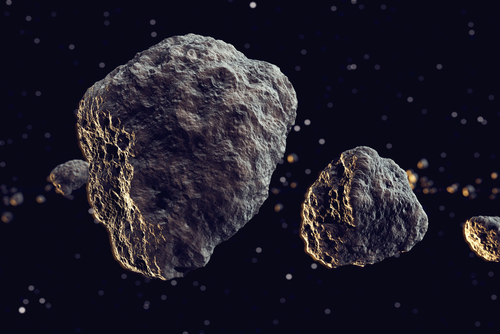
C- type – These asteroids have an abundance of water, and would be ideal places to refill astronaut supplies during space exploration. The option of stopping for water would greatly reduce mission costs. In addition, they also have organic carbon which would allow food growth.

S-Type – The surface of these asteroids is full of numerous metals, such as cobalt, nickel, gold and platinum.

M-Type – A source of up to ten times the amount of metal on S-type Asteroids.

Scientists have come up with three ways in which asteroid mining can be performed: mining the asteroid and bring the raw materials back to Earth, processing the materials before leaving to produce propellant to fuel the return trip or transporting the asteroid to a safe orbit around the moon, or our planet, where it would then be studied and mined.

A leader in space exploration, NASA has been researching asteroid mining for many years. They have already launched OSIRIS-REx on September 8, 2016, to facilitate the study of asteroid 101955 Bennu. The spacecraft will return to Earth with a sample of its surface in 2023, so that it can be studied in detail. If OSIRIS-REx is successful it will be the first mission that has brought an asteroid sample back to Earth.

NASA is also currently working on a mission called the Asteroid Redirect Mission (ARM). The aim of this project is for a spacecraft to use robotic arms and anchoring grippers which it will be fitted with, to retrieve a 4 metre boulder from a near-earth asteroid. The boulder will then be transported to a stable lunar orbit for analysis by robotic probes and future missions. ARM will be launched in December 2020.

Climate Change To Wipe Out Half Of Ethiopia’s Coffee-Growing Area

June 30th, 2017 by James Ayre

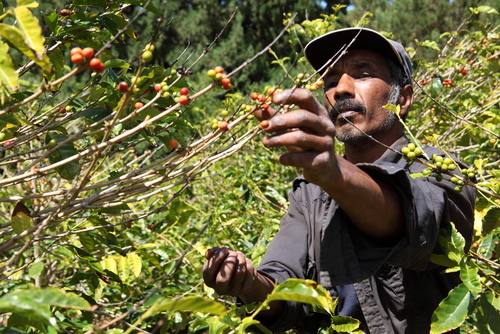
The birthplace of coffee, Ethiopia, is likely to lose up to half of its total coffee-growing area by the end of the century as a result of anthropogenic climate change and its effects, according to a new study.

As it is, still nowhere near the end of the century, rising temperatures and changing precipitation patterns in Ethiopia are already damaging coffee production in some parts of the country where “special” varieties are grown.

This may not sound as though it’s all that important but it’s probably worth realizing here that there are currently around 100 million people worldwide who are involved in coffee bean farming — so the industry is intimately involved in the economies of many regions around the world. If the coffee industry does end up collapsing in Ethiopia, as the study predicts, then there will no doubt be serious economic problems that follow.

The press release provides a bit more clarity: “Without major action both in the coffee industry and in slashing greenhouse gas emissions, coffee is predicted to become more expensive and worse-tasting. The research combined climate-change computer modelling with detailed measurements of current ground conditions, gathered in fieldwork that covered a total distance of 30,000 km within Ethiopia. It found that 40-60% of today’s coffee growing areas in Ethiopia would be unsuitable by the end of the century under a range of likely warming scenarios.”

There is a means of dealing with the effect of climate change on coffee production in the short term, though an expensive one: moving production uphill. Even this approach will have run its course by 2040, since it won’t be possible to move production any further uphill at that point.

Researcher Aaron Davis from the Royal Botanic Gardens Kew noted: “It literally reaches the ceiling, because you don’t have any higher place to go.”

Commenting on the loss of production at the heritage site Harar, Davis stated: “In one area, there are hundreds if not thousands of hectares of dead trees. It is a world renowned name and has been grown in that area for many centuries. But under all (climate change) scenarios, it’s going to get worse.”

“Some of the origins, what you would call terroir in the wine industry, will disappear, unless serious intervention is undertaken,” he continued. “It would be like losing the Burgundy wine region. Those areas are found nowhere else but Ethiopia, and because of the genetic diversity, the diversity of flavor profiles is globally unique.”

Something that’s perhaps just as important as the loss of cultivated area will be the loss wild arabica and robusta coffee genetics — which could well result in the loss of genetics that would help to improve crop resistance against drought and disease. To improve resistance against the impending effects of climate change, in other words.

As explained by Prof Sebsebe Demissew from the University of Addis Ababa: “Coffee originates from the highland forests of Ethiopia, and it is our gift to the world. As Ethiopia is the main natural storehouse of arabica genetic diversity, what happens in Ethiopia could have long-term impacts for coffee farming globally.”

The new study is detailed in a paper published in the journal Nature Plants.