
Tech-savvies believe that we’d genuinely be futuristic when we have easy access to Graphene batteries. A battery may sound like a simple thing to many, but Graphene batteries could change the game forever.
Scientists say that Graphene batteries will genuinely create a futuristic society where your devices can run up to days and weeks without charging.
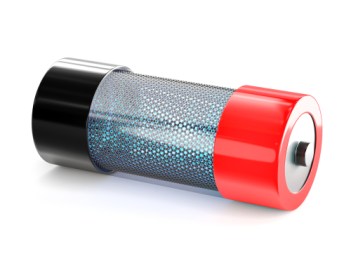 A Graphene Battery in a nutshell
Packed together in a honeycomb structure, graphene is a carbon atom composition that has a thick two-dimensional atomic layer. The 2D structure of this composition allows graphene to be highly flexible, stalwart, and light in weight, as well as offer exceptional electrical and thermal conductivity that is even better than that of copper – an element that is known to be most conducive.
Graphene battery vs your regular battery
The battery that we use in our portable devices is made with lithium-ion, also known as Li-ion. A lithium-ion battery has a similar structure to a graphene battery. Both the batteries have two conductive plates coated in an electrolyte solution, but the characteristics of both batteries differ on a considerable margin.
As mentioned earlier, graphene’s electrical and heat conductivity is higher than the most conducive element copper. Thus, it’s conductivity surpasses that of Lithium-ion as well. As a result, a device can be charged a lot faster as current travels more quickly. This high conductivity also extends the life span of a battery as they cool down faster.
A regular battery’s charging rate doesn’t remain consistent throughout its lifetime. A lithium-ion battery starts faster, tires out, and then delivers slower current, reducing the rate of charging. On the other hand, a Graphene battery offers linear charging rates, which means that this type of battery doesn’t tire out.
 “Graphene batteries can make batteries charge faster and dissipate heat more effectively. This has big implications. It means power tools don’t overheat as quickly. It means home appliances serve families better, and for longer. And it eventually means [electric cars] can charge faster.” Chip Breitenkamp, VP of business development at the graphene battery company said.
Most importantly, Graphene batteries are safe. The incidents of smartphones burning up, overheating, and damage due to overcharging are overly familiar. Users can avoid these unfortunate events by opting for Graphene Batteries instead. There’s virtually no chance of overheating Graphene batteries as they are more robust than lithium-ion ones.

 Technological developments in 2020 are firing on all cylinders. There is something new coming up each day, but nobody thought that virtual reality could get any more real than it already is.
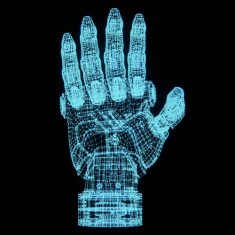 Silica-based distributed fibre-optic sensor (DFOS) systems are a renowned tool for sensing stress, pressure, vibration, warmth, and moisture. This glove has a stretchable fibre-optic sensor that extends to the length of your fingers, with tips lit up with LED lights. The current framework is pretty simple with bands wrapped around fingers, a battery attached on the wrist, Bluetooth and some basic circuits.
 There is now a new collaboration between Adidas and Lululemon and they have begun to acquire suitable and environmentally friendly fabric that will not only look chic and modern, but also help save the world at the same time. A start-up called Bolt fabrics has begun to create a special kind of fiber which is made up of mycelium, which is a threadlike root of a mushroom which creates a sort of faux leather or vegan leather material.
 They believe that this fabric has the same supple and warmth that a natural leather does. Through this natural feeling, the company aims to get more and more famous brands involved. This is because using leather was always questioned. People always believed that using leather was cruel to animals and many even protested against it. However, the look that leather could achieve was incomparable, until now.
 A group of researchers at MIT Dream Lab, which was launched in 2017, has developed a device that can help you hack into dreams. In reality, it is a device that needs to be worn and it interacts with your dreams in various ways. This includes giving you a sense of control over your dream.
 Researchers believe hypnagogic imagery or hypnagogic hallucinations are very common in the state of consciousness where one is moving between sleep and wakefulness. Some have reported having vivid auditory and visual hallucinations.
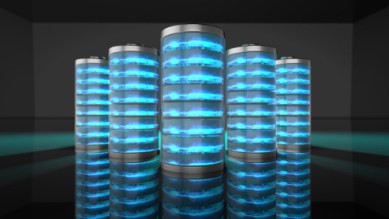 A robot is a machine that obeys instructions fed into it, while on the front it may seem very easy that a robot obliges to your commands but in the back end, complex algorithms and sophisticated programming is operating the machine. To function effectively and efficiently, a reliable battery is crucial.
 The scientists at the University of Michigan suggest that robotic performance can be increased tenfold by redistributing the batteries location throughout the exterior. Nearly 20% of a robot’s design is occupied by batteries. However, by mimicking the human energy derivation from fat from all over the body, placing batteries in different parts of the robot’s exterior can not only save space and allow it to be used for other purposes, but also allow the robot itself to operate more efficiently. How much more efficient exactly? Nearly 72 times.


 R. E. KEARNEY