
Have you ever imagined a world where you would just think things and they would happen? For example, you thought to send a happy birthday message to your grandmother and your phone does it automatically? Well, this concept seems to be coming closer to becoming reality very soon. In 2017, Facebook decided to create a device which would use your thoughts to type. So whatever you were thinking at that moment would be typed out by Facebook’s new brain-computer. Now Facebook has started to show how far they have come with this invention and how soon consumers can have it in their hands. It is something that will revolutionize technology as it will let the disabled speak and make our daily lives much easier.
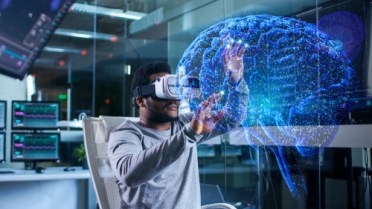 Facebook says that they are in collaboration with scientists and researchers at the University of California to work on this new invention. They stated that they want to connect the world without any limitations whether they are geographical, physical or mental. They want to make the world instantly accessible and completely hands-free. So with collaboration from researchers, Facebook is trying to build a device that will let patients with neurological diseases have a voice again by examining their brain’s activity in real-time.
An experiment was conducted by the researchers where a neurological patient who had been surgically implanted with electrodes on the surface of his brain was asked to answer questions aloud. Around 61% of the time, the computer was able to comprehend and present the correct answer through brain signals alone. Researchers now believe that this could have a real impact on society as it would enable those who cannot speak to now have a voice and share their opinion with the world too.
 However, there is much more work to be done. Right now the project is just at the beginning stage where it is starting to take form. What the researchers aim to achieve will take many years of trials and practice. The researchers want to decode around 100 words per minute with a vocabulary of 1000 words, and they want less than a 17% chance of error. This is a huge goal for the researchers and if this is achieved, it could transform the technological world.
However there are a few downfalls too, the procedure is surgically invasive, which in itself is a huge risk. This is a different model compared to the one aimed for normal consumers which will be manual headsets. Also in the initial trials, there was very limited vocabulary that was tested which means very limited answers could be provided. It leaves a great deal of scope for improvement. This device will take many years to be completed and to reach the consumers and patients, and will need much more money and effort to become a reality.

 Carbon Energy, which is backed by billions of dollars of support, has finally been able to gather enough money to start the design process for their negative emissions project. The purpose of the project is to suck the carbon dioxide out of the atmosphere and re-use it to create energy. This facility is based in Calgary, Canada at the moment. The company has been able to raise 68 billion dollars for its project of using carbon dioxide from the air to create energy and is to date the most money raised for technology.
 What the company plans to do is to use the carbon dioxide in the air and create carbon out of the air. The carbon will then be stored under-ground in the 230-acre factory and used to create fuel for different cars. Many different companies, like Chevrolet, might be interested in the company as a way to decrease their carbon footprint.
 The project is called the “Deep Density Displacement model” or D3M for short. This is the name given to it because of the speed and accuracy of the project, which was not the biggest shock to researchers rather the fact that it could accurately predict how the universe would look after tweaking certain parameters. Shirley Ho says that it was like “teaching image recognition software with lots of pictures of cats and dogs, but then it’s able to recognize elephants.”
 A deep neural network powers the D3M by feeding it 8000 different simulations from the highest accuracy model. The neural networks take training data and make calculations on the information, and then researchers compare the resulting outcomes with the expected outcomes. As time goes by, neural networks become faster and adapt.
 There are various ways to read or manipulate brain waves and neural connections within our brain. Some are non-invasive and use tools like helmets to read brain waves. A perfect example is an EEG. Yet, it is quite imprecise. However, there are invasive ways of interfering with the brain’s functioning. They are more precise, but can harm the individual too. For example, brain surgery. The probes used in it are big and cause destruction. Neuralink also has an invasive product, but it will not have huge probes, rather it will be a microchip inserted within the brain. It will read the brain with minuscule probes weaving through.
 Neuralink has developed an application that is available on your iPhone. The chip will connect to your iPhone through an application and the person using it will be trained through that as well. There will be no big probes – it will all be through Bluetooth.
 What is Graphene?
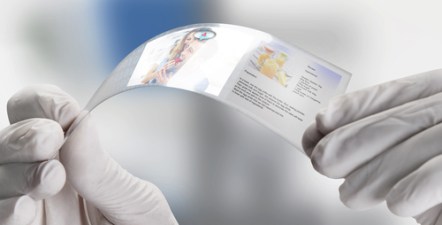 portable electronics. Our smartphones and tablets could become way more durable and could even be folded like a piece of paper with the help of Graphene. Also, another use could be wearable electronics. With Graphene, these could fit the skin perfectly and could fit any size or shape. Another use for Graphene could be solar cells. As it is highly conductive, it is the perfect material for conduction of solar energy. Its photovoltaic properties will also allow it to develop better sensors for cameras.
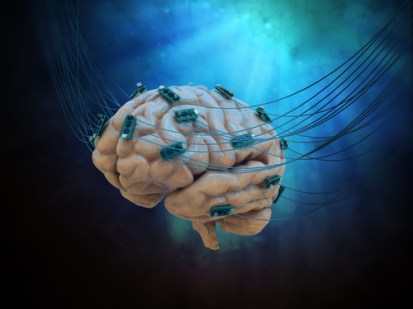 Doctors believe that this is a ray of hope for those who are completely blind and have lost their eyesight due to a disease or accident. They believe that if the camera completely erases the purpose of the eyes, it could lead to many more opportunities for people who cannot see.
 It is believed that the square which was shown to the patients may just be the beginning. If they were to introduce many more electrodes within the brain, they would be able to create a proper image, which would show the blind person everything around them. What they aim to do is use the reference of a style of painting. When you paint tiny thousands of spots, they come together and represent a full picture – this could be done in the brain too. When electrodes are stimulating thousands of places in the brain while the camera is feeding the information, there is potential that a proper image may be created in the same way as a painting.
 R. E. KEARNEY