Supersonic Plane

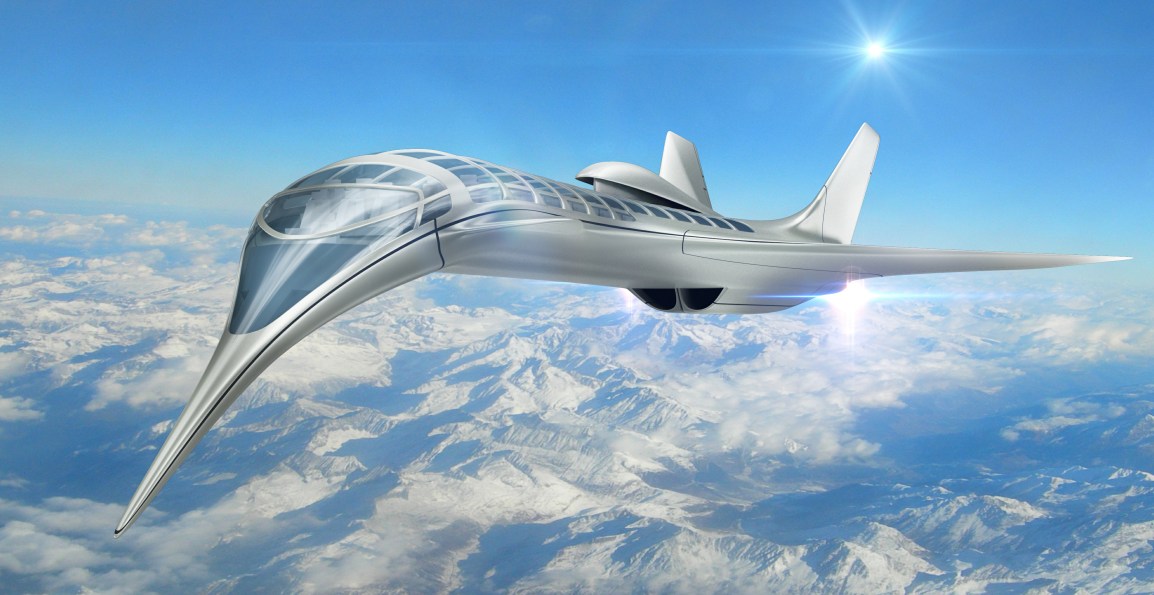
Hermeus, an American aerospace organisation has introduced the idea of a supersonic plane that would be capable of breezing over the Atlantic at a speed of 4,000 mph in only 90 minutes. What is a supersonic aircraft? A supersonic aircraft is a plane that can travel quicker than the speed of sound.

This speed is greater (almost twice) than that of the iconic Concorde. As per Ars Technica, seeing a working prototype any time soon is unlikely, but, the initial round of funding has been completed. This would make it possible for the organisation to bring in a propulsion demonstrator. Interestingly, Hermeus is not the only organisation working on this, a competitor ‘Boom Supersonic’ is also working on something similar. Boom Supersonic is another start-up just like Hermeus.

Boom Supersonic is working on a Mach 2.2 supersonic jet that will have space for around 55 passengers and will be a little faster than Concorde. As per the announcement of 2017, Boom Supersonic is planning on bringing in this innovation by the mid-2020s. They are being successfully backed by Richard Branson’s Virgin Group and have already received orders for around 76 planes. This is huge. However, it is important to note that going up from Mach 2 to Mach 5 can be a daunting task. It is not simple. In order to make this extremely fast plane a success, Hermeus is looking to utilise whatever technology they can to make this happen. This includes looking for cutting edge rocketry and titanium materials.

Supersonic aircrafts were previously used in the twentieth century for the purpose of research and military. Boom Supersonic is trying to work on creating a faster future. Supersonic planes are an amazing discovery that could change the future of air travel. Today, a flight from San Francisco to Tokyo takes around 11 hours. Boom Supersonic and Hermeus aim to considerably reduce this time.

The American Bell X-1 was the very first plane to fly supersonically. It was an experimental aircraft that used 6000-lb thrust rocket powered by ethyl alcohol and liquid oxygen. The majority of such aircrafts have been either for military use or as an experiment. There is no example of a supersonic plane that has been used for regular passenger flights. In the 1960s and 70s, there were many designs initiated for supersonic planes. Two of the well-known names that entered service include the Russian Tupolev Tu-144 and the Anglo-French Concorde. However, there were many restrictions that prevented them being used at their full capacity.

Florida Drones

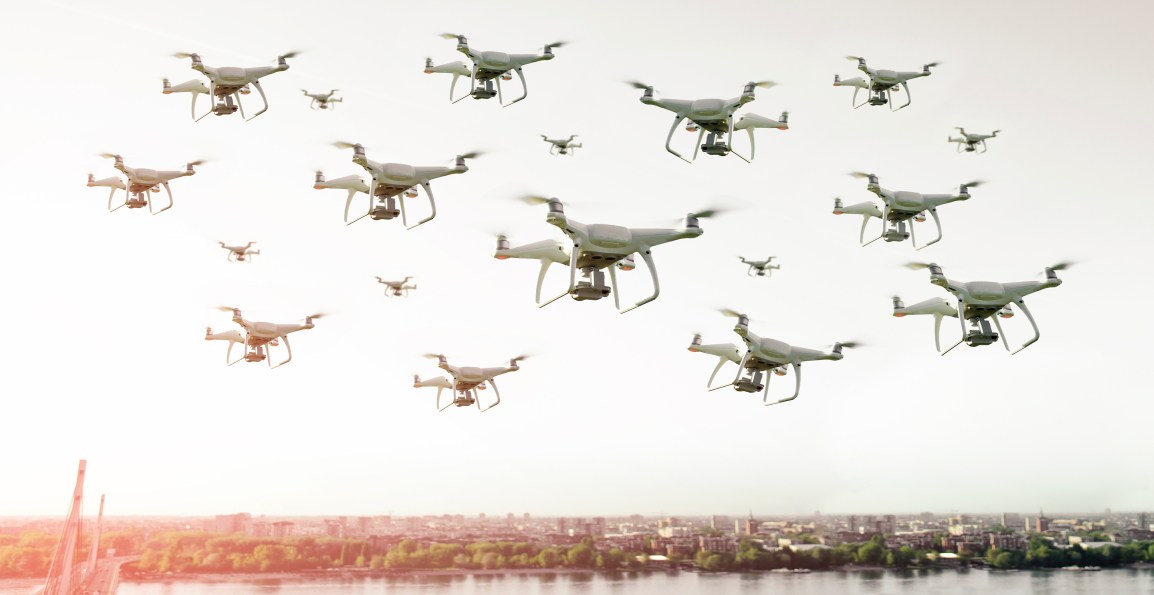
In South Florida, rainy seasons can also be called mosquito season. For this purpose, Florida has come up with a new weapon to combat against insects and diseases. As per the latest updates, Florida is to battle mosquitoes through the Federal Drone’s Program. Federal approval has been granted to the Lee County Mosquito Control District to use the drone program for the purpose of managing pests by spending the summer spreading larvicide over salt marshes that are usually used as breeding grounds by infectious mosquitoes. This can be a high-tech and efficient attempt to control the pest population along with saving a huge deal of the state’s money. Drones are already being used by the mosquito control company for the purpose of searching for pools of standing water that are at distant places.

Interestingly, now these drones will be able to carry around enough larvicide that can be sprayed across more than 2 acres. This is a task that would normally be handled by helicopters that are very expensive. However, this technology will make it less costly and efficient to treat the remote pools and eradicate mosquitoes. Florida Keys Mosquito Control District wants to start with a precise location to test first.

Dealing with pests and finding a way to combat them can be a daunting task in some places. If not controlled, they could lead to the spread of various dangerous diseases. Therefore, this technology will be a good option to deal with such situations and controlling the spread of diseases, especially in remote areas.

A few days ago, residents in Key West woke up from the noise of a mosquito control helicopter that was there to spray larvicide to the Aedes aegypti mosquito after heavy rainfall. The Aedes aegypti mosquito carries diseases like dengue and Zika virus. These helicopters and drones will become a common sight during the summer as the plans are to spray larvicides on the saltmarsh mosquitoes in remote areas. The idea of using drones is a cost-effective and an efficient alternative compared to helicopters.
If everything goes as per the plan, Florida Keys Mosquito Control District will consider expanding the program next year. The exact details of when and how the unmanned drone will be used to spread larvicide and combat pests in Florida is unknown. The idea of this program is to expand and not be limited to the present regulations to see how this can be used to control other diseases. If it works, it could become a huge success for the Florida Keys Mosquito Control District.

Electric Planes

For the purpose of cleaning up the aviation sector, scientists funded by NASA are working on developing electric planes powered by cryogenically-liquefied hydrogen fuel. The scientists dealing with this project are from the University of Illinois. Their plan is to use technology that can revolutionize the entire aviation sector. For this purpose, these scientists have been successful in collecting funding of $6 million over three years from NASA.

What is an electric plane?

An electric aircraft is an aircraft that is powered by electric motors. This electricity may be in the form of power cables, batteries, solar cells, power beaming, fuel cells or ultra-capacitors.

In 2010, NASA initially proposed the idea and introduced the concept of NASA Puffin, for vertical takeoff and landing (VTOL) vehicles. Since then, there have been many projects financed by the European Commission for this purpose. NEAT (NASA Electric Aircraft Testbed), is a testbed in Plum Brook Station, which is used for the development, design and assembling of electrical aircraft systems. Furthermore, in order to improve electric-propulsion components, NASA grants NRA (NASA Research Agreements), which will be finished by 2019.

X-57 Maxwell is a development by NASA to showcase the technology used to eliminate noise, fuel use and emissions. NASA tested this first propulsion technology consisting of 14 electric motors turning propellers, all of which were connected to an extraordinarily designed wing. Through this research and invention, NASA will prove that using electrical planes will help in creating planes that are efficient, quieter and more environmentally friendly. Furthermore, there will be many other advantages too. X-57 Maxwell is a development that will be using batteries, which reduce the emission of carbon, and demonstrated how it could result in reducing demand for lead-based carbon fuel in the aviation sector.

It is only a matter of time, but electric power will change the way the aviation industry works. We humans never think for the long-term. NASA is currently working on the problem. However, there is one limiting factor in this program, which is the battery. Battery development is not something that the current NASA program is looking at. Battery development will be risky, complex and costly. The main aim of NASA is to save the world by presenting this amazing invention. This is the reason why the space agency is putting so much funding behind this project, and invent the very first electric aircraft. Scientists from the University of Illinois are looking for options to use liquid hydrogen fuel cells for the purpose of powering the aircraft.

If successful, a revolution in the aircraft industry is on its way.

Hologram Campaigning

In 1977, a science fiction adventure called Star Wars was released. The epic was met with unprecedented anticipation and fanfare. The general populace and media alike were fascinated by the concepts depicted in the movie.

One of its most famous scenes involved a princess leading a rebellion who records a distress signal in the form of a holographic message. At the time, it felt like a distant and innovative concept. However, a few decades later, it has become a reality.

Even politicians are relying on holograms to contest elections. With the United States elections of 2020 only eighteen months away, candidates have already incorporated holograms into their campaigns.

Joko Widodo

One of the highest profile cases of a politician using holographic images to generate buzz is that of President Joko Widodo of Indonesia. Widodo has used a hologram to beam himself to areas and voters in key regions in anticipation of the election.

As Indonesia is the third largest democracy in the world and with elections fast approaching, Widodo and Ma’ruf, his vice presidential candidate, began projecting three dimensional images at campaign rallies. This allowed them to reach their followers in various hard to reach regions of the country and overcome stringent time constraints as well.

As more than 190 million voters were registered to participate in the elections, time was of the essence and through hologram campaigning, Widodo was able to deliver his message to more prospective followers.

The life size hologram was simply moved from one place to another across Indonesia as voting day grew closer. Widodo is not the only high profile example of a politician banking on the power of holographic images to reach his followers. Others include Turkish President Recep Tayyip Erdogan and Indian Prime Minister Narendra Modi.

As Widodo shuttled around the archipelago, the 57-year-old tactics seemed to have paid dividends, since the latest polls have shown that Widodo and party held a lead over their rivals.

Narendra Modi

Modi, the incumbent Prime Minister of the largest democracy in the world, solved the conundrum of how to reach the maximum number of people all the way back in 2014. The BJP leader used holograms to address rallies across India and convey his message to the largest electorate on the planet.

Indian voting can typically last longer than a month which means that campaigning can become frantic at times. However, Modi successfully used the aid of holographic images to address various rallies simultaneously.

Once he emerged victorious in the aftermath of the elections, experts lauded Modi for pioneering the use of holograms in the country and using them to great effect. In a vast country such as India, embracing the technology meant that Modi was able to reach remote villages and garner greater support for his cause.
These two prominent examples show that hologram campaigning is no longer just a concept depicted in science fiction, but has become a reality.

Drone Warfare

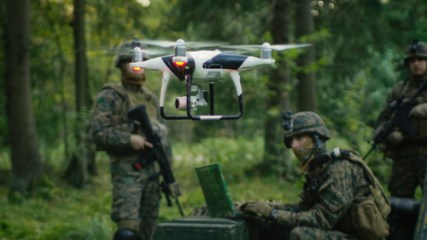
You may have heard of drones being used at weddings and ceremonies to capture the most memorable moments. You may have even come across news of drones being used to deliver supplies to those in need.

Combat Device

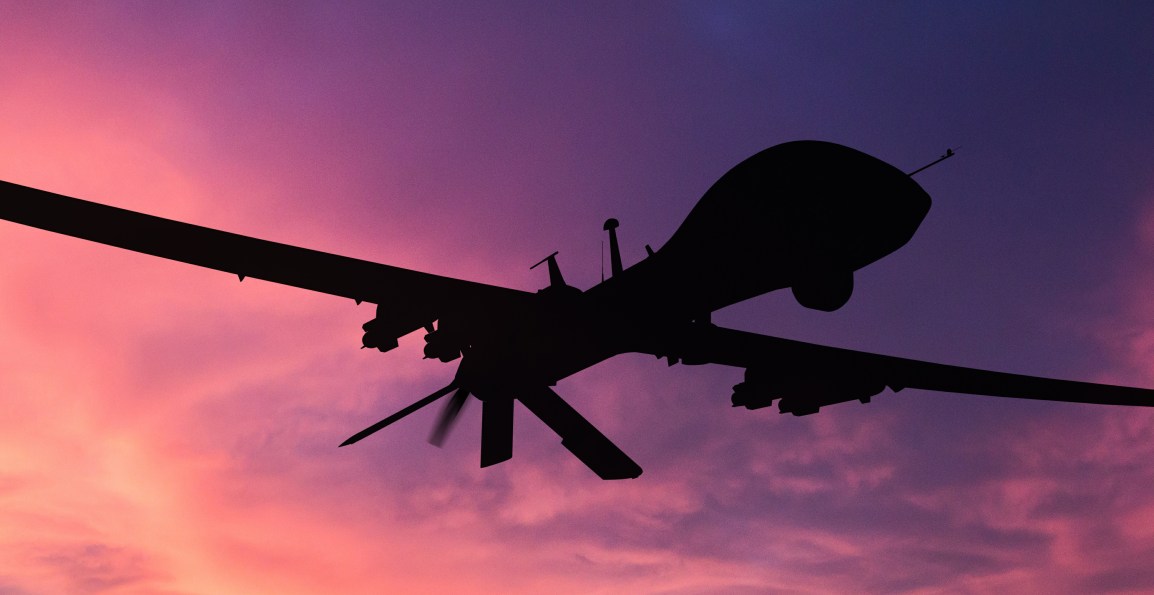
However, there is another major application of drones. Also called Unmanned Aerial Vehicles (UAV), drones are frequently used in combat. Typically, these combat machines are used to carry missiles and execute strikes.

Drones are usually under human control in real time, although the level of autonomy can vary from one case to another. They are beneficial for combatants because no pilot is on board, which means there is no collateral or casualties if the drone is shot down.
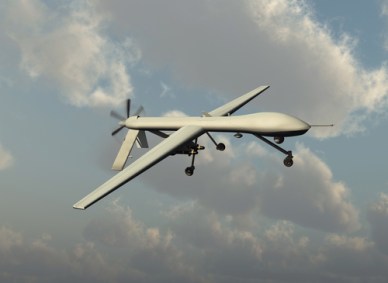
In principle, the operator runs the drone from a remote location. The equipment that a pilot would utilise is not needed, which means that the drone is considerably lighter than a manned vehicle would be.

The United States, Israel and China are generally considered as industry leaders when it comes to drone technology and the art of implementing them in warfare.

History of Drones

Although it may seem that drones have come to the fore in recent years, their first use can be traced all the way back to the 19th century, when Austrians employed hot air balloons to bomb Italian cities without using pilots.

As soon as the Wright brother made a significant breakthrough and pioneered the first aircraft, work on pilotless planes began in earnest. While remote controlled planes were in development during the First World War in 1914 and 1918, unmanned vehicles were also being researched extensively.

It was at that time that the term drone was being thrown around. The United Kingdom created the Queen Bee, which was a plane that was regulated using a radio from the ground. This vehicle was designed for target practice, similar to most unmanned appliances at the time.

In the decades following the Second World War, countries realised the need for innovation and making headway in combat devices. It was in the second half of the 20th century that drone technology witnessed a revolution of sorts.

First, it was the Israeli aviation team of the 70’s that established an aircraft which operated similar to how a glider would. This unmanned vehicle was capable of flying for more than 24 hours at a stretch. This became the basis of drones and even to this day, these vehicles take inspiration from the design produced by Israel.

The next advancement came in the 90’s when transmitters were attached to drones. This meant that footage could be recorded and transmitted to operators on the ground. This was used to devastating effect by NATO commanders and expedited the signing of the Dayton peace accords.

Another imperative improvement was made at the turn of the century by the United States once again. They were able to fasten missiles to drones as the CIA began their pursuit of Osama Bin Laden, the most wanted man on the planet at the time.

Quantum Computing – The Next Big Revolution

From classical computers to the modern day mobile and VR era, science and technology have completely revolutionized the world like never before. And it seems to be just the beginning. The world is about to witness the next big revolution in technology with Quantum Computing.

Where do we stand when it comes to understanding it?

Researchers and scientists from all over the world have thoroughly explored and realized the exceptional computing capabilities of this discrete quantity of energy. Leading technology companies namely, IBM, Google, and several others are striving to introduce a whole new era of quantum-based computers. IBM has unveiled “System One” and shared its vision to bring this unique invention to the commercial market.

How does Quantum Computing work?

In order to draw a better understanding of this whole new technology, one has to understand the concept of “Qubits” which is similar to “Bits” in classical computing. Just like classical computing relies on the binary system that builds bits, Quantum computing relies on Qubits. These super-conducting electrons – a type of subatomic particle – enable a multilayer circuit to work.

The Quantum Leap and Artificial Intelligence

In an era where Artificial Intelligence can analyze and break down the data using classical computing, “System One” is expecting to give an unbelievable boost to AI with Quantum Computing. It looks like IBM and many other renowned names in the field of science and technology have started to believe Quantum Computing as a dream for the “not too distant future” of the modern day world.

What are the Current Challenges?

According to the researchers, Quantum Computing can add great value to the existing concept of Artificial Intelligence by enabling it to extract restrained patterns within huge datasets. According to IBM scientists, they aim to build a strong and truly capable Quantum Machine which can outpace any classical computer when it comes to machine learning tasks.

Most of the industry experts and scientists have concluded that Quantum Computing may contribute extensively to the area of medical research and climate change but will not be sophisticated enough to resolve the existing scientific mysteries.

On the other hand, scientists and researchers are still striving to predict the possible uses of Quantum Computing. Moreover, they are still unclear about patterns and data-centric discoveries they should look for.

Conclusion

Leading companies are trying new and unique ways to use quantum computing and find out how it can aid and extend the various capabilities of classic computing. Researchers have concluded that the idea of Quantum Computing can benefit several diverse industries across the world which could include healthcare, climate, finance, energy and a lot more. Keeping this in view, it cannot be denied that Quantum Computing is about to become the future of today’s world while bringing exceptional technological leaps in other areas of research and development.